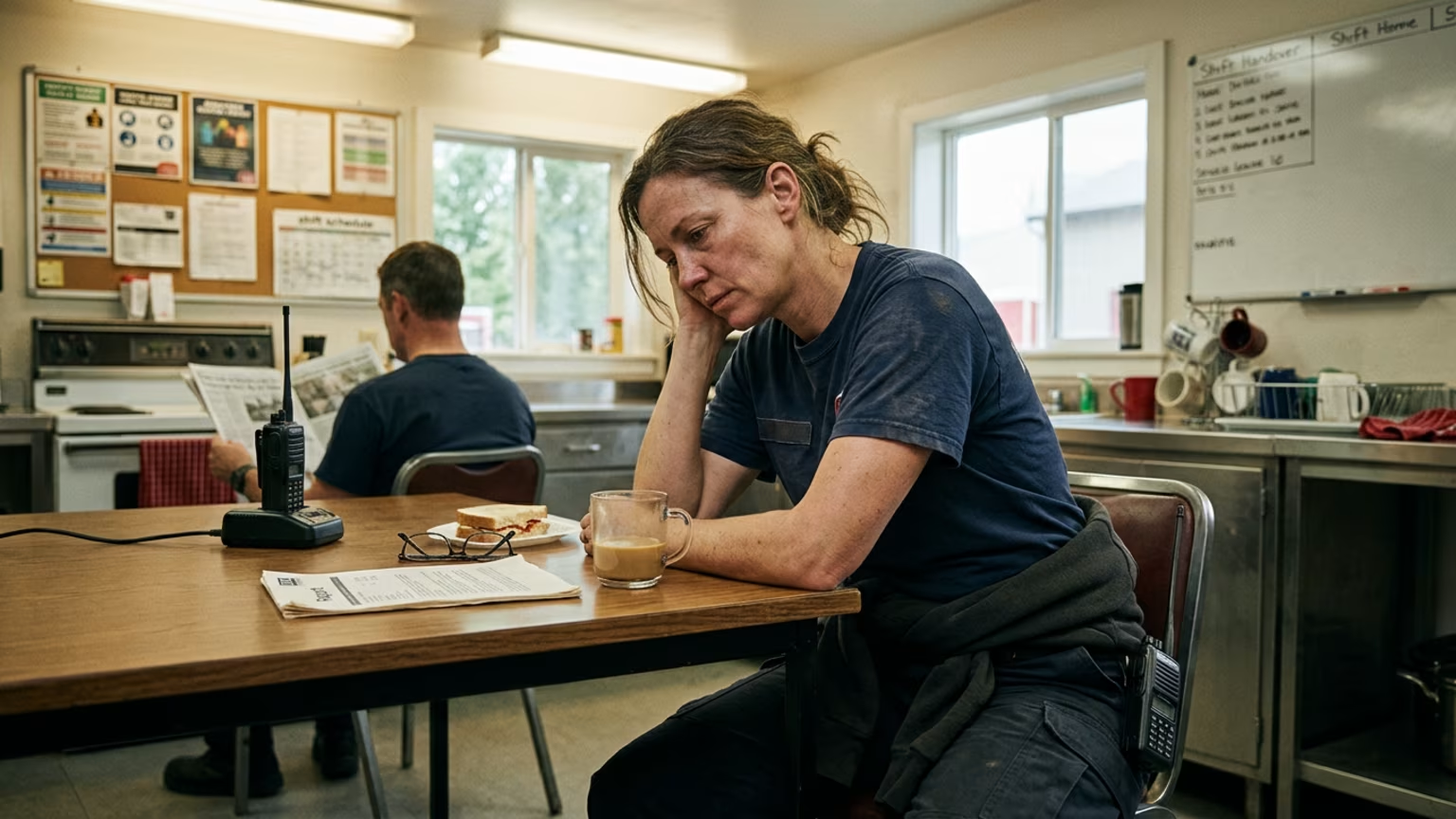

CDC data shows 71.5% of U.S. adults reported fatigue in 2024. Learn how this population data informs practical sleep and recovery protocols for first responders.





In September 2026, the CDC’s National Center for Health Statistics published findings showing that 71.5 percent of U.S. adults reported feeling very tired or exhausted. The data draws from the 2024 National Health Interview Survey and highlights a widespread pattern of fatigue affecting daily function.
The CDC report examined fatigue among adults aged 18 and older over a three-month period. While most adults felt tired at some point, the frequency of their symptoms varied widely. The breakdown showed 54.9 percent experienced fatigue on some days, 10.7 percent on most days, and 5.9 percent every day. Meanwhile, 28.5 percent of respondents reported never feeling very tired or exhausted.
The CDC defined "frequent fatigue" as feeling very tired or exhausted on most days or every day. This frequent category captured roughly one in six adults in the survey. Frequent fatigue was reported by 20 percent of women and 13 percent of men. Age played a noticeable role in the prevalence of these symptoms.
Frequent fatigue was most common among adults aged 18 to 34, at 19.5 percent. It was least common among adults aged 65 and older, who reported a rate of 12.9 percent. The CDC report also found measurable differences by racial and ethnic group across the surveyed population. Frequent fatigue was reported by 25.5 percent of American Indian and Alaska Native adults.
The rate was 18 percent for White adults and 17.3 percent for Black adults. Hispanic adults reported a rate of 12.9 percent, while Asian adults reported 9.1 percent. Among those experiencing frequent fatigue, 45.3 percent said symptoms lasted some of the day, and 20.2 percent said symptoms lasted all day.
The functional impact of this exhaustion was substantial in the CDC data. Notably, 36 percent of adults with frequent fatigue reported work limitations. This compared with just 15.3 percent of adults without frequent fatigue. People experiencing frequent exhaustion also reported higher rates of anxiety symptoms, cognition difficulties, and depression symptoms than those without it.
NBC News covered the CDC report and featured insights from board-certified sleep specialist Dr. Carol Ash. The coverage noted that researchers separate this level of fatigue from ordinary sleepiness. They described fatigue as physical or mental tiredness or exhaustion that does not improve with additional sleep or rest. This distinction is vital for understanding when tiredness becomes a functional impairment.
The CDC report measured fatigue across the general public rather than focusing specifically on emergency personnel. Its 71.5 percent prevalence figure should not be presented as a specific first-responder statistic. However, its findings validate the need for structured recovery protocols for anyone managing irregular schedules. The high prevalence of functional impairment in the national data reinforces the operational risk of ignoring sleep deprivation.
A first-responder recovery article citing NIOSH states that long shifts, night work, and rotating schedules can increase fatigue. The same article notes that these schedule demands can slow reaction time and raise injury risk. For emergency personnel, a difficult shift is a known hazard, but the body's physiological response to night work requires specific management. Shift workers face an additional challenge because night work often conflicts with the body’s normal circadian timing.
A summary of 2026 American Academy of Sleep Medicine guidance provides conditional recommendations for adults with shift-work disorder. These conditionally supported tools include strategic naps before night shifts, bright light during night work, and carefully timed caffeine. These interventions are meant for individuals dealing with excessive sleepiness from irregular schedules. They should be treated as tactics to test cautiously rather than universal prescriptions for all emergency personnel.
The AASM guidance was described as having very low-certainty evidence for these specific interventions. The guidance also warned that sleep inertia after a nap can temporarily impair performance and increase accident risk. For responders, any nap strategy must account for the time needed to fully wake up. Personnel must clear this post-nap grogginess before driving, responding, training, or performing safety-critical tasks.
Emergency-service culture often assumes that fatigue is simply the result of long hours and demanding calls. The new data and medical coverage challenge the idea that a bad shift is the only explanation for persistent exhaustion. The CDC findings illustrate a population-level symptom pattern that frequently coexists with cognitive and emotional difficulties. NBC’s written coverage identified mental health, lifestyle, and physical health as three broad categories that contribute to fatigue.
NBC’s medical coverage specifically cautions that ongoing fatigue may warrant evaluation for an underlying health problem. The report identified multiple potential contributors to fatigue, including obstructive sleep apnea, anemia, heart disease, and thyroid disorders. It also noted that exhaustion can occur as a medication side effect or stem from mental-health conditions. Stress produces hormonal responses involving cortisol and adrenaline, while anxiety and depression can disrupt sleep.
Medical experts recommend paying attention to whether fatigue is temporary or becoming chronic and persistent. This distinction is critical because irregular schedules can make sleep loss appear routine even when symptoms require clinical attention. The NBC article also described relaxation and active rest as useful components of recovery. These include breathing exercises and gentle stretching, which serve as practical low-intensity options after a demanding call.
While you cannot always control mandatory overtime or call volume, you can adapt your routines using evidence-aware strategies. The recent guidance suggests several actionable adjustments for those working outside a standard schedule. These steps focus on managing energy during a shift and protecting the recovery window afterward. Testing these tools cautiously can help personnel build better baseline resilience.
Creating a reliable environment for rest is a baseline requirement for shift work and sleep. Use blackout curtains, an eye mask, earplugs, or white noise to reduce environmental disruption during daytime sleep. A consistent wind-down routine after a difficult call can help signal your body that the shift is over. These are practical sleep-hygiene strategies to test rather than guaranteed medical treatments.
The summarized AASM guidance conditionally supports a pre-shift nap for adults dealing with shift-work disorder. However, a nap is not a replacement for a full sleep period. You must allow sufficient time to overcome post-nap grogginess before returning to duty or operating a vehicle. Sleep inertia is a real physiological barrier that requires careful management in high-stakes environments.
Caffeine is conditionally supported before or during a night shift for individuals with excessive sleepiness. The practical concern for emergency personnel is timing, as late consumption carries significant risks. It may make post-shift daytime sleep significantly more difficult and ruin a critical recovery window. Treat caffeine as a specific timing tool rather than a constant support mechanism for accumulated sleep debt.
Bright light during a night shift may help some workers manage excessive sleepiness. Because this recommendation is conditional and based on very low-certainty evidence, do not assume more light is always better. Light timing should be handled deliberately, especially when transitioning into post-shift recovery. Interventions must be adapted to whether you are working permanent nights, rotating shifts, or returning to a day schedule.
The CDC data connect frequent fatigue with work limitations, cognition difficulties, anxiety symptoms, and depression symptoms. A responder who is exhausted may be affected in more than one operational domain simultaneously. When exhaustion is severe, you should not treat your workout as a character test. Focus instead on mobility, technique, and duty fitness fundamentals when alertness is heavily impaired.
Fatigue that continues despite opportunities for sleep deserves proper medical attention from a qualified clinician. Monitor yourself for cognitive problems, mood symptoms, breathing-related sleep disruption, or declining work function. NBC’s coverage identified sleep apnea, mental-health conditions, and medication effects as possible contributors to this ongoing exhaustion. Recognizing these clinical signs early is a crucial part of maintaining career longevity in the emergency services.
The CDC data found clear associations between frequent fatigue and limitations that affect daily working capabilities. That does not prove that fatigue caused every individual impairment, but it demonstrates a strong connection. It supports using fatigue as a valid reason to review scheduling, rest opportunities, and fitness-for-duty procedures. Acknowledging these risks helps departments build better recovery models for personnel working rotating or permanent night schedules.
The 2026 CDC report provides a national snapshot rather than a real-time measurement of every current shift-work population. Moving forward, first responders should track future updates to the AASM shift-work guidance. The current reliance on very low-certainty evidence for naps, light exposure, and caffeine highlights the need for more rigorous testing. Future guidelines will likely refine these conditional recommendations as more operational data becomes available.
Pay attention to new studies measuring objective performance markers rather than relying solely on self-reported survey data. The CDC survey measured self-reported fatigue over the previous three months, which limits conclusions about exact causes. The gap between occasional tiredness and the frequent fatigue that causes work limitations will likely drive further clinical study. Until more conclusive data emerges, personnel should rely on cautious, evidence-aware sleep hygiene to manage their recovery.
Addressing the physical toll of frequent fatigue requires moving past generic fitness advice that assumes a predictable nine-to-five schedule. Rescuris helps first responders build practical, evidence-led recovery routines that respect the realities of night shifts, rotating schedules, and demanding operational windows without sacrificing long-term capability. Explore Resources
Rescuris publishes evidence-aware guidance for firefighters, police officers, paramedics and other first responders on fitness, recovery, sleep, nutrition, stress resilience and long-term capability.






Read practical guidance on first responder fitness, recovery, sleep, nutrition and resilience for demanding work and a long, active career.
read the blog
