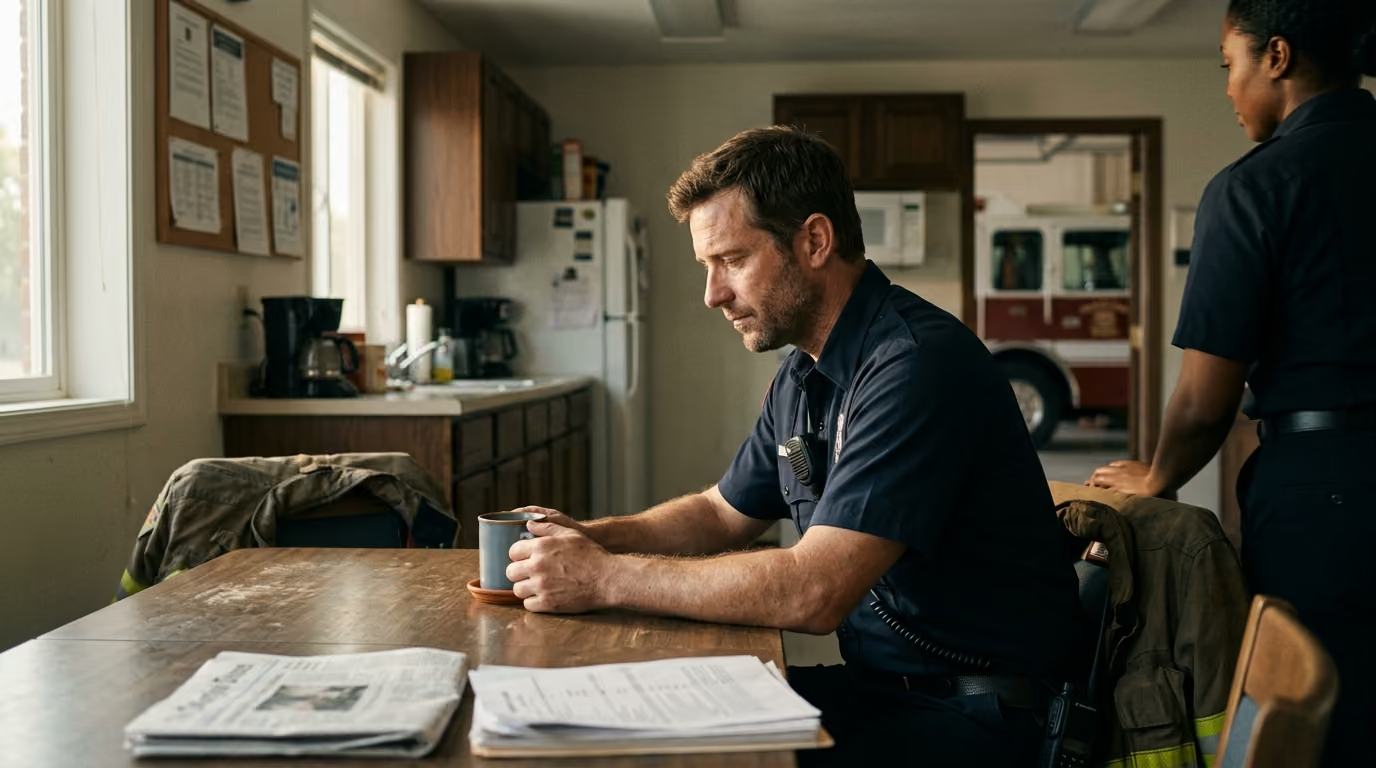
First responders frequently search for training routines that build real duty capability without causing chronic joint pain or deep physical exhaustion. Many generic fitness routines fail because they treat emergency personnel like bodybuilders or stationary gym athletes. A complete exercise library for emergency services must build force, speed, structural durability, and aerobic stamina across unpredictable physical tasks.
A complete first responder training library focuses on foundational movement patterns rather than isolated muscle groups. It prioritizes the squat, hinge, push, pull, carry, drag, climb, and power expressions. Selecting reliable compound movements and progressing them with steady volume allows firefighters, police officers, and paramedics to meet physical calls with confidence. When equipment is scarce or joints feel irritable, straightforward exercise substitutions maintain progress without compromising occupational readiness.
Occupational Demands and Physical Capacities
First responder tasks rarely occur in controlled environments. Structural firefighters navigate dark buildings while wearing 22 to 68 kilograms of protective equipment and breathing apparatus. They hoist heavy supply lines, force entry through solid doors, raise ladders, and drag casualties across uneven flooring. Research from the National Strength and Conditioning Association notes that firefighter job performance correlates with upper-body pressing strength, rowing endurance, grip capacity, and lower-body power. Minimum aerobic benchmarks for structural firefighting frequently target 42 milliliters per kilogram per minute, which equals roughly 12 metabolic equivalents.
Law enforcement personnel face a wide spectrum of physical requirements across a single shift. A patrol officer might sit in a vehicle for hours before sprinting to intercept a suspect, executing a physical control technique, or vaulting an obstacle. Specialist tactical teams carry heavy body armor and specialized breaching tools, demanding higher levels of absolute strength and load carriage tolerance. Police physical readiness assessments emphasize aerobic power, trunk stability, grip strength, and anaerobic repeatability under sudden stress.
Paramedics and emergency medical technicians perform high-volume manual material handling under tight physical constraints. Research examining work-related musculoskeletal disorders in emergency medical services shows annual low-back pain prevalence rates between 30 and 66 percent. Field providers frequently manipulate stretchers weighing over 70 kilograms with a patient inside, often lifting or adjusting equipment nearly 40 times per shift. They carry medical kits up narrow stairwells, kneel on concrete to perform prolonged chest compressions, and transfer patients from awkward positions. While powered stretchers and mechanical loading systems reduce musculoskeletal injury rates, physical capacity remains a vital line of defense.
These varied operational duties require a balanced base of physical capacities:
- Absolute strength to lift heavy equipment, breach barriers, and control resisting individuals.
- Relative strength to climb, vault, pull body weight upward, and navigate confined spaces.
- Power and rate of force development to accelerate rapidly and execute dynamic physical tasks.
- Strength endurance to maintain muscular output across extended incidents.
- Aerobic and anaerobic work capacity to sustain hard physical work and recover between high-output bursts.
- Grip and trunk integrity to transfer force safely between the hands, spine, and lower extremities.
Developing these capacities requires exercises chosen for transferability, safety, and scalable loading. Explore our strength and duty performance resources for deeper operational frameworks.
Lower-Body Strength: Squat, Step, and Hinge Variations
Lower-body strength provides the foundation for stair climbs, heavy carries, equipment lifts, and tactical movements. Training the lower body requires both bilateral movements for absolute force production and unilateral movements for balance and pelvic stability under load.
Squat and Step Patterns
The squat pattern builds knee extension strength, hip drive, and trunk rigidity. It directly transfers to rising from low stances, lifting heavy gear from the ground, and navigating vertical structures.
- Front Squat: Placing the barbell across the anterior deltoids demands an upright torso and heavy thoracic extension. This position reduces sheer stress on the lumbar spine while building quad strength and upper-back posture that transfers directly to carrying gear against the chest.
- Safety-Bar Squat: The safety squat bar shifts the center of mass slightly forward while removing external rotation demands from the shoulders and wrists. It is an exceptional tool for first responders managing shoulder stiffness or elbow strain from tactical gear and manual handling.
- Goblet Squat: Holding a kettlebell or dumbbell close to the sternum provides immediate tactile feedback for trunk bracing. It serves as an ideal teaching tool for novice lifters and an effective movement preparation drill for experienced personnel.
- Rear-Foot-Elevated Split Squat: Elevating the rear foot places the majority of the load onto the lead leg. This unilateral exercise targets the quadriceps, adductors, and gluteal complex while challenging lateral pelvic control without excessive spinal loading.
- Loaded Step-Up: Stepping onto a sturdy 30 to 45 centimeter box while holding dumbbells or wearing a weighted vest replicates the biomechanics of stair navigation under load. Drive through the heel of the elevated foot and avoid pushing off aggressively with the trailing leg.
Hinge and Posterior-Chain Patterns
The hinge pattern targets the hamstrings, gluteus maximus, and spinal erectors. It reinforces safe mechanics for lifting patients, raising ladders, moving charged hose lines, and pulling equipment from low positions.
- Trap-Bar Deadlift: The neutral grip and central load alignment reduce lumbar moment arms compared to conventional straight-bar deadlifts. The trap-bar deadlift allows high force production with a lower learning curve, making it a reliable staple for duty readiness.
- Conventional Barbell Deadlift: Pulling from the floor with a barbell develops whole-body tension, grip strength, and posterior chain power. Maintain a rigid neutral spine and drive the floor away with the legs before locking the hips through.
- Romanian Deadlift: Lowering the bar to mid-shin height with a soft knee bend and active hip hinge builds eccentric hamstring strength. This exercise protects against hamstring strains during sudden sprints and reinforces hip dominance during manual lifting.
- Sandbag Ground-to-Shoulder: Lifting an unstable sandbag from the floor to the shoulder requires whole-body coordination, grip security, and aggressive hip extension. It represents an awkward, non-uniform load that mirrors field conditions.
- Single-Leg Romanian Deadlift: Performing the hinge on a single leg builds unilateral hamstring resilience, ankle stability, and hip rotator control. Use a light dumbbell in the opposite hand to challenge rotational stability.
Upper-Body Strength: Horizontal and Vertical Pressing and Pulling
Upper-body strength enables first responders to control individuals, push heavy stretchers, force structural entry, and handle heavy tools. Balanced programming demands equal attention to anterior pushing and posterior pulling to maintain shoulder joint health.
Horizontal and Incline Pressing Patterns
Pressing movements develop the anterior deltoids, pectoralis major, triceps, and serratus anterior. These muscles assist in pushing heavy objects, performing chest compressions, and executing physical control holds.
- Flat Barbell Bench Press: A standard movement for building absolute upper-body pressing force. Keep the shoulder blades retracted and depressed against the bench to protect the glenohumeral joint under heavy loading.
- Neutral-Grip Dumbbell Floor Press: Pressing dumbbells from the floor limits shoulder extension at the bottom of the movement. The neutral grip reduces subacromial impingement risks, making this an ideal option for personnel with previous shoulder irritation.
- Standard and Deficit Push-Ups: The push-up allows natural scapular protraction and upward rotation, promoting healthy shoulder blade mechanics. Elevating the feet on a bench or wearing a weighted vest increases intensity without changing the natural movement path.
- Standing Landmine Press: Pressing an angled barbell from a standing or split stance bridges the gap between horizontal and vertical pushing. It challenges core anti-rotation, promotes upward scapular rotation, and spares the shoulder joint from extreme overhead positions.
- Half-Kneeling Single-Arm Dumbbell Press: Pressing one weight overhead while kneeling on one knee forces the hips, glutes, and core to resist extension and rotation. It builds pressing strength while teaching the torso to stay locked under asymmetrical loading.
Vertical and Horizontal Pulling Patterns
Pulling movements target the latissimus dorsi, rhomboids, trapezius, rear deltoids, and elbow flexors. Strong pulling musculature protects the shoulders from postural slump, improves hose handling, and secures grip during patient transfers.
- Strict Pull-Ups and Chin-Ups: Pulling body weight to a fixed bar builds relative strength and latissimus power. Chin-ups place more emphasis on the biceps, while an overhand pull-up challenges the lower trapezius and forearm flexors.
- Inverted Bodyweight Row: Setting a bar in a rack at waist height allows trainees to pull their chest to the bar with heels on the floor. Adjusting foot placement changes the resistance instantly, making it accessible across all conditioning levels.
- Chest-Supported Dumbbell Row: Lying prone on an incline bench isolates the mid-back and latissimus while eliminating spinal compression. This variation lets responders train upper-back volume without adding fatigue to the lower back after demanding shifts.
- Single-Arm Cable or Band Row: Pulling a resistance line while standing in an athletic stance develops rotational core resistance. The pulling action works simultaneously with the hip stabilizers to reinforce multi-planar control.
- Hand-Over-Hand Rope Pull: Pulling a weighted sled toward the body using a thick rope builds forearm endurance, grip power, and continuous upper-body pulling stamina. It directly simulates dragging hose lines or hauling equipment upward.
Loaded Carries, Sled Work, and Horizontal Force Transfer
Loaded carries and sled drills represent the ultimate bridge between general gym strength and operational execution. They challenge work capacity, grip stamina, breathing mechanics under load, and spinal stiffness.
Loaded Carry Variations
Carries force the trunk to resist bending and twisting while the lower extremities are in motion. They teach the lifter to breathe rhythmically behind a braced abdominal wall.
- Farmer Carry: Carrying heavy dumbbells, kettlebells, or specialized handles at the sides develops exceptional grip strength, trapezius density, and lateral hip stability. Responders should walk with tall posture, level shoulders, and short, controlled steps.
- Suitcase Carry: Holding a single weight on one side of the body creates high lateral shear forces. The opposite quadratus lumborum, obliques, and gluteus medius must contract intensely to keep the torso vertical.
- Front-Rack Carry: Holding two kettlebells or a barbell in the front-rack position places high metabolic demands on the thoracic erectors and rectus abdominis. This carry builds positional endurance for carrying victims or front-loaded equipment.
- Bear-Hug Sandbag Carry: Wrapping both arms around a heavy sandbag against the chest compresses the rib cage and forces diaphragm control under heavy load. It directly simulates moving an unresponsive individual or carrying awkward tools.
- Overhead Waiter Carry: Walking with a dumbbell or kettlebell locked out overhead builds dynamic scapular stability and rotator cuff control. Keep the rib cage pulled down and avoid arching the lower back to support the load.
Sled Pushes, Drags, and Horizontal Force
Sled training allows maximal concentric force output with minimal eccentric muscle damage. This makes sled work exceptionally valuable for building conditioning without generating extreme muscle soreness that could impair on-duty performance.
- Forward Sled Push: Driving a heavy sled forward with hands high or low on the uprights builds quadriceps power, calf strength, and horizontal force projection. It trains the lower body to generate high power angles without spinal compression.
- Backward Sled Drag: Walking backward against a sled strap places continuous tension on the vastus medialis and patellar tendon. It builds knee durability, strengthens the quads, and conditions the lower legs with zero axial spine load.
- Harness Drag: Attaching a sled harness to the waist allows forward walking or sprinting while keeping the hands free. It trains hip extension and trunk forward lean against constant resistance.
- Low-Position Dummy Drag: Grasping a heavy training dummy or sled strap under the armpits and walking backward replicates casualty evacuation. Keep the chest broad, hips back, and take steady, deliberate backward steps.
- Lateral Sled Drag: Walking sideways while pulling a sled through a waist belt trains the adductors, abductors, and lateral knee stabilizers. It reinforces hip control for navigating tight hallways and uneven outdoor terrain.
Review our guide on programming training around shift rotations to integrate these carries without overtaxing your recovery window.
Power Development, Rate of Force Production, and Vertical Movement
Power represents the ability to express strength quickly. First responders must jump over obstacles, sprint short distances, force doors open, and react to sudden shifts in weight during patient handling.
Ballistic and Explosive Exercises
Power training improves neuromuscular coordination and motor unit recruitment. Guidelines from the American College of Sports Medicine recommend using light to moderate loads moved at high velocity to target rate of force development.
- Medicine-Ball Scoop Toss: Standing sideways to a concrete wall and rotating hips to toss a heavy ball builds rotational power. This hip-dominant rotational movement transfers directly to striking tools and dynamic patient maneuvering.
- Medicine-Ball Chest Pass: Exploding outward from the chest with a heavy non-bouncing medicine ball builds upper-body pushing power and chest drive. It teaches the upper extremities to express force rapidly from a static hold.
- Overhead Medicine-Ball Slam: Raising a ball overhead and slamming it into the ground with full hip flexion targets anterior core power and latissimus recruitment. It conditions the upper body without placing landing stress on the knees.
- Kettlebell Swing: The hardstyle kettlebell swing trains explosive hip extension, glute power, and rapid lat engagement at lockout. It builds posterior power without the technical complexity of barbell Olympic lifting.
- Dumbbell Snatch: Pulling a single dumbbell from between the knees to overhead in one smooth motion builds unilateral hip drive and shoulder stability. It offers an accessible power-training tool with lower technical risk than a barbell snatch.
Vertical Movement and Obstacle Navigation
Climbing stairs, pulling body weight over obstacles, and ascending ladders require relative strength, grip endurance, and aerobic power.
- Weighted Vest Stair Climb: Climbing stairs or a step mill while wearing a 15 to 30 kilogram vest builds vertical work capacity and calf endurance. It directly conditions the cardiovascular system for high-rise fire response.
- Towel Pull-Up: Draping a heavy towel over a pull-up bar and gripping the fabric builds extreme open-hand grip strength and forearm endurance. This variation prepares the hands for gripping heavy fabric, turnout gear, and irregular equipment handles.
- Rope-Assisted Incline Climb: Pulling upward along an inclined ramp or climbing a hanging rope trains upper-body pulling synchronization with lower-body foot locks. It reinforces grip pacing and latissimus endurance.
- Box Jump: Jumping onto a stable plyometric box develops lower-body vertical power and landing mechanics. Step down between repetitions rather than jumping backward to minimize Achilles tendon strain.
- Short Sprint Accelerations: Performing 10 to 20 meter sprints from various starting stances builds acceleration mechanics and hamstring tolerance. Keep volume low and rest intervals long to preserve movement quality and avoid pulling muscles.
Program Sequencing, Structuring, and Shift-Aware Templates
A well-structured training session ensures that high-skill, power-demanding movements occur before fatigue sets in. Heavy compound strength work follows power, while carries and high-density conditioning finish the workout.
Standard Session Sequencing Architecture
- Preparation and Mobility (5 to 10 minutes): Joint circles, thoracic spine rotations, hip openers, and ankle mobilization to restore movement ranges.
- Movement Activation (5 minutes): Glute bridges, band pull-aparts, and core bracing drills to awaken stabilizing muscle groups.
- Speed, Power, and Agility (10 minutes): Medicine ball throws, jumps, or light explosive swings performed with full recovery between sets.
- Primary Compound Strength (15 to 20 minutes): Main squat, hinge, push, or pull variation performed for moderate sets and low to moderate reps.
- Secondary Accessory Work (15 minutes): Unilateral strength, inverted rows, or structural stability movements to address weak links.
- Carries and Work Capacity (10 to 15 minutes): Loaded walks, sled pushes, drags, or interval conditioning tailored to occupational goals.
- Cooldown and Downregulation (5 minutes): Diaphragmatic breathing and passive mobility to shift the nervous system into recovery.
Structural Firefighter Duty Template
This sample session focuses on heavy hip drive, upper-back endurance, and stair-climbing capacity under load:
- Medicine-Ball Scoop Toss: 3 sets of 4 repetitions per side (rest 60 seconds).
- Trap-Bar Deadlift: 4 sets of 4 to 6 repetitions (rest 2 minutes).
- Standing Landmine Press: 3 sets of 8 repetitions per arm (rest 90 seconds).
- Chest-Supported Dumbbell Row: 3 sets of 10 repetitions (rest 75 seconds).
- Bear-Hug Sandbag Carry: 4 rounds of 30 meters (rest 90 seconds).
- Step-Mill Intervals: 6 rounds of 45 seconds hard climb, 75 seconds easy recovery.
Law Enforcement Patrol Template
This session balances horizontal acceleration, pressing strength, rotational control, and multi-directional stability:
- Broad Jump: 4 sets of 3 repetitions (focus on soft landings, rest 60 seconds).
- Front-Foot-Elevated Split Squat: 3 sets of 6 repetitions per leg (rest 90 seconds).
- Neutral-Grip Dumbbell Floor Press: 4 sets of 8 repetitions (rest 90 seconds).
- Strict Chin-Ups: 4 sets of 5 to 8 repetitions (rest 90 seconds).
- Suitcase Carry: 3 rounds of 35 meters per side (rest 60 seconds).
- Sled Push Sprints: 6 rounds of 20 meters with full recovery between bouts.
Paramedic and EMT Manual-Handling Template
This session prioritizes posterior-chain endurance, unilateral stability, anti-rotational core strength, and low-back sparing:
- Hardstyle Kettlebell Swing: 4 sets of 8 repetitions (rest 60 seconds).
- Romanian Deadlift: 3 sets of 8 repetitions (focus on slow eccentric lowering, rest 90 seconds).
- Half-Kneeling Single-Arm Cable Row: 3 sets of 10 repetitions per arm (rest 60 seconds).
- Loaded Step-Up: 3 sets of 8 repetitions per leg (rest 75 seconds).
- Farmer Carry: 4 rounds of 40 meters at moderate weight (rest 90 seconds).
- Backward Sled Drag: 5 rounds of 30 meters continuous pacing.
For those managing high call volumes, applying minimum effective dose training principles helps maintain these baselines without compromising sleep.
Progression Frameworks Across Training Ages and Schedules
Progressing an exercise program does not require adding weight to the bar every single workout. Modulating volume, density, range of motion, and implement stability provides predictable adaptations across a long career.
Progression for Novice Responders
Novice trainees or personnel returning from extended layoffs need to build motor competence, connective tissue tolerance, and baseline strength. American College of Sports Medicine guidelines suggest starting with loads corresponding to an 8 to 12 repetition maximum.
- Focus on mastering the movement pattern with body weight or light kettlebells before introducing heavy barbells.
- Use standard bilateral exercises and stable positions, such as goblet squats, elevated trap-bar deadlifts, and chest-supported rows.
- Prioritize consistency, performing full-body sessions two to three times per week with at least 48 hours of recovery between workouts.
- Avoid training to muscular failure; leave two to three repetitions in reserve on every work set.
Intermediate Trainees and Double Progression
Intermediate responders have developed technical proficiency and can handle a wider loading spectrum ranging from 1 to 12 repetitions. A double progression system provides steady progression without requiring sudden jumps in weight:
- Select a target rep range, such as 3 sets of 6 to 8 repetitions.
- Begin with a weight that allows 3 clean sets of 6 repetitions.
- Keep the load constant each week until you can complete all 3 sets at the top end of 8 repetitions with clean technique.
- Increase the load by 2 to 5 percent and reset the rep target back to 6 repetitions.
Advanced Trainees and Duty Demands
Advanced emergency personnel require structured periodization to maintain multiple fitness qualities simultaneously. A systematic review on concurrent training in tactical and athletic populations demonstrates that combining strength and aerobic training does not interfere with force production when volume and recovery are managed sensibly.
- Use phase potentiation, cycling through 4- to 6-week blocks that emphasize either absolute strength, power development, or aerobic work capacity.
- Retain a baseline dose of strength work during conditioning blocks, and maintain short aerobic sessions during heavy strength blocks.
- Incorporate complex carries, asymmetrical loading, and job-simulated circuits while wearing duty vests or protective equipment.
- Monitor daily readiness closely; reduce training volume immediately when cumulative sleep deprivation or high call volume elevates systemic fatigue.
Check our guide on training readiness and autoregulation strategies to adjust workout intensity based on real-time shift recovery metrics.
Exercise Modifications for Joint Pain, Fatigue, and Limited Gear
First responders frequently deal with nagging shoulder impingement, lower back stiffness, and knee irritation. Modifying exercise selection preserves strength gains while removing stress from sensitive joint structures.
Modifications for Joint Irritation
Pain during a movement is a signal to modify the angle, range of motion, or load placement rather than forcing through discomfort.
- Shoulder Discomfort: Swap standard barbell bench pressing and straight-bar overhead presses for neutral-grip dumbbell floor presses, push-ups from handles, or standing landmine presses. These variations allow natural scapular movement and reduce anterior capsule stress.
- Low Back Sensitivity: Replace conventional floor deadlifts with elevated trap-bar deadlifts, block pulls, or hip thrusts. Utilize backward sled drags and chest-supported rows to train the legs and back without axial spine compression.
- Knee Irritation: If deep knee flexion triggers patellofemoral pain, switch to box squats to parallel, reverse lunges, step-ups, or heavy backward sled walking. Sled work builds quadriceps strength while sparing the knee joint from impact and deep shear stress.
- Elbow and Wrist Strain: Replace straight-bar curls and pull-ups with neutral-grip chin-ups, gymnastics rings, or suspension straps. Suspension trainers allow the wrists and elbows to rotate naturally throughout the pulling motion.
Adaptations for Limited Equipment and Station Work
When training in an austere firehouse, remote patrol post, or on the road with minimal gear, simple training implements provide substantial training stimulus.
- Duffel Bags and Sandbags: Fill a durable canvas duffel bag with wrapped sand to create an uneven, shifting implement. Use it for bear-hug squats, shoulder carries, clean-and-presses, and bent-over rows.
- Water Jugs and Hose Bundles: Improvised heavy handles, water containers, or retired fire hose bundles serve as excellent tools for high-volume farmer carries and ground-to-shoulder drills.
- Heavy Duty Resistance Bands: Thick looped elastic bands can be anchored to structural posts to perform horizontal presses, face pulls, lat pulldowns, and resisted sprint drills.
- Bodyweight and Tempo Modulation: Use 4-second eccentric lowering phases, 2-second pauses at the bottom, and explosive concentric drives during push-ups, split squats, and pull-ups to increase intensity without external weight.
For comprehensive return-to-duty strategies, explore our injury recovery and movement modification resource section.
Safety Boundaries, Work Environment Realities, and Clinical Support
Physical training prepares the body for emergency service, but it cannot override basic physiological limits or dangerous workplace hazards. Recognizing safety limits protects personnel from acute training injuries and systemic burnout.
Training Safety and Acute Fatigue Boundaries
Fatigue from extended shifts degrades motor control, increases spinal flexion under load, and slows reaction times. Forcing heavy maximal lifts or high-complexity power movements after consecutive sleepless shifts increases injury risk without providing meaningful physical adaptations.
- Never perform high-velocity Olympic lifts, maximal deadlifts, or box jumps when deeply sleep deprived or suffering from mental exhaustion.
- If your resting heart rate is elevated or subjective recovery is poor, shift the session toward light aerobic movement, joint mobility, and submaximal carries.
- Stop any exercise set immediately if technical form breaks down, spinal neutral is lost, or joint pain becomes sharp and localized.
- Maintain clear footwear and stable flooring when performing loaded carries to prevent ankle rolls and unexpected load drops.
Workplace Ergonomics and Systemic Interventions
Physical fitness improves duty readiness, but it is not a complete shield against poor ergonomic design. In paramedicine, manual-handling research demonstrates that equipment design and transport systems strongly influence musculoskeletal injury rates.
- Relying purely on core strength to compensate for broken or outdated stretcher equipment is an ineffective safety strategy.
- Departments that adopt powered stretchers, hydraulic loading systems, and proper vehicle ergonomic layouts see meaningful reductions in lost-time back injuries.
- Physical capability and modern ergonomic tools must work together to maintain a sustainable, injury-free emergency service career.
Clinical Evaluation Guidelines
Self-directed exercise modification is appropriate for mild muscle soreness or minor movement stiffness. Certain signs and symptoms demand professional evaluation by a licensed physical therapist, sports physician, or orthopedic specialist:
- Radiating pain, numbness, tingling, or weakness traveling down an arm or leg.
- Joint swelling, visible structural deformity, or sensations of mechanical locking and giving way.
- Persistent pain that worsens over several weeks despite rest, load reduction, and movement modifications.
- Dizziness, chest pressure, irregular heart palpitations, or unexplained shortness of breath during exercise.
A qualified clinician can diagnose structural pathology, prescribe targeted rehabilitation exercises, and establish safe return-to-duty milestones based on clear physiological criteria.
Practical Steps for Building Sustainable Physical Capability
Developing resilient physical capability is an ongoing process that supports duty readiness today while protecting your health for decades after retirement.
Apply these practical steps to build and sustain your operational fitness this week:
- [ ] Review your current exercise selection: Verify that your weekly routine includes at least one squat, hinge, push, pull, carry, and power movement.
- [ ] Incorporate one loaded carry variation: Add three to four sets of heavy farmer carries or bear-hug sandbag carries at the end of your next strength session.
- [ ] Implement the double progression model: Select a staple compound lift, pick a 6 to 8 rep range, and commit to mastering the weight before increasing the load.
- [ ] Swap out painful movements: If standard bench pressing or back squatting causes nagging discomfort, replace them with floor presses or safety-bar squats for the next four weeks.
- [ ] Establish a minimum-dose backup plan: Design a 20-minute bodyweight, band, and sled routine that you can execute when shift demands leave you with limited time and energy.
- [ ] Audit your ergonomic environment: Check your vehicle seating, duty belt arrangement, and equipment lifting procedures to eliminate unnecessary daily strain.
Building a durable first responder body requires consistency, smart exercise selection, and respect for recovery constraints. When you match your training choices to the real demands of the job, you build reliable strength that endures through every call and every tour of duty.
Sources
- NSCA's TSAC Report
- A New Model for Optimizing Firefighter Human Performance : Strength & Conditioning Journal
- Use of Physical Fitness Assessments in Tactical Populations : Strength & Conditioning Journal
- 3.5. Musculoskeletal Health...
- PHYSICAL FITNESS AND JOB PERFORMANCE OF FIREFIGHTERS : The Journal of Strength & Conditioning Research
- Post-Injury Training to Essential Job Demands for Firefighters
- Profiling the absolute and relative strength of a special ...
- Work-related musculoskeletal disorders and injuries ...
- assessing comprehensive fitness and injury risk in the fire ...
- Understanding the physical fitness requirements for firefighters
- Running head: On Duty Competitive Sports: Effects on Firefighter Fitness
- A 3-Minute Work Capacity Test Predicts Simulated Firefighting ...
- (PDF) TSAC Report | Issue 57 - NSCA
- Concurrent Strength and Endurance Training: A Systematic ...
- American College of Sports Medicine position stand. ...
- American College of Sports Medicine position stand ... - PubMed
- Resistance Training Muscle Power: Design Programs that Work!
- (PDF) Same or split session concurrent endurance and strength training
- Concurrent training in team sports: A systematic review - Deborah Seipp, Oliver J Quittmann, Frowin Fasold, Stefanie Klatt, 2023