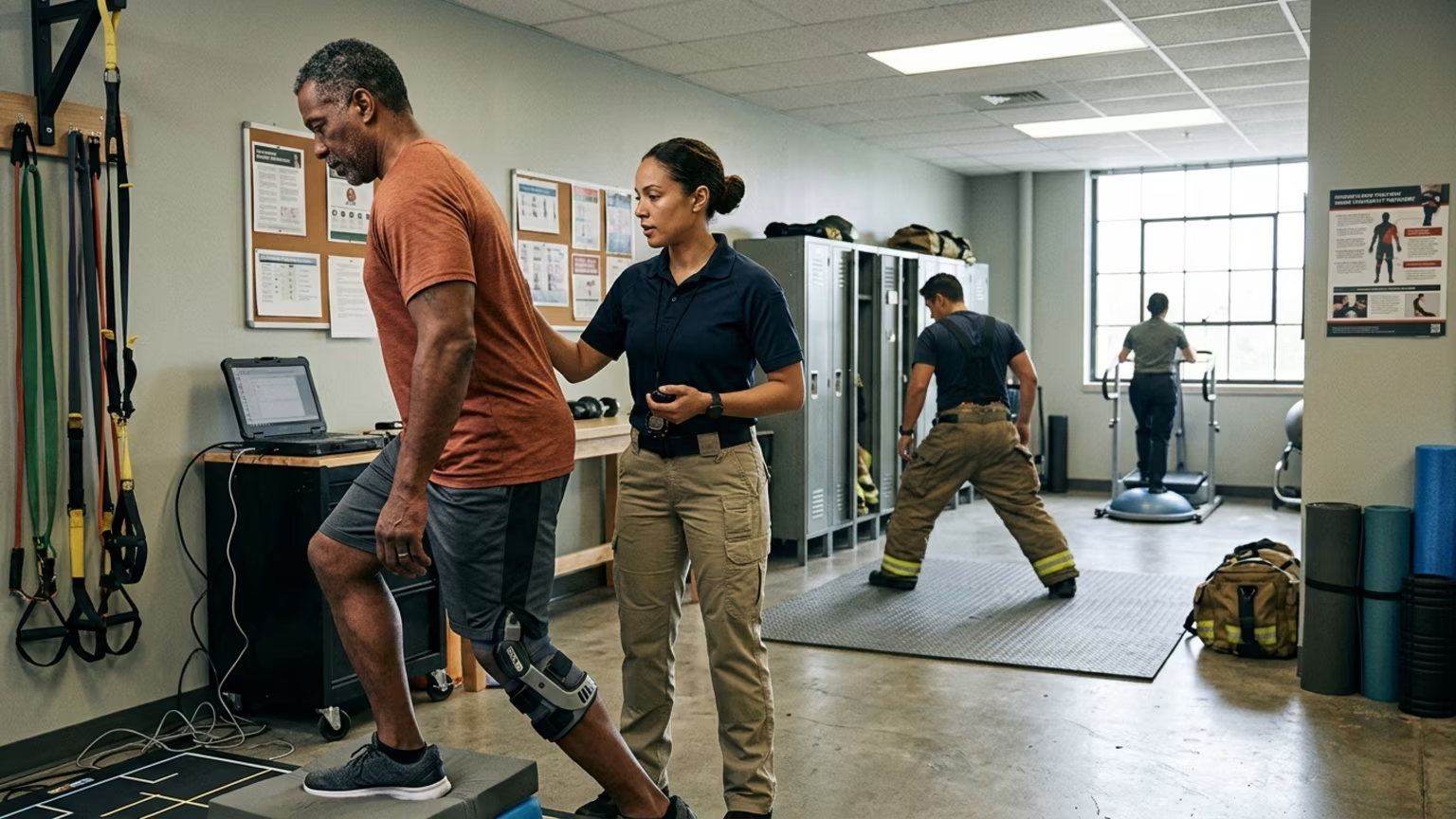

Specialized chemical testing and multi-agency coordination highlight the complex, long-term physical recovery path for injured Rome volunteer firefighters.





On September 6, 2026, two Rome Volunteer Fire Department firefighters were injured in an explosion inside a maintenance garage at the Applewood Apartments in Proctorville, Ohio.
The explosion highlights the complex nature of blast and exposure injuries for emergency personnel. By September 14, WSAZ reported that one firefighter remained in advanced care at Cabell Huntington Hospital’s Burn Unit. The second injured member was recovering at home during the same reporting period. The Rome Volunteer Fire Department described both individuals as facing a long road to recovery.
This incident required specialized intervention far beyond the initial emergency response. The hospital burn center needed to determine the exact chemicals released during the explosion. Different chemicals require specific testing equipment and dictate completely different treatment considerations. Identifying the involved substances became a primary operational priority for the medical professionals.
To address this unknown variable, the Ohio National Guard deployed specialized personnel late on September 12. These teams arrived early the following morning to begin their environmental analysis. Guard members wearing protective suits and other safety equipment collected samples on September 13. They utilized chemical detectors and a mobile laboratory to process the environmental data.
Ohio National Guard Lt. Col. Jeff Jones confirmed the mobile laboratory could provide answers fairly quickly. This rapid testing capability is vital for professionals managing the physical rehabilitation of the injured firefighters. Timely identification directly informs the clinical decisions made by occupational health specialists. It sets the foundation for a structured and safe medical response.
The Rome incident translates directly into how departments must handle post-incident injury protocols. Field commanders must view severe blast injuries as extended coordination events rather than closed incidents. Medical care for these types of injuries depends heavily on environmental data gathered from the scene. Without accurate chemical identification, clinicians face significant hurdles in establishing safe treatment pathways.
This event validates the necessity of multi-agency cooperation during the recovery phase. Local emergency management officials and military specialists played direct roles in facilitating medical care. Lawrence County Emergency Management Director Jeff Boster confirmed that identifying the chemicals mattered because the results would affect firefighter treatment. This operational reality demands a structured system for preserving scene data.
For emergency professionals managing physical wear, this case highlights the intersection of environmental hazards and long-term capability. Returning to demanding shift work after a severe injury requires precise medical guidance. Standard recovery timelines often fall short when complex chemical exposures are involved. Medical teams need complete situational awareness to build effective physical rehabilitation plans.
Departments must integrate this level of coordination into their standard operating procedures. Relying solely on hospital handoffs is insufficient for complex occupational injuries in the fire service. Agencies should establish clear communication channels with treating specialists and environmental testing units. This proactive approach supports the rigorous physical conditioning and injury recovery required for an eventual return to duty.
Standard operational thinking often assumes that hazards are fully neutralized once an incident scene is contained. The Applewood Apartments response directly challenges this outdated and simplified assumption. The explosion occurred in a fully enclosed maintenance garage with no windows or ventilation. Boster noted that spare construction materials and chlorine pods were present in the unventilated space.
The presence of these materials created a lingering hazard that required advanced analytical tools to evaluate. Protective suits worn by the National Guard highlight the ongoing caution required even days after the event. The assumption that visual inspection is enough to declare a scene safe is overturned by this necessity. Specialized testing remains crucial when unknown chemicals complicate the recovery environment.
Another challenged assumption is that a patient recovering at home requires less structured support than one in a hospital. While one Rome firefighter remained in a burn unit, the department noted both faced lengthy recoveries. Supervisors often mistakenly equate hospital discharge with a rapid return to full duty readiness. This event proves that home recovery from blast injuries involves significant physical and medical hurdles.
The assumption that standard hospital protocols cover all aspects of responder recovery is also challenged here. Burn units excel at acute medical intervention, but returning a firefighter to duty requires highly specific occupational conditioning. A civilian recovering from a blast faces a very different physical future than a first responder returning to active service. Bridging the gap between clinical discharge and operational readiness requires specialized knowledge of the physical demands of firefighting.
Finally, officials confirmed there was no current safety risk to residents of the apartment complex. Boster also stated that nothing illegal was taking place at the incident location. However, public communication distinguishing between resident safety and completion of the chemical analysis was necessary. Clearing the area for the public does not immediately resolve the clinical questions surrounding the responders.
Agencies must immediately adjust their post-incident procedures to include comprehensive exposure documentation. Early and accurate record-keeping is critical when unknown substances are involved in a blast incident. Responding officers should note the exact location layout, ventilation conditions, and any visible containers. Documenting the types of protective equipment used during the initial response is equally important.
This detailed information directly assists burn centers and specialized medical units in their initial assessments. When meal timing is inconsistent and sleep disruption is common, the body's natural healing processes are strained. Adding an uncharacterized chemical exposure to this baseline stress requires highly specific medical interventions. Clinicians need every available data point to manage these complex physiological recovery variables.
Departments should assign a dedicated recovery liaison for any member facing a severe line-of-duty injury. This liaison coordinates information among the injured responder, department leadership, and hospital specialists. They also manage updates from agencies conducting environmental investigations to keep all parties informed. Streamlining this communication prevents vital medical or situational data from being lost in transition.
Training coordinators must avoid making rapid assumptions about a responder's return-to-duty timeline. The initial appearance of an injury often masks the true extent of the required rehabilitation process. Firefighters dealing with burns or blast impacts face a prolonged journey of restoring strength and mobility. Rushing this physical conditioning compromises long-term capability and increases the risk of subsequent injuries.
Generic fitness advice fails entirely when applied to complex occupational health recoveries. Firefighters need practical guidance that respects the physical load of their specific daily duties. Rehabilitation programs must account for the heavy gear, unpredictable movements, and extreme conditions characteristic of emergency response. Professionals must follow evidence-led conditioning strategies rather than relying on pure motivation to push through pain.
Rebuilding joint stability and cardiovascular endurance must follow a progressive, evidence-led schedule. Training staff should coordinate with medical providers to design routines that safely simulate the physical load of active duty. Reintroducing the weight of protective equipment must be done gradually to avoid stressing newly healed tissues. This deliberate scaling of physical demands protects the responder from the setbacks associated with overtraining.
Balancing strength, endurance, and body composition across a career is challenging without the burden of severe trauma. Injured personnel must have access to physical specialists who understand the demands of irregular shifts. Recovery strategies should prioritize sustainable physical healing over rapid, short-term performance gains. This measured approach ultimately protects the responder's career longevity and overall quality of life.
Severe injuries dramatically alter a first responder's daily routine and metabolic requirements. The energy required to heal from burns or blast trauma requires precise nutritional management. Managing nutrition and hydration becomes a critical operational task when standard meal timing is disrupted. Hospital stays and subsequent home recovery plans must include targeted nutrition and body composition strategies to preserve lean muscle.
Proper hydration strategies also play a pivotal role in the recovery of soft tissue and burn injuries. The body requires significantly more fluids to support cellular repair and flush out metabolic waste during rehabilitation. First responders often struggle with chronic dehydration due to the extreme heat and physical exertion of their standard shifts. Correcting this baseline deficit while managing an acute injury requires deliberate, tracked nutritional planning.
Sleep disruption is another major hurdle during the long road to physical recovery. Injured personnel face interrupted rest due to pain management schedules, clinical observations, or physical discomfort. This disruption compounds the chronic fatigue many emergency professionals already carry from years of shift work. Clinicians must address these sleep challenges directly to optimize the body's natural physical recovery mechanisms.
Conflicting advice that prioritizes short-term benchmarks can be dangerous during this delicate healing phase. Injured firefighters should focus on long-term health outcomes rather than rushing to meet arbitrary fitness goals. Evidence-led recovery strategies prioritize patience, adequate rest, and consistent nutritional support. This approach guarantees that when responders eventually return to duty, they retain their full physical capability.
The multi-agency response in Proctorville offers a practical blueprint for handling complex chemical exposures. Boster confirmed that the focus remained firmly on helping the injured firefighters recover from the blast. Departments can replicate this focus by maintaining strong relationships with local emergency management and specialized units. Pre-planning these connections reduces operational friction when specialized field testing becomes medically necessary.
Occupational health personnel should be integrated into the injury response strategy from the very beginning. They provide the necessary translation between complex environmental data and practical physical rehabilitation steps. This integration helps injured members navigate support systems more effectively during a highly stressful time. Clear administrative support reduces the mental burden on responders while they focus on physical healing.
Agencies must also recognize that managing occupational stress is a crucial component of severe injury recovery. The psychological impact of a blast incident can severely disrupt normal recovery patterns and physical rest. Addressing these factors requires clear, research-based strategies rather than generic wellness advice. Supporting the whole responder builds a more complete and resilient return to active duty, as highlighted in current first responder performance research.
As the injured firefighters continue their long rehabilitation, the investigation into the blast remains active. Boster stated that officials are working to establish exactly how the explosion occurred. Understanding the mechanics of the event in the enclosed, unventilated garage is essential for preventing future occurrences. The final results of the Ohio National Guard's chemical analysis will heavily inform these safety conclusions.
Future developments in this case will provide further operational lessons for emergency response protocols. Tracking the long-term physical outcomes of the two firefighters will stress the importance of structured medical support. Departments should monitor how specific chemical identifications ultimately influence burn care and occupational health strategies. These ongoing findings will continue to shape practical, evidence-led safety practices for all emergency-service professionals.
Agency health officers constantly navigate the complexities of rehabilitating injured personnel, but managing that process becomes a clear, evidence-led system when Rescuris runs the strategy. We replace the generic fitness advice that assumes a predictable nine-to-five schedule with practical, research-backed conditioning plans that help firefighters regain full duty capability without sacrificing long-term health.
Rescuris publishes evidence-aware guidance for firefighters, police officers, paramedics and other first responders on fitness, recovery, sleep, nutrition, stress resilience and long-term capability.






Read practical guidance on first responder fitness, recovery, sleep, nutrition and resilience for demanding work and a long, active career.
read the blog
