
A 2026 UK Biobank study links nighttime light exposure to altered heart structure and a higher risk of heart failure, offering insights for first responder sleep.





On September 9, 2026, a Tulane University research team published findings in the European Heart Journal demonstrating that high nighttime light exposure is associated with adverse cardiac remodeling and later cardiovascular outcomes.
The study examined nighttime light exposure, cardiac structure, cardiac function, and later cardiovascular outcomes over a multi-year period. For the initial cardiac imaging analysis, researchers studied 11,071 UK Biobank participants. These individuals wore wrist accelerometers with integrated light sensors for seven continuous days between 2013 and 2015. This specific measurement window provided a baseline for their ambient light exposure during typical sleep periods. The participants then underwent cardiovascular magnetic resonance imaging approximately three years later to assess structural heart changes.
A separate, much larger analysis tracked 73,286 participants to assess incident cardiovascular disease and mortality. This secondary outcome analysis monitored the cohort over an extensive eight to ten year follow up period. The researchers defined high nighttime exposure as more than three lux during the participants five least active nighttime hours. This threshold was used to differentiate between highly illuminated sleeping environments and darker conditions. Compared with participants who had no exposure above that three lux level, the high exposure group showed multiple distinct structural differences upon imaging.
The high exposure group had a 2.4 percent greater height indexed left ventricular mass and a 1.5 percent greater average heart wall thickness. They also demonstrated a 1.9 percent lower myocardial contraction fraction, which indicates differences in how the heart muscle functions. The study found lower measures of left ventricular circumferential, radial, and longitudinal strain in the high exposure group. The analysis reported changes in other chambers as well, including larger indexed right ventricular volumes and a larger indexed left atrial maximum volume.
The Seoul Economic Daily report summarized these complex imaging findings as thicker heart walls and weaker pumping function among people exposed to more light at night. During the follow up period, people in the high exposure group had a 29 percent higher risk of heart failure than those in the no exposure group. This same comparison was associated with a 15 percent higher risk of atrial fibrillation and a 24 percent higher risk of myocardial infarction. Researchers also noted a 33 percent higher risk of stroke and a 26 percent higher risk of cardiovascular disease mortality.
The study reported linear dose response relationships, meaning that the measured cardiac associations increased steadily as nighttime light exposure increased. Shorter sleep duration statistically mediated approximately 24 to 49 percent of most of the observed cardiac associations. The Seoul Economic Daily article described a plausible biological mechanism involving circadian disruption, changes in melatonin production, shorter sleep, and impaired deep sleep. However, the report emphasized that the study did not prove nighttime light directly causes heart disease. Because the research utilized an observational cohort, it identifies an association rather than proving direct causation.
These cardiovascular findings are particularly relevant to emergency service professionals who frequently sleep outside conventional nighttime hours. The American College of Cardiology and American Heart Association have identified firefighters, law enforcement officers, and EMS professionals as tactical athletes. A 2026 ACC and AHA scientific statement created a specialized cardiovascular evaluation and management framework for this population. This framework covers more than four million military personnel, firefighters, and law enforcement officers. It also includes EMS professionals, pilots, and astronauts. The statement described specific occupational factors as cardiovascular strain amplifiers that may increase cardiovascular burden during routine or emergency operations.
These acknowledged cardiovascular strain amplifiers include sleep deprivation and psychological stress. The framework also identifies chronic high alert status, heavy equipment, and austere operating environments as strain amplifiers. Treating physical recovery conditions as a necessary part of occupational cardiovascular risk management aligns directly with this medical framework. First responders already carry a significant cardiovascular burden, making effective rest strategies highly important for long term occupational health. The broader shift work literature generally associates long term night and rotating work with circadian disruption, cardiometabolic disease, and some adverse safety outcomes. However, the strength and causality of individual associations vary significantly across different studies and populations.
A recent meta analysis summarized in the available search results examined the specific mortality risks associated with occupational scheduling. The analysis found that night work, rather than general shift work, was associated with small increases in mortality risk. This data included a pooled cardiovascular mortality relative risk of 1.18. This specific finding did not reach conventional statistical significance because its confidence interval included one. Despite this, the cumulative impact of working through the night remains a vital consideration for emergency personnel.
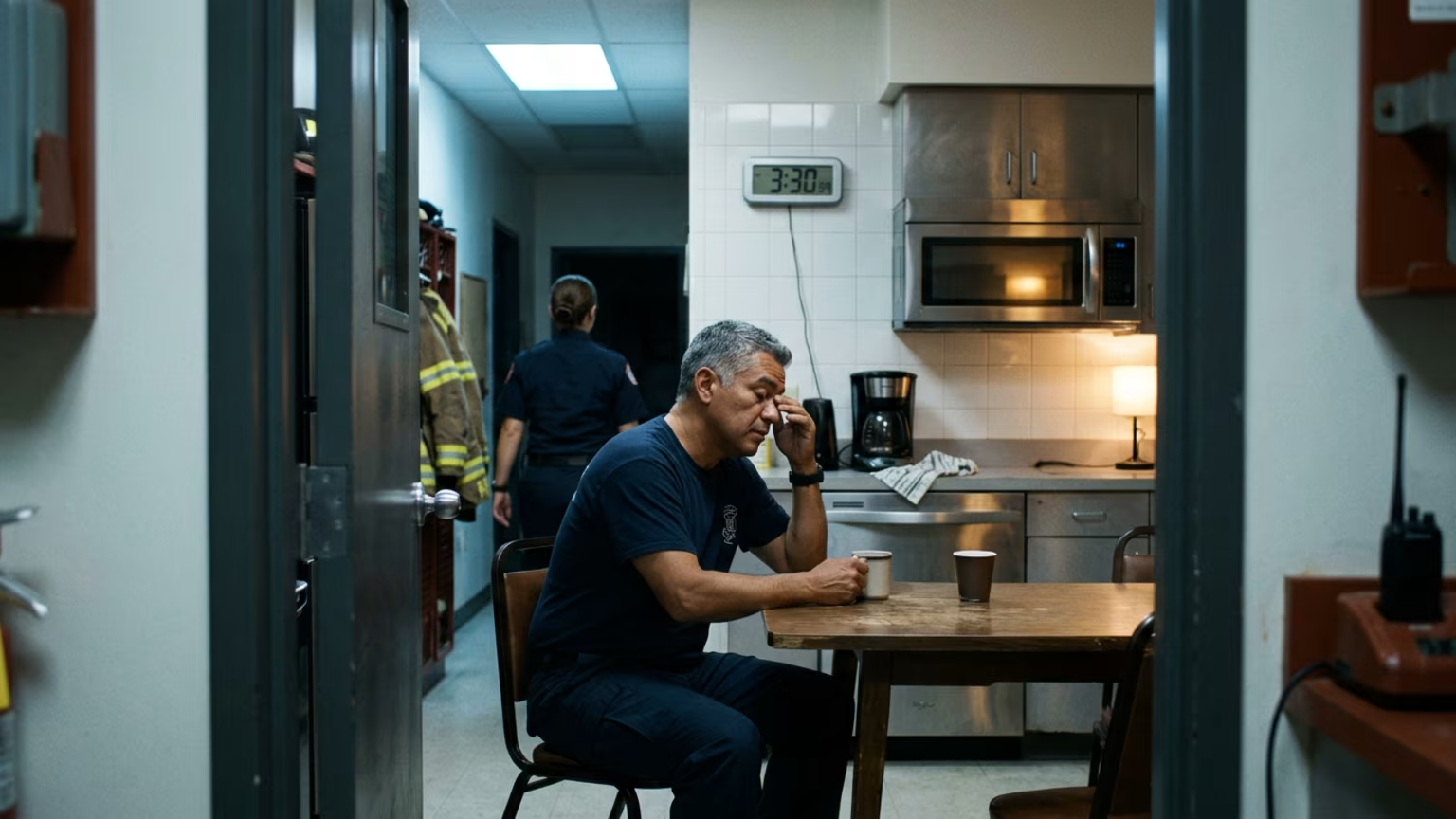
For first responders, the practical context is that sleep may occur during daylight hours, between demanding calls, or in shared fire stations. These specific bedrooms are frequently affected by streetlight glare and electronic device illumination from necessary equipment. By connecting environmental light exposure to structural heart changes, the Tulane University findings validate department efforts to improve shift work and sleep conditions. Managing cumulative cardiovascular load is a fundamental part of maintaining career long duty fitness. Optimizing the physical sleep environment represents a tangible, accessible step toward better physiological recovery.
First responders can treat room darkness as a low cost recovery experiment rather than a guaranteed medical treatment. If operationally safe, individuals should attempt to reduce unnecessary light during their main sleep period. The available news coverage specifically identifies bedside lamps and streetlight entering through a window as common sources of nighttime exposure. These practical mitigation measures are consistent with the everyday suggestions reported by Seoul Economic Daily. Implementing these small adjustments requires minimal investment but may yield measurable improvements in rest quality.
Personnel can improve their personal sleeping quarters at home by installing blackout curtains to completely block external streetlights. Covering nonessential indicator lights on electronics and positioning the bed away from direct window glare can also significantly reduce exposure. Reducing room light should always support protecting adequate sleep time rather than replacing it. Because shorter sleep statistically mediated 24 to 49 percent of most cardiac associations in the study, prioritizing the total sleep opportunity remains critical. A dark room is highly beneficial, but sufficient sleep duration is still a mandatory component of recovery.
In shared facilities like firehouses or EMS bases, crews must utilize a safe lighting compromise that respects both rest and readiness. Fire stations and emergency quarters require lighting sufficient for safe access, rapid muster readiness, and immediate response to calls. Departments can limit direct glare and unnecessary illumination around sleeping areas without compromising operational safety protocols. The study results should not be interpreted as a reason to make a sleeping environment completely dark at the expense of safe movement or fall prevention. Practical safety must always remain the priority in active emergency environments.
A darker sleep environment addresses only one specific part of the broader occupational cardiovascular load. The ACC and AHA statement clearly identifies sleep deprivation and psychological stress as cardiovascular strain amplifiers. The document also lists chronic high alert status, heavy equipment, and austere environments as contributing factors. Responders can systematically evaluate their own routines by comparing several weeks with reduced room light against their usual conditions. They can record personal sleep duration, nighttime awakenings, and subjective recovery to track what is feasible across irregular shifts. This personal monitoring process helps professionals build sustainable habits that fit the realities of their demanding work schedules.
The study authors concluded that greater nighttime light exposure was associated with adverse cardiac remodeling and subclinical functional decline across multiple heart chambers. They clearly stated that the findings highlight dark nights and adequate sleep as potentially important elements of cardiovascular health. However, the study itself did not test firefighters, police officers, paramedics, or EMTs as a distinct occupational group. Therefore, the 29 percent estimate should not be presented as the exact heart failure risk increase for first responders specifically. Emergency personnel face a unique combination of physical stressors that the general public does not experience.
The central limitation of this research is the observational design utilized by the scientific team. The study found that higher nighttime light exposure was associated with cardiac changes and later cardiovascular events, but it did not establish that light exposure directly caused those outcomes. The light exposure measurement came from a single wrist worn sensor used for a brief seven day period. This short measurement window may not perfectly represent a participant's usual bedroom environment or their lifelong exposure history. Furthermore, the cardiac imaging cohort and the much larger cardiovascular outcome cohort were not identical groups of people.
The exposure threshold of more than three lux is a research comparison metric, not a validated clinical boundary proving that every exposure below it is perfectly safe. The reported percentage changes in heart structure and function were relatively small average differences observed at the population level. The study does not establish how those minor structural differences translate into an individual responder's absolute, real world risk. Shorter sleep duration mediated part, but certainly not all, of the observed physiological associations. The medical community still has much to learn about how these variables interact over long careers.
Because sleep duration only explained a portion of the findings, the direct cause remains unclear. The relevant pathway could be light itself, sleep loss, or circadian timing. It might also involve other correlated behaviors or a complex combination of factors. The available sources sensibly recommend reducing unnecessary light and using blackout curtains where appropriate, but they do not prescribe a universal lighting configuration for fire stations. Ongoing research will be necessary to determine if manipulating these environmental variables actively reduces cardiovascular events in high stress populations. Understanding these specific physiological mechanisms will be crucial for improving long term career longevity among emergency service professionals.
Controlling station lighting to limit nighttime exposure is a practical operational decision that sets the stage for broader physiological recovery. Balancing strength, endurance, mobility and body composition across a demanding career can be difficult on irregular shifts, but Rescuris provides the evidence-led guidance professionals need to maintain long-term capability.
Rescuris publishes evidence-aware guidance for firefighters, police officers, paramedics and other first responders on fitness, recovery, sleep, nutrition, stress resilience and long-term capability.






Read practical guidance on first responder fitness, recovery, sleep, nutrition and resilience for demanding work and a long, active career.
read the blog
