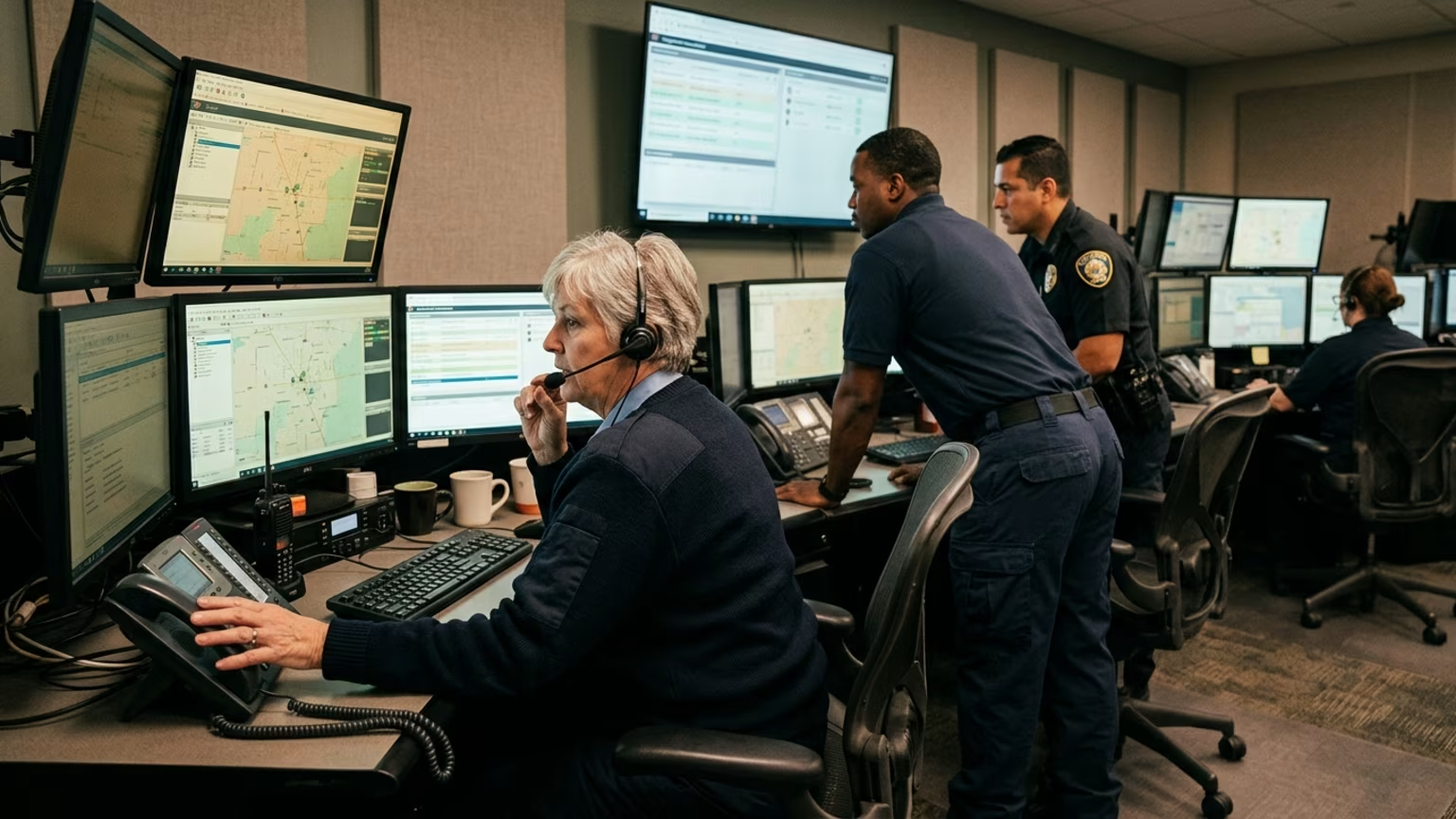

First responders can build interactive support systems, protect sleep recovery, and manage occupational stress without falling for the tough-it-out trap.





Resilience in emergency services is not a fixed personal trait or a measure of moral toughness. A 2026 editorial on mental health defines it as the product of interacting factors rather than an isolated individual characteristic. This system includes coping resources, leadership, organizational climate and evidence-based interventions. It also relies heavily on targeted training and deep social connection. It is a trainable behavior and a supported operational state rather than a demand to silently absorb unlimited occupational stress.
Many training academies historically treated stress tolerance as a solo endeavor. The current literature challenges this isolated view entirely. True capability requires acknowledging that fatigue and trauma exposure accumulate over time. When we view resilience as an interacting system, we can properly evaluate how organizational climate and available resources dictate long-term success.
How does this definition connect to shift readiness and fatigue management? Emergency response demands sustained alertness across irregular hours and unpredictable environments. When resilience is treated as a solitary obligation, responders often conceal early signs of fatigue to maintain duty readiness. This concealment severely limits access to the very systems that support career capability.
The reality of emergency work means that recovery requires active systems involving multiple people. A 2026 review concluded that family members play a central role in maintaining responders' well-being. These families also experience work-related hardships and often feel their support is undervalued. Recognizing resilience as a shared system respects the realities of demanding duty and the people who support it.
Treating recovery as a dynamic system directly affects biological longevity in the field. A study of Australian paramedic students reported that emotional and instrumental social support after fieldwork trauma were associated with reduced epigenetic-age acceleration. In contrast, burnout and secondary traumatic stress were associated with increased epigenetic-age acceleration. This research suggests that trusted connections interact directly with physical wear and tear.
The same paramedic study also found that a stronger sense of organizational membership before trauma exposure was associated with lower epigenetic-age acceleration. This highlights the importance of building supportive environments before critical incidents actually occur. A solid foundation of peer trust prepares the body and mind for the inevitable challenges of the shift. Pre-incident planning is just as vital for mental performance as it is for tactical operations.
The 2026 editorial highlights the need for organizational interventions and targeted training alongside individual coping strategies. For a first-responder audience, this means shifting the vocabulary from learning to tolerate anything to actively building recovery capacity. When agencies prioritize access to support, they directly improve the operational effectiveness of their personnel. Providing these resources transforms mental readiness from an abstract concept into a measurable standard.
Physical readiness remains a core component of this operational system. A 2026 systematic review analyzed five eligible studies of structured physical training interventions for firefighters. These interventions included high-intensity functional training, circuit training, nonlinear periodization and complex training. A balanced routine protects duty fitness while managing the fatigue accumulated from irregular schedules.
Across those five studies, the interventions were associated with improvements in simulated job-task performance. These measured tasks included victim rescue, hose advancement, ladder operations and fireground-test completion times. This physical capacity interacts closely with mental endurance on the job. Strong physical conditioning provides a necessary buffer against the physical toll of frequent sleep disruption.
The traditional approach relies on individual grit to process difficult shifts and demanding calls. This mindset ignores the biological reality of how the human body processes chronic stress over a long career. The current evidence points toward an interactive model involving several core mechanisms. These mechanisms bridge the gap between psychological health and physical capability.
Resilience is not simply the absence of symptoms after a tough shift. An emergency professional might continue to run calls effectively while experiencing significant internal disruption. Continuing to work while suppressing symptoms is entirely different from effectively processing those experiences. Identifying early deficits allows responders to seek assessment before a crisis forces them off duty completely.
Responder Assist provides a clear pathway for recognizing trauma-related difficulties in the field. They note that current and former emergency-service workers may experience flashbacks, nightmares and unwanted memories. These intrusive symptoms often interrupt the restorative sleep required for deep physical recovery. When sleep is repeatedly compromised, every other biological system begins to struggle.
Dysregulation also presents through noticeable behavioral and emotional shifts at home. Responders might notice ongoing hypervigilance, emotional numbing, active avoidance, social isolation or unusual irritability. These changes can severely strain the family members who play a central role in maintaining a responder's well-being. Left unaddressed, these shifts can permanently alter household dynamics and personal relationships.
Relying entirely on external performance metrics to measure recovery is a dangerous oversight for emergency personnel. A responder may continue to perform effectively while still needing thorough assessment or focused support. Outward performance should never be used as the sole measure of health. True capability involves recognizing internal deficits before they manifest as critical errors on the job.
Finally, a broad indicator of deficit is a general difficulty functioning normally outside of the work environment. A responder might perform flawlessly on the fireground but struggle with simple daily tasks. When these warning signs persist over time, they signal a major breakdown in the interacting factors that sustain capability. They indicate an immediate need for professional assessment rather than increased isolation.
Building capacity requires combining individual habits with external support systems. The goal is to create a reliable operating system that actively protects long-term health. Waiting for a critical incident to figure out your support network is a dangerous strategy. You must construct these pathways while you are healthy and fully capable.
The first foundational method is establishing clear clinical pathways for sleep and trauma. Responder Assist identifies cognitive behavioral therapy for insomnia and imagery-rehearsal therapy as evidence-based tools used for responder sleep disturbances. Seeking out these specific therapies offers a structured approach to persistent insomnia or nightmares. Protecting your sleep is the most effective way to maintain healthy shift-work sleep routines.
Organizations must also provide and promote formal behavioral-health infrastructure. The National Volunteer Fire Council lists behavioral-health resources for firefighters, emergency medical providers, rescue workers, dispatchers and families. These comprehensive resources include a searchable provider directory, educational courses and organizational-health resources. They also offer a 24-hour helpline for eligible members and their household family.
The Responder Assist program publishes a responder-specific pathway that begins with a simple confidential assessment. This initial evaluation is followed by an open discussion of symptoms and support options. From there, providers coordinate referral to psychology or psychiatry as appropriate. They can also connect responders with trauma-focused treatment, care planning and return-to-work support.
Family members should also be integrated into these recovery frameworks whenever possible. Because families play a central role in maintaining well-being, they must understand the warning signs of accumulated stress. Providing families with access to the National Volunteer Fire Council educational resources empowers them to offer effective support. This shared understanding reduces the friction that often occurs when a responder brings operational stress home.
Physical conditioning must also be maintained alongside psychological support for true longevity. Engaging in structured physical training supports occupational readiness and builds stress tolerance. The recent systematic review highlighted high-intensity functional training, circuit training, nonlinear periodization and complex training as effective methods. Consistent training routines help responders manage the daily physical fatigue accumulated from irregular schedules.
Integrating these tools requires consistent leadership support and proactive peer connection. Departments should focus heavily on reducing stigma and building awareness of all available services. Establishing a trusted network early ensures that support is accessible when a critical incident inevitably occurs. By establishing these systems proactively, responders can protect career longevity and a highly capable life after service.
When you evaluate your current approach to the job, are you relying solely on your own capacity to absorb stress, or have you actively built an interactive support system that sustains your career?
Planning for physical capability and an active life after retirement requires treating resilience as a supported system rather than a test of solo endurance. When isolated stress accumulation threatens long-term health, Rescuris translates complex clinical evidence into practical guidance that helps emergency professionals build reliable recovery pathways.
Rescuris publishes evidence-aware guidance for firefighters, police officers, paramedics and other first responders on fitness, recovery, sleep, nutrition, stress resilience and long-term capability.






Read practical guidance on first responder fitness, recovery, sleep, nutrition and resilience for demanding work and a long, active career.
read the blog
