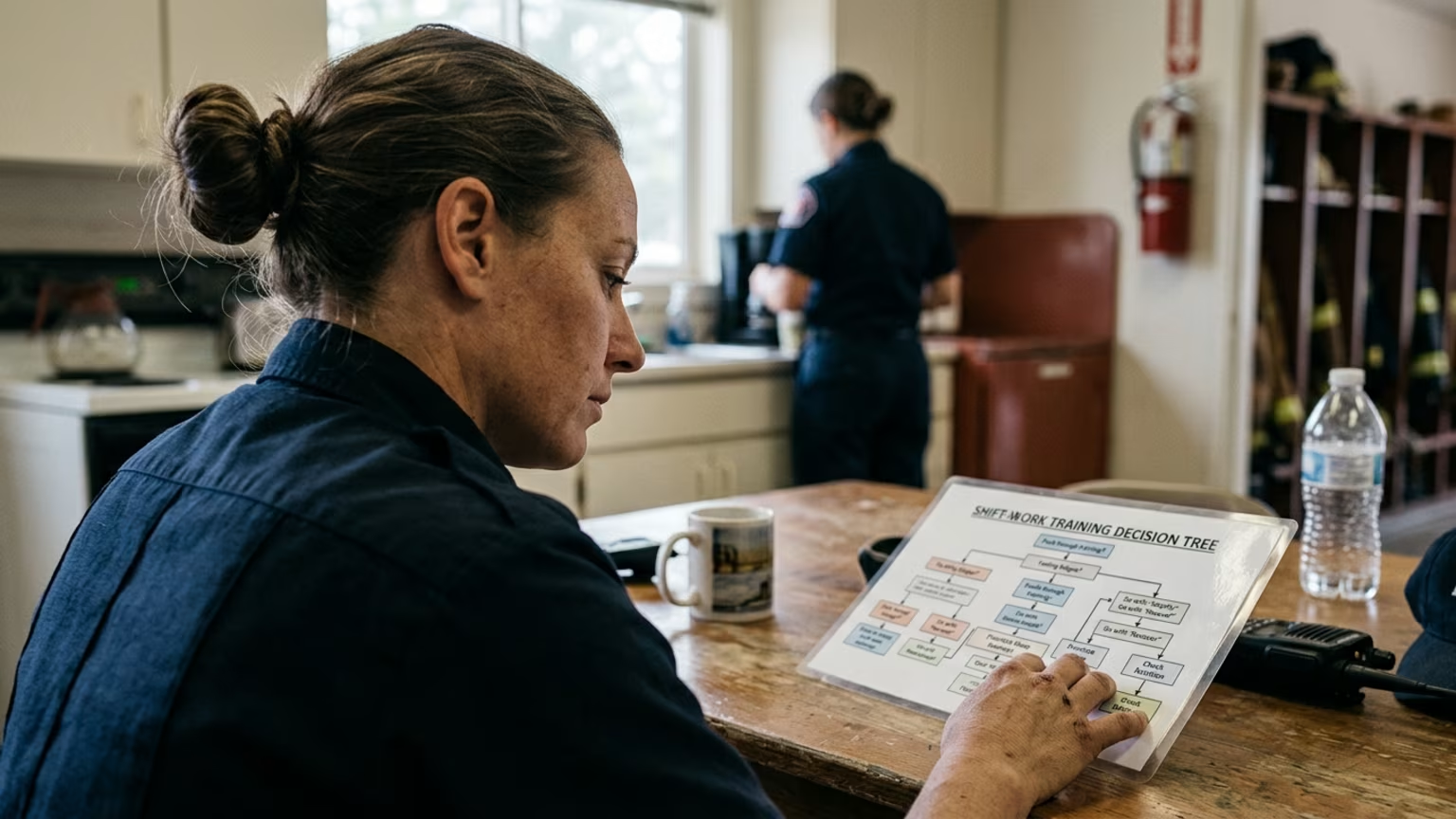

Learn how first responders can use a daily training decision tree to adjust their workouts based on sleep loss, shift demands and physical readiness data.





The structural reality of emergency service places an immense burden on physical health. A study of firefighters in Estonia and Latvia reported that nearly 55% were overweight or obese. The same researchers noted that only about one in 10 consistently felt well-rested. This chronic exhaustion represents a predictable outcome of demanding shift work rather than a simple lack of personal discipline.
Fire-service researchers are increasingly examining schedule design and physiological strain together. The researchers argued that departments should build training and protected rest into shifts rather than leaving both entirely to individual firefighters. This perspective shifts the focus from isolated fitness goals to comprehensive occupational health management. A proactive approach treats rest and conditioning as supported organizational systems.
Relying purely on sheer willpower fails when the underlying schedule severely limits sleep opportunities. Fire-service fitness monitoring is moving toward repeatable department-level testing to better capture these physical trends. However, creating a safe training environment requires recognizing the limits of human physiology. Unpredictable calls and fragmented rest create physical deficits that standard fitness programs ignore.
The connection between scheduling and obesity highlights a systemic issue within emergency services. When responders lack guaranteed rest periods, their metabolic health inevitably suffers over time. The Baltic study underscores how environmental conditions directly influence physical composition. Addressing these health metrics requires structural changes rather than just distributing new workout templates.
Sleep deprivation directly compromises the physiological systems that first responders rely on during high-stress calls. When a professional operates on fragmented rest, their nervous system struggles to regulate normal stress responses. This shift-work sleep disruption means that a standard heavy workout might become an excessive stressor instead of a productive stimulus. The structural reality of shift work demands a highly adaptable approach to daily conditioning.
The tactical implications of these autonomic deficits are severe during emergency operations. Physical output drops significantly when the nervous system cannot recruit muscle fibers efficiently. Diminished capacity compromises scene safety and critical decision making. Ultimately, a sleep-deprived responder faces a reduced ability to handle the physical demands of unexpected emergencies.
Adding extreme environmental stress further complicates autonomic recovery pathways. A systematic review found mixed acute-recovery results after post-exercise heat exposure and said the evidence was insufficient to confirm a reliable benefit. Specifically, four studies found benefits, four found no effect and one found an adverse effect. Deliberately adding heat exposure after a hot call might overwhelm the central nervous system.
The systematic review did not confirm heat exposure as a dependable recovery intervention. Recovery requires practical mitigation rather than stacking multiple environmental stressors on a fatigued body. Heat exposure is not synonymous with physiological recovery. A fixed push-through rule is difficult to defend when the body is already dealing with heavy physical strain.
The Roswell Fire Department provided a practical example of how structural changes influence physiological recovery. The Roswell report tracked a schedule transition from June 2024 through early 2026. The department moved from a 24/48 schedule to a 48/96 schedule to evaluate operational and health outcomes. This transition used an 11:00 a.m. start under the 48/96 schedule, compared with an 8:00 a.m. start under the previous 24/48 schedule.
Firehouse reported that Roswell’s schedule transition was associated with an average 41-minute increase in self-reported nightly sleep. In the Roswell report, wrist-tracker sleep rose from 6.7 to 7.0 hours overall and from 6.1 to 7.0 hours on commute nights. A later shift start reduces the amount of pre-shift sleep lost to early commuting or preparation. These specific schedule alterations directly facilitated better baseline rest for the personnel involved.
The shift from an 8:00 a.m. start to an 11:00 a.m. start demonstrates the power of marginal operational gains. By pushing the start time back, responders avoided waking up extremely early for morning commutes. This small adjustment protected the most vital sleep phase right before a long shift began. Small logistical changes can yield significant improvements in baseline physiological readiness.
These findings highlight how schedule design can materially affect sleep opportunity. The result comes from one department and should not be generalized automatically to all similar shift systems. However, it demonstrates that organizational design plays a massive role in fatigue management. Protecting the next opportunity for sleep remains a critical component of career longevity for emergency professionals.
A defensible readiness-based decision tree begins with basic safety screening rather than the planned workout. Responders must stop or defer training when there are acute symptoms, heat-illness warning signs, unusual chest symptoms, fainting or confusion. Severe shortness of breath, injury or an inability to exercise safely also require immediate training cessation. Departments should align this initial step directly with their established occupational-health policy.
After clearing basic safety protocols, professionals must account for the total load of their shift. A demanding fireground evolution, prolonged patient movement, repeated stair work or extended search operations generate significant physical training stress. This accumulated duty stress must be calculated into the daily physical cost. Multiple calls, emotionally difficult incidents and prolonged heat exposure compound this daily workload.
When a shift includes heavy physical output, professionals should reduce the next planned session rather than trying to make up missed training. Repeated calls, heat exposure and an unexpectedly high workload can combine quickly. No validated formula exists for adding those stressors together perfectly. Any decision tree should be presented as a conservative coaching framework rather than a clinically validated scoring system.
First responders can use four broad options instead of a binary choice between intense training and complete rest. Applying this framework helps emergency professionals avoid all-or-nothing thinking. It allows for continuous physical development without ignoring the biological realities of occupational stress. Each option serves a distinct purpose in the broader conditioning strategy.
A planned session remains appropriate when sleep, symptoms, perceived energy and duty load are close to normal. Responders should execute their primary strength or conditioning work as originally programmed during these windows. Capitalizing on these fully recovered states allows professionals to drive actual physical adaptation. Consistently hitting these planned sessions builds the baseline resilience required for emergency service.
A reduced session works well when responders need to retain the main movement pattern but lower the volume or intensity. This approach also involves limiting technical complexity to protect an already fatigued nervous system. By cutting total sets or lowering weights, professionals maintain movement competency without demanding massive recovery resources. This compromise keeps the habit of physical training intact during challenging shift rotations.
The third option involves easy aerobic work or mobility. This choice is highly appropriate when the responder wants to move but has poor sleep, substantial sitting or moderate fatigue. Activities like a slow cyclical ride or basic joint mobilization can improve blood flow without taxing the autonomic nervous system. This low-intensity approach actively facilitates recovery following a demanding duty cycle.
Finally, complete rest and recovery is necessary when severe fatigue, substantial heat strain or a highly demanding shift make additional loading imprudent. Recognizing when to fully rest requires professional maturity and a long-term perspective on health. Attempting to force physical exertion during states of extreme depletion only increases injury risk. True recovery days are active components of a successful physical conditioning program.
Responders must separate severe sleep disruption from normal tiredness when planning their daily movement. A short or repeatedly interrupted sleep period should lower the planned training dose. After multiple calls or severe sleep interruption, a short walk or easy cyclical aerobic work can preserve routine. This low-intensity approach avoids turning the workout into another high-stress exposure.
After occupational heat exposure, responders should prioritize cooling and rehydration before adding new physical stress. The current systematic review evidence does not justify treating additional heat exposure as a reliable recovery tool. Mitigation protocols must respect the nervous system rather than forcing additional adaptation.
Furthermore, responders should avoid placing absolute trust in rigid fitness assessments when making daily training decisions. A recent fire-service study identified the 20-metre shuttle run as a practical monitoring option while cautioning about misclassification near important thresholds. Relying purely on field tests near critical cut-points can lead to poor training choices. Wearables and field tests can help identify broad trends in duty fitness.
However, a readiness score should inform judgment rather than replace symptoms, context or professional evaluation. The available first-responder evidence does not establish a universal readiness threshold that dictates exactly when to lift, run or rest. Professionals must rely on contextual observation alongside any digital feedback. Any decision tree serves as a conservative coaching framework rather than a clinically validated scoring system.
A single poor night dictates a training modification, but chronic sleep issues require a different approach. Recurrent insomnia, nightmares, depression or unexplained fatigue warrant a comprehensive occupational-health assessment. Professionals should utilize dedicated clinical resources rather than relying on basic sleep hygiene tips. Ignoring chronic sleep deficits guarantees that any physical conditioning program will eventually stall or cause injury.
Education alone is rarely sufficient to reverse severe occupational sleep deficits. Serious sleep problems demand targeted medical support alongside intelligent training modifications. Emergency departments must prioritize actual recovery protocols rather than assuming responders can just sleep better at home. Building a sustainable career means treating persistent fatigue as a medical issue rather than a personal failure.
Treating physical readiness as a dynamic variable rather than a fixed daily expectation protects both immediate tactical capability and long-term health.
Moving from daily training modifications to a long-term conditioning plan requires building routines that survive unpredictable shift rotations. Because generic fitness advice that assumes a predictable nine-to-five schedule ignores operational realities, Rescuris provides the evidence-backed strategies needed to maintain physical capability and duty readiness over time. Explore Resources
Rescuris publishes evidence-aware guidance for firefighters, police officers, paramedics and other first responders on fitness, recovery, sleep, nutrition, stress resilience and long-term capability.






Read practical guidance on first responder fitness, recovery, sleep, nutrition and resilience for demanding work and a long, active career.
read the blog
