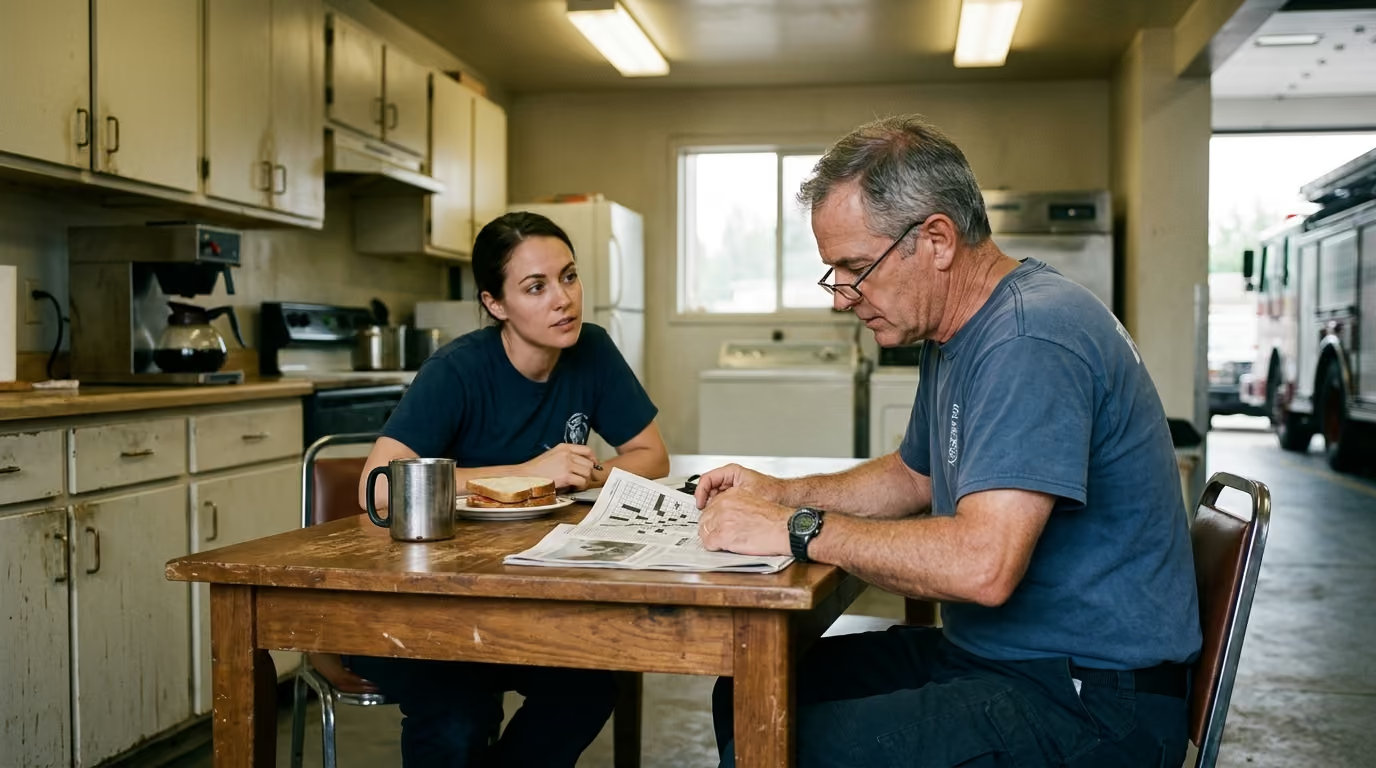

Managing high-stakes radio traffic after consecutive night shifts requires proven cognitive protocols that protect veteran first responders from operational fatigue and mental decline.





If you are in immediate danger, call 911. For 24/7 support, call or text 988 and press 1 for the Veterans Crisis Line, or text 838255.
Many veteran emergency responders search for ways to fix sudden brain fog, slow recovery after night shifts, or difficulty tracking chaotic scenes. Aging on the line changes how your body and brain handle stress, sleep loss, and heavy workloads. You do not need to accept cognitive decline as an unavoidable career ender, nor should you pretend your physiology is unchanged from your rookie year.
Preserving mental performance as you age requires shifting from raw physiological grit to deliberate performance systems. Experienced personnel naturally develop superior pattern recognition, tactical judgment, and communication skills. Protecting those strengths requires managing sleep debt, maintaining physical reserve above operational baselines, and implementing strict verification protocols on duty.
Cognitive performance relies on two distinct forms of mental ability known as fluid and crystallized capacity. Fluid abilities include raw processing speed, working memory manipulation, divided attention, and rapid problem-solving in novel situations. Crystallized abilities encompass accumulated trade knowledge, situational judgment, procedural fluency, and vocabulary. Research on cognitive aging demonstrates that raw processing speed tends to decline gradually across adulthood, which can affect how quickly someone calculates unfamiliar doses or tracks multiple radio channels simultaneously.
Research published in cognitive psychology shows that differences in processing speed account for a large portion of age-related variance in memory and reasoning tasks. When processing speed slows, holding several novel pieces of information in active working memory becomes more demanding. In emergency operations, this can show up when an officer tries to update a mental perimeter map while listening to cross-traffic on two radios. It can also appear when a paramedic calculates a weight-based drug dose while managing an uncooperative bystander.
Crystallized abilities tell a very different story. Veteran responders possess mental models built over thousands of calls, allowing them to recognize dangerous building construction, subtle patient deterioration, or shifting suspect body language long before a novice notices anything wrong. This stored knowledge reduces cognitive load because the brain does not have to analyze every single detail as an entirely new problem. You process the scene as a familiar pattern rather than a collection of separate puzzle pieces.
The primary risk of relying on experience is premature closure. This cognitive bias occurs when a responder matches a call to a familiar mental script too early and ignores conflicting details. An experienced provider might assume an older patient is experiencing simple dehydration because the dispatch sounded routine, overlooking subtle signs of sepsis. Preserving high-level mental function requires pairing deep pattern recognition with structured cross-checks, deliberate pauses, and systematic verification.
Fatigue in emergency services is not just feeling sleepy. It is a degraded physiological state that impairs situational awareness, shortens working memory, slows reaction time, and harms emotional regulation. The National Institute for Occupational Safety and Health identifies difficulty concentrating, flawed logic, emotional instability, and poor communication as distinct operational warning signs of fatigue.
The human body experiences three main types of fatigue during shift work:
Aging alters how the brain and nervous system tolerate these stressors. Evidence from the Centers for Disease Control and Prevention indicates that older shift workers experience larger performance drops during night shifts and rapid schedule rotations compared to younger peers. The biological margin required to absorb back-to-back night shifts narrows over time. Sleep architecture changes with age, resulting in less deep slow-wave sleep and more frequent awakenings from daytime environmental noise.
Field studies highlight the direct safety consequences of circadian fatigue in public safety. Research on police shifts published in policing journals revealed that officers working night shifts demonstrated significantly greater vehicle lane deviation during post-shift driving than officers working day shifts. Sleep quality data among prehospital providers shows that poor sleep quality is widespread, with over forty percent of surveyed clinicians meeting criteria for severe fatigue. When cumulative fatigue combines with age-related changes in recovery speed, the risk of driving collisions, medical errors, and tactical misjudgments rises substantially. Responders managing high workloads can explore practical strategies for managing shift work sleep to protect daytime recovery windows.
Mental performance does not occur in isolation from physical conditioning. Every task in public safety draws from a shared pool of physical and cognitive energy. When an emergency responder operates near their maximum heart rate or physical limit, cognitive capacity drops. A firefighter struggling under the weight of turnout gear and a breathing apparatus has fewer mental resources left to evaluate structural stability, track exit routes, or monitor crew safety.
Physical fitness research in law enforcement demonstrates that overall physical performance metrics generally decline with advancing chronological age, though absolute muscular strength tends to decline far more slowly than aerobic endurance or mobility. Excess body fat percentage correlates directly with decreased physical work capacity across age brackets. When an older officer carries heavy duty gear with reduced cardiovascular efficiency, routine physical tasks demand a much higher percentage of maximum capacity, leaving less cognitive reserve for de-escalation and situational appraisal.
Cardiorespiratory standards in NFPA 1582 recognize these biological realities by establishing age-adjusted and sex-adjusted fitness targets rather than relying on arbitrary, single-cutoff standards. This standard uses metabolic equivalent benchmarks to confirm that a firefighter maintains adequate physical reserve for structural fire suppression. Maintaining strong aerobic fitness ensures that routine physical work remains submaximal. This leaves vital cognitive bandwidth open for communication, spatial tracking, and rapid tactical adjustments.
Muscular strength and trunk stability play a direct role in how the body recovers between demanding operational shifts. Research on firefighter recovery demonstrates that higher baseline strength improves inter-shift recovery times. Resistance training helps preserve motor unit recruitment, joint stability, and tendon resilience. Veteran personnel who prioritize sustainable strength work protect their nervous system from the deep, lingering exhaustion that clouds mental focus on subsequent shifts. Responders seeking to balance physical capability and long-term durability can review structured programming within duty fitness concepts.
Different branches of emergency services present unique cognitive stressors that interact with the aging process in distinct ways. Understanding these specific demands helps veteran personnel apply targeted adjustments to their daily operational habits.
Fireground operations place extreme physical loads on the human body through heavy protective gear, respiratory equipment, and severe thermal stress. Core body temperature elevation combined with high heart rates degrades working memory and executive decision-making. Research examining Iranian firefighters demonstrated that occupational stress and burnout were significantly correlated with decreased cognitive performance, showing higher omission errors and slower reaction times on standardized attention tests.
Veteran firefighters must adjust how they monitor crew status and manage personal physical output:
Police officers face long periods of low-intensity patrol interrupted by sudden, high-threat encounters requiring rapid legal, tactical, and ethical decision-making. Split-second threat assessment, vehicle operations, and physical control tactics rely heavily on rapid processing speed and motor control. Studies examining police stress indicate that while physical processing speed may slow with age, veteran officers frequently show lower operational stress and greater psychological resilience than junior colleagues, drawing on extensive experience to de-escalate volatile situations peacefully.
Veteran law enforcement personnel can leverage their experience while protecting operational safety:
EMS clinicians operate under sustained decision density, frequently calculating complex medication dosages, interpreting diagnostic monitors, and performing technical airway interventions in unpredictable field settings. A national evaluation of prehospital personnel published in medical literature revealed alarming burnout rates across personal, work-related, and patient-related domains. Burnout was strongly associated with increased sick leave usage and intent to leave the profession. Furthermore, fatigued EMS personnel demonstrate significantly higher odds of reporting medical errors, on-duty injuries, and safety-compromising actions.
Veteran paramedics and emergency medical technicians can safeguard clinical accuracy through deliberate workflow habits:
A cognitive forcing function is an established procedure, physical constraint, or checklist designed to prevent common human errors. These tools remove the burden of relying entirely on working memory during high-stress, fatigue-heavy situations. Relying on memory when sleep-deprived is a recognized vulnerability. High-reliability industries like aviation, nuclear power, and surgical medicine use cognitive forcing functions specifically to eliminate reliance on raw memory.
Checklists serve as primary reliability tools in field operations. Veteran responders sometimes resist checklists, viewing them as training wheels meant only for probationary personnel. In reality, checklists protect experienced providers from the cognitive vulnerabilities caused by circadian disruption and sensory overload. Using a laminated pocket guide for pediatric resuscitations or vehicle extrication sequences preserves mental energy for broader scene management.
Closed-loop communication is another essential forcing function. In noisy, chaotic environments, misheard radio traffic or verbal orders cause critical operational failures. Closed-loop communication uses a four-step cycle:
This communication standard prevents assumptions from replacing verified facts. It becomes especially valuable when sirens, atmospheric equipment, building alarms, or multiple simultaneous speakers create high sensory noise.
Pre-incident staging and standardized equipment layouts also act as physical forcing functions. When apparatus compartments, medical bags, and duty belts follow uniform organization, motor memory executes equipment retrieval automatically. You do not waste precious cognitive capacity hunting for a specific tool in an unorganized compartment while managing a critical incident. Responders looking to build reliable field habits can review operational systems within stress resilience and mental performance resources.
Tactical reset protocols provide a mental break between high-stress calls. Taking ninety seconds to slow breathing, reset posture, and review incident outcomes clears residual adrenaline before returning to service. Responders interested in brief, practical field techniques can read about active post-incident transition strategies to reset physiological arousal before taking the next dispatch.
Training methodologies that served a twenty-two-year-old recruit can cause chronic systemic inflammation, joint degeneration, and persistent nervous system fatigue in a forty-five-year-old veteran. Physical training for experienced personnel must focus on building functional capacity above job baselines without depleting the recovery resources needed for duty.
Worksite exercise research in fire departments indicates that older responders can recover from appropriately programmed resistance training just as effectively as younger colleagues. The primary variable is matching training intensity, volume, and exercise selection to current recovery capacity. Veteran responders should prioritize multi-joint compound movements performed through a complete, pain-free range of motion. Unilateral exercises, such as split squats and single-arm pressing, build rotational stability and balance while reducing total spinal loading.
Cardiorespiratory conditioning must emphasize building a broad aerobic base through steady-state Zone 2 training. Zone 2 exercise, performed at a conversational pace where heart rate remains moderate, increases capillary density and mitochondrial efficiency. This type of aerobic training builds the engine required to recover quickly between emergency calls without overwhelming the central nervous system. Constant high-intensity interval training, while useful in moderation, should be used sparingly during weeks with high overtime or disrupted sleep.
Protecting sleep opportunity requires deliberate scheduling and clear boundaries around off-duty time. NIOSH recommends a minimum of ten consecutive hours off duty between shifts to provide a realistic window for seven to eight hours of consolidated sleep. During prolonged operational surge events or wildfire deployments, incorporating strategic fifteen-to-thirty-minute naps during daytime rest periods can temporarily restore alertness without producing deep sleep inertia.
Nutrition, hydration, and stimulant management directly affect cognitive stability across long shifts. Relying on excessive caffeine to push through circadian fatigue creates a vicious cycle of elevated cortisol, disrupted daytime sleep, and increased cardiovascular strain. Veteran responders should taper caffeine consumption at least six to eight hours before their planned sleep window. Maintaining consistent hydration and consuming balanced meals containing protein, complex carbohydrates, and essential fats stabilizes blood glucose levels, preventing mid-shift energy crashes. Personnel interested in long-term operational health can review broader perspectives on career longevity to sustain their capabilities over decades of service.
Preserving mental performance across an aging workforce is not solely an individual responsibility. Public safety agencies must build operational systems, scheduling policies, and workplace cultures that support longevity and safety. Treating fatigue and recovery purely as personal discipline issues ignores well-documented physiological limits.
Forward-thinking departments implement comprehensive Fatigue Risk Management Systems that monitor leading indicators of exhaustion:
The joint Wellness-Fitness Initiative developed by the International Association of Fire Fighters and the International Association of Fire Chiefs provides an established framework for total responder health. This initiative advocates for annual, confidential medical, physical, and behavioral health assessments tailored specifically to the occupational hazards of public safety. Regular confidential screening allows responders to identify and treat emerging cardiovascular issues, metabolic changes, or sleep disorders early.
Departments must also create viable, respected pathways for veteran personnel to contribute their specialized knowledge through tiered duty models. Experienced personnel possess invaluable operational wisdom that takes decades to develop. Forcing a binary choice between full-speed tactical duty and complete retirement causes agencies to lose critical expertise prematurely.
Veteran personnel can transition into high-impact operational roles:
These roles must be structured as respected career milestones rather than perceived demotions. Creating clear career pathways keeps institutional knowledge inside the organization while aligning operational physical demands with current functional capabilities.
Preserving mental performance requires recognizing when subtle cognitive changes or physical fatigue indicate underlying medical conditions rather than standard aging. Responders must maintain clear boundaries around personal fitness for duty, avoiding the temptation to work through severe symptoms that compromise crew safety.
Sleep disorders represent a major treatable cause of cognitive decline in emergency services. Obstructive sleep apnea is highly prevalent among first responders due to neck circumference, shift work disruption, and upper airway tissue changes. Warning signs include loud snoring, witnessed breathing pauses during sleep, waking with a dry mouth or morning headache, and severe daytime sleepiness despite spending eight hours in bed. Sleep apnea deprives the brain of oxygen and prevents restorative slow-wave sleep, directly degrading working memory and reaction time. Responders experiencing these symptoms should seek formal evaluation at an accredited sleep medicine clinic.
Prescription medications, over-the-counter sleep aids, and common health treatments can also impair cognitive performance. Blood pressure medications, antihistamines, muscle relaxers, and psychiatric medications can cause daytime drowsiness, slowed processing speed, or postural dizziness. First responders must review all medications with a qualified occupational medicine physician to verify that treatments do not compromise field alertness or operational safety.
Cumulative psychological trauma and delayed stress injuries can manifest as cognitive impairment. Chronic exposure to critical incidents, severe injury scenes, and organizational conflict can lead to post-traumatic stress, clinical depression, or severe burnout. Cognitive symptoms of psychological stress include chronic memory lapses, extreme irritability, emotional numbness, and difficulty making routine decisions. Responders experiencing persistent cognitive changes, severe mood shifts, or intrusive thoughts should connect with licensed mental health professionals familiar with public safety culture.
If you or a coworker are experiencing an acute mental health crisis or thoughts of self-harm, immediate professional assistance is available:
If you are concerned about your safety or a colleague's safety at home, work together with a trusted family member, peer, or clinician to temporarily secure firearms and medications outside the home until the crisis resolves.
Preserving mental performance across a long public safety career requires consistent, deliberate action across your physical, cognitive, and operational routines. Apply this practical checklist to evaluate and strengthen your operational readiness this week:
Maintaining high-level mental performance throughout your emergency services career is about matching operational demands with deliberate recovery and systematic verification. Building these sustainable habits protects your professional sharpness on duty today while securing your long-term health and capability for the years beyond service.
Stay connected for research-led guidance on duty fitness, shift-work sleep, injury recovery, stress, nutrition and career longevity. Practical ideas for first responders who want to stay capable on the job, recover well and protect their health for the long run.



Read practical guidance on first responder fitness, recovery, sleep, nutrition and resilience for demanding work and a long, active career.
read the blog



