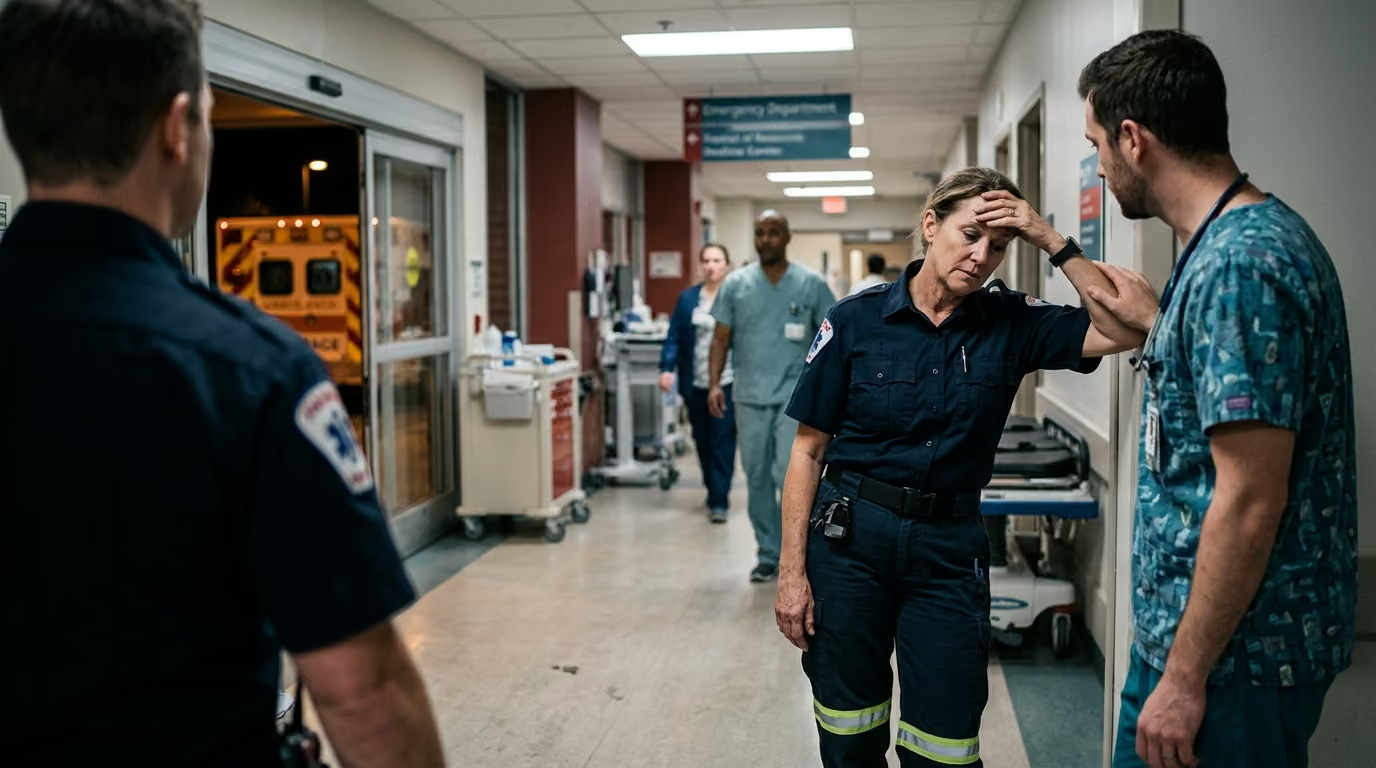

Repeated exposure to fatal emergency calls takes a heavy psychological toll on first responders managing cumulative grief, operational stress, and unacknowledged trauma.





If you or someone you know is in immediate danger, call 911. For free, confidential support available 24/7, call or text 988. Military veterans and emergency personnel can call 988 and press 1, or text 838255. If you are experiencing acute distress or suicidal thoughts, speak with a professional immediately, and work with a trusted colleague, clinician, or family member to store firearms and lethal means safely away from immediate access.
Many emergency responders search for answers when a routine shift suddenly leaves them feeling hollow, angry, or unable to sleep. You might wonder why a particular call stays with you for months while others fade immediately. This guide provides a definitive, research-based breakdown of occupational grief, delayed reactions, organizational systems, and sustainable recovery strategies for emergency-service personnel.
Occupational grief is an expected human reaction to death, dying, and catastrophic loss encountered during emergency service. It differs fundamentally from personal bereavement. In personal life, loss occurs within recognized social structures that offer funeral leave, sympathy, and community support. In emergency services, personnel experience loss while managing operational command, making clinical decisions, and preparing for the next dispatch.
Professional grief encompasses acute, cumulative, anticipatory, delayed, disenfranchised, and prolonged responses. Acute grief occurs immediately following a high-stress incident or critical fatality. Cumulative grief develops gradually over months or decades of repeated exposure to traumatic scenes. Anticipatory grief arises when personnel manage prolonged rescue efforts or palliative transports where death is inevitable.
Disenfranchised grief is common among first responders. It occurs when a loss is not openly acknowledged, socially validated, or publicly mourned. Paramedics may feel profound sadness over an unidentified patient, yet feel they lack the right to mourn because they were not family. Dispatchers process traumatic dying moments over radio channels without ever seeing the patient, leaving their emotional response invisible to field crews. Firefighters and police officers often suppress grief because agency culture mistakenly equates visible sorrow with operational unfitness.
Coping with these events requires understanding the dual-process model of bereavement. This model describes healthy adaptation as an oscillation between loss-oriented processing and restoration-oriented coping. Loss-oriented processing involves acknowledging sadness, remembering the deceased, and confronting the emotional impact of the scene. Restoration-oriented coping involves focusing on immediate operational duties, managing practical tasks, and maintaining daily life. First responders excel at restoration-oriented functioning because duty demands immediate focus. Problems arise when operational demands permanently block loss-oriented processing.
The evidence base examining professional grief reveals that exposure to death is a standard occupational reality rather than an exceptional circumstance. A comprehensive scoping review of professional grief among healthcare and emergency workers indicates that repeated exposure to dying patients correlates with sleep disturbances, emotional blunting, acute anxiety, and operational fatigue. However, research across field-based personnel remains uneven. Data collection across national first-responder populations is fragmented, which prevents researchers from calculating a single universal prevalence rate for complicated grief or trauma disorders across the entire emergency sector.
Studies focused on specific emergency cohorts provide concrete data on exposure frequency and emotional outcomes. In a study examining 145 emergency medicine physicians, 66 percent reported witnessing patient death at least once per month. Within that same physician cohort, 70 percent reported profound sadness following patient deaths, 38 percent reported disappointment, 37 percent experienced insomnia, and 14 percent reported persistent operational fatigue. Despite these frequent exposures, 24 percent of the physicians had received zero formal training on managing grief, and 64 percent reported fewer than six hours of lifetime training. Furthermore, 64 percent stated that structured post-incident debriefings occurred rarely or never in their departments.
Data from prehospital emergency medical services demonstrate a clear upward trend in scene fatalities. An analysis of United States EMS agencies revealed that the proportion of clinicians responding to calls involving on-scene deaths rose from 56 percent in 2018 to 63 percent in 2021. Median annual agency-level death-on-scene encounters increased from 14 to 23 incidents over the same timeframe. These numbers confirm that prehospital personnel routinely encounter unresuscitatable trauma, completed suicides, and out-of-hospital cardiac arrests as baseline workload components.
Early-career personnel frequently experience heightened vulnerability to acute grief reactions. Research evaluating clinicians managing pediatric fatalities found that providers aged 20 to 25 reported significantly higher initial grief intensity compared to providers aged 50 or older. While experience helps senior personnel establish operational boundaries and communication tools, cumulative exposure brings different risks. Veteran personnel may develop severe emotional blunting, chronic cynicism, or delayed stress reactions after decades of unaddressed calls.
Social support remains the strongest protective factor identified in the clinical literature. Across multiple studies, higher perceived peer support correlates with lower grief intensity and improved career longevity. In emergency medicine and prehospital care, personnel consistently report that informal conversations with crew members are more restorative than mandatory formal debriefings led by unfamiliar outsiders.
Suicide exposure within emergency services presents distinct clinical complexities. Research examining women firefighters found that 74.4 percent knew someone who died by suicide, and 31.3 percent had lost a fellow firefighter to suicide. Suicide loss frequently generates intense guilt, rumination, anger, and operational self-doubt. The study noted that high perceived impact from a coworker's suicide was strongly associated with elevated psychiatric symptoms and personal suicide risk. Addressing suicide loss requires proactive agency protocols, confidential clinical resources, and open peer communication.
First responders process grief under physiological constraints that civilian populations rarely experience. Shift work, irregular rotations, and chronic sleep disruption directly alter how the human brain processes emotional trauma. When an emergency worker operates under chronic sleep debt, the amygdala becomes hyper-reactive while the prefrontal cortex struggles to regulate emotional responses. A call that might be manageable after eight hours of consolidated sleep can feel emotionally devastating at 04:00 after three consecutive night shifts.
The tempo of emergency operations forces rapid emotional suppression. During a mass casualty incident or a challenging pediatric arrest, personnel must execute complex physical tasks, calculate drug dosages, and manage chaotic environments. Sympathetic nervous system activation suppresses emotional processing to preserve motor performance and cognitive clarity. This acute suppression is functionally adaptive on scene. However, when units are immediately cleared and dispatched to a minor transfer or routine call, the nervous system remains locked in high arousal.
Physical load, extreme thermal stress, and chemical exposure further deplete a responder's psychological reserves. Structural firefighting gear, tactical body armor, and heavy medical bags increase physical fatigue and metabolic strain. Managing extreme grief while physically exhausted accelerates emotional depletion. Responders who want to protect their mental stamina benefit from structured stress and mental performance resources designed specifically for tactical environments.
Cultural expectations within public safety agencies often complicate natural grief recovery. Personnel fear that showing sadness or asking for time off will cause peers to question their reliability under pressure. A study examining acute-care personnel found that among workers who denied feeling grief after patient deaths, 89 percent admitted they suppressed their emotions due to fear or a desire to project professional composure. In emergency services, this outward display of stoicism is frequently mistaken for resilience. In reality, persistent emotional suppression prevents psychological recovery and increases long-term burnout risk.
To mitigate these pressures, field crews need practical decompression methods that function within unpredictable dispatch tempos. Implementing active post-incident transition strategies helps clear residual physical tension before the next response. Crews can also use rapid grounding techniques while returning to quarters to down-regulate sympathetic arousal.
Different categories of loss produce distinct psychological and physiological responses in emergency personnel. Understanding these categories allows organizations and individuals to anticipate specific support needs.
Pediatric fatalities represent some of the most challenging calls in emergency services. Systematic reviews examining emergency personnel handling unexpected child deaths reveal widespread themes of intense moral distress, acute anger, and deep identification with the victim. When a child patient matches the age, appearance, or name of a responder's own child, psychological boundaries dissolve instantly.
Responders on pediatric calls often report feeling trapped in chaotic environments surrounded by distraught family members. The natural biological instinct to protect children collides with the clinical reality of severe injury or sudden infant death. Even when medical care is executed flawlessly, clinicians frequently experience severe retrospective second-guessing. Personnel ask themselves what could have been done differently, transforming grief into unwarranted guilt.
The death of a crew member strikes at the foundation of operational trust and mutual reliance. First responders operate in high-risk environments where survival depends on the competence and vigilance of their partners. Losing a colleague in the line of duty destroys the assumption of operational safety. It leaves crews to manage personal bereavement while maintaining public protection duties.
Coworker loss is often complicated by public scrutiny, media coverage, and formal investigations. Agency members must process their private grief under bright lights and administrative reviews. Coworker deaths resulting from off-duty accidents or suicide carry additional layers of shock, stigma, and unresolved anger. Personnel often experience survivor guilt, questioning why they survived while their partner died.
Losses involving severe violence, burns, industrial entrapment, or mass casualties combine bereavement with sensory trauma. The psychological burden involves not just the fact of death, but the visual, auditory, and olfactory memories of the scene. Responders may struggle with intrusive imagery long after the incident is closed.
When victims suffer prolonged entrapped deaths before rescue tools can reach them, crews experience intense helplessness. The gap between a responder's desire to save a life and the mechanical limits of extrication creates profound frustration. This acute helplessness is a primary driver of acute post-incident distress.
Not all impactful grief originates from dramatic disasters. Most emergency-service grief accumulates through hundreds of unscheduled, ordinary deaths. Responders witness fatal overdoses, terminal oncology complications, nursing home cardiac arrests, and fatal single-vehicle collisions week after week.
Because these calls are considered standard business, crews rarely discuss them. The responder returns to service, writes the report, and restocks the rig. Over five, ten, or twenty years, this steady accumulation of unacknowledged mortality creates heavy emotional wear. Without healthy processing, cumulative grief gradually transforms into cynicism, emotional withdrawal, and physical exhaustion.
Grief in emergency services rarely follows a tidy, linear progression. Personnel frequently show zero emotional distress during the shift or in the days immediately following a critical fatality. The human nervous system prioritizes operational survival, compartmentalizing emotional responses until the environment is perceived as safe.
Delayed reactions may surface weeks, months, or years after the actual incident. Common triggers include:
Distinguishing professional grief from related occupational conditions is critical for effective recovery. Professional grief centers on the reality of loss, sadness, and the search for meaning. Burnout is driven by systemic workload, lack of autonomy, administrative frustration, and chronic physical exhaustion. Secondary traumatic stress mirrors post-traumatic stress disorder, generating intrusive flashbacks, hypervigilance, and active avoidance of reminder locations. Moral injury develops when operational constraints, command decisions, or resource deficits force personnel to act against their core ethical values.
These conditions frequently coexist. A paramedic experiencing cumulative grief over multiple patient deaths may also suffer from burnout due to mandatory overtime. A firefighter managing moral injury after a fatal structural collapse may also battle secondary traumatic stress. Recognizing the specific combination of issues ensures that responders seek the right interventions rather than applying generic stress management advice.
Emergency agencies have an institutional obligation to build predictable, structured operational protocols for post-death support. Relying on ad-hoc, informal conversations leaves personnel vulnerable when catastrophic events occur. Effective agency systems integrate immediate operational decompression, structured peer engagement, and dignified workplace rituals.
A robust departmental response follows eight structured steps:
For decades, many emergency services relied on mandatory Critical Incident Stress Debriefing (CISD) models. These models forced all involved personnel into a room to describe their thoughts and emotional reactions in detail shortly after a tragedy. Research over the past two decades, reinforced by guidance from the National Institute for Occupational Safety and Health (NIOSH), demonstrates that mandatory psychological debriefing can be ineffective or even harmful for some individuals. Forcing personnel to recount graphic sensory details before their nervous systems have stabilized can cause secondary traumatization.
Modern best practices clearly separate operational reviews from emotional support:
Workplace rituals provide structured social recognition for loss, helping personnel process difficult calls as a team. Useful agency rituals include formal bell-ringing ceremonies, moment-of-silence observances at roll call, black badge bands, apparatus memorial plaques, and structured station remembrance meals.
Healthy adaptation does not require personnel to forget traumatic calls or sever emotional ties with lost colleagues. The psychological concept of "continuing bonds" emphasizes that maintaining an enduring, meaningful connection to the deceased supports long-term resilience. Responders maintain healthy bonds by honoring a fallen partner's values, mentoring junior recruits in their memory, improving technical rescue protocols based on hard-earned lessons, and participating in annual memorial events.
Agency leaders must ensure that participation in rituals remains voluntary. While public ceremonies provide profound healing for many personnel, others find large, formal gatherings overwhelming. Organizations should offer quiet, private alternatives for members who prefer individual reflection.
The impact of occupational grief inevitably crosses the threshold into home life. First responders frequently attempt to protect their spouses, partners, and children by maintaining total silence about the horrors witnessed on shift. While well-intentioned, complete emotional withdrawal creates significant relationship strain. Spouses often sense the responder's underlying tension, irritability, or emotional flatness, misinterpreting these symptoms as personal rejection or marital dissatisfaction.
Healthy communication does not require describing graphic scene details or traumatic injuries. Responders can communicate emotional reality while protecting family members from secondary trauma. A simple, honest framing allows partners to understand the responder's state without sharing graphic burdens:
Families navigate occupational grief more effectively when they maintain steady daily routines and realistic expectations. Spouses can provide exceptional support by offering quiet companionship, handling practical household tasks during recovery windows, and avoiding demands for deep emotional conversations immediately after a rough shift. Family members should also watch for concerning behavioral shifts, including increased alcohol consumption, reckless financial spending, explosive anger, or complete social isolation.
First responders managing grief must prioritize baseline biological recovery at home. NIOSH operational guidelines emphasize six foundational health habits following critical incidents:
Grief, sleep deprivation, and acute stress impair the precise cognitive and motor functions required for emergency operations. Severe grief slows reaction times, reduces situational awareness, narrows visual attention, and impairs complex clinical decision-making. Working on an active emergency apparatus while severely impaired by acute grief endangers the individual, the crew, and the public.
Individual responders and company officers must monitor for signs of operational impairment. If a crew member experiences severe dissociation, unmanageable intrusive flashbacks while driving, or an inability to execute basic clinical tasks, they must be temporarily relieved from frontline duties. Taking a crew member out of service for safety is not a punitive measure; it is a fundamental operational guardrail.
While acute grief reactions are expected, persistent symptoms that fail to resolve over time warrant professional clinical care. First responders should seek evaluation from a licensed mental health professional when experiencing:
Selecting the right clinician is essential. Emergency personnel should seek out therapists who specialize in public safety mental health, veteran care, or traumatic loss. Clinicians who understand emergency service culture, operational terminology, and shift schedules provide far more effective care than generalist counselors who may become overwhelmed by graphic emergency narratives.
Evidence-based therapeutic modalities with strong clinical support for traumatic loss and PTSD include Eye Movement Desensitization and Reprocessing (EMDR), Prolonged Exposure (PE), and Cognitive Processing Therapy (CPT). These structured therapies help the brain reprocess traumatic memories and resolve complex guilt without requiring lifelong treatment.
Building sustainable capability across a multi-decade emergency career requires viewing grief management as an essential operational skill rather than an occasional personal crisis. First responders will inevitably encounter death, tragic suffering, and the loss of colleagues throughout their service. Long-term psychological survival does not depend on hardening oneself into an unfeeling cynic, nor does it require leaving the profession after difficult calls.
True career longevity involves acknowledging the human reality of loss, utilizing structured peer and organizational support, maintaining solid biological habits, and cultivating life outside the uniform. Responders who navigate grief successfully learn to integrate their operational experiences into their broader life narrative, building deep empathy, technical expertise, and profound purpose. For more comprehensive approaches to managing the physical and mental demands of long-term service, review our core guides on long-term career longevity.
Proactive management of occupational loss ensures that emergency responders can protect their communities effectively while preserving their health, their families, and their purpose throughout a long career.
To strengthen personal resilience and support your crew, apply these practical steps over the coming week:
Stay connected for research-led guidance on duty fitness, shift-work sleep, injury recovery, stress, nutrition and career longevity. Practical ideas for first responders who want to stay capable on the job, recover well and protect their health for the long run.



Read practical guidance on first responder fitness, recovery, sleep, nutrition and resilience for demanding work and a long, active career.
read the blog



