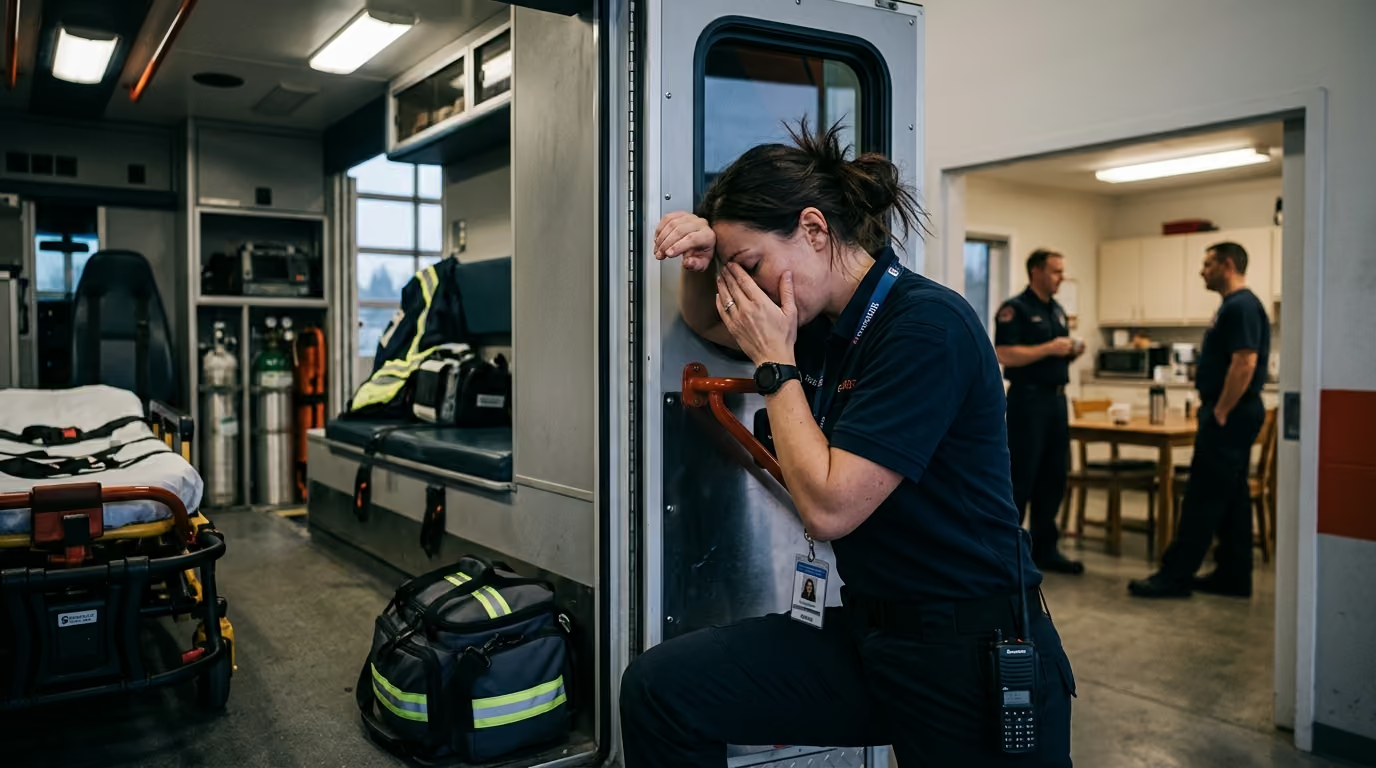

Exhausting night shifts and back-to-back emergency calls demand practical communication strategies to help first responders advocate for protected rest and recovery.





Many first responders search online for ways to tell a supervisor they are too exhausted to drive safely. Others search for ways to explain shift-work exhaustion to a spouse without sounding lazy or uncommitted. This guide provides a definitive framework for communicating sleep and recovery needs across the chain of command, at home, and in clinical settings.
Fatigue in emergency services is an operational hazard rather than a personal weakness. Managing it requires clear communication, objective documentation, and structured requests. When personnel treat recovery as a safety control, they protect their crews, their patients, their families, and their own longevity.
Fatigue in emergency services is widespread, measurable, and directly linked to operational harm. Research across fire, emergency medical services, and law enforcement demonstrates that sleep deficiency degrades performance in predictable ways.
Systematic reviews and occupational health evaluations confirm substantial rates of sleep disorders among emergency personnel. Research shows that roughly 30 percent of paramedics experience excessive daytime sleepiness. Poor sleep quality affects between 50 and 71 percent of emergency medical personnel and firefighters. Furthermore, clinical screenings indicate that obstructive sleep apnea affects approximately 30 percent of first responders. Insomnia symptoms and shift work disorder appear at similarly high rates across public safety sectors.
The connection between sleep restriction and operational error is supported by strong evidence. Data from the United States Department of Transportation and emergency medical studies link acute and cumulative fatigue to ambulance collisions, personnel injuries, and medication administration mistakes. Extended wakefulness slows reaction times, impairs spatial reasoning, and reduces situational awareness. NIOSH guidance notes that fatigue causes observable operational signs. These signs include yawning, flawed logic, concentration failures, emotional volatility, and impaired communication.
While the evidence linking fatigue to safety incidents is clear, evidence regarding certain scheduling interventions remains nuanced. For instance, systematic reviews evaluating biomathematical fatigue models found no direct proof that software alone reduces operational accidents in active emergency services. Predictive software can assist administrative planning. However, it cannot replace crew reporting, supervisor judgment, or physiological sleep opportunity. Fatigue risk management must combine organizational design with direct human communication.
Understanding these distinctions helps responders build stronger arguments. Citing verified safety data transforms a conversation from a subjective complaint into an evidence-based risk assessment. Reviewing established fatigue baselines for shift work helps crews and administrators benchmark local scheduling policies against national safety standards.
Emergency response creates unique physiological challenges that standard workplace wellness programs fail to address. Shift schedules frequently force personnel to operate during the circadian low point between 2:00 a.m. and 5:00 a.m. During these hours, core body temperature drops, alertness declines, and the biological drive to sleep reaches its daily peak.
A central barrier in emergency work is the difference between scheduled time off and actual sleep opportunity. A department schedule may assign a twelve-hour gap between shifts. In reality, the worker must commute, eat, shower, complete family responsibilities, and decompress from sympathetic nervous system arousal. A twelve-hour release period often yields only five or six hours of actual sleep opportunity. National guidelines recommend nine to eleven hours of protected off-duty time so a worker can achieve seven hours of continuous sleep.
Extended rotations introduce cumulative physical strain. Working 24-hour, 48-hour, or extended holdover shifts creates compounding sleep debt. Call volume during nominal rest hours fragments slow-wave and rapid eye movement sleep cycles. Even when personnel remain in a bunk, anticipatory stress and station tones prevent deep restorative rest. Examining how shift length and circadian strain interact shows why back-to-back night tours produce disproportionate cognitive fatigue.
Emergency work also involves high physical loads, toxic exposures, extreme heat, and acute psychological stress. These factors increase the biological requirement for systemic tissue repair and immune recovery. When sleep is cut short, the body cannot clear metabolic waste products from the brain or regulate inflammatory cascades. Fatigue becomes cumulative. Without deliberate intervention, acute exhaustion evolves into chronic physical depletion.
Communicating recovery needs requires a reliable, repeatable structure. Responders should avoid emotional venting or vague statements about being tired. Instead, conversations can follow the four-part Safety, Evidence, Request, and Review framework.
Every operational conversation must open with the primary safety concern. Beginning with safety establishes that the goal is mission success, patient protection, and crew welfare.
Do not begin by apologizing for physical limits. Frame the problem in terms of operational integrity. For example, open by stating that acute sleep loss has created an unacceptable risk for apparatus operation, drug calculation, or fireground incident command. This approach removes character judgments and aligns the responder with the organizational goal of risk mitigation.
Back up the safety concern with verifiable facts. Presenting objective data prevents the conversation from turning into a debate about personal toughness or motivation.
Responders should bring specific numbers:
Vague requests like asking for things to get better rarely produce actionable results. Supervisors require specific operational solutions that maintain service coverage while mitigating acute hazard exposure.
A clear request might include:
Always offer a practical pathway to maintain operational continuity. If requesting reassignment from driving, suggest a qualified crew partner who is well-rested and willing to trade responsibilities.
Every operational adjustment requires an agreed timeline for review. Establishing an end point reassures leadership that the adjustment is a structured safety intervention rather than an open-ended avoidance of work.
Define who makes the final operational decision, what performance indicators trigger further escalation, and when normal duty profiles will resume. Set a firm time to reassess whether the intervention restored alertness or if secondary relief is needed. Documenting these steps creates an administrative record that helps agencies identify broader systemic staffing flaws.
Advocating for recovery requires adapting your approach depending on the listener. Supervisors, peers, family members, and medical providers each view fatigue through different lenses.
Conversations with company officers and shift commanders should remain brief, formal, and centered on liability and performance. Officers are responsible for mission completion and subordinate safety. Frame the conversation around helping them manage their operational risk.
A practical script for leadership:
> "Captain, I need to report an operational fatigue concern. Over the last 48 hours, I have received less than four hours of broken sleep due to call volume and holdovers. I am experiencing slowed reaction times and difficulty concentrating, which creates a safety risk while operating the engine. I am requesting that we swap driving assignments for the remainder of this shift or schedule a protected rest period. We have a certified driver on our crew ready to take the wheel."
This script names the exact hazard, supplies objective data, offers a direct operational solution, and keeps the company in service safely.
Peer dynamics in emergency services can either support recovery or reinforce dangerous silence. Fatigue advocacy among peers requires mutual accountability without judgment. When a partner shows signs of severe sleep debt, address the physical reality directly.
Effective peer intervention phrases:
Using the buddy system to catch fatigue errors normalizes recovery behaviors. It treats fatigue as an environmental hazard, comparable to heat stress or structural instability, rather than an individual flaw.
Shift-work fatigue often damages personal relationships when off-duty recovery is mistaken for disengagement. Family members may assume that off-duty days mean total availability for household chores, childcare, and social events.
Explain the physiological necessity of sleep before the shift cycle begins. Establish clear boundaries around recovery windows while committing to dedicated, attentive family time once rested.
A practical family communication script:
> "My shift rotation ends tomorrow morning at 07:00, and I have been awake most of the night. To be safe driving home and fully present with the family this evening, I need protected sleep from 08:30 to 14:00. I will put my phone on silent and sleep in the back room. Once I wake up, I will take over the kids' afternoon activities and handle dinner."
This approach establishes that recovery is a health and safety requirement. It provides a specific waking time, offers a clear plan for household contribution, and removes uncertainty.
Primary care doctors who lack occupational medicine experience may not understand emergency schedules. They might offer generic advice, such as recommending a regular 10:00 p.m. bedtime, which is impossible for rotating shift workers.
Responders must present clear clinical evidence. Bring a two-week sleep log documenting work hours, off-duty sleep duration, caffeine intake, and symptom patterns. Clearly state your job requirements, including safety-sensitive tasks like emergency driving, tactical decisions, and medication administration.
A structured clinical script:
> "Doctor, I work 24-hour rotating shifts in emergency services. Over the past three months, I have experienced persistent daytime sleepiness, unrefreshing sleep, and difficulty sleeping on off-duty days. Here is a two-week sleep and schedule log. I would like to screen for obstructive sleep apnea, shift work disorder, and underlying metabolic or endocrine disruptions that could be worsening this fatigue."
Clear clinical descriptions help physicians select appropriate diagnostic tests. They can order home sleep apnea tests, refer you to sleep specialists, or evaluate laboratory blood panels. Detailed tracking can also help you design customized sleep plans across different shift patterns that fit rotating schedules.
Preparation makes challenging conversations easier. Use these checklists before discussing fatigue with leadership, families, or healthcare providers.
Reviewing practical meal strategies for demanding shifts can also help identify whether energy crashes stem from sleep debt, nutritional timing, or a combination of both.
Emergency service culture often equates extreme sleep deprivation with dedication and toughness. Responders who ask for rest may fear being labeled uncommitted or weak. Changing this culture requires replacing character-based language with precise operational risk terminology.
A responder can be fully committed to the mission while remaining physiologically unfit for safety-critical tasks. Willingness is a psychological state; fitness for duty is a neurobiological reality.
When advocating for sleep, make this distinction clear. State plainly: "I am ready and willing to work, but after 20 hours of continuous operations, my reaction speed makes emergency driving unsafe." This statement reinforces professional commitment while recognizing undeniable biological limits. It protects the agency against avoidable vehicle accidents and protects the responder against disciplinary action resulting from fatigue-induced errors.
Responders often worry that reporting fatigue will lead to administrative penalties, missed overtime opportunities, or lost specialty assignments. Managing these risks requires knowing the difference between operational reporting and private medical information.
Operational reporting focuses only on current capability:
Medical confidentiality protects private health conditions:
When operational adjustments require formal schedule modifications, work through established occupational health channels, union representatives, or human resource safety officers. Keep field conversations focused strictly on immediate safety and performance metrics.
Fatigue advocacy is not always straightforward. Responders often encounter difficult administrative and operational scenarios that require careful navigation.
During mass-casualty events, wildland fires, or extended natural disasters, normal relief schedules often break down. Personnel may be required to remain operational for days under arduous conditions.
In disaster operations, advocacy shifts from requesting standard schedules to establishing minimum safe recovery baselines:
NIOSH disaster management protocols state that managing rest during major incidents is an administrative safety duty, not an optional luxury. Crews that ignore recovery during multi-day operations experience sharp rises in vehicle accidents, falls, and command-level tactical errors.
Staffing shortages frequently result in mandatory holdovers, forcing responders to work 36 to 48 consecutive hours. When mandated to stay, personnel often feel they have no choice but to push through dangerous levels of exhaustion.
When facing mandatory overtime:
Do not frame refusal of a safety-critical task as insubordination. Frame it as an operational safety stop based on documented physical impairment. Consult union representatives or departmental safety policies to ensure proper protocols are followed.
The drive home after a night shift is one of the most dangerous parts of an emergency responder's schedule. Research confirms that drowsy driving produces cognitive impairment similar to legal alcohol intoxication.
Advocating for commute safety means treating transportation as part of the duty cycle. Departments should provide quiet bunk access for post-shift naps before personnel attempt long drives home. Responders must recognize that driving while severely sleep-deprived endangers both themselves and the public. Applying disciplined caffeine timing during night shifts helps maintain vigilance during the final hours of duty without disrupting subsequent daytime sleep.
Personal fatigue countermeasures have clear physiological limits. While tactical interventions can temporarily support alertness, they do not replace restorative sleep.
Caffeine is a valuable operational tool, but it does not reduce underlying sleep debt. It works by temporarily blocking adenosine receptors in the brain, masking the sensation of sleepiness without repairing cellular fatigue.
Relying on escalating doses of caffeine or energy drinks creates a dangerous cycle. High stimulant intake increases baseline anxiety, causes gastrointestinal distress, and disrupts the quality of subsequent sleep opportunities. Caffeine should be used strategically during active duty windows and stopped at least six hours before an intended sleep period.
Short operational naps provide proven, temporary cognitive benefits during long shifts. Research from the American College of Emergency Physicians and NIOSH demonstrates that a 20 to 30-minute nap significantly restores alertness, situational awareness, and motor performance.
Key rules for operational naps:
Strategic naps are a field-expedient safety buffer. They should never be used by management to justify unsafe, chronically extended shift schedules. Understanding how to build customized shift-work sleep plans helps responders integrate tactical napping into broader monthly recovery strategies.
There are points at which personal countermeasures fail and continuing duty becomes dangerous. Responders and officers must recognize these non-negotiable safety stops.
Immediate safety triggers include:
When these conditions occur, the responder must step back from the safety-sensitive task immediately. Continuing to operate in this state places crews, patients, and the public at severe risk.
Persistent sleep problems often require formal medical evaluation. Shift work can cause, worsen, or mask serious underlying sleep disorders that lifestyle adjustments alone cannot fix.
Shift work disorder is a formal medical condition recognized in the International Classification of Sleep Disorders. It is defined by chronic insomnia or excessive sleepiness associated with work hours that overlap standard sleep periods.
Diagnostic requirements typically include:
A physician will use sleep logs, actigraphy monitors, and clinical interviews to confirm the diagnosis. A formal diagnosis helps secure necessary schedule accommodations, medical leave, or targeted clinical therapies.
Obstructive sleep apnea is highly prevalent among first responders, often going undiagnosed due to the assumption that exhaustion is simply part of the job. Sleep apnea causes repeated airway collapse during sleep, resulting in frequent oxygen drops and severe sleep fragmentation.
Warning signs requiring immediate medical evaluation:
Responders experiencing these symptoms should request an objective sleep study from a qualified medical provider. Treating underlying sleep disorders protects cardiovascular health, restores cognitive performance, and significantly improves long-term career longevity.
Advocating for sleep and recovery requires steady, practical action. Use this implementation checklist to improve your recovery communication and operational readiness over the next seven days.
Sustainable capability across a long emergency-services career depends directly on protecting physiological recovery. Treating sleep as a core operational requirement preserves your health, protects your crew, and ensures you remain reliable when the community calls.
Stay connected for research-led guidance on duty fitness, shift-work sleep, injury recovery, stress, nutrition and career longevity. Practical ideas for first responders who want to stay capable on the job, recover well and protect their health for the long run.



Read practical guidance on first responder fitness, recovery, sleep, nutrition and resilience for demanding work and a long, active career.
read the blog



