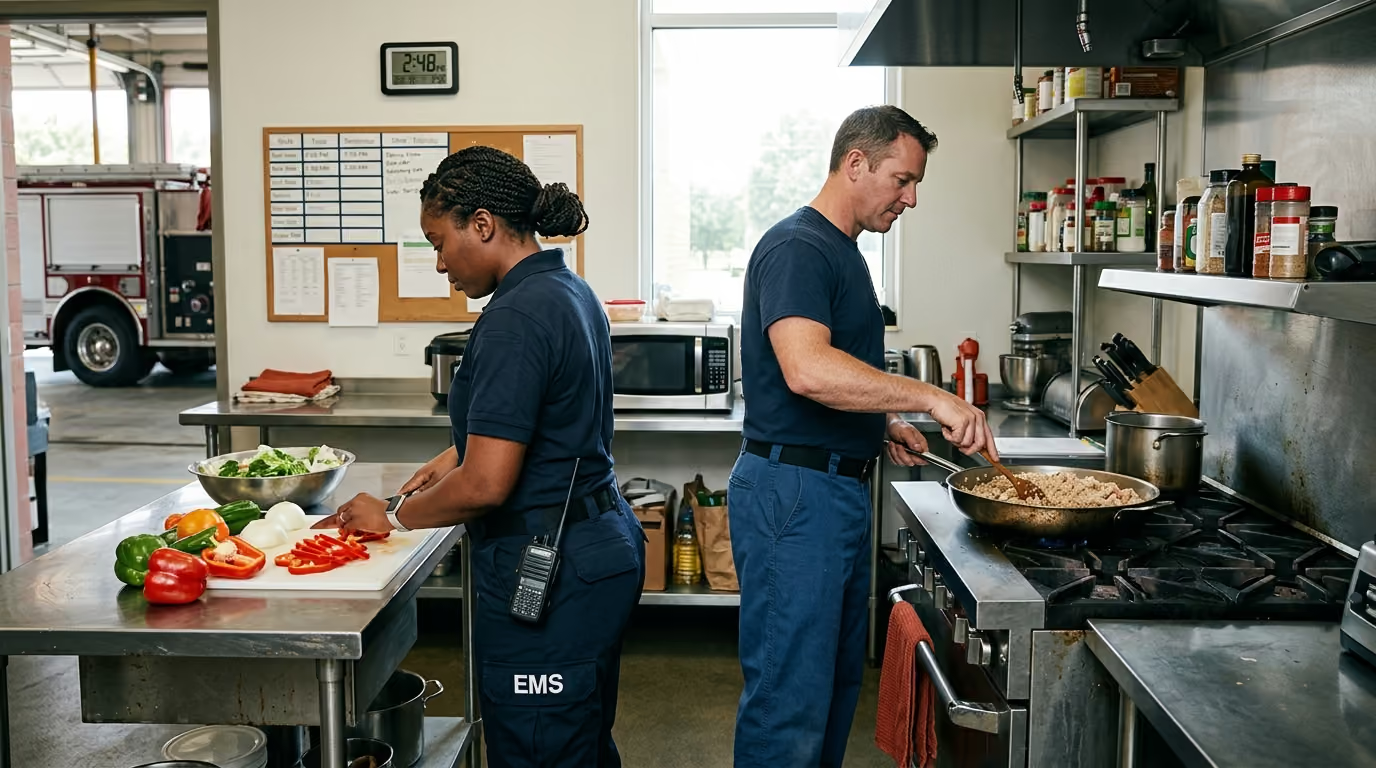

Unpredictable shift schedules and disrupted sleep patterns demand a phased nutrition framework designed specifically to protect muscle mass and sustain healthy body composition.





Long-term weight management is not a temporary fat-loss diet. It is an operational system for keeping body weight, waist circumference, and metabolic health stable across decades of service. For firefighters, law enforcement officers, and emergency medical personnel, this system must withstand rotating shifts, fragmented sleep, station food culture, acute stress, and career transitions.
Achieving sustainable body composition requires separating short-term energy restriction from long-term weight stability. Success means protecting skeletal muscle and duty readiness while navigating unpredictable calls and fluctuating activity levels. When nutrition, physical movement, and recovery strategies adapt to shift demands rather than fighting them, weight stability becomes realistic and repeatable.
Most commercial weight-loss programs assume a predictable schedule. They rely on standard sleeping hours, routine mealtimes, low baseline stress, and steady daily energy expenditure. First responders rarely experience these conditions. When an emergency call interrupts dinner or forces extended physical exertion overnight, rigid diet rules collapse.
Evidence indicates that short-term calorie restriction produces initial scale changes, but indefinite weight maintenance requires ongoing behavioral, physical, and nutritional systems. Long-term weight stability is the ongoing process of preventing weight regain while preserving physical capability and health. Body-composition management focuses specifically on reducing adipose tissue while maintaining or building muscle mass. Performance nutrition matches fuel, fluid, and timing to the specific demands of emergency response and physical training.
Research from the National Heart, Lung, and Blood Institute shows that weight-loss maintenance is strengthened when physical activity and behavioral strategies continue indefinitely. Commercial programs often treat maintenance as an afterthought. For emergency personnel, the maintenance structure must be established before any fat loss begins.
Body mass index is frequently used as a primary screening metric, but it does not differentiate muscle mass from fat mass. Highly muscular personnel may register an elevated BMI despite possessing low body fat and exceptional aerobic and muscular capacity. Conversely, an individual with a normal BMI may carry excess visceral fat and elevated cardiometabolic risk. Comprehensive management evaluates waist circumference, blood pressure, lipid panels, glucose markers, and operational readiness alongside scale weight.
Shift work introduces direct metabolic and behavioral constraints. Observational research demonstrates consistent associations between shift work and elevated BMI, with more pronounced associations seen in workers with more than a decade of shift exposure. Among firefighters, higher monthly shift volumes and prolonged sedentary work show linear dose-response relationships with increased obesity prevalence.
Sleep restriction fundamentally changes how the brain regulates appetite. Controlled experimental studies show that sleep deprivation increases daily energy intake, particularly from carbohydrates and fats. In laboratory settings, sleep-restricted participants consumed hundreds of additional calories per day compared to fully rested controls, while their energy expenditure remained unchanged.
Sleep debt alters hunger hormones by elevating ghrelin and suppressing leptin. This hormonal shift creates biological pressure to consume calorie-dense, highly palatable foods. When sleep loss combines with the immediate availability of convenience foods in the station or apparatus, caloric intake rises without conscious intent.
First responder work combines brief periods of extreme exertion with long stretches of low physical activity. A difficult call requires rapid cardiovascular and muscular output, but hours between calls may involve vehicle operations, report writing, and equipment maintenance. Relying on emergency calls to burn sufficient energy is ineffective, as total daily energy expenditure is often lower than responders assume.
Public health guidance from the World Health Organization recommends that adults accumulate 150 to 300 minutes of moderate aerobic activity or 75 to 150 minutes of vigorous activity each week. It also advises limiting sedentary time and replacing it with light-intensity movement throughout the day. Establishing a baseline movement floor ensures energy balance remains stable even during shifts with low call volume.
Understanding these sleep and circadian challenges is essential for long-term health. Responders can learn more about [building a shift-specific sleep plan] to protect recovery windows between tours.
Station food culture plays a massive role in daily nutritional habits. Shared meals, family-style servings, communal snack tables, and traditions centered on rich meals define station life. Qualitative studies show that portion sizes, peer influence, and frequent snacking heavily influence dietary patterns in emergency services.
Food choices are also driven by operational stress. Emergency personnel regularly encounter high-acuity incidents, traumatic calls, and high workloads. Stress-driven eating often manifests as sudden urges for specific calorie-dense foods, serving as a rapid coping mechanism for emotional fatigue or boredom.
Address station culture through practical, group-level adjustments rather than social isolation:
When addressing individual stress eating, a brief pause between the impulse and the action can restore control. Personnel can implement a practical four-step sequence:
If you choose to eat a comfort food, serve a single portion on a plate rather than eating directly from the container. Resume normal nutrition at the next meal without skipping food as punishment.
Rigid clock-based meal plans fail because emergency response schedules change constantly. A shift-adaptive system replaces rigid times with functional meal anchors tied to operational status. This ensures adequate nutrition regardless of whether a responder is working a day shift, working an overnight tour, or recovering at home.
Classifying days by operational demand provides clear guidelines for fueling and recovery:
Characterized by high call volume, extrications, prolonged fireground operations, or heavy structural training.
Characterized by mixed activity including administrative duties, training drills, station maintenance, and low-to-moderate call volume.
Characterized by interrupted night rest, multiple late calls, or extended late-night operations.
Characterized by circadian adjustment, family life, errands, and physical recovery.
Maintaining readiness requires carrying shelf-stable foods that survive temperature swings and extended calls. Keep a dedicated go-bag stocked with reliable nutrition options:
Beverages require careful management. Caffeine improves alertness when used strategically, but excessive reliance can compromise daytime recovery sleep and mask severe exhaustion. Responders looking for deeper protocols can review [managing caffeine on night duty] to protect their recovery windows.
Limit sugar-sweetened beverages, soda, and high-calorie energy drinks, which add empty calories without providing satiety. For a broader perspective on fueling systems, explore our [practical meal strategies for emergency personnel].
Long-term weight management is a structured progression of distinct phases. Moving immediately from a strict fat-loss diet into unstructured eating almost always leads to weight regain. A phased system builds dietary sustainability into the process from day one.
Before restricting calories, evaluate your current baseline. Track meal patterns, sleep duration, shift patterns, station snacking, liquid calories, and physical activity. This phase establishes objective awareness without judgment, identifying high-leverage areas for adjustment.
When fat reduction is appropriate, implement the smallest effective energy deficit. Guidelines from the National Heart, Lung, and Blood Institute recommend a modest deficit of 500 to 1,000 calories per day to produce a safe, sustainable loss of one to two pounds per week.
Aggressive deficits compromise cognitive sharpness, physical power, recovery capacity, and mood. Maintain daily protein intake between 1.6 and 2.2 grams per kilogram of body weight to preserve skeletal muscle mass during fat loss. Pair nutrition with resistance training to ensure weight lost comes from fat rather than functional muscle.
Once you reach your initial body-composition target, increase calories gradually back to maintenance levels over several weeks. This controlled transition prevents sudden weight rebound while restoring metabolic rate, energy expenditure, and training performance. The goal is to stabilize weight within a narrow, sustainable target range.
Long-term maintenance involves consistent self-monitoring, structured meal planning, regular physical activity, and proactive stress management. Successful maintainers weigh themselves periodically, maintain awareness of portion sizes, and take prompt corrective action when weight trends drift upward.
Weight management is rarely a straight path. Operational emergencies, injuries, mandatory overtime, family stress, and life events can disrupt nutrition and activity habits. Without a clear recovery strategy, a temporary dietary slip can spiral into full-scale weight regain.
Differentiate clearly between a lapse and a relapse:
Establish objective, color-coded action zones to guide adjustments based on regular measurements:
Implement the 24-Hour Recovery Rule whenever an acute lapse occurs:
Certain operational events carry a high risk for dietary lapses. Prepare specific plans for these scenarios:
Changes in physical workload represent critical vulnerability points across a first responder's career. When an injury forces modified duty, or when an individual transitions into retirement, daily energy expenditure drops sharply. If nutritional habits and portion sizes remain unchanged, rapid fat gain and muscle loss often follow.
An injury eliminates normal training sessions and removes the physical demands of emergency response. However, the body still requires adequate nutrients to heal injured tissues:
Retirement removes the physical demands of active duty along with the built-in social structure of the station. Successful weight maintenance after service requires establishing new daily routines:
Long-term career longevity requires continuous attention to body composition. Responders can check out our dedicated [nutrition and body composition resources] for evidence-based guidance across every career stage.
Relying solely on bathroom scale weight provides an incomplete picture of physical readiness and health. A comprehensive occupational dashboard tracks body dimensions, clinical health markers, performance capability, and daily behaviors.
Review this dashboard periodically as a practical feedback tool. If metrics drift out of the target zone, use that data to refine your meal prep, sleep planning, or training volume without guilt.
Weight management strategies must never compromise personal safety, crew safety, or operational readiness. Extreme caloric deficits, severe dehydration, or misuse of stimulants can impair judgment, slow reaction times, and increase injury risks during emergency calls.
Never restrict calories aggressively during high-demand periods like fire academy training, wildland deployments, hazardous materials incidents, or heavy call cycles. Maintain adequate carbohydrate and fluid intake during operational work to sustain cognitive function and thermoregulation.
Never use extreme dietary practices, fasting protocols, or appetite-suppressing stimulants to compensate for sleep deprivation or dangerous exhaustion. Driving emergency vehicles and operating complex equipment while fatigued poses severe life-safety hazards.
Consult a qualified healthcare professional, registered dietitian, or occupational medicine physician when facing these conditions:
Intermittent fasting can be effective for some first responders, but it requires careful scheduling around call volume. Fasting during a high-demand, high-call night shift can lead to severe energy crashes, reduced alertness, and subsequent overeating. If you use a time-restricted eating window, place that window during your active operational hours and break the fast if heavy physical calls demand immediate fuel. For a deeper analysis of circadian meal windows, read about [time-restricted feeding and shift work metabolic strain].
If an emergency call interrupts your meal, secure the food in a refrigerator if possible. Do not force yourself to finish eating rapidly before leaving the station. Keep a quickly digestible carbohydrate or protein option in the vehicle for extended operations. Once the incident is terminated and you return to quarters, reheat and finish your balanced meal rather than turning to fast food.
Completely banning desserts can create social friction and often triggers cycles of restriction and overeating. A practical approach is the planned single portion: decide in advance when you will participate in a station dessert, serve a modest portion onto a small plate, eat it slowly, and decline seconds. On other days, rely on fresh fruit, Greek yogurt, or low-sugar options as your default choice.
Yes. As personnel age, baseline metabolic rate and natural muscle mass gradually decline, while joint wear and injury histories accumulate. Older responders should emphasize progressive resistance training to protect lean muscle tissue and support bone density. Protein distribution becomes more critical, requiring 25 to 40 grams of high-quality protein per meal to optimize muscle protein synthesis alongside dedicated balance and mobility work.
Sustainable weight management for first responders is built on adaptable, repeatable habits rather than extreme dietary restriction. By protecting sleep, adapting nutrition to shift demands, maintaining lean muscle, and planning for operational disruptions, emergency personnel can protect their health and capability throughout their active service and into retirement.
Stay connected for research-led guidance on duty fitness, shift-work sleep, injury recovery, stress, nutrition and career longevity. Practical ideas for first responders who want to stay capable on the job, recover well and protect their health for the long run.



Read practical guidance on first responder fitness, recovery, sleep, nutrition and resilience for demanding work and a long, active career.
read the blog



