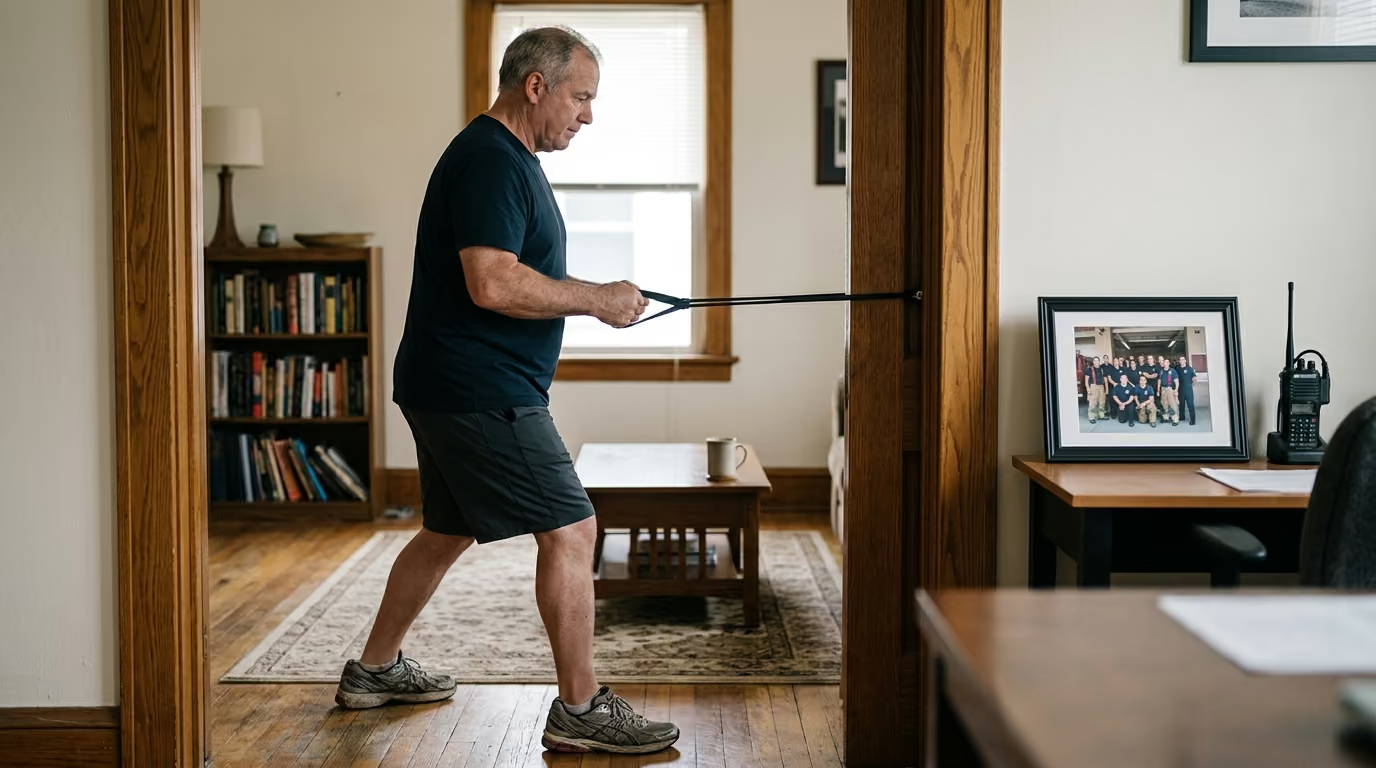

Duty-ready physical fitness requires structured strength and conditioning strategies to preserve functional capacity during administrative light duty and after career retirement.





Duty-ready fitness is not a single test score, a body composition percentage, or a personal record in the gym. It is the physical reserve required to perform real-world tasks, manage unpredictable physical demands, recover efficiently, and protect long-term physical independence. When an injury results in light duty, when an administrative transfer removes daily physical tasks, or when retirement ends active service, the daily physical stimulus of emergency response disappears. Maintaining functional capacity during these transitions requires shifting from reactive, job-driven activity to structured, deliberate movement maintenance.
Preserving physical readiness during light duty or retirement protects joints, preserves muscle mass, and maintains cardiorespiratory headroom. It prevents the rapid loss of strength and conditioning that often follows sudden reductions in occupational activity. By focusing on foundational movement patterns, joint mobility, cardiovascular health, and balance, emergency service personnel can preserve their physical capability across every career stage and throughout life after service.
General physical activity guidelines provide a baseline for metabolic and cardiovascular health, but they do not automatically create operational readiness. The World Health Organization recommends that adults complete 150 to 300 minutes of moderate-intensity aerobic physical activity weekly, or 75 to 150 minutes of vigorous-intensity aerobic physical activity. The guidelines also recommend muscle-strengthening activities involving all major muscle groups on two or more days per week. These targets support metabolic regulation and lower the risk of chronic disease.
Occupational tasks in emergency response require higher thresholds of physical output. Firefighting, emergency medical response, and tactical operations demand rapid force production, sustained load carriage, awkward lifts, and repeated bouts of near-maximal effort. Research on firefighter task performance demonstrates that specific physical attributes correlate directly with operational performance. For example, lower-body strength and age predict stair-climb performance, while grip strength and age predict hose-drag speed.
A useful way to conceptualize readiness is through the framework of capability reserve. Capability reserve represents the difference between your maximum physical capacity and the physical demand of a given task. If clearing a stairwell or dragging a rescue manikin requires eighty percent of your maximum capacity, that task will be exhausting and dangerous. If the same task requires only forty percent of your maximum capacity, you complete it with composure, precision, and lower risk of injury.
Readiness can be expressed through a simple relationship:
Readiness = Capability × Repeatability × Control × Recovery
If any single component fails, total readiness drops. A person may possess the absolute strength to lift a heavy object once. If they lack the repeatability to lift it ten times, the control to move safely over uneven terrain, or the recovery capacity to repeat the effort twenty minutes later, their operational capability remains compromised.
Maintaining this capability reserve is the central focus of duty fitness programming. When daily service no longer provides an automatic physical stimulus, deliberate training must preserve this operational margin.
Physical adaptations decline when an adequate training stimulus is removed. Detraining begins rapidly when occupational demands or structured exercise cease. Research evaluating detraining indicates that four weeks of insufficient stimulus negatively affects both cardiorespiratory fitness and muscular strength regardless of chronological age. Shorter interruptions can also degrade high-intensity performance. Two weeks of detraining has been shown to reduce repeated-sprint ability and intermittent recovery performance.
The loss of physical capacity occurs along distinct timelines across different physiological systems:
Aerobic enzyme activity, blood volume, and mitochondrial density decline within two to three weeks of complete inactivity. Submaximal heart rates rise for a given workload, and the body becomes less efficient at clearing lactate.
Fast-twitch motor unit recruitment and rate of force development degrade quickly without regular exposure to high-velocity or high-load movements. This directly affects the ability to recover balance during a slip or trip.
Maximal force production declines more slowly than endurance or power. Neural drive decreases first, followed by structural muscle atrophy over four to eight weeks of sustained inactivity.
Tendons, ligaments, and joint capsules adapt to chronic load. When occupational load carriage and dynamic impacts stop, connective tissue stiffness decreases, making tissues more vulnerable to strain upon sudden re-exposure.
Understanding these timelines reinforces the value of the minimum effective dose. The minimum effective dose is the smallest volume and frequency of exercise necessary to preserve a specific physical adaptation. Maintaining an existing physical quality requires far less total work than building that quality from scratch. Two brief strength sessions per week can preserve muscular strength for months, provided the intensity of effort remains sufficiently high.
Similarly, maintaining a baseline of zone-two cardiovascular work preserves mitochondrial function and capillary density. By applying the minimum effective dose during administrative assignments, medical leave, or retirement, first responders prevent severe physical deconditioning.
Light duty must not be viewed as complete physical rest. In an operational context, light duty typically means operating under specific medical restrictions. These restrictions might include no heavy lifting, no running, no wearing structural turnout gear, or avoiding overhead movements. Treating light duty as total immobilization leads to systemic deconditioning, weight gain, and joint stiffness.
A practical light-duty physical plan separates activities into five clear categories:
Rehabilitation models used in military and tactical populations offer a clear three-stage approach to managing injury while preserving capability:
During the initial recovery stage, the priority is protecting the injured structure while aggressively maintaining fitness in unaffected regions. A responder with a wrist fracture can still perform lower-body resistance training, sled pushes, and stationary cycling. A responder with a knee injury can perform upper-body pressing, seated rows, core bracing, and single-leg work on the uninjured limb. This minimizes whole-body deconditioning.
Once medical clearance allows progressive loading of the healing tissue, training expands. The goal is restoring joint range of motion, symmetrical strength, and multi-joint coordination. Training at this stage focuses on basic movement patterns including squats, hinges, pushes, pulls, and carries at moderate volumes.
Before returning to full operational status, the individual must transition from general gym exercises to duty-specific demands. This involves progressive load carriage, stair intervals, awkward object manipulation, and agility drills. Jumping directly from light desk duty back to full-tempo operational response without this transition creates high reinjury risk.
A practical method for managing daily exercise during recovery is the traffic-light adjustment framework:
Navigating this progression requires a structured approach to injury recovery rather than guesswork.
When daily physical work stops, specific functional capacities deteriorate unless targeted through structured training. Routine daily living rarely provides the intensity or movement variety required to maintain these capabilities.
Strength forms the foundation for all physical performance. Progressive resistance training preserves muscle mass, bone mineral density, and metabolic rate. Training must emphasize multi-joint compound movements that train movement patterns rather than isolated muscles:
Older adults and recovering responders retain the capacity to build strength and neuromuscular efficiency when training with progressive overload.
Power is the ability to produce force quickly. While absolute strength helps move a heavy object, power helps you catch yourself during a stumble or step across an obstacle rapidly. Power declines faster than strength during aging and inactivity. Power training during light duty or retirement should emphasize safety and control:
Occupational tasks require repeated efforts under fatigue. Muscular endurance allows a responder to hold a position, carry equipment over distance, and work without technical collapse. Useful methods include timed carries, sled drags, high-repetition step-ups, and sustained grip holds. Grip strength is strongly associated with occupational performance in emergency tasks such as equipment handling and hose management.
Aerobic capacity is the primary driver of recovery between high-intensity efforts. In a study examining Canadian firefighters across different age brackets, age accounted for 61 percent of the variance in aerobic capacity, while upper- and lower-body strength remained relatively stable across age groups.
This finding demonstrates that cardiovascular capacity declines faster than raw muscular strength if not deliberately trained. Maintaining base aerobic conditioning through brisk walking, rucking, cycling, rowing, or swimming preserves stroke volume, mitochondrial density, and vascular health.
Passive flexibility without muscular control has limited functional value. Mobility is active, usable range of motion under tension. Priority areas for preservation include:
Mobility work should integrate active end-range control, such as controlled articular rotations and loaded stretches, rather than passive static stretching alone.
Balance is a dynamic motor skill that degrades without exposure to varied terrain and reactive tasks. The Centers for Disease Control and Prevention reports that the age-adjusted fall death rate among older adults increased by 21 percent between 2018 and 2024. For retired responders, fall prevention is essential for maintaining autonomy.
Balance training should progress beyond balancing on foam pads. It should include single-leg stance variations, tandem walking, carrying asymmetric loads, navigating uneven surfaces, and obstacle step-overs. Furthermore, ground mobility, the physical ability to get down to and up from the floor without external assistance, must be practiced regularly. Ground transfers integrate hip mobility, core control, knee stability, and upper-body pushing strength.
Retirement marks a major environmental and behavioral transition. Many individuals assume that retirement will automatically provide abundant free time for health, fitness, and recreation. However, epidemiological research demonstrates that physical activity patterns often change unpredictably following retirement. Studies indicate that physical activity levels frequently decline after retirement among individuals leaving physically demanding occupations, whereas activity levels may increase for those leaving sedentary desk jobs.
When a first responder leaves active service, several subtle mechanisms contribute to physical decline:
An active shift involves hours of standing, walking, lifting gear, climbing stairs, and managing heavy tools. This non-exercise physical activity burns substantial energy and maintains baseline joint mobility. In retirement, this daily volume disappears, often replaced by prolonged seated screen time, driving, or passive leisure.
Fire stations, police departments, and EMS bases provide an organic social structure. Group workouts, shift routines, and peer expectations encourage regular training. Without the scheduled structure of the shift calendar, training consistency often falters.
For many responders, physical fitness was tied directly to operational readiness and protecting colleagues. When the uniform is hung up, the internal motivation to train can diminish. Former personnel may struggle to find a compelling reason to maintain difficult physical standards without an immediate operational mission.
Navigating this transition successfully requires building a deliberate movement architecture. Long-term health requires replacing lost occupational activity with structured daily habits:
Developing long-term habits is the core of career longevity strategies. Physical capability should serve your quality of life long after your final shift.
You do not need a commercial human performance laboratory to monitor functional physical capability. Simple, standardized field assessments provide objective data on strength, endurance, balance, and movement quality over time.
Tracking these metrics quarterly provides early warning of physical decline, allowing you to adjust your training before functional deficits lead to injury.
An effective training template must match the individual's operational status, physical restrictions, and daily schedule. The following evidence-informed templates provide adaptable structures for different circumstances.
This template accommodates an upper-extremity restriction while preserving lower-body power, core stiffness, and aerobic capacity.
This template provides a balanced weekly routine for retired personnel looking to maintain strength, cardiovascular capacity, and movement confidence.
These templates should be tailored to individual physical baselines, existing orthopedic limitations, and medical guidance. Personnel seeking structured guidance can explore comprehensive strength and duty performance resources to support systematic progression.
Maintaining physical capability requires understanding physiological limits, recognizing contraindications, and respecting biological recovery. A common error among former operational personnel is attempting to train through acute joint pain, severe systemic fatigue, or undiagnosed medical symptoms.
Emergency service personnel have elevated lifetime rates of cardiovascular disease. The American College of Sports Medicine emphasizes preparticipation screening based on current physical activity level, known cardiovascular, metabolic, or renal disease, and signs or symptoms suggestive of disease.
Past athletic achievements or career fitness do not grant permanent immunity to coronary artery disease or hypertension. Personnel with diagnosed medical conditions, new chest tightness, irregular pulse, unexplained shortness of breath, or dizziness during exertion must seek medical clearance from a qualified physician before initiating or progressing an exercise program.
Decades of carrying heavy equipment, descending apparatus, and managing awkward loads often result in degenerative joint changes in the knees, hips, shoulders, and spine. Training with osteoarthritis requires adjusting joint mechanics rather than stopping exercise entirely:
Many retired first responders take prescription medications for cardiovascular health, hypertension, or pain management. Certain medications alter physiological responses during exercise:
A major barrier to lifelong physical readiness is the belief that unless a workout is exhausting and intense, it has no value. This mindset often leads to overuse injuries, chronic inflammation, burnout, and subsequent extended periods of complete inactivity. Sustainable physical readiness is built on consistency, technical execution, and adequate recovery rather than perpetual physical exhaustion.
Individuals navigating the transition from active service can review practical pathways for maintaining physical readiness after service to establish sustainable habits.
Brisk walking and grip training provide excellent foundational benefits for metabolic health and basic tool handling. However, they do not provide the complete stimulus required for comprehensive physical capability. Walking does not sufficiently challenge upper-body pushing and pulling strength, multi-planar core stability, rate of force development, or high-load lower-body strength. To maintain true capability reserve, walking should be paired with multi-joint resistance training, balance challenges, and active mobility work.
When medications such as beta-blockers blunt the natural heart rate response to exercise, standard percentage-based heart rate formulas become inaccurate. In these circumstances, subjective intensity scales provide a reliable alternative. Use the Rating of Perceived Exertion (RPE) scale on a 1 to 10 rating, where 1 represents rest and 10 represents maximum effort. For base aerobic training, use the Talk Test: you should be able to speak complete sentences without gasping for breath.
Yes, provided the movements are modified and progressed gradually. Getting down to and up from the floor is a critical functional skill that preserves independence and fall recovery. Individuals with knee sensitivity can use supportive equipment, such as placing a hand on a sturdy bench or chair, using a foam pad under the knees, and performing half-kneeling transitions rather than deep kneeling postures. Over time, controlled movement through tolerated ranges strengthens surrounding musculature and improves joint stability.
Medical clearance indicates that tissue healing is sufficient to tolerate progressive loading, not that the individual is immediately ready for maximal performance. Follow a gradual reconditioning period lasting four to eight weeks. Begin with moderate loads at fifty to sixty percent of previous capacity, focusing on movement quality, symmetry, and joint control. Increase loading, speed, or volume by no more than ten percent per week while monitoring joint recovery and movement mechanics.
Sustainable capability is built through consistent, intelligent movement habits that preserve your physical reserve across your entire life. By viewing physical training as a continuous investment in strength, mobility, and functional headroom, you protect your readiness on duty, support safe recovery through light duty, and maintain an active, independent life in retirement.
Stay connected for research-led guidance on duty fitness, shift-work sleep, injury recovery, stress, nutrition and career longevity. Practical ideas for first responders who want to stay capable on the job, recover well and protect their health for the long run.



Read practical guidance on first responder fitness, recovery, sleep, nutrition and resilience for demanding work and a long, active career.
read the blog



