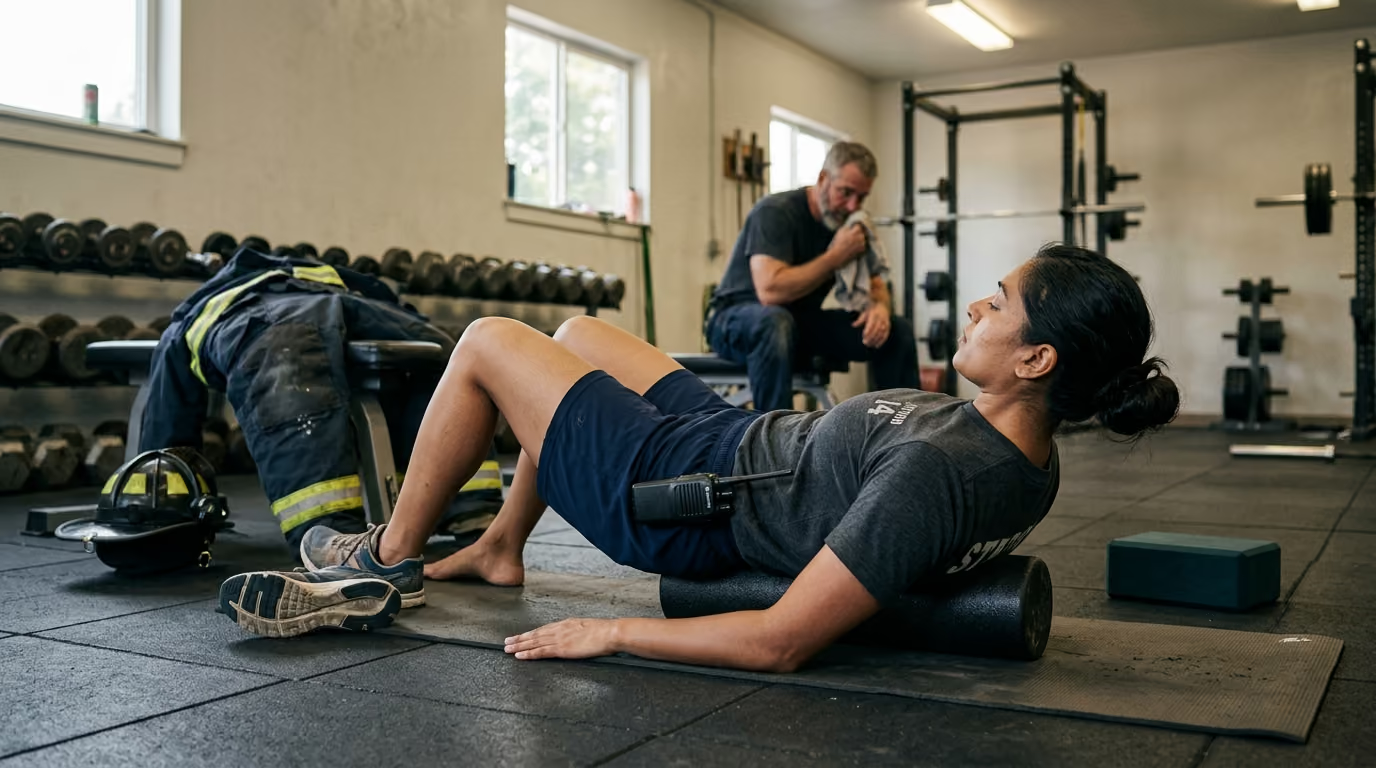

Repeated high-intensity emergency calls increase cumulative tissue strain and cause movement breakdown unless first responders manage internal fatigue alongside physical workload.





Many emergency responders search for answers when sudden joint pain, muscle strains, or deep physical fatigue appear after shifts where no single incident seemed extreme. The central question is straightforward: why do repeated physical efforts create severe injury risk when each individual task felt completely manageable?
The answer lies in cumulative load. A single sprint, forcible entry, victim drag, or structural climb rarely exceeds tissue capacity on its own. When those high-force actions are repeated across hours or shifts without sufficient recovery, tissue tolerance drops, movement patterns degrade, and the physical cost of each subsequent effort multiplies.
Preventing breakdown requires understanding how repeated physical stress accumulates across hours, days, and weeks. By tracking cumulative exposure, spacing demanding physical stressors, adjusting training volume around duty cycles, and recognizing early movement degradation, emergency personnel can maintain high operational capability across an entire career without accumulating destructive physical wear.
Tissue injury during operational work is rarely the result of an isolated mechanical demand. Instead, it is an evolving interaction between external dose, movement velocity, recovery timing, mechanical efficiency, and baseline preparedness.
A high-intensity call is any discrete occupational or training bout that demands a high level of force, velocity, acceleration, deceleration, power, or rapid physical decision-making. These actions are defined by their mechanical and physiological cost rather than duration alone. A thirty-second patient extrication down a tight stairwell creates far higher peak joint forces and tissue strain than thirty minutes of light equipment maintenance.
To manage physical capacity, responders must distinguish between external load and internal load. External load represents the physical work performed, such as running distance, deceleration counts, stair climbs, victim carries, or barbell volume. Internal load measures the physiological and perceptual cost of that work on the individual, including heart rate response, perceived exertion, nervous system fatigue, and localized muscle breakdown.
The same external work creates vastly different internal strain depending on sleep quality, recent duty volume, hydration, environmental heat, and prior soft-tissue irritation. When high-intensity calls occur in rapid succession, the body faces an escalating internal cost for the exact same physical output.
External load answers what you did, while internal load answers what that work cost your body today. If an emergency medical technician lifts a heavy stretcher three times during a well-rested day shift, the internal load remains moderate. If that same technician performs the identical three lifts at four in the morning after fourteen hours of continuous calls, the internal strain is dramatically higher.
When tracking physical readiness, recording only external tasks provides an incomplete picture. A training run or kettlebell session that felt effortless last week can impose dangerous physical strain if performed after a night of broken sleep and multiple high-stress calls. Understanding this gap is essential for preventing overuse injuries across an operational rotation.
Load density refers to how closely high-intensity physical efforts are packed together in time. Ten maximal sprints distributed across two hours allow adequate metabolic and tissue recovery between bouts. Those same ten sprints compressed into a fifteen-minute window create severe metabolic fatigue, mechanical degradation, and elevated tissue strain.
Research on repeated maximal efforts shows that short recovery intervals, particularly thirty seconds or less, substantially impair performance and increase physiological strain. When incomplete recovery leaves residual muscular and nervous system fatigue, the body alters its movement strategies to complete the demanded task.
Residual fatigue reduces dynamic balance, impairs muscle contraction speed, and alters joint coordination. Studies evaluating repeated maximal running have demonstrated that even forty-eight hours of recovery can be insufficient to restore normal lower-limb running mechanics after severe physical exertion. When responders face new physical calls before recovering from prior ones, they operate with altered joint mechanics that elevate injury vulnerability.
International consensus statements on athletic and occupational load monitoring emphasize that injury risk rises when acute workloads rapidly outpace chronic preparation. Acute workload represents the physical stress accumulated over a short period, typically seven days. Chronic workload represents the rolling average of physical work sustained over three to six weeks, reflecting the individual's baseline physical preparation.
The acute to chronic workload ratio provides a conceptual model for comparing immediate physical demands against recent conditioning. Historically, sports medicine research suggested that an acute to chronic ratio between 0.8 and 1.3 represented a balanced training zone, while ratios exceeding 1.5 correlated with elevated injury rates.
Modern systematic reviews provide a more nuanced perspective. While sudden spikes in physical workload correlate with increased soft-tissue injury risk, the acute to chronic workload ratio is not a stand-alone diagnostic tool. It should serve as an operational trend indicator rather than an absolute safety formula.
High chronic physical capacity serves as a protective buffer against the demands of operational duty. Responders who build strong, durable foundations of strength, aerobic capacity, and movement skill can tolerate higher acute spikes in workload without breaking down.
Problems arise when an individual encounters an acute surge in duty demands that far exceeds their recent preparation. This frequently occurs after returning from medical leave, transitioning from administrative duties to field assignments, or experiencing a sudden cluster of working structure fires. When acute physical demands outstrip established tissue capacity, soft tissues absorb mechanical forces that exceed their immediate repair capabilities.
Biological tissues do not maintain a static tolerance limit throughout a work shift. Tendons, ligaments, muscles, and joint capsules experience viscoelastic changes and microscopic collagen disruption under repeated mechanical loading.
During early bouts of high-intensity effort, healthy muscle-tendon units absorb and transmit force with high elasticity and structural stiffness. As repeated high-force contractions accumulate, muscular force production declines, transferring greater passive mechanical stress onto tendons, ligaments, and articular cartilage. An effort that produced safe tissue strain at the beginning of a shift can cause micro-tears or inflammatory flare-ups when executed in a fatigued state near the end of the shift.
Physical breakdown does not require a single catastrophic physical event. It can also stem from high training monotony, which occurs when daily workloads show minimal variation across a week.
Training monotony is calculated by dividing average daily workload by the standard deviation of daily load across seven days. When high daily physical stress is repeated without dedicated light recovery days, the resulting physical strain multiplies. Emergency personnel who combine intense daily physical workouts with continuous operational duty frequently fall into this pattern, accumulating systemic fatigue that compromises both health and operational readiness.
Standard athletic load models assume predictable practice schedules, scheduled rest days, and controlled environments. First responders operate under entirely different constraints. Unpredictable call volumes, mandatory overtime, fragmented sleep, heavy protective equipment, and uncontrolled physical environments fundamentally change how physical stress accumulates.
Personal protective equipment significantly magnifies mechanical load. Structural firefighting gear, self-contained breathing apparatus, tactical vests, and duty belts add twenty to fifty pounds of external mass. This added load elevates joint contact forces, alters center of mass, restricts spinal mobility, and increases the cardiovascular cost of basic locomotion.
Executing high-intensity physical tasks while carrying external equipment reduces the body's margin for error. A rapid stair climb, victim carry, or dynamic suspect apprehension performed under load generates massive eccentric braking forces on the knees, hips, and lumbar spine.
Unlike sport athletes who peak for scheduled competitions, emergency personnel face random operational spikes. A crew might experience twelve hours of low-intensity medical calls followed immediately by three consecutive working structure fires or complex multi-vehicle rescue operations.
This unpredictability creates irregular clusters of high-density physical loading. When intense physical tasks occur back-to-back during a night shift, the body receives zero recovery time to restore glycogen reserves, clear cellular metabolic waste, or down-regulate heightened sympathetic nervous system tone. Applying structured recovery strategies, such as using a between-call reset to manage acute shift stress, helps restore autonomic balance and prevents residual muscular tension from compounding across successive calls.
Shift work and nighttime dispatches disrupt regular sleep architecture. Sleep deprivation impairs neuromuscular coordination, slows reaction time, blunts cellular tissue repair, and alters pain perception.
When physical training is layered on top of severe sleep deficits, the risk of training-induced soft-tissue strain rises sharply. High-intensity physical training performed in an acutely sleep-deprived state increases perceived exertion and compromises dynamic spinal stabilization. Responders managing heavy call volumes must learn to adjust the intensity of their physical preparation to match their sleep status, protecting baseline capacity rather than forcing exhaustive workouts on depleted reserves.
Emergency operations frequently occur in harsh thermal environments. Structural firefighting, summer tactical deployments, and prolonged roadside rescue operations impose severe heat strain that accelerates cardiovascular and muscular fatigue.
Thermal strain increases core body temperature, accelerates glycogen depletion, and promotes dehydration. Fluid deficits reduce blood volume, impairing oxygen delivery to hard-working skeletal muscles and delaying cellular waste clearance. A physical task performed in high heat creates far higher internal physiological strain than the exact same task completed in a climate-controlled setting, requiring extended recovery intervals before subsequent high-force bouts.
As muscular fatigue accumulates across repeated calls, movement quality predictably deteriorates. This deterioration is not merely a cosmetic change in posture. It represents a fundamental shift in how mechanical forces are distributed across the musculoskeletal system.
Movement quality refers to an individual's ability to execute functional motor patterns with appropriate joint alignment, dynamic stability, and balanced force distribution. Early in a shift, an unwearied responder possesses substantial motor reserve, allowing them to absorb unexpected loads and stabilize awkward postures using active muscular contractions.
As fatigue sets in, the central nervous system modifies motor recruitment patterns. The body seeks the path of least metabolic resistance, often substituting passive ligamentous tension and joint compression for active muscular stabilization.
Fatigue-induced movement breakdown follows recognizable mechanical patterns across the body:
Research examining fatigue protocols shows marked reductions in single-leg postural control, joint position sense, and rapid force development. When proprioception is blunted, the body reacts more slowly to uneven surfaces, unstable footing, or shifting patient loads.
A delay of only a few milliseconds in dynamic muscle activation can mean the difference between cleanly absorbing a sudden stumble and sustaining an acute ligament sprain. Monitoring subtle changes in baseline coordination provides valuable insight into an individual's immediate physical readiness.
Biomechanical studies indicate that movement alterations under fatigue vary significantly between individuals. Not every kinematic shift leads directly to an acute tear, but persistent movement degradation signals that muscular support systems are compromised.
Viewing movement quality as an operational signal allows responders to adjust their physical strategies before structural failure occurs. When jumping down from an apparatus or lifting heavy equipment begins to look or feel uncoordinated, it indicates that active muscular shock absorption is depleted, requiring immediate adjustments in pacing, lifting mechanics, or team assistance.
Managing cumulative physical stress requires practical tracking methods that fit within the realities of emergency service schedules. Complex laboratory measures are rarely accessible in a firehouse or police precinct. Instead, responders need streamlined systems that record both external workload and internal physical responses across distinct time horizons.
An effective monitoring system tracks what the body did and how the body handled the work. Integrating simple daily markers provides clear operational visibility without creating administrative burdens. Responders seeking structured guidance can review resources on injury prevention and physical recovery to establish sustainable monitoring routines.
Begin by identifying the specific high-demand physical tasks common to your operational role. Rather than recording shifts as simply busy or slow, track the approximate volume of high-force physical bouts:
Counting discrete high-force events provides a tangible measure of external mechanical stress that minutes or mileage alone cannot capture.
Session rating of perceived exertion offers a validated, cost-effective method for quantifying internal workload. Multiply the duration of a physical event in minutes by an exertion score on a scale from one to ten.
A forty-minute training session rated at an exertion level of seven yields a workload score of 280 units. Applying this same calculation to physically demanding emergency operations provides a shared metric for comparing training stress against occupational stress across a work block.
Evaluate physical exposure across distinct operational windows to detect accumulating fatigue early:
A thirty-second morning self-check helps identify systemic fatigue before entering the weight room or beginning a demanding shift. Rate the following markers on a simple scale:
No single score dictates complete cessation of physical activity. However, when multiple markers drop simultaneously, it signals that training intensity should be modified to prioritize tissue recovery.
Physical training should enhance operational capability, not compete with it for biological recovery resources. When duty calls impose high physical demands, training sessions must be modified to prevent overtraining and soft-tissue breakdown.
Spacing physical stressors requires understanding which biological systems are being taxed. A heavy eccentric squat workout, a series of maximal sprints, and a structural fire response all create significant physical fatigue, but they place distinct demands on the nervous system, muscle fibers, and connective tissues.
High-velocity movements and heavy maximal strength efforts place immense demands on the central nervous system. These neural stressors require longer recovery windows than low-intensity aerobic conditioning or localized muscular endurance work.
Avoid stacking mechanically similar high-intensity stressors on consecutive days. Performing maximal sprint intervals the morning after a high-volume lower-body strength session places extreme eccentric strain on fatigued hamstrings and adductors, sharply elevating strain risk. Space high-neural sessions at least forty-eight hours apart whenever duty schedules permit.
When operational call volume spikes, replacing high-intensity workouts with submaximal training preserves movement patterns without adding structural exhaustion. Practical adjustments include:
Exploring comprehensive guidelines on duty fitness can help personnel structure balanced workout templates that adapt to fluctuating call volumes.
A deload is a planned, temporary reduction in overall training volume and intensity designed to clear accumulated fatigue and allow soft-tissue repair. During periods of mandatory overtime, severe weather deployments, or heavy multi-call shifts, implementing an immediate training deload is an essential tactical decision.
Reduce total gym training sets by forty to fifty percent while keeping movement quality exceptionally high. These deload periods prevent training monotony, reduce chronic inflammation, and ensure that physical reserves remain available for emergency response.
When faced with demanding operational tasks or planned workouts during heavy call cycles, emergency personnel need clear decision-making frameworks. Using a systematic five-question checklist helps determine whether to proceed with planned training, modify the physical dose, or pivot to active recovery.
Before initiating high-intensity physical training or demanding tactical conditioning, answer these five questions:
Based on the answers to the readiness filter, select one of four operational pathways:
Examining real-world operational scenarios illustrates how to apply these decision pathways effectively:
A crew experiences five physically demanding medical extrications and a working basement fire during a twenty-four-hour shift. The following morning, the planned training schedule calls for heavy deadlifts and sprint conditioning.
Applying the readiness model reveals an extreme acute spike in operational physical volume combined with severe sleep disruption. Proceeding with heavy deadlifts creates immense lumbar shear stress on fatigued spinal erectors. The appropriate modification is to replace the heavy lifting with gentle joint mobility, twenty minutes of easy aerobic cycling, and extended soft-tissue recovery, returning to heavier lifting after forty-eight hours of restorative sleep.
A responder performs moderately difficult functional fitness workouts every day for six consecutive days while working steady twelve-hour day shifts. Although no single workout causes failure, systemic fatigue accumulates, resting heart rate elevates, and morning joint stiffness becomes persistent.
This pattern represents high training monotony. The solution is not adding more intense conditioning, but introducing strict low-intensity recovery days. Scheduling two days of light restorative movement breaks the monotonous strain cycle, restores hormonal balance, and enables soft-tissue remodeling. Responders seeking deeper insights into career preservation can review frameworks on career longevity.
During a high-intensity kettlebell and box jump conditioning circuit, a firefighter completes the first four rounds cleanly. In the fifth round, their knees cave inward significantly during landings, their lower back rounds during swings, and their breathing becomes erratic.
Rather than forcing completion of the remaining rounds, the responder applies the movement quality rule. Continuing under visible mechanical breakdown trains compensatory motor patterns and stresses the patellar tendon and lumbar discs. The session is immediately terminated or modified to light bodyweight carries, protecting movement integrity while avoiding unnecessary tissue trauma.
Physical resilience requires recognizing absolute safety limits. Training through acute, sharp pain or forcing high-intensity performance through extreme systemic exhaustion does not demonstrate toughness. It creates predictable, preventable career-ending injuries.
Emergency personnel must establish clear safety boundaries regarding when to modify physical demands and when to seek clinical evaluation. Understanding the difference between benign, transient training soreness and structural soft-tissue pathology is critical for maintaining long-term physical readiness.
Learning to interpret physical symptoms ensures timely interventions:
If you experience any of the following symptoms, avoid high-intensity loading and consult a licensed physical therapist, sports physician, or qualified orthopedic provider:
For broader recovery strategies following operational trauma or physical wear, personnel can consult dedicated resources on injury and recovery to support safe return-to-duty timelines.
Never attempt maximal physical lifts, high-speed tactical sprinting, or explosive plyometric training when experiencing:
Protecting these safety boundaries ensures that responders maintain physical capability when the emergency tones drop, preserving health across a twenty-five-year career and into retirement.
Building long-term physical resilience against repeated high-intensity calls requires consistent, small adjustments to your weekly routine. Implement this practical checklist to establish robust workload management habits starting this week:
Sustainable operational capability is not built through constant physical exhaustion. It is developed by systematically balancing high-force physical preparation with intelligent exposure tracking, smart movement spacing, and disciplined recovery.
Stay connected for research-led guidance on duty fitness, shift-work sleep, injury recovery, stress, nutrition and career longevity. Practical ideas for first responders who want to stay capable on the job, recover well and protect their health for the long run.



Read practical guidance on first responder fitness, recovery, sleep, nutrition and resilience for demanding work and a long, active career.
read the blog



