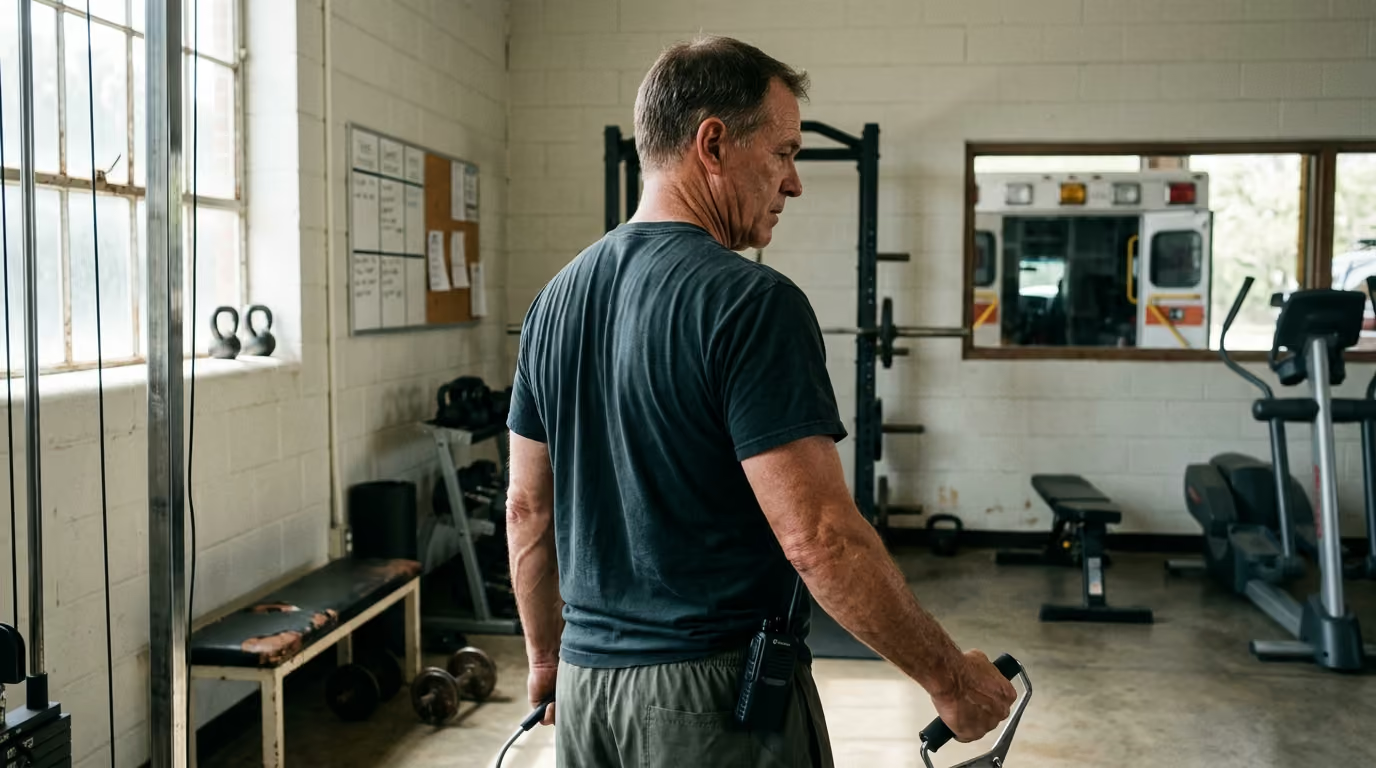

Retirement health strategies combine clinical hormone evaluations with phased resistance training programs to help transitioning first responders preserve metabolic function and vitality.





Many retiring emergency personnel assume that post-service physical decline stems from an unavoidable crash in testosterone. In reality, the abrupt loss of operational structure, regular physical demands, and structured shift schedules usually drives the loss of physical capacity long before hormones change. Preserving strength and vitality after leaving the station or patrol car requires a deliberate daily structure, progressive physical training, and targeted medical care. Testosterone replacement is a specific clinical treatment for confirmed medical deficiency, not an automatic anti-aging shortcut for retirement fatigue.
A successful post-service transition requires separating true endocrine dysfunction from the physical detraining and sleep disruption that frequently follow retirement. When you rebuild daily habits around progressive loading, adequate protein intake, and restorative rest, you protect your functional independence for decades.
The human body responds directly to daily physical demands. When a first responder transitions out of active service, the daily physical volume of the job vanishes overnight. Emergency calls, equipment carries, stair climbs, and station workouts disappear from the weekly routine. If structured physical training is not intentionally scheduled to replace that activity, muscle tissue atrophies and body fat accumulates.
This shift in body composition frequently alters circulating hormone levels without any failure of the testes. Adipose tissue contains the enzyme aromatase, which converts testosterone into estradiol. Increased visceral fat also increases systemic inflammation and decreases sex hormone-binding globulin. These metabolic changes lower both total and free testosterone concentrations in the blood.
Clinical research categorizes testosterone levels into distinct biological parameters:
Differentiating between primary endocrine failure and functional suppression is essential. Age-related testosterone decline in healthy men typically averages roughly one percent per year after age thirty. A sudden drop in energy, recovery capacity, or strength after retirement points to behavioral, metabolic, or sleep disruption rather than normal biological aging.
Addressing body composition and physical conditioning often restores testosterone levels in functional suppression. When individuals view low testosterone as a permanent medical defect instead of a physiological response to deconditioning, they miss the opportunity to rebuild their health foundation. True long-term health requires evaluating total lifestyle stress before assuming hormone therapy is the sole solution.
Retirement from the fire service, law enforcement, or emergency medical services brings a profound change in biological rhythms. Active-duty personnel operate under chronic circadian disruption, unpredictable adrenaline surges, and heavy physical loads for twenty to thirty years. When that operational environment suddenly stops, the nervous system and endocrine system face an unfamiliar environment.
Research examining retirement patterns reveals that the transition is highly individualized. Some individuals experience improved sleep duration and fewer sleep interruptions once shift work ends. A prospective cohort study found that sleep duration increased and sleep difficulties decreased after retirement, independent of physical activity changes.
Other individuals struggle significantly when the external structure of shift work disappears. A study evaluating older military veterans showed that poor sleep quality correlated directly with reduced physical health-related quality of life. Transitioned service members frequently report higher rates of moderate to severe clinical insomnia compared to active personnel. For these individuals, the sudden absence of a mandatory wake time disrupts circadian entrainment, leading to fragmented sleep and poor daytime energy.
You can learn more about managing circadian disruption in our guide on shift-work sleep recovery.
Orthopedic wear and tear also compounds the transition. Decades of wearing duty belts, carrying breathing apparatus, climbing ladders, and patient transfers leave lasting joint strain. When retired first responders experience chronic joint discomfort, they often decrease daily movement. This reduction in daily movement accelerates muscular atrophy and reduces energy expenditure, which directly drives weight gain.
Retirement also removes the immediate social camaraderie and shared mission of the station house or department. Psychological stress, loss of purpose, and social isolation can manifest as somatic fatigue, low motivation, and depressed mood. These psychological symptoms closely mirror androgen deficiency. Attributing these complex transition challenges solely to low testosterone leads to ineffective interventions that fail to solve the underlying lifestyle disruption.
Accurate diagnosis of testosterone deficiency requires strict clinical criteria and disciplined laboratory testing. Serum testosterone levels fluctuate significantly based on the time of day, acute stress, recent physical exertion, fasting status, and illness. A single blood draw taken in the afternoon or during a period of poor sleep does not provide an accurate assessment of endocrine health.
Clinical guidelines from the Endocrine Society and the American Urological Association emphasize that diagnosis requires both compatible clinical symptoms and repeatedly low laboratory measurements. Testing must be performed in the morning, ideally between seven and ten in the morning, after an overnight fast. If the initial morning total testosterone level falls below 300 ng/dL, a second confirmatory morning test is required on a separate day.
A thorough medical diagnostic assessment should investigate several related physiological parameters:
Clinicians must distinguish specific androgen deficiency symptoms from general, non-specific complaints. Symptoms with high diagnostic value include reduced sexual desire, fewer spontaneous morning erections, erectile dysfunction, unexplained microcytic anemia, and measurable loss of bone mineral density. Non-specific symptoms such as fatigue, mild weight gain, low mood, and slower gym progress are common across numerous metabolic, sleep, and psychological conditions.
Diagnostic workups should also include screening for obstructive sleep apnea, type 2 diabetes, thyroid dysfunction, and chronic opioid or medication exposure. High alcohol intake and certain prescription medications suppress the hypothalamic-pituitary-gonadal axis. When clinicians and patients address these underlying medical drivers first, testosterone levels frequently improve without exogenous hormone intervention. Explore comprehensive frameworks in our testosterone and hormone management section.
The benefits and limitations of testosterone replacement therapy in older men have been thoroughly studied in major clinical trials. The National Institutes of Health supported the Testosterone Trials, a landmark group of coordinated studies evaluating older men with low testosterone concentrations. The findings provide clear data on what testosterone therapy can achieve and what it cannot do.
The Testosterone Trials demonstrated that one year of testosterone therapy produced clear improvements in sexual desire, erectile function, and sexual activity. The treatment also produced a marked increase in hemoglobin levels, successfully correcting unexplained anemia in over half of the treated men. In addition, volumetric bone mineral density and estimated bone strength showed clear improvements, with particularly strong benefits observed in trabecular bone in the spine.
The trials showed far more modest results regarding physical performance and general vitality. Testosterone treatment did not substantially improve six-minute walking distance in older men with mobility limitations, although slight gains appeared across the broader cohort. The therapy produced no meaningful improvements in cognitive functioning, memory, or broad subjective vitality scores. Mood and depressive symptoms showed minor improvements, but the magnitude of change was small.
Cardiovascular safety data has provided greater clarity in recent years. The TRAVERSE trial investigated older men with hypogonadism and established cardiovascular disease or elevated cardiovascular risk. Over several years of follow-up, physiological testosterone replacement proved non-inferior to placebo regarding major adverse cardiac events, such as heart attacks and strokes.
However, testosterone therapy carries specific physiological risks that require careful management. Exogenous testosterone consistently increases red blood cell production, which can cause erythrocytosis and elevate blood viscosity. It also suppresses endogenous sperm production, making it inappropriate for individuals who plan to conceive. Testosterone is contraindicated in men with active prostate cancer, severe untreated obstructive sleep apnea, uncontrolled congestive heart failure, and baseline hematocrit levels exceeding fifty percent.
Medical testosterone therapy should be viewed as a focused treatment for confirmed clinical deficiency rather than a broad anti-aging remedy. It does not replace the systemic adaptations created by progressive resistance exercise, cardiovascular training, balanced nutrition, and structured sleep.
Physical strength is the primary physical asset protecting your independence, metabolic health, and physical capability as you age. Sarcopenia, the age-related loss of muscle mass, strength, and function, accelerates dramatically when regular training ceases. Relying on hormones to maintain physical function without regular mechanical loading is physiologically ineffective. Resistance exercise remains the single most potent stimulus for muscle protein synthesis and neuromuscular preservation.
Physical activity guidelines from the Centers for Disease Control and Prevention advise older adults to perform muscle-strengthening activities at least two days per week, alongside 150 minutes of moderate aerobic activity and balance training. For a retired first responder, returning to exercise requires a structured, periodized approach that accommodates past injuries while progressively loading joints and connective tissues.
The initial phase re-establishes movement patterns, joint tolerance, and motor control without causing excessive tissue damage or tendon strain. Training sessions should occur twice per week on non-consecutive days, using full-body routines.
Every session should prioritize five foundational movement patterns:
Perform two to three sets of eight to twelve controlled repetitions per exercise. Always stop each set with three to four repetitions in reserve. Training to failure is unnecessary for stimulating muscle retention and increases recovery time and joint irritation.
Once baseline joint tolerance is established, training frequency can increase to three days per week. This phase introduces progressive overload by gradually increasing load, volume, or movement complexity.
Muscle power, the ability to produce force rapidly, declines faster than maximum strength as we age. Preserving power is essential for real-world balance recovery, navigating uneven terrain, and reacting quickly to trips or falls. Integrate controlled power drills early in each session, such as medicine ball chest passes, light kettlebell swings, or snappy box step-ups.
Gradually increase the intensity on foundational lifts to six to eight repetitions per set with two repetitions in reserve. Incorporate unilateral exercises, such as single-leg Romanian deadlifts and step-downs, to identify and correct left-to-right strength imbalances developed during operational service.
The final phase creates a sustainable long-term routine. The objective is maintaining lean tissue, robust bone density, and functional mobility without accumulating joint pain. You can structure this around two or three full-body strength sessions per week, paired with dedicated cardiovascular and balance conditioning.
Balance training must be deliberately integrated rather than treated as an afterthought. Include tandem balance stances, single-leg balancing on firm surfaces, lateral band walks, and multi-directional lunges. Combine this with regular zone two aerobic activity, such as brisk outdoor walking, rowing, or cycling, to support mitochondrial health and cardiovascular function. Explore further longevity strategies in our career longevity frameworks resource center.
Preserving lean muscle mass and optimizing endogenous hormone production requires deliberate nutritional, metabolic, and sleep habits. After leaving active service, daily caloric expenditure usually drops significantly due to the absence of operational physical labor. If food intake and alcohol consumption remain at active-duty levels, body composition shifts rapidly toward visceral fat accumulation.
Dietary protein intake is critical for counteracting age-related anabolic resistance. Older muscle tissue requires a higher concentration of essential amino acids, particularly leucine, to stimulate muscle protein synthesis after a meal.
A successful nutritional strategy should prioritize consistent protein distribution throughout the day:
When addressing post-retirement weight gain, avoid extreme, crash calorie restriction. Severe caloric deficits accelerate the loss of lean skeletal muscle, lower metabolic rate, and suppress endogenous testosterone production. Aim for a moderate, steady caloric deficit that yields roughly half a pound to one pound of fat loss per week, paired with progressive strength training. Review our detailed nutrition and body composition guidelines for more structural guidance.
Sleep quality serves as the primary regulator of metabolic recovery and hormonal health. Obstructive sleep apnea (OSA) is exceptionally prevalent among retired emergency responders due to chronic shift work histories, upper airway changes, and elevated neck circumferences. Untreated sleep apnea disrupts normal sleep architecture, lowers morning testosterone concentrations, and elevates cardiovascular risk.
Screening for sleep apnea is essential if you experience habitual loud snoring, morning headaches, witnessed breathing pauses, or severe daytime sleepiness. Stabilizing airway patency through continuous positive airway pressure (CPAP) or oral appliances frequently improves daytime energy, insulin sensitivity, and natural hormone production.
Every retiring first responder presents a unique medical, physical, and psychological profile. Applying a single, uniform solution to every individual leads to poor outcomes and misdiagnoses. Examining practical scenarios helps clarify when lifestyle restructuring is the primary need and when formal endocrine care is warranted.
An illustrative model involves a 52-year-old former firefighter who stops station shifts, ceases regular morning workouts, and gains fifteen pounds within six months. He reports persistent lethargy and brain fog. A single blood test drawn in the late afternoon shows a total testosterone level of 285 ng/dL.
Assessment: This presentation represents functional suppression driven by deconditioning, circadian disruption, and dietary changes. The appropriate intervention involves establishing a fixed wake time, scheduling progressive strength training three days weekly, correcting diet quality, and repeating laboratory tests in the morning under fasting conditions after eight weeks of consistent lifestyle adherence.
Consider an illustrative model of a 66-year-old retired police officer experiencing persistent loss of libido, erectile dysfunction, and marked loss of strength despite consistent training. Two separate morning fasting blood tests show total testosterone levels of 210 ng/dL and 225 ng/dL, with elevated luteinizing hormone levels.
Assessment: This pattern indicates primary hypogonadism. Because clinical symptoms align with confirmatory laboratory deficits, shared medical decision-making regarding testosterone replacement therapy is appropriate. The clinical evaluation should include baseline hematocrit, PSA screening, and a comprehensive cardiovascular assessment.
Consider an illustrative example of a 58-year-old retired paramedic presenting with central adiposity, severe afternoon fatigue, loud snoring, and a borderline morning testosterone level of 295 ng/dL.
Assessment: Untreated sleep-disordered breathing and visceral adiposity are the primary drivers of fatigue and functional hormone suppression. The priority intervention is formal sleep testing to evaluate obstructive sleep apnea, combined with a progressive walking and resistance program. Initiating testosterone therapy without treating severe sleep apnea can worsen airway obstruction.
An illustrative model features a 48-year-old former tactical officer who maintained high strength during service but ceased all heavy lifting post-retirement due to chronic knee discomfort. He reports difficulty climbing stairs and carrying gear, but his morning testosterone levels test normal at 520 ng/dL.
Assessment: Normal hormonal status does not prevent muscle atrophy from detraining. The solution requires a structured physical rehabilitation program that works around joint limitations, rebuilding lower-body strength through regressions like box squats, sled drags, and step-ups. Review our guide on orthopedic injury recovery for joint-friendly exercise modifications.
When testosterone replacement therapy is medically indicated and prescribed by a licensed physician, systematic medical monitoring is necessary. Hormone replacement should never follow an unmonitored protocol. Responsible clinical care ensures that physiological serum concentrations are maintained while tracking safety parameters.
The primary hematologic risk associated with testosterone therapy is secondary erythrocytosis, an abnormal elevation in red blood cell volume. When hematocrit exceeds fifty-four percent, blood viscosity increases, which elevates the risk of thromboembolic events and cardiovascular strain. Injectable formulations tend to cause higher peaks in testosterone levels and carry a higher incidence of erythrocytosis compared to transdermal gels.
A standard clinical monitoring schedule includes:
If red blood cell counts rise above safe thresholds, medical options include reducing the hormone dose, switching from injectable to transdermal delivery, or performing therapeutic phlebotomy under physician direction. Unmonitored therapy carries avoidable health risks. Working with an experienced medical provider ensures that any therapeutic intervention supports long-term physical capability.
Transitioning from active service into retirement requires managing your health with the same professional discipline applied during your operational career. Rather than focusing on a single biomarker like testosterone, maintain a comprehensive dashboard that tracks strength, metabolic health, sleep quality, and functional capacity.
Set aside time each quarter to evaluate practical health benchmarks:
Building sustainable strength and vitality after emergency service does not depend on quick fixes or hormonal shortcuts. It is achieved through the steady execution of foundational health habits, progressive physical training, intelligent nutritional choices, and professional medical oversight when indicated.
Preserving physical capability after active duty is a lifelong process built on consistent daily training, restorative recovery, and sound medical care.
Stay connected for research-led guidance on duty fitness, shift-work sleep, injury recovery, stress, nutrition and career longevity. Practical ideas for first responders who want to stay capable on the job, recover well and protect their health for the long run.



Read practical guidance on first responder fitness, recovery, sleep, nutrition and resilience for demanding work and a long, active career.
read the blog



