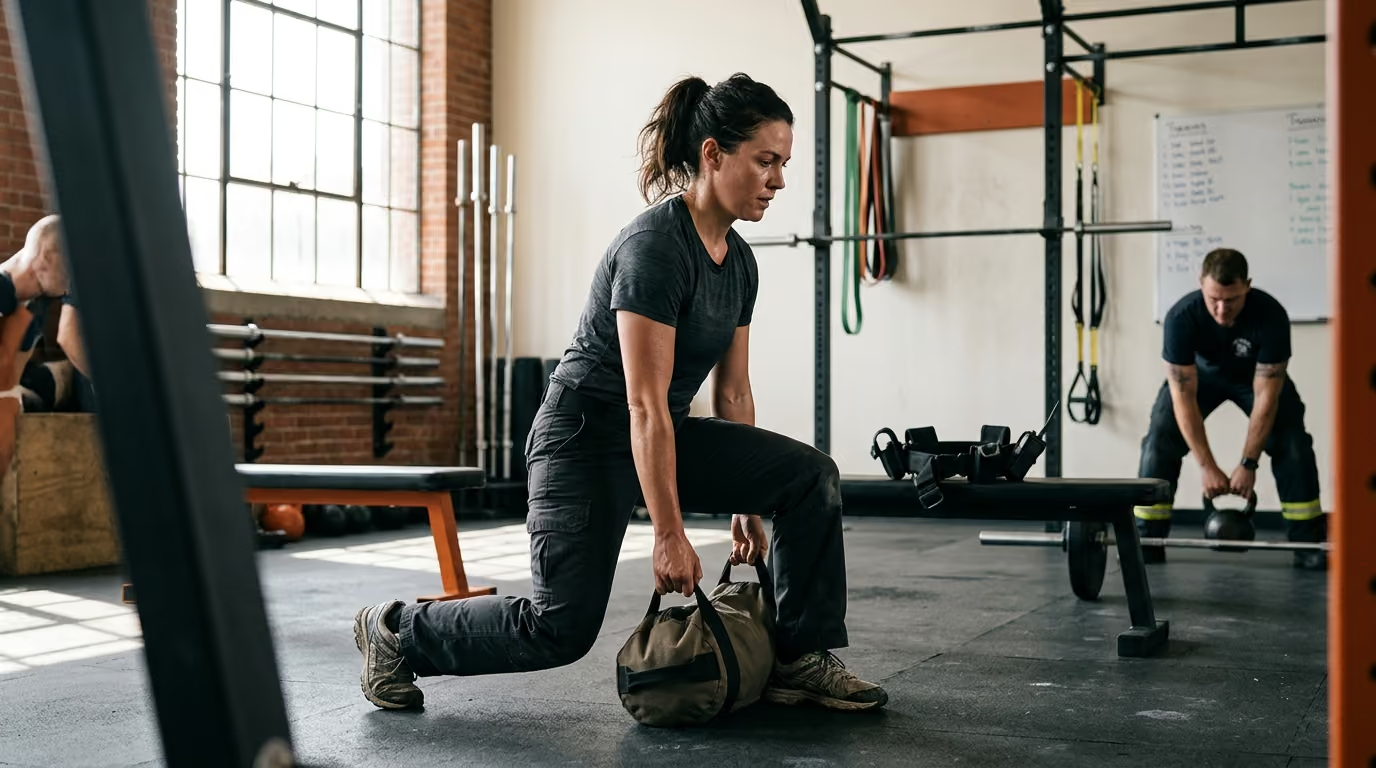

A complete tactical fitness framework helps female first responders navigate hormonal shifts, build occupational strength, and safely return to active duty after pregnancy.





Women's strength and conditioning in emergency services is the systematic development of duty-matched physical capacity, tissue resilience, and career longevity. It is not a diluted version of male training programs, nor is it a rigid schedule dictating workouts by calendar dates. Building occupational capability requires progressive physical loading tailored to the real demands of suppression, rescue, patient handling, and patrol work. At the same time, it requires an intelligent understanding of reproductive physiology, life stages, and individual health signals.
This guide provides an evidence-based roadmap for female firefighters, police officers, paramedics, and military personnel. It examines how menstrual physiology, hormonal contraception, pregnancy, postpartum recovery, and menopause intersect with physical training. By moving past outdated stereotypes and social media trends, emergency responders can build durable strength, maintain high readiness, and protect their long-term health across decades of service.
Popular fitness media often claims that women must drastically change their workouts every week based on hormonal shifts. The scientific literature presents a far more nuanced picture. While hormonal fluctuations occur across a normal cycle, group-level changes in maximal strength, explosive power, and aerobic capacity are generally small, inconsistent, and highly variable among individuals.
A comprehensive review of 35 studies evaluating athletic performance across menstrual phases found mixed results. Fifteen studies noted at least one performance variable shifting across the cycle, but twenty studies found no measurable change in capacity. Systematic reviews indicate that no single phase of the menstrual cycle can be labeled universally superior or inferior for physical performance. Group-level force production, sprint speed, and cardiorespiratory endurance remain relatively stable when training loads are managed intelligently.
Research evaluating cardiorespiratory markers reinforces this conclusion. A systematic review and meta-analysis confirmed that menstrual cycle phases do not significantly alter lactate threshold or submaximal aerobic endurance. While core body temperature rises slightly during the luteal phase, the body maintains its ability to adapt to conditioning, provided hydration and recovery are supported.
The menstrual cycle consists of a follicular phase, ovulation, and a luteal phase. Cycle length, ovulation timing, and hormone concentrations vary widely between women and between consecutive cycles in the same individual. Assuming a textbook 28-day schedule with ovulation precisely on day 14 leads to inaccurate programming. Natural variations in cycle length make calendar-based periodization unreliable for tactical athletes.
Subjective symptoms often impact training availability more than measurable physiological capacity. Responders frequently report cramping, lower back aching, gastrointestinal discomfort, sleep disruption, headache, and breast tenderness. These symptoms are real and can impair coordination or increase perceived effort. When symptoms arise, adjusting session volume or exercise selection is appropriate, but there is no scientific reason to eliminate heavy lifting or interval conditioning simply because of a calendar date.
Hormonal contraceptives are widely used across the emergency services for pregnancy prevention, cycle control, and symptom management. These medications include combined oral contraceptive pills, progestin-only pills, intrauterine devices, subdermal implants, injections, and transdermal patches. Each method delivers different hormone formulations, doses, and systemic exposures.
Evidence shows that hormonal contraception has, on average, minor or inconsistent effects on strength, power, and aerobic performance. Some studies report subtle decreases in maximal oxygen uptake or minor alterations in recovery kinetics, but these differences rarely translate to meaningful performance deficits on the fireground or on patrol. For many responders, the reduction in heavy bleeding, painful cramping, and unpredictable cycle timing provides a substantial practical advantage during shifts.
A common misconception is that hormonal contraceptives protect female athletes against musculoskeletal injuries like anterior cruciate ligament tears. Current systematic reviews show that hormonal contraception does not provide a proven protective effect against ligament or joint injuries. Training programs must rely on proven neuromuscular conditioning, posterior chain strengthening, and landing mechanics rather than assuming hormonal protection.
Responders using hormonal contraception should understand that withdrawal bleeding during the inactive pill phase is not a natural ovulatory period. Calendar tracking systems designed for natural cycles do not apply to women using systemic hormonal birth control. Monitoring should focus on symptom patterns, energy levels, sleep quality, and physical readiness rather than theoretical hormonal phases.
Any decision to begin, change, or discontinue hormonal contraception should be made with a qualified medical provider. Choices should balance reproductive goals, menstrual symptoms, migraine history, bone density, and individual cardiovascular risk factors rather than athletic performance alone.
Emergency service occupations require high physical readiness across multiple physiological capacities. Fire suppression, suspect apprehension, patient extraction, and tactical movement do not adjust their demands based on biological sex. Training programs must prepare female personnel to meet and exceed identical occupational benchmarks through progressive physical overload.
Musculoskeletal injury surveys among active female firefighters highlight the critical need for comprehensive physical preparation. In surveys of North American female firefighters, over 60 percent of respondents reported experiencing at least one occupational injury during their careers. Strains, sprains, and muscular pain in the lower back and lower extremities represent the vast majority of these occupational injuries. Building robust tissue capacity through dedicated strength training is a primary line of defense.
Developing duty-ready capacity requires targeting specific physical domains:
Absolute strength dictates the ability to advance a charged hoseline, force entry with a halligan bar, carry heavy equipment, or drag an unconscious victim. Relative strength determines how efficiently a responder moves her own body weight over obstacles, through narrow openings, or up ladders. Training must center on foundational multi-joint movements, including squats, deadlifts, overhead presses, rows, and heavy carries.
Emergency incidents rarely consist of a single maximal effort. Responders must repeatedly climb stairs, operate hydraulic rescue tools, hold patient stabilization positions, or perform prolonged chest compressions under fatigue. Building strength endurance requires higher-volume resistance work, submaximal circuit training, and extended carries that condition muscle groups to resist local fatigue.
Power allows an officer to sprint after a fleeing suspect, a firefighter to breach a reinforced door, or a paramedic to rapidly lift a stretcher over a curb. Once foundational movement mechanics and base strength are established, training should integrate power development. Useful modalities include medicine ball throws, trap bar jumps, kettlebell swings, and low-volume plyometrics.
A strong aerobic foundation accelerates recovery between high-intensity tasks, reduces heart rate during sustained incidents, and supports autonomic recovery after shifts. Anaerobic power fuels short, high-output bursts during dynamic entries or rapid rescues. Conditioning programs should combine low-intensity steady-state cardiovascular base building with interval sessions designed to mimic duty work-to-rest ratios.
First responders operate with substantial external loads, including structural firefighting turnout gear, self-contained breathing apparatus, ballistic vests, and duty belts. This external weight shifts the center of mass, places continuous compressive stress on the spine, and alters gait mechanics. Training must develop trunk anti-rotation and anti-extension stability, hip stability, and ankle mobility to preserve movement mechanics under heavy gear.
Responders seeking to organize their weekly work can learn how to balance structured physical training with short readiness sessions through targeted programming strategies.
Navigating pregnancy as a first responder requires distinguishing between two distinct issues: the physiological safety of exercise in an uncomplicated pregnancy, and the severe occupational hazards present in emergency response environments.
Leading medical organizations, including the American College of Obstetricians and Gynecologists, recommend at least 150 minutes of moderate-intensity aerobic activity per week during uncomplicated pregnancies. Regular physical exercise reduces the risk of gestational diabetes, preeclampsia, excessive gestational weight gain, and lower back pain. For women with an established strength training background, continuing resistance training supports musculoskeletal strength, posture, and mental health.
Exercise modifications become necessary as pregnancy advances. The release of relaxin increases joint laxity, while a changing center of gravity challenges balance. Programming adjustments include:
While structured exercise is beneficial, active duty in emergency environments carries unique risks that cannot be trained away. Exposure to toxic products of combustion, heavy metals, airborne pathogens, extreme thermal stress, traumatic physical impacts, and heavy victim extrications present substantial risks to fetal health.
The International Association of Fire Fighters emphasizes that pregnant personnel should be offered voluntary, confidential reassignment to light-duty or administrative roles without loss of pay, seniority, or benefits. Emergency services must maintain clear policies that support early notification, respect medical privacy, and provide safe work options throughout pregnancy.
Responders must know the clinical red flags that require stopping exercise immediately. Medical attention is necessary if a pregnant responder experiences vaginal bleeding, regular painful contractions, fluid leakage, dizziness, chest pain, calf pain or swelling, headache, or muscle weakness affecting balance.
Returning to full operational capability after childbirth is a staged rehabilitation process rather than a single clearance event at a six-week checkup. The six-week medical appointment typically confirms basic tissue healing of surgical incisions or perineal tears. It does not validate that a responder is physically prepared to drag a 200-pound victim, climb six flights of stairs with an equipment pack, or sprint in full body armor.
Postpartum recovery timelines vary widely based on whether delivery was vaginal or via cesarean section, the presence of perineal tearing, pelvic floor symptoms, abdominal wall separation, sleep debt, and infant feeding demands. Clinical guidelines for returning to running and high-impact training recommend a progressive approach that allows tissues to adapt without overloading the pelvic floor.
A structured postpartum return-to-duty pathway includes five progressive stages:
Focus on walking, diaphragmatic breathing, gentle pelvic floor coordination, and light mobility work. Re-establish basic core activation without heavy intra-abdominal pressure. Prioritize rest, nutrition, and recovery from delivery.
Introduce structured resistance training using bodyweight and moderate loads. Focus on fundamental patterns: goblet squats, Romanian deadlifts, chest presses, supported rows, and split squats. Monitor closely for signs of abdominal doming, pelvic heaviness, or urinary leakage.
Begin low-level plyometrics and rate-of-force development once base strength is established and the responder is symptom-free. Incorporate box step-downs, light medicine ball throws, short interval running, and skipping. Ensure pelvic floor stability remains solid during ground impact.
Reintroduce job-specific conditioning. Integrate stair climbs with weighted vests, sled drags, hose pulls, dummy carries, and equipment handling. Progressive thermal exposure and crawling drills can be introduced in controlled environments.
Validate readiness through comprehensive, duty-specific performance assessments. Test repeated work capacity, simulated emergency scenarios under fatigue, and movement under full PPE load before returning to frontline assignments.
Urinary incontinence, fecal leakage, pelvic organ prolapse symptoms (feeling a heavy bulge or dragging sensation in the pelvis), and lingering musculoskeletal pain should never be accepted as unavoidable consequences of childbirth. Responders experiencing these symptoms should seek evaluation from a specialized pelvic floor physical therapist.
Understanding how to balance high output capacity workouts with low fatigue maintenance sessions is essential when rebuilding duty fitness around interrupted sleep.
Perimenopause marks the transition toward menopause, characterized by fluctuating ovarian hormone production, irregular cycles, and shifts in metabolic health. Menopause is clinically defined after twelve consecutive months without menstruation, typically occurring between ages 45 and 55. For female first responders, this biological transition often coincides with the peak of their operational seniority and leadership responsibilities.
Common symptoms during this stage include vasomotor episodes (hot flashes and night sweats), disrupted sleep architecture, joint stiffness, changes in lean muscle distribution, and mood fluctuations. When combined with rotating night shifts, heavy personal protective equipment, thermal stress on the fireground, and cumulative occupational fatigue, these symptoms can create real operational friction.
Training priorities must adapt to support musculoskeletal integrity, metabolic health, and bone mineral density:
Declining estrogen levels accelerate the loss of bone mineral density and skeletal muscle mass. Progressive resistance training is a primary non-pharmacological tool to counter osteopenia and sarcopenia. Research indicates that resistance training at or above 70 percent of one-repetition maximum, performed two to three times per week, stimulates bone remodeling and preserves lean tissue. Heavy compound movements like squats, deadlifts, and overhead presses provide essential axial loading.
Aging causes a disproportionate loss of Type II fast-twitch muscle fibers, which are vital for rapid force production and dynamic balance. Incorporating safe, explosive movements, such as kettlebell swings, trap bar pulls, and medicine ball throws, helps retain motor unit recruitment speed, reducing fall risk and maintaining duty agility.
Vasomotor symptoms can alter thermoregulation. Conditioning should emphasize well-structured aerobic base building combined with high-intensity interval training, rather than endless medium-intensity exhaustion sessions. Responders must be proactive with hydration, electrolyte management, and active cooling protocols during structural firefighting or extended tactical operations in hot weather.
Midlife fatigue, sleep disruption, and decreased recovery capacity should not automatically be blamed on menopause. Clinicians must screen for iron deficiency anemia, thyroid dysfunction, clinical depression, obstructive sleep apnea, and low energy availability. Responders struggling with severe menopausal symptoms should consult a knowledgeable medical provider to discuss evidence-based symptom management, including hormone replacement therapy where clinically appropriate.
Emergency service personnel can learn more about managing circadian strain and responder sleep debt to protect recovery during hormonal transitions.
Rather than following arbitrary phase-based calendars, tactical athletes benefit most from a performance-centered, symptom-informed monitoring model. This three-layer framework separates daily readiness tracking from objective performance metrics and clinical flags, providing actionable insight without unnecessary complexity.
Track a small selection of repeatable, low-fatigue performance benchmarks every two to four weeks:
Tracking these markers reveals true physiological capacity trends over time. If a responder feels tired before a shift workout but matches her standard velocity and grip strength, she can proceed with normal training.
A fast, 30-second daily check-in helps identify meaningful patterns across shifts and cycles:
Using an autoregulated training model based on daily readiness allows responders to adjust training volume or intensity down when cumulative fatigue spikes, and push when readiness is high.
Certain symptoms are not standard training soreness and require prompt escalation to medical providers:
A critical clinical risk in tactical populations is Low Energy Availability (LEA), which drives Relative Energy Deficiency in Sport (REDs). LEA occurs when dietary energy intake is insufficient to support normal physiological functions after accounting for the energy expended during training and duty.
In emergency services and military environments, LEA frequently occurs unintentionally due to unpredictable call volumes, missed meals on long shifts, appetite suppression from high stress, or deliberate under-fueling for body composition goals. While a threshold of 45 kilocalories per kilogram of fat-free mass per day is often cited in sports literature, any sustained energy deficit can trigger severe consequences.
Sustained low energy availability suppresses reproductive hormones, leading to menstrual disruption and amenorrhea. More dangerously, it impairs bone turnover, drastically increasing the risk of stress fractures in the tibia, metatarsals, and femoral neck. It blunts muscle protein synthesis, compromises immune defenses, impairs cognitive focus during critical incidents, and disrupts mood regulation.
When a female responder presents with missed cycles, recurrent soft-tissue injuries, or chronic exhaustion, the answer is rarely to prescribe more cardio or cut calories. The appropriate response is a multidisciplinary clinical review focusing on nutritional adequacy, metabolic recovery, and workload management.
Responders seeking foundational guidance on duty-specific programming can explore broader resources within our strength, fitness, and duty performance collection.
Training for arduous emergency service duty requires an uncompromising commitment to safety. Tactical athletes must recognize when physical discomfort represents a normal training stimulus and when it signals a medical issue that compromises personal safety or crew readiness.
Emergency responders must never operate on frontline emergency apparatus, drive emergency vehicles, or perform hazardous training drills when acute illness, severe sleep deprivation, or unmanaged injury impairs cognitive reaction time or motor control. The safety of the public and the crew depends entirely on each member's operational readiness.
If acute symptoms, such as severe cramping, sudden dizziness, or joint instability, occur during a shift, duty tasks must be modified immediately. Tactical fitness means having the professional judgment to pull back before a minor tissue strain turns into a career-ending injury.
A common error among female first responders is assuming that chronic fatigue, brain fog, and lagging strength are normal byproducts of the uniform. These symptoms warrant a comprehensive medical workup to rule out underlying clinical issues:
Pelvic floor dysfunction is common among female athletes, particularly those who lift heavy loads, run, or have experienced childbirth. Incontinence, pelvic pain, and pelvic organ prolapse are medical conditions that respond exceptionally well to targeted pelvic floor physical therapy. Tactical athletes should seek care from board-certified physical therapists specializing in pelvic health rather than modifying their lives around symptoms or abandoning heavy strength training.
Responders interested in broader policy contexts can read about how agencies implement sex-neutral fitness and body composition standards across arduous public safety roles.
No automatic deload is necessary during menstruation. If a responder feels capable and has minimal symptoms, she can perform normal, high-intensity training. If severe cramping, back pain, or fatigue occurs, modifying session volume, resting longer between sets, or using low-impact conditioning is appropriate. Training should be guided by daily symptom readiness, not calendar dates.
Pack portable, nutrient-dense meals containing high-quality protein and complex carbohydrates that can be consumed quickly between calls. If full meals are impossible during busy shifts, liquid nutrition, such as whey or plant protein shakes with fruit and nut butter, can maintain energy balance. Keeping emergency food in the locker prevents unintentional low energy availability during extended incidents.
Yes. High-intensity interval training is highly effective for women in perimenopause when programmed with adequate rest. It stimulates insulin sensitivity, supports cardiovascular capacity, and preserves metabolic health. The key is ensuring interval sessions are short, high quality, and balanced with lower-intensity aerobic base building, rather than turning every workout into an exhaustive circuit.
Heavy lifting itself does not cause pelvic floor dysfunction when performed with proper breathing, bracing, and progressive loading. Problems typically arise when athletes hold their breath excessively (prolonged Valsalva maneuver) under loads they have not properly conditioned for, or when returning to heavy lifting too quickly postpartum. Proper core mechanics and progressive exposure protect the pelvic floor.
Building enduring strength and fitness as a female first responder requires training real occupational capacities, strength, power, conditioning, and tissue resilience, while respecting individual physiology and life transitions. By pairing progressive physical loading with symptom-informed monitoring and prompt clinical support, emergency responders can sustain high operational capability, protect their health, and thrive throughout a long service career.
Stay connected for research-led guidance on duty fitness, shift-work sleep, injury recovery, stress, nutrition and career longevity. Practical ideas for first responders who want to stay capable on the job, recover well and protect their health for the long run.



Read practical guidance on first responder fitness, recovery, sleep, nutrition and resilience for demanding work and a long, active career.
read the blog



