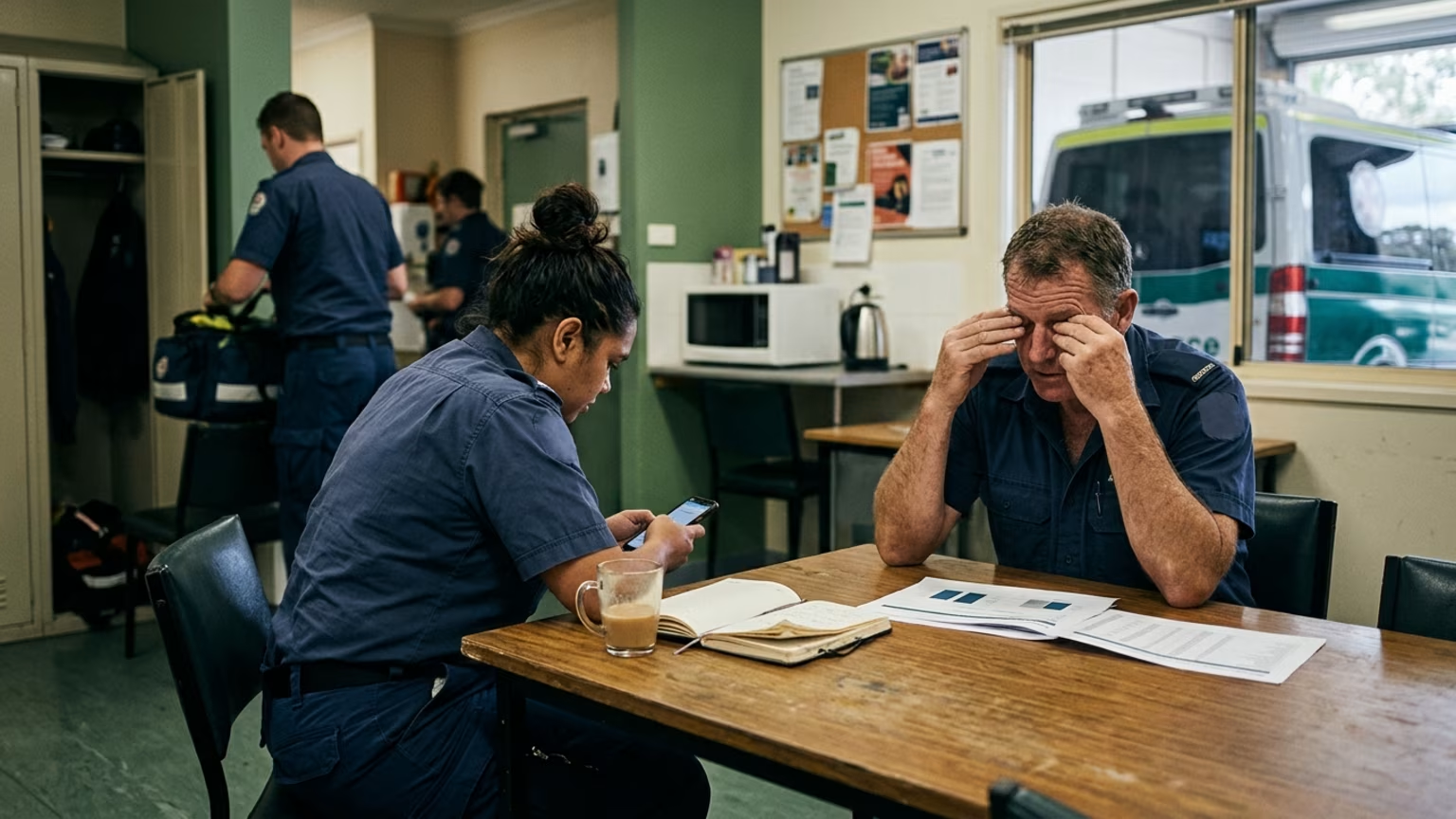

A 2025 survey of ACT Ambulance Service staff highlights severe workload stress, high workplace aggression rates, and a critical lack of organizational support.





In early October 2026, The Canberra Times reported the results of a 2025 public-sector survey detailing severe workload strain among ACT Ambulance Service personnel. The data covered 119 ambulance respondents within a broader pool of more than 13,000 public servants.
The clearest finding centers on the direct relationship between understaffing and daily occupational stress. Among the ACT Ambulance Service respondents, more than 70 percent identified a lack of staff as one of the main causes of work-related stress. Only 36 percent of these professionals felt their current workload was appropriate for their role. These figures illustrate a workforce operating under persistent pressure with limited capacity for adequate recovery.
The survey indicated that 41 percent of the ambulance respondents were experiencing high or very high stress levels. This specific metric points to a systemic structural issue rather than isolated incidents of individual fatigue. Working continuously under these conditions depletes the physical reserves required to handle complex medical emergencies. Paramedics cannot sustain high operational output when staffing deficits consistently force them past their natural physiological limits.
The data regarding organizational support reveals a stark contrast between field personnel and administrative staff. Only 16 percent of the ambulance staff felt organizational policies supported their health and wellbeing. This finding stands far below the 54 percent benchmark recorded across the broader ACT public service. A gap of this magnitude indicates that generic administrative policies do not translate effectively to the realities of emergency medical response.
The report characterized this low wellbeing-support result as the most alarming finding in the survey. It highlights a critical disconnect between administrative expectations and the actual demands of shift work. When a vast majority of the workforce feels entirely unsupported by their organization, individual resilience training often loses its intended impact. The data shows that structural changes are strictly necessary to address these widespread operational concerns.
These survey figures validate a hard reality regarding fatigue management in emergency services. When personnel face severe staffing shortages, standard advice on physical recovery becomes extremely difficult to implement. The reported mismatch between available personnel and expected workload drastically limits the effectiveness of individual recovery strategies. Responders cannot effectively lower their baseline stress if their schedule demands constant overtime and delayed meal breaks.
The operational consequences of this tension are compounded by frequent encounters with hostility in the field. The report stated that half of the ambulance respondents had experienced workplace violence or aggression. Within that specific group, 87 percent identified a patient as the source and 70 percent identified a member of the public. Operating in an environment with such high rates of confrontation requires immense situational awareness and constant physical readiness.
Maintaining this level of vigilance drains cognitive reserves rapidly during a standard rotating shift. More than 90 percent of those reporting aggression described facing verbal abuse or intimidating behavior. Additionally, 26 percent of this group reported instances of physical assault. Dealing with frequent physical and verbal threats requires a well-regulated nervous system to process the repeated spikes in acute operational stress.
The psychological anticipation of violence alters how the body prepares for rest long after the shift concludes. When a paramedic expects verbal abuse or physical threats during routine calls, their nervous system remains in a heightened state of alert. This biological response severely compromises sleep quality and delays the onset of restorative deep sleep cycles. Managing this specific type of physiological hyperarousal is critical for preventing chronic exhaustion.
When persistent understaffing limits scheduled recovery windows, physical training protocols must adapt to the reality of the job. Personnel dealing with these conditions should prioritize nervous system regulation over demanding physical conditioning. Recognizing the physical toll of these events helps professionals maintain their baseline duty readiness. Organizations must validate their fatigue models against actual call volume rather than relying strictly on standard shift templates.
The contrast between ambulance personnel and general public servants challenges the effectiveness of blanket corporate wellness programs. A 54 percent support benchmark for general public servants suggests that standard policies function adequately in predictable office environments. However, the 16 percent result for ambulance staff demonstrates that generic wellness programs fail in high-stakes operational contexts. Shift work requires targeted interventions that acknowledge interrupted sleep and unpredictable physical demands.
The report also detailed severe internal workplace concerns that compound the physical wear of medical response work. Nearly 30 percent of the respondents said they had personally experienced bullying on the job. Furthermore, 19 percent reported workplace discrimination and 13 percent reported sexual harassment. These severe internal stressors frequently amplify the psychological burden of demanding clinical workloads.
These negative internal dynamics often accelerate staff turnover and worsen existing personnel shortages. When experienced paramedics leave the service due to bullying or discrimination, the remaining staff must absorb an even larger share of the clinical workload. This cycle of attrition forces newer personnel to operate without the guidance of seasoned veterans. Rebuilding a depleted workforce requires organizations to systematically eliminate these toxic behaviors from their operational culture.
Relying solely on conventional stress seminars while ignoring these internal and external challenges leaves personnel vulnerable to rapid burnout. Emergency medical professionals cannot simply ignore the physiological effects of systemic understaffing or persistent workplace hostility. The assumption that individual coping skills can overcome a lack of basic organizational safety is fundamentally flawed. True fatigue management requires a functional internal culture alongside adequate operational staffing levels.
Given these reported organizational gaps, emergency medical professionals must make deliberate adjustments to their daily shift preparations. First, personnel should actively monitor their own signs of accumulated fatigue without waiting for administrative interventions. Tracking sleep architecture and monitoring resting heart rate provides highly objective data on physiological recovery. This routine tracking allows professionals to adjust their physical exertion levels based on the actual toll of their recent shifts.
Second, managing the physical response to field hostility must become a central part of routine shift preparation. With half of the surveyed personnel reporting workplace aggression, responders need reliable methods to process acute psychological stress. Utilizing quick grounding techniques can help emergency workers maintain focus and regulate their autonomic nervous system between difficult calls. Re-establishing physical calm prevents tension from accumulating across a twelve-hour operational rotation.
Third, professionals need to separate their individual fitness programming from their career stress. If the operational workload is exceptionally high, duty fitness must focus strictly on injury prevention and joint mobility. High-output conditioning should be scaled back immediately when the body is already managing elevated occupational strain. Implementing active post-incident transition strategies helps clear residual physical tension before the evening commute home.
Managing physical energy also requires a strategic approach to diet when breaks are unpredictable. Professionals must plan their nutrition during high workload periods to avoid crashing near the end of a rotation. Relying on convenient processed food during extended shifts frequently worsens the metabolic impact of sleep deprivation. Packing nutrient-dense meals provides a reliable energy baseline when organizational staffing deficits delay traditional meal breaks.
Finally, individuals dealing with persistent overload should document these conditions and utilize available clinical channels. Acknowledging that organizational policies might lack sufficient support means professionals must proactively seek external or peer-led resources. Understanding these systemic pressures is also important when assessing the mental-health risks of high-stress training across different emergency medical disciplines. Seeking qualified clinical support builds a solid foundation for long-term career capability.
Moving forward, the emergency medical community must observe whether public-sector administrators take concrete steps to adjust current ambulance staffing models. The data from the ACT survey provides a clear snapshot of how workforce shortages translate directly into high occupational strain. Future assessments should track whether specific staffing interventions or schedule modifications successfully change these perceived levels of organizational support. Monitoring these structural changes will clarify which strategies actually improve physical conditions on the ground.
Researchers must also isolate the specific effects of internal workplace issues from the inherent stress of critical patient care. The broader Emergency Services Agency group included 323 respondents in this specific public-sector survey. Comparing the ambulance service data with other specific emergency agencies could reveal whether these internal cultural issues are entirely unique to medical response environments. Understanding how bullying and discrimination interact with standard clinical fatigue will require more detailed operational research.
Ignoring these reported survey findings could lead to more severe consequences for community health outcomes and response times. A highly stressed and fatigued ambulance workforce is naturally more susceptible to clinical errors and preventable operational injuries. Public safety relies entirely on the physical capability and mental sharpness of the responders operating in the field. Addressing these systemic workload deficits is an absolute necessity for sustaining a functional emergency medical system.
For now, tracking how departments respond to this reported data will indicate the future direction of emergency workforce management. If agencies begin prioritizing objective workload regulation, field personnel may see tangible improvements in their shift recovery windows. Until those structural changes materialize, emergency professionals must continue adapting their individual routines to survive the strict demands of understaffed rosters. The conversation around first responder health must remain focused on highly practical and measurable operational changes.
Translating survey data on organizational understaffing into actionable field practices builds a necessary foundation for managing long-term occupational fatigue. When navigating these demanding environments, conflicting advice that prioritises short-term performance while ignoring long-term health creates unnecessary physical risk, and Rescuris provides clear structural frameworks to help emergency professionals protect their baseline capability. Explore Resources
Rescuris publishes evidence-aware guidance for firefighters, police officers, paramedics and other first responders on fitness, recovery, sleep, nutrition, stress resilience and long-term capability.






Read practical guidance on first responder fitness, recovery, sleep, nutrition and resilience for demanding work and a long, active career.
read the blog
