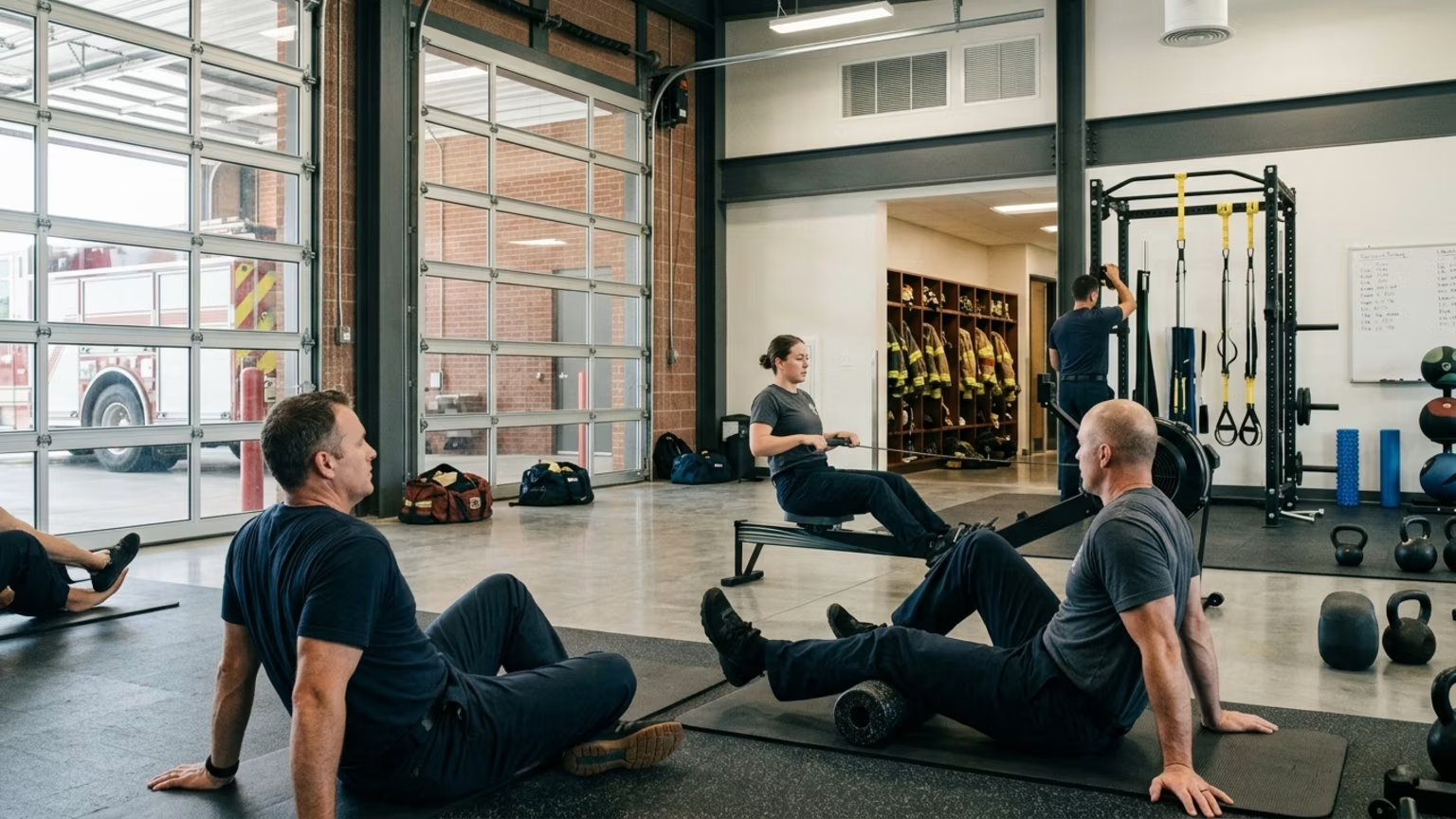

Buffalo Grove's new $10.1 million fire station integrates exhaust controls, bunk alerts and fitness space to support first responder recovery and readiness.





Buffalo Grove, Illinois, opened Fire Station 25 on September 16, 2026, replacing a 50-year-old facility with a new building heavily focused on personnel health. The construction project came in slightly below its $10.1 million budget, according to municipal officials cited by FireRescue1 and the Chicago Tribune.
The defining characteristic of Buffalo Grove’s latest project is the integration of recovery features directly into the municipal architecture. The new station was designed by FGM Architects and its construction was managed by Frederick Quinn Corp. They replaced a building that Project Manager Adam Slotkus described as having required multiple repairs before its age simply caught up with it. The updated design introduces a range of occupational health systems tailored to the realities of a 24-hour shift schedule.
FireRescue1 reported that the new station features individual bunk rooms equipped with specific climate controls and programmable alerts. It also includes modern tailpipe hoses intended to keep fire-vehicle exhaust out of the interior station environment. To support physical readiness, the architects included a workout room three times the size of the former station’s exercise area. The expanded apparatus-bay capacity and high-speed overhead doors improve operational response times while helping to keep cold air out during winter.
Deputy Chief Shawn Collins explained that firefighters may be awakened three, four or five times in a single night. He highlighted the critical importance of uninterrupted sleep for emergency personnel. Collins framed the new bunk room designs and programmable alerts as a structural method to reduce unnecessary sleep interruptions across a shift. While these statements reflect operational rationale rather than measured clinical outcomes, they represent a clear acknowledgment of fatigue management.
Beyond recovery and exposure control, the building incorporates an array of energy-related features that support daily station efficiency. FireRescue1 noted that the facility utilizes occupancy-sensor lighting and door-status indicator lights. Furthermore, a separate FireRescue1 report outlines broader station-design priorities when department budgets become constrained. That guidance identifies personnel safety features, contamination-control spaces, and sleeping and hygiene facilities as the critical priorities to protect.
A fire station's physical layout actively shapes how an emergency crew manages physical recovery between emergency responses. The inclusion of individually controlled sleeping quarters validates modern operational guidelines surrounding sleep disruption. When a specific unit is dispatched, programmable alerts allow non-dispatched crews to remain undisturbed in their separate bunks. This targeted alerting mechanism directly limits unnecessary nighttime awakenings. Managing continuous rest periods is necessary to combat the extreme fatigue associated with long shifts. This concept mirrors broader discussions regarding how rising municipal call volumes directly impact physical recovery and readiness.
Physical training capacity also received a substantial upgrade in the new Buffalo Grove facility. Collins argued that maintaining physical fitness is fundamentally easier than regaining it after an extended period of decline. By expanding the workout room to three times its previous size, the department removes a common barrier to consistent exercise. Crews now have immediate access to adequate space for structured physical conditioning and active recovery protocols between calls.
However, the mere presence of a larger fitness area does not automatically generate a more capable workforce. A dedicated workout room functions as an operational resource that requires active and intelligent utilization by the crews. Emergency service professionals must rely on adaptable training programs rather than assuming the facility itself guarantees fitness. Physical readiness remains a daily discipline necessary for handling heavy equipment and navigating unpredictable incident scenes. Developing sustainable habits is crucial, a topic covered extensively in our guide on structuring physical training patterns for emergency duty.
The integration of new vehicles also alters how crews engage with daily physical demands. The Buffalo Grove station houses a new rescue squad vehicle described in FireRescue1’s report as smaller, quicker and lighter. This specific apparatus is intended for paramedic and technical-rescue responses. Operating lighter vehicles for medical calls can marginally reduce the heavy lifting associated with navigating massive fire engines.
Historically, municipal budgets prioritized the storage of massive fire apparatus over the biological requirements of the assigned crews. Many older facilities placed living spaces and turnout gear rooms adjacent to diesel-heavy bays without adequate environmental separation. The 50-year-old station that Buffalo Grove replaced serves as an example of aging infrastructure struggling to meet modern standards. These outdated setups often forced personnel to sleep in open dormitories while inhaling residual diesel particulates and off-gassing equipment.
The new construction challenges this traditional approach by enforcing strict physical boundaries between contaminated work zones and clean recovery areas. Village President Eric Smith framed the updated facility as a comprehensive investment in public safety, general preparedness and the emergency responders themselves. This modern perspective shifts the definition of a station from a simple garage to an occupational health facility. Protecting the respiratory health and sleep quality of emergency personnel is now viewed as an essential municipal obligation.
Previous design philosophies assumed that robust exposure controls were secondary luxury items rather than critical safety requirements. Tailpipe exhaust hoses and independent climate systems represent a fundamental departure from the passive ventilation strategies used decades ago. Recognizing the long-term impact of environmental exposures has forced architects to prioritize contamination control. Budgeting effectively for these upgrades requires significant foresight from local government officials and fire department leadership alike.
Modern station designs must account for the reality that first responders spend roughly a third of their lives inside these facilities. Providing adequate decontamination areas and hygienic sleeping quarters is no longer viewed as an optional upgrade. It is a fundamental strategy for mitigating the staggering costs associated with occupational illness and early medical retirement. The Buffalo Grove project serves as a highly visible example of this necessary evolution in municipal infrastructure planning.
While advanced facility features offer distinct advantages, their operational effectiveness relies entirely on strict daily maintenance. Exposure control systems require consistent human oversight to function as designed over the lifespan of a municipal building. A September 2026 account detailed a National Institute for Occupational Safety and Health (NIOSH) health-hazard evaluation at a different fire station. That report indicated that measured carbon monoxide, carbon dioxide and diesel particulate matter were below relevant occupational exposure limits there.
The report attributed the station's lower ultrafine-particle levels to the successful use of dedicated vehicle exhaust filters. However, that same NIOSH evaluation identified significant remaining concerns regarding routine system maintenance and internal airflow management. Investigators discovered folded filters in an air-handling unit that could allow contaminated air to easily bypass the intended filtration system. They also documented that air from the turnout-gear room sometimes flowed backward into the designated living quarters.
First responders must adopt proactive daily practices so their station's environmental controls actually protect them. The American Industrial Hygiene Association reported several NIOSH recommendations that crews can implement immediately to manage station air quality.
These practical maintenance steps help translate expensive municipal investments into cleaner working environments. Relying completely on passive automated systems without routine physical inspections creates a dangerous false sense of security. Crews must actively monitor their surroundings and keep heavily contaminated turnout gear strictly isolated from clean sleeping quarters.
As municipalities continue investing in health-focused infrastructure, researchers must track the actual outcomes produced by these structural improvements. The reporting on Fire Station 25 confirms the installation of climate controls, exhaust hoses and specialized lighting systems. It does not yet supply measured data regarding changes in firefighter health outcomes, career duration or overall injury rates. Following these specific metrics over the next decade will be essential for justifying similar infrastructure investments in other jurisdictions.
Future occupational studies should quantify the exact sleep duration gained through targeted, programmable bunk room alerting systems. There is also an ongoing need to measure how a substantially larger workout footprint influences actual weekly training adherence among crews. Documenting these specific operational benefits will help shift modern station design from a local preference to an absolute industry standard. This focus on objective evidence aligns with broader conversations surrounding federal grant funding allocated for on-site physical recovery services.
The connection between daily station environments and long-term biological resilience remains a critical area for ongoing occupational observation. As older stations across the country require extensive repairs and eventual replacement, operational data will become increasingly valuable. Equipment installations alone cannot reverse the physical toll of a long career in the emergency services. However, structured facilities create an environment where targeted rest and consistent physical maintenance are far more accessible.
Until robust longitudinal data emerges, departments must treat these new facility designs as valuable instruments that require daily discipline to optimize. The success of a ten-million-dollar building ultimately rests on the daily habits of the professionals who operate within it. Keeping clean zones isolated and using workout spaces daily will dictate the true return on this public investment.
Upgrading a fire station with sleep controls and larger fitness rooms is a major operational decision, but utilizing those spaces effectively requires personalized strategy. When emergency professionals need help separating useful stress-resilience guidance from motivational slogans or mental-health stigma, Rescuris translates complex biological research into practical protocols. We help crews turn new facility investments into daily habits that support physical capability, consistent recovery, and long-term career longevity.
Rescuris publishes evidence-aware guidance for firefighters, police officers, paramedics and other first responders on fitness, recovery, sleep, nutrition, stress resilience and long-term capability.






Read practical guidance on first responder fitness, recovery, sleep, nutrition and resilience for demanding work and a long, active career.
read the blog
