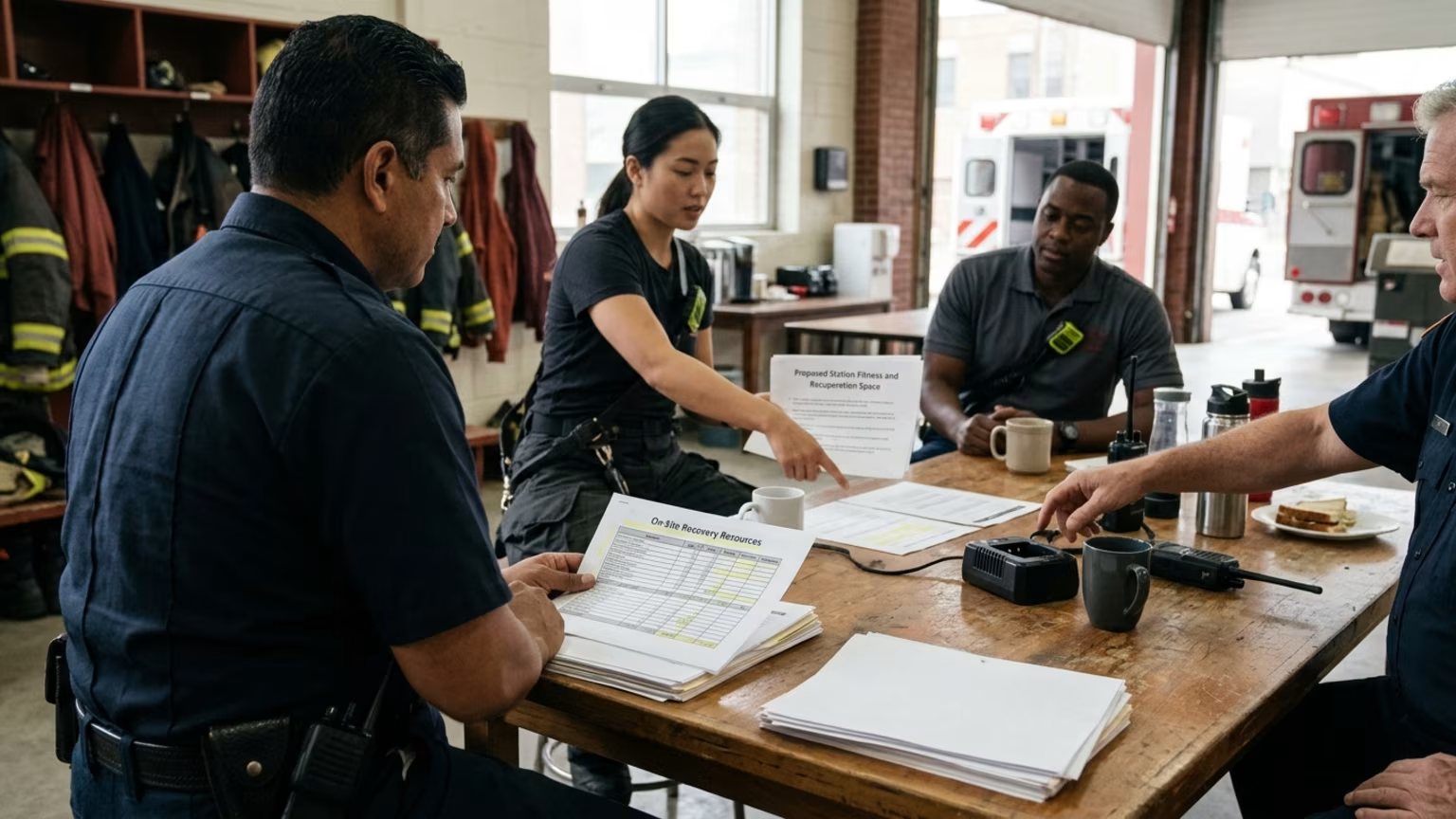

Recent FEMA grant funding highlights a proposed operational shift toward integrating on-site physical therapy and mental-health wellness services in fire stations.





In September 2026 FEMA announced more than $14 million in fire-grant funding for response organizations across Alaska, Idaho, Oregon and Washington. This regional funding block includes specific federal awards aimed at bringing physical therapy and mental-health services directly into local fire stations.
The primary operational takeaway from this recent funding cycle is the planned integration of clinical support services into the daily firehouse environment. Kootenai County Fire & Rescue in Post Falls, Idaho, was awarded $120,000 through FEMA’s Assistance to Firefighters Grant program. This specific federal award is designated for a proposed firefighter wellness initiative. The plan is expected to include on-site physical therapy, on-site mental-health services, and additional training and resources for the department’s peer-support team.
According to local reporting the Idaho department originally requested funding for both clinical services and new physical equipment. FEMA ultimately funded the services portion of the submitted proposal, and Kootenai County plans to seek additional funding for the broader initiative. The current award represents a planned investment in personnel health rather than a completed or active program.
A Federal Register notice provides the logistical background for these regional awards. It notes that the Fiscal Year 2025 AFG application period ran from May 19 to June 22, 2026. The official notice also states that $291.6 million would be available for AFG awards from the designated federal appropriation. This dedicated funding mechanism allows departments to propose local solutions for injury recovery and complex physical management.
Incorporating physical therapy into the station environment heavily influences how emergency personnel approach injury rehabilitation and daily physical capability. The Kootenai County Fire & Rescue chief stated that an on-site physical therapist could help with targeted injury prevention. He also noted that bringing mental-health professionals into stations could make these critical services easier for firefighters to access during shifts.
These local statements reflect a growing practitioner perspective on maintaining operational readiness while managing accumulated physical wear over a career. The chief described a clear shift toward prioritizing the mental and physical health of frontline firefighters. He added that the department had seen the need for this professional support particularly clearly over the past 15 months. By proposing on-site clinical resources the department aims to reduce the logistical friction of seeking outside medical care.
First responders manage severe sleep disruption from nights, rotating shifts, overtime and highly unpredictable emergency calls. Finding the time and physical energy to commute to an off-site physical therapy clinic often compounds this existing operational fatigue. When agencies propose embedding clinical services directly into the station they formally acknowledge these severe logistical constraints. This shift validates the demand for recovery protocols that respect the unpredictable nature of heavy emergency response work.
The broader regional awards highlight how federal fire-service funding addresses varied operational challenges across different municipal districts. For example, Stevens County Fire District 1 in Washington was awarded more than $710,000 through FEMA’s SAFER program. Fire Chief Mike Bucy explained that the bulk of this grant would continue funding a full-time recruitment and retention coordinator. Combined with the Idaho wellness grant, these two Inland Northwest awards total more than $800,000 in dedicated federal support.
The Stevens County SAFER award also supports structural gear for incoming firefighters and financial compensation for volunteers’ required station time. Chief Bucy noted that properly fitting protective equipment matters for immediate firefighter safety as well as overall department morale. He explained that federal grants help the rural district manage rising costs while securely directing local dollars to other pressing community needs.
Historically emergency response agencies treated physical rehabilitation and stress resilience as separate personal responsibilities managed strictly outside of normal duty hours. The standard operational expectation was that personnel would independently schedule medical appointments, organize physical therapy sessions, and build shared support systems on their own time. This traditional separation often forced individuals to choose between securing adequate restorative sleep and seeking necessary clinical care between irregular shift rotations.
The Kootenai County AFG wellness award challenges the rigid assumption that specialized clinical services must remain physically separated from the operational base. Moving these physical and mental-health resources directly into the fire station actively acknowledges the harsh physical realities of demanding duty cycles. It positions structured injury prevention as an integrated core component of departmental infrastructure rather than a purely individual financial or logistical burden.
Balancing strength, endurance, mobility and healthy body composition across a demanding career requires careful physiological oversight from educated professionals. Generic community rehabilitation clinics often fail to understand the specific biomechanical demands placed on firefighters wearing heavy structural protective gear. Off-site physical therapy centers typically operate on standard schedules that ignore the erratic recovery windows available to emergency service professionals. Embedding these experts directly into the firehouse challenges the notion that tactical athletes must simply adapt to civilian medical scheduling norms.
The recent federal awards provide a practical reference point for frontline personnel evaluating new wellness initiatives within their own local agencies. Since the Idaho initiative is currently prospective the available reporting does not outline a specific physical-therapy protocol or a finalized clinical staffing model. It also does not define strict medical eligibility criteria or establish rigorous return-to-duty performance measures for the proposed internal program.
For first responders reviewing similar local administrative proposals, this news highlights several specific logistical questions to ask command staff. Personnel should ask exactly when the clinical service will be available and how physical access will function alongside rotating shift schedules. It is also highly relevant to clarify how the department plans to effectively manage privacy and access to mental-health resources within the busy station environment. Asking these highly specific logistical questions helps personnel understand how new initiatives will practically affect their daily work routines.
Evaluating these proposals also requires understanding the fully intended scope of internal departmental support mechanisms and overall financial investment. Departments planning to formally expand these specialized programs should clearly define what additional peer-support training is planned for their working personnel. Finally members should respectfully ask how the department will objectively assess whether the active program is genuinely meeting its stated injury prevention goals. These critical conversations help successfully convert broad funding announcements into actionable recovery planning for the rank and file.
The available grant reporting is strictly informational news rather than actionable medical guidance or a clinical standard of protective care. It simply documents a planned department-level operational service for emergency personnel managing accumulated physical wear and demanding duty schedules. Personnel should absolutely continue following their established local medical protocols while their specific agencies evaluate the structural feasibility of these new on-site delivery models.
Future industry reporting will need to closely track how these prospective wellness services truly function once they are fully implemented within the active station environment. The current grant news confirms the planned allocation of local funds without independently establishing the long-term clinical efficacy of on-site physical therapy. Researchers and industry analysts must rigorously monitor whether these funded programs actually reduce acute injury rates or measurably improve return-to-duty timelines over multiple operational cycles.
Furthermore, evaluating mental-health initiatives requires effectively separating useful stress-resilience guidance from empty motivational slogans or lingering mental-health stigma. As departments increasingly utilize these federal grants to hire specialized professionals, independent analysts must evaluate the actual care utilization rates among active-duty personnel. Future clinical studies should examine whether bringing these targeted resources directly into the active station successfully normalizes vital physical care for high-risk tactical occupations.
Broader national funding trends will ultimately dictate exactly how many response agencies can successfully replicate these embedded service models moving forward. Regional reporting indicates that $648 million was made available nationally across FEMA’s three main fire grant programs when opportunities were published in May 2026. These specific funding programs include the Assistance to Firefighters Grants, SAFER and Fire Prevention and Safety initiatives. Tracking the subsequent distribution of these designated funds will reveal whether the wider fire service continues to permanently shift resources toward station-based clinical support.
Until formal program evaluations are rigorously published for peer review, the operational outcomes of the Kootenai County initiative remain a practitioner expectation rather than a measured clinical conclusion. Emergency personnel should actively watch for empirical data on how station-based medical models ultimately impact long-term career longevity and daily physical capability. The ultimate long-term success of these programs will strictly depend on consistent fatigue management and dedicated continuous local funding.
Scheduling specialized clinical recovery services alongside rotating emergency shifts requires careful planning to prevent additional physical exhaustion. Sleep disruption from nights, rotating shifts, overtime and unpredictable calls frequently complicates how personnel manage their rehabilitation timelines, but Rescuris delivers practical guidance built around these highly demanding duty constraints.
Rescuris publishes evidence-aware guidance for firefighters, police officers, paramedics and other first responders on fitness, recovery, sleep, nutrition, stress resilience and long-term capability.






Read practical guidance on first responder fitness, recovery, sleep, nutrition and resilience for demanding work and a long, active career.
read the blog
