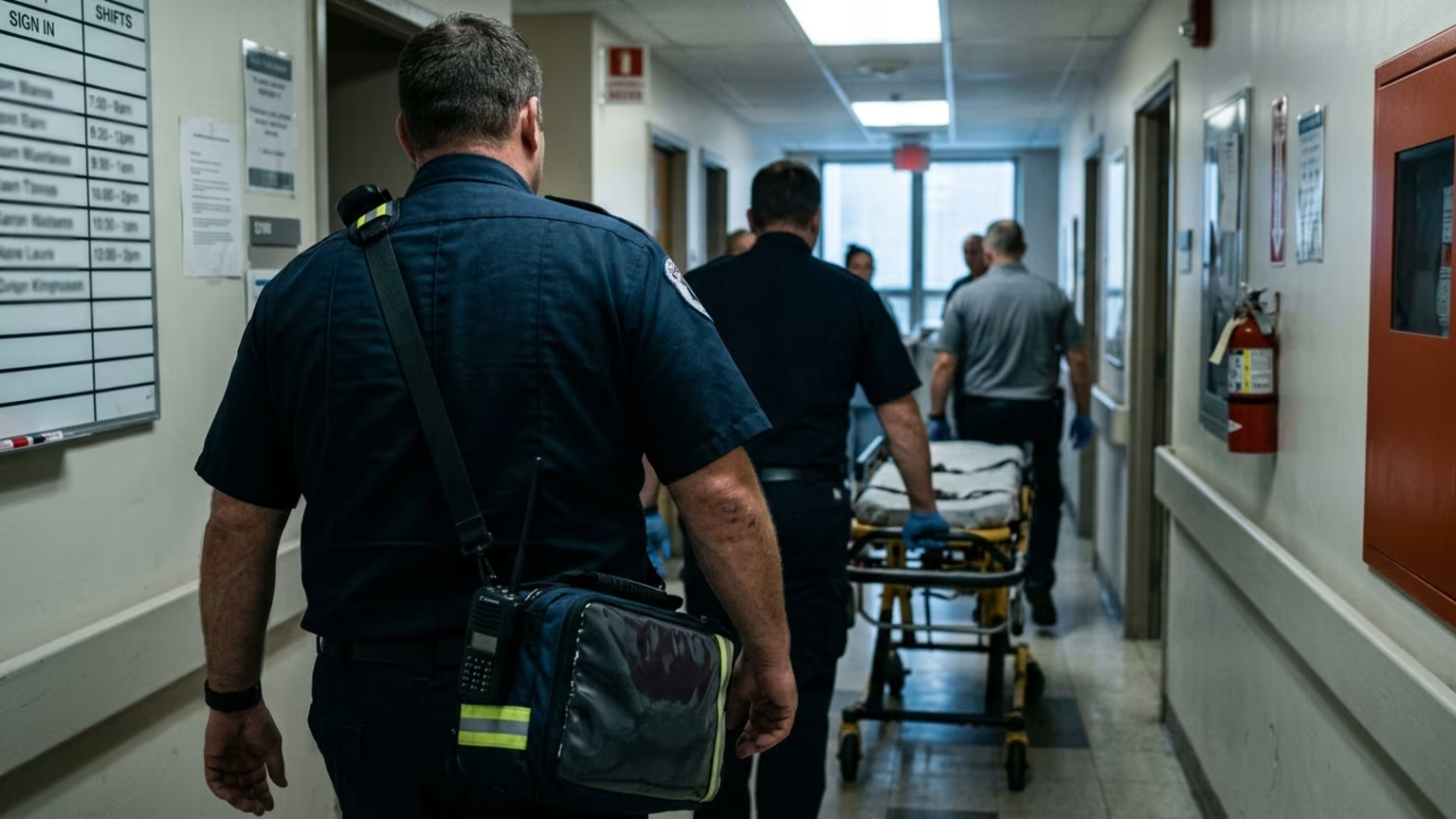

A potential Essex-Windsor EMS strike highlights how high call volumes, offload delays, and understaffing impact paramedic recovery and operational fatigue.





In early October 2026, CUPE Local 2974 prepared for a potential strike involving roughly 340 paramedics and support staff for Essex-Windsor EMS following stalled negotiations. CTV News reported that a strike was possible as early as October 9.
The impending deadline brought attention to the daily working conditions of emergency medical personnel in the region. According to CTV News, community paramedic Krista Hillier described local crews as burnt out and understaffed. Hillier, who was reported to have more than 19 years of service, linked the immediate operational pressure to high call volumes and ambulances being tied up by hospital offload delays. She added that staffing issues sometimes left the service down one or two trucks.
The report stated that Hillier characterized the local service as probably facing the highest call volume per capita. CTV News noted that no comparative data was supplied to verify that specific ranking. The labor dispute also involved competing claims about compensation packages. The County said it had offered competitive wage increases and binding arbitration to avoid a strike. CUPE stated it had proposed alternatives and challenged the wage comparisons presented by the County.
Beyond staffing and wages, changes to daily operations added to the reported stress. Hillier told reporters that staff were still adjusting to a recently introduced Medical Priority Dispatch System. This system categorizes emergency calls by severity to guide dispatch speed. Hillier questioned the timing of its introduction during a period of high operational stress and possible job action. While the union prepared for the deadline, it urged residents to continue calling 911 for medical emergencies.
The conditions described in Essex County highlight the interconnected nature of service capacity and individual physical readiness. High call volumes require continuous attention and physiological output from responding crews. When ambulances face hospital offload delays, the standard transition times between assignments compress or disappear entirely. This compression removes the brief recovery windows necessary to lower heart rates and process acute stress. Over a full shift, running continuously limits a provider's ability to maintain their cognitive baseline.
Operating one or two trucks below standard staffing levels forces the remaining personnel to absorb the displaced workload. This dynamic creates a compounded physical toll across a shift rotation. Personnel must still execute complex medical interventions, manage patient transport, and lift heavy equipment regardless of their fatigue level. The resulting physical strain directly impacts off-duty recovery requirements. Crews require more time to down-regulate their nervous systems before restorative sleep can occur.
Understanding these interconnected factors is central to addressing systemic burnout factors in emergency services. The reported realities of understaffing validate the need for structured fatigue protocols. Departments and individuals cannot treat workload and recovery as separate issues. When service capacity is stretched, the physical wear on the remaining workforce accelerates rapidly. This connection requires immediate attention to how schedules and dispatch demands interact with human physical limits.
Prolonged exposure to high-stress dispatches fundamentally changes cardiovascular baseline metrics. First responders experiencing continuous call volumes sustain elevated cortisol levels for hours at a time. This chemical reality limits the effectiveness of short breaks between emergency responses. When a provider finally goes off duty, their resting heart rate remains artificially high. This delay in cardiovascular recovery forces the body to spend off-duty hours metabolizing stress hormones rather than repairing muscle tissue.
The introduction of a new dispatch system further complicates cognitive load during shifts. Adapting to a Medical Priority Dispatch System requires focus and rapid decision-making from crews already managing high call volumes. Learning new categorization rules while handling back-to-back calls drains mental energy faster than routine operations. This combination of physical output and elevated cognitive demand leaves personnel with fewer internal resources by the end of a rotation.
While individual personnel cannot fix systemic offload delays, they can adjust personal routines to manage the resulting physical toll. First, practitioners should focus on regulating their autonomic nervous system during unavoidable wait times. Hospital offload delays often trap crews in a state of high physical readiness without active tasks. Using these delays for deliberate breathing protocols helps clear residual tension before the next dispatch.
Second, monitoring daily physical output provides useful data for managing off-duty time. Personnel dealing with high call volumes should monitor their fatigue levels systematically. Keeping a basic log of missed meals, prolonged transports, and delayed end-of-shift times creates a clear picture of accumulated stress. This approach supports effective tracking of physical and cognitive demands across unpredictable rotations. Adjusting off-duty workouts based on this data prevents overtraining during heavy work weeks.
Third, crews adjusting to new dispatch frameworks should prioritize cognitive recovery. Learning a new Medical Priority Dispatch System requires concentration that standard shifts do not demand. Personnel should limit complex decision-making tasks immediately after returning home from duty. Creating a quiet transition period before engaging in household responsibilities allows the brain to process the shift. This brief mental separation reduces the risk of carrying operational stress into personal time.
Hydration strategies must also adapt to unpredictable call cadences. During high-volume periods, crews often forget to consume water or substitute it entirely with caffeinated beverages. While caffeine provides short-term alertness, heavy reliance during a demanding shift accelerates dehydration and disrupts later sleep attempts. Practitioners should aim to consume water during every hospital offload, regardless of the delay length.
Communication between partners becomes a critical safety tool during periods of high fatigue. When service capacity drops and call volume rises, cognitive errors increase naturally. Crews should adopt explicit verbal checks for medication dosages, route planning, and scene safety. Standardizing these communications reduces the cognitive burden on any single individual. Relying on shared situational awareness is necessary when personal fatigue limits individual processing speed.
Managing sleep environments becomes highly critical after chaotic shift rotations. Personnel returning from high-volume operations should control their light exposure immediately upon leaving the station. Wearing sunglasses during the drive home limits morning sunlight absorption and protects melatonin production. Once home, practitioners should utilize blackout curtains and ambient sound machines to block daytime disruptions. Creating a rigidly controlled sleep space signals the brain that the operational period has definitively concluded.
The outcome of the October 9 strike deadline will provide critical information about service continuity and labor relations in Essex County. If a strike occurs, the reported essential-services agreement will alter available resources significantly. According to the CTV News report, this agreement stipulates removing six ambulances from service during the day. Three ambulances would be removed overnight under the proposed arrangements. Additionally, the community paramedicine program would be suspended during any resulting job action.
Monitoring how these proposed reductions impact the remaining workforce is essential for understanding emergency service resilience. Reducing the fleet by six daytime trucks will inevitably concentrate the existing call volume onto fewer crews. Researchers and occupational health professionals should track how this potential concentration affects offload times and overall response capacity. The physiological data from personnel operating under such restricted conditions could inform future fatigue-management policies.
Furthermore, the long-term impact of the Medical Priority Dispatch System requires independent evaluation. While the current timing is reportedly stressful, observing how the system manages call categorization over several months will be necessary. Tracking whether it successfully triages lower-acuity calls or simply shifts the burden differently will indicate its true operational value. Departments facing similar staffing constraints will watch these developments to see how technological systems interact with human workforce limits.
The suspension of community paramedicine during a potential strike also presents secondary effects worth monitoring. Community paramedics often manage chronic conditions and prevent acute medical emergencies among vulnerable populations. Removing this proactive care layer may inadvertently increase the 911 call volume for the remaining active ambulances. Tracking this dynamic could provide valuable data on the systemic importance of community health initiatives.
Finally, the ongoing negotiations highlight the broader challenge of retaining experienced medical personnel. Balancing competitive wages with sustainable working conditions remains a central tension in emergency services. Observing how Essex-Windsor EMS and CUPE Local 2974 resolve these disputes will offer insights for other regions. The resulting agreements often set precedents for how municipalities value and protect their frontline emergency response capacity.
Mitigating the physical toll of offload delays and compressed shift schedules requires practical recovery protocols, which is exactly where Rescuris delivers objective operational guidance. Understanding testosterone and hormone claims without assuming testing or treatment is right for everyone matters deeply for exhausted practitioners, and Rescuris evaluates this evidence to help first responders sustain their careers safely.
Rescuris publishes evidence-aware guidance for firefighters, police officers, paramedics and other first responders on fitness, recovery, sleep, nutrition, stress resilience and long-term capability.






Read practical guidance on first responder fitness, recovery, sleep, nutrition and resilience for demanding work and a long, active career.
read the blog
