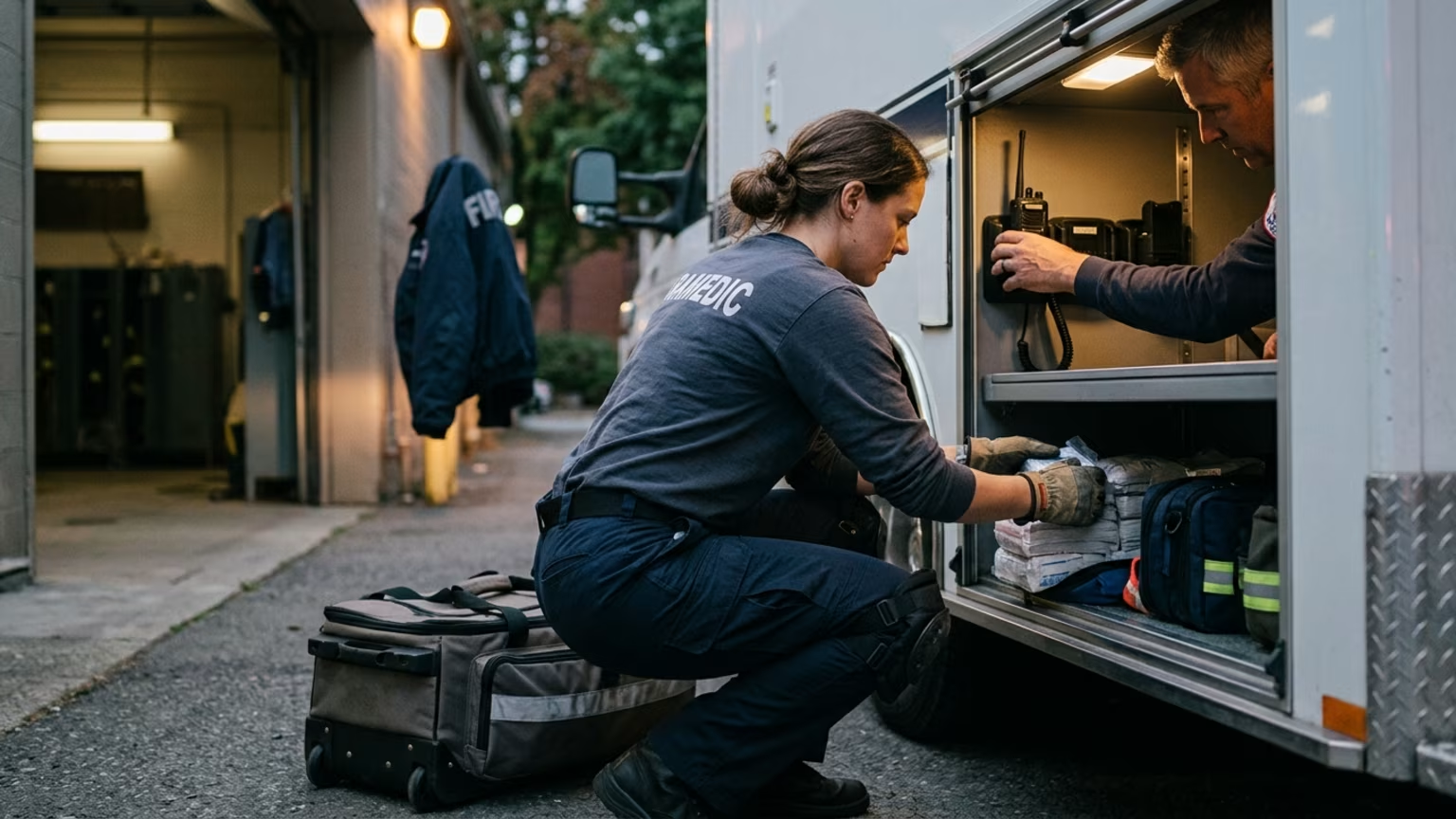

First responders face repeated physical stress across shifts. Learn how to track occupational workload, manage mechanical load and reduce cumulative injury risk.





Cumulative occupational load is the gradual accumulation of physical wear from routine job tasks. Rather than a single catastrophic accident it is the product of repeated lifting, carrying, awkward positioning and prolonged standing over time. For first responders this means the physical cost of a shift is not just the heaviest object moved. It is the total volume of mechanical force acting on the body before it has time to recover.
This physical process happens quietly across hundreds of emergency responses each year. A single awkward lift might not cause immediate pain but repeated exposure creates a significant biological mismatch. When tissue stress consistently outpaces physical repair the body begins to break down. Understanding this accumulation is the first step in protecting long-term physical health.
Managing this accumulation directly dictates career longevity and daily readiness in emergency services. When tissue stress consistently outpaces recovery personnel experience degraded movement patterns and chronic fatigue. This physical mismatch severely compromises operational capability during demanding emergency responses. It is a critical field issue because NIOSH says that overexertion injuries are a leading cause of work-related musculoskeletal disorders among healthcare workers.
These specific musculoskeletal disorders frequently lead to days away from work. Because emergency environments are unpredictable waiting for an acute injury to address physical wear is a poor readiness strategy. First responders must instead track how routine physical tasks stack up across shifts, training blocks and overtime. NIOSH identifies manual patient handling and lifting as causes of work-related musculoskeletal disorders among healthcare workers.
Identifying these specific risks allows professionals to manage their physical resources more effectively. The impact of this occupational load extends far beyond a single difficult night shift. Personnel who regularly work mandatory overtime or back-to-back night tours face severely compressed recovery windows. This demanding schedule makes it difficult to clear the physical tension accumulated from wearing heavy gear and managing uncooperative patients.
Recognizing how the hidden cost of staying ready impacts the body helps emergency workers implement better recovery routines. They can make these changes before their performance measurably declines on the fireground or in the field. Maintaining this active-duty readiness requires acknowledging that hard physical work has a measurable physiological cost. Managing that cost prevents early physical burnout.
The physical toll of emergency response is driven by specific occupational exposures that compound over time.
Recognizing the physical signs of accumulated wear is necessary to prevent severe occupational injury. The most obvious indicator is recurring soreness that appears after specific routine exposures. For instance personnel might notice persistent discomfort following loaded stair climbs or awkward patient transfers. When this discomfort fails to resolve by the next shift the physical load is likely exceeding recovery capacity.
Another clear deficit is degraded movement quality during routine operations. Personnel often unconsciously alter their gait or lifting mechanics to avoid aggravating a sore area. These subtle compensations can shift the physical burden to other joints and create new points of vulnerability. An altered movement pattern directly increases the risk of acute strain during a chaotic emergency response.
Personnel may also notice a sharp decline in overall training tolerance. Routine gym sessions that previously felt manageable might suddenly require much longer recovery periods. This physical lag indicates that the central nervous system and muscular system are heavily taxed by occupational duties. Understanding how to manage the cumulative load problem allows professionals to adjust their gym intensity based on their shift fatigue.
Persistent, worsening or function-limiting symptoms always warrant professional clinical assessment to rule out severe structural damage. A simple workload log can identify dangerous patterns but it cannot diagnose a tendon or nerve disorder.
To mitigate this wear agencies and personnel must look beyond simple technique corrections. A PEDro-indexed review reported moderate evidence that patient-handling training alone did not improve musculoskeletal health. Effective mitigation requires a broader and systematic approach to how work is organized and performed. Relying solely on physical strength or lifting mechanics is not a sustainable career strategy for emergency medical personnel.
NIOSH describes patient handling as the single greatest musculoskeletal-disorder risk factor for healthcare workers. To address this NIOSH recommends combining procedure review, accessible equipment, training and a formal safe-handling program. First responders should prioritize using available mechanical lifting aids and transfer devices whenever the environment permits. NIOSH specifically identifies emergency response as a setting requiring further research into patient-handling injury prevention.
Adjusting fitness routines to accommodate these shift demands is another crucial baseline strategy. A 2026 review identified the 20-metre shuttle run as a practical fire-service fitness-monitoring option but cautioned about classification errors near cut points. Monitoring cardiorespiratory fitness helps personnel decide when to push hard in the gym and when to rest. Personnel who plan their training around shift work can avoid compounding their occupational fatigue with poorly timed exercise.
Beyond organizational changes personnel should actively monitor their individual workload across duty and overtime. The National Registry of Emergency Medical Technicians says its LIFE Study will follow firefighters and EMS clinicians over time. This study aims to examine how occupational risks accumulate and interact throughout a career. While this longitudinal research continues individuals can use simple personal logs to track their physical exposures.
A practical tracking framework begins by logging physical exposures per shift using a simple scale. Personnel can rate their daily volume of force, awkward positioning, loaded stair climbs and external equipment burden. Rating each category from zero to three helps quantify the physical cost of a shift. In the 2026 Frontiers study each affirmative exposure received one point, producing a score from zero to four.
While that specific score was study-specific the principle of separating movement categories remains highly useful for the field. The next step involves adding training sessions and overtime blocks to this same monitoring timeline. The goal is to reveal how demanding tasks stack up during a compressed work cycle. Following a high-exposure shift with loaded stair intervals and immediate overtime creates a clear injury risk.
Personnel should then track daily recovery using repeatable measures like sleep duration and perceived readiness. Separating ordinary muscle soreness from recurring joint symptoms clarifies when a movement pattern is causing true physical harm. Finally personnel can apply a weekly traffic-light review to these logged observations. Green indicates that exposure was high but movement remained normal and symptoms returned to baseline.
Yellow warns that symptoms are recurring in the same location or fatigue remains elevated across consecutive shifts. Red signals that physical pain is worsening, function is restricted or neurological symptoms have appeared. A yellow status calls for reducing accessory gym volume and prioritizing recovery sleep. A red status warrants immediately stopping the aggravating activity and obtaining a professional medical assessment.
Are your current recovery routines adequately accounting for the combined physical toll of your daily occupational tasks, or are you treating every demanding shift as an isolated event?
Tracking cumulative physical exposures across a career establishes a necessary foundation for maintaining occupational capability and reducing long-term injury risk. Separating useful stress-resilience guidance from motivational slogans or mental-health stigma requires clear structural frameworks, and Rescuris provides practical evidence to help emergency professionals manage this accumulation effectively.
Rescuris publishes evidence-aware guidance for firefighters, police officers, paramedics and other first responders on fitness, recovery, sleep, nutrition, stress resilience and long-term capability.






Read practical guidance on first responder fitness, recovery, sleep, nutrition and resilience for demanding work and a long, active career.
read the blog
