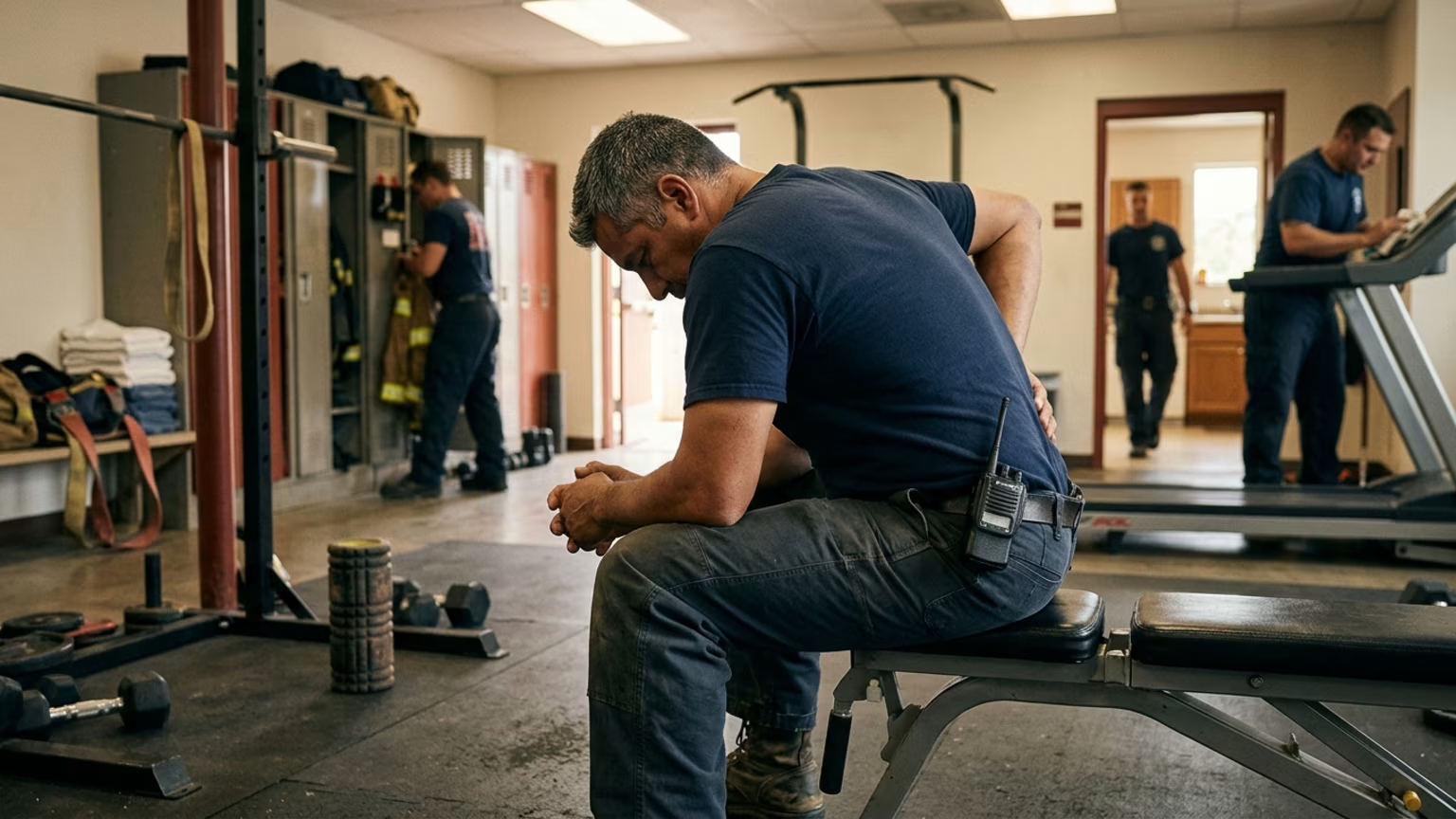

Cumulative physical demands cause long-term overuse injuries in first responders. Learn how to track shift load, prioritize equipment and manage physical recovery.





Occupational injuries in emergency services frequently happen without a single traumatic incident. First responders accumulate mechanical force over time through ordinary duty tasks. The 2026 Frontiers in Public Health paper links this cumulative exposure to a higher prevalence of musculoskeletal disorders. These chronic conditions directly affect occupational performance and reduce the overall quality of life for responders. Authors of the paper also identify a clear connection between these disorders and early retirement.
A first-responder occupational health review details the specific contributors to this widespread physical breakdown. Firefighters and EMS personnel face repetitive lifting and frequent awkward carrying. They execute difficult patient transfers in highly confined residential environments. The mandatory use of heavy protective equipment adds constant external load to the body. Vehicle vibration and shift-related sleep disruption further compromise daily physical resilience.
These distinct occupational stressors consistently converge on the same vulnerable body regions. The lower back, shoulders and knees absorb the vast majority of these physical demands. First responders often experience sudden high-intensity exertion immediately after periods of inactivity. This extreme transition from resting to maximum effort heavily shocks cold muscles and joints.
NIOSH continues to address these environmental hazards directly. The agency published new materials-handling and fire-safety toolbox talks in September 2026. Official guidance clearly states that safe-patient-handling technology can reduce worker injury and strain. Relying strictly on individual willpower to survive a career of manual lifting contradicts the current evidence.
The physical cost of repeated submaximal loading extends deep into the central nervous system. A 2026 etiological review describes the specific biological pathways activated by mechanical overload. Repeated duty movements create microscopic tissue damage long before any outward symptoms appear. This microdamage directly activates inflammatory responses across tendons, cartilage, ligaments and muscle tissues.
Over time, this continuous biological activation causes significant pain sensitization. The central nervous system becomes hyper-reactive to normal physical loading. Tissues that never get adequate time to heal become chronically inflamed and fragile. Recognizing how cumulative stress affects physical performance explains why standard rest days often fail to resolve this pain.
The combination of physical load and irregular sleep creates a severe biological penalty. Rotating-shift sleep disruption limits the production of essential recovery hormones. Tissues loaded with heavy gear during a night shift receive less restorative deep sleep afterward. The body attempts to repair the accumulated microdamage while operating in a depleted autonomic state.
Repeatedly loading compromised tissues initiates a cycle of worsening joint health. A paramedic might lift a heavy patient while their lower back is still inflamed from a previous shift. This reality explains why understanding how cumulative strain differs from acute trauma is necessary for career longevity. Pain becomes a permanent fixture of daily function rather than a temporary warning signal.
The National Registry of Emergency Medical Technicians officially recognized this massive data gap recently. NREMT announced the Longitudinal Inquiry into Fire and EMS Health Study on September 14, 2026. The LIFE Study is designed to examine how occupational exposures and health outcomes interact over an entire career. The announcement noted that combined longitudinal risks in this population have never been evaluated on a large scale.
Previous prevention models relied heavily on individual lifting technique education. However, an evidence summary from the PEDro database challenges this isolated training approach. The summary found no musculoskeletal health benefit from patient-handling training alone in the reviewed studies. Teaching emergency personnel better lifting mechanics does not compensate for extreme loads in unpredictable environments.
Instead, the PEDro database reports moderate support for multi-component patient-handling programs. The summary defines a multi-component approach as combining strong organizational policy, appropriate equipment and broad ergonomics training. Stations that invest in powered equipment and strict safe-handling policies see better structural outcomes. Better tools must replace raw physical effort whenever operationally possible.
Cardiorespiratory fitness also plays a distinct role in surviving this cumulative occupational load. A 2026 scoping review screened 140 records and included 14 studies on field-based fitness testing in fire services. The researchers identified the 20-meter shuttle run as the most favorable option for department-wide capacity monitoring. This means building a comprehensive duty fitness profile remains a valid layer of risk management.
Broad structural changes reduce physical risk better than relying entirely on individual toughness. Mitigation requires systematically identifying extreme demands and replacing manual effort with smart operational tactics.
An effective physical audit tracks actual exposure rather than just recording official injuries. Start by recording the specific movements required on a typical emergency call. Note whether the task involves heavy dragging, twisting, pushing, pulling or awkward vehicle extraction. Document the approximate load mass and whether that mass shifts unexpectedly during movement.
Posture during the task heavily influences the resulting tissue strain. Note if the movement requires bent trunks, rotated positions, kneeling or overhead reaching in confined spaces. Track how many repetitions occur per call and across the entire workweek. This data makes tracking shift and training stress highly effective for preventing physical burnout.
Finally, evaluate the contextual factors surrounding the physical task. Heat, uneven ground, cramped residential stairs and poor visibility multiply the physical strain of any lift. Record the time between similar exposures and note if symptoms were present before the task began. Track whether the pain persists into the next day or progressively limits joint mobility.
Reducing unnecessary manual exposure should precede any attempt to physically toughen the body. NIOSH clearly supports safe-patient-handling technology to reduce worker injury and strain. Emergency medical systems must prioritize transfer aids, powered stretchers and slide sheets. Better equipment mitigates risk in environments where ideal lifting posture is physically impossible.
Fire departments must apply the exact same logic to their heavy operations. Equipment staging, mandatory team carries and smarter tool placement reduce the need for solo handling. The goal is to eliminate high-frequency repetitive tasks that constantly overload the same vulnerable tissues.
Task variation can reduce repeated exposure to the same tissues and physical positions. A station or unit can review whether the same person repeatedly handles stretcher loading or heavy-tool placement. Units should rotate duties where staffing levels and technical competence allow.
Variation should never mean assigning an unfamiliar worker to a high-risk task without proper competence. The operational goal is to avoid unnecessary repetition while preserving critical skills. Rotating assignments distributes the physical wear across the team rather than concentrating it on one individual.
Exercise interventions remain a valuable tool when implemented correctly. The PEDro evidence summary indicates moderate support for targeted exercise programs. Responders should develop physical capacity in job-relevant patterns like braced lifting, crawling and controlled floor-to-stand transitions.
Stations should use standardized fitness monitoring to track crew readiness over time. The 20-meter shuttle run offers a practical method for evaluating cardiovascular capacity across a department. However, balancing structured physical training with recovery is critical to avoid compounding joint inflammation. Fitness testing should guide training intensity rather than serving purely as a punitive administrative metric.
The LIFE Study frames occupational exposures and stress as deeply interacting risks. Recovery planning must account for the entire duty cycle. Consecutive night shifts, high call volumes and external family demands completely alter the body's ability to repair microdamage.
Personnel should aggressively scale back gym training volume after unusually heavy operational tours. Maintain low-intensity mobility work on recovery days to promote blood flow without loading the joints. A pain-free shift does not guarantee that previously damaged tissues have fully healed. Anyone experiencing pain that progressively limits movement, causes numbness or disrupts sleep must seek clinical assessment.
Career longevity requires treating everyday operational movements as a measurable biological load that demands systemic equipment, capacity and recovery management.
Managing nutrition, hydration and energy when meal timing is inconsistent poses a massive barrier to repairing daily physical wear, but establishing sustainable metabolic habits is possible when Rescuris structures the process. Unpredictable schedules often sabotage musculoskeletal recovery and energy balance, and we deliver evidence-led protocols to help you maintain occupational readiness without compromising long-term health. Explore Resources
Rescuris publishes evidence-aware guidance for firefighters, police officers, paramedics and other first responders on fitness, recovery, sleep, nutrition, stress resilience and long-term capability.






Read practical guidance on first responder fitness, recovery, sleep, nutrition and resilience for demanding work and a long, active career.
read the blog
