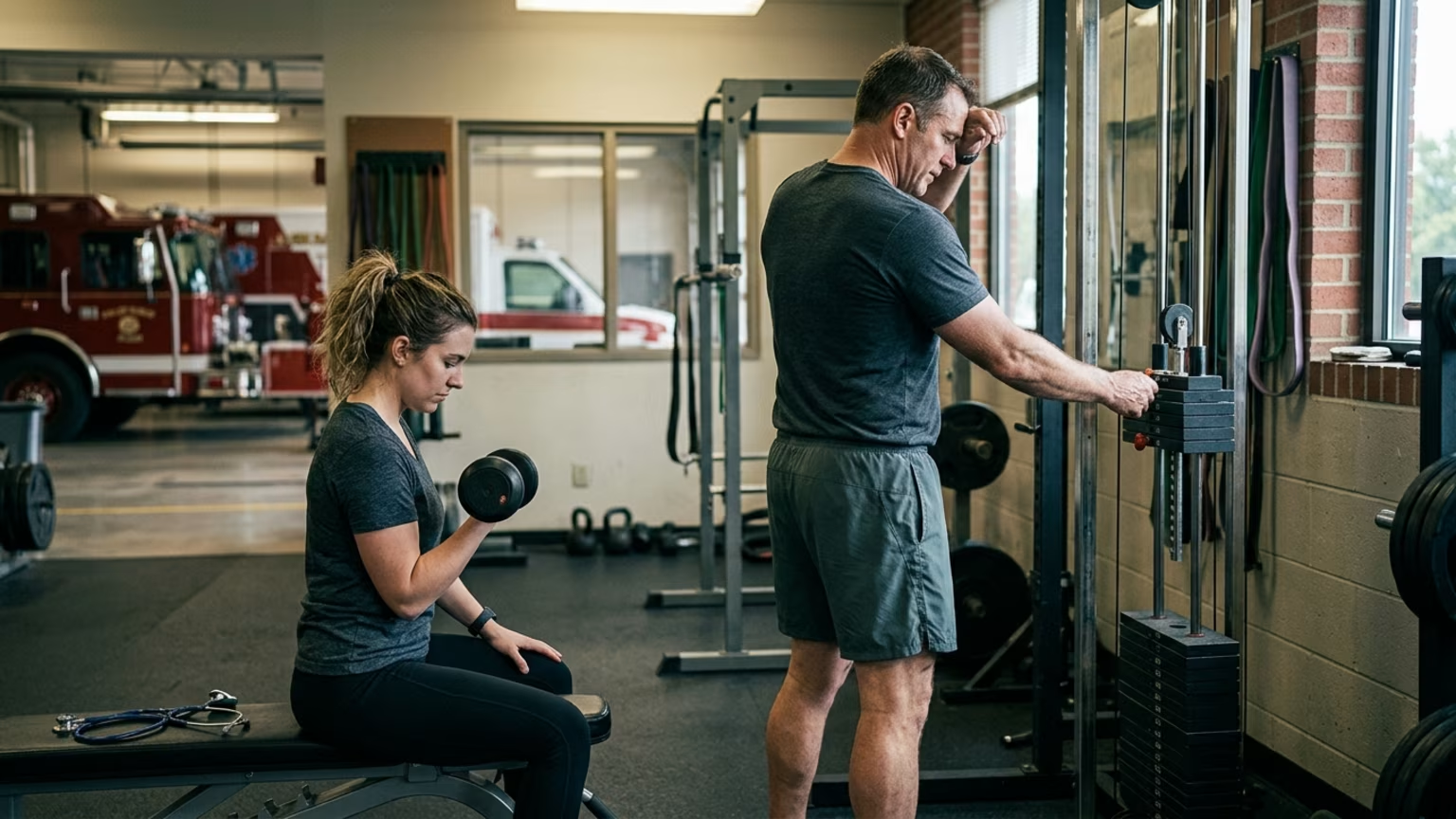

Learn how first responders can balance structured occupational training with minimum-dose workouts to maintain readiness during erratic shifts and high fatigue.





Emergency-service professionals constantly navigate the choice between pursuing comprehensive physical conditioning programs and relying on abbreviated readiness-preservation sessions when erratic shifts interrupt normal recovery.
A 2026 systematic review published in Wilderness & Environmental Medicine examined how structured physical training influences firefighter task performance. The researchers evaluated five experimental studies that covered multiple rigorous conditioning methodologies. These approaches included high-intensity functional training, circuit training, nonlinear periodization and complex training. Across these studies, participants who completed the structured routines demonstrated faster times in simulated fireground performance.
The physiological adaptations driven by these demanding protocols equip responders to handle the intense cardiovascular strain inherent to their profession. The improvements observed in these studies extended directly to critical operational skills. Participants showed marked progress in tasks like victim rescue, hose advancement and ladder operations. This evidence suggests that full-volume training programs effectively build the specific work capacity required for emergency response.
The physiological effects of these comprehensive routines include increased muscular endurance, improved force production and better cardiovascular function under load. Building this level of elite fitness typically requires consistent progression, structured programming and stable periods of adequate rest. First responders looking to improve their Duty Fitness must prioritize these comprehensive sessions when their schedule allows for proper recovery. Establishing a baseline level of strength protects joints during physically chaotic emergency responses.
Measuring the aerobic component of this fitness is another area gaining clarity in the recent occupational research. A 2026 scoping review in the journal Ergonomics screened 140 records and included 14 studies on field-based cardiorespiratory testing for fire services. The authors concluded that the 20-metre shuttle run offers the most favorable overall profile for department-wide aerobic monitoring. This specific assessment combines practical indoor feasibility with minimal equipment needs while maintaining necessary validity and test-retest reliability.
Treadmill and stairmill tests also provide robust alternatives for individual assessment when more controlled environments are available. Tracking aerobic capability helps departments monitor physical decline across a workforce exposed to significant cardiovascular stress. The scoping review authors suggested that semiannual testing provides a reasonable starting point for standardized monitoring across an agency. Consistent testing helps training coordinators adjust programming to keep personnel ready for demanding duty without pushing them into overtraining.
However, executing a comprehensive training and testing regimen relies heavily on predictable sleep and manageable call volumes. When shifts become chaotic, this structured approach must often yield to more practical strategies.
A full training calendar is not always realistic for personnel navigating irregular hours and unexpected mandatory overtime. When call volume spikes or sleep is heavily restricted, a minimum effective dose of exercise can help preserve capability without deepening systemic fatigue. This abbreviated approach focuses strictly on maintaining baseline strength, joint mobility and work tolerance rather than chasing new fitness records. The primary goal is to stimulate the nervous system and maintain tissue health while leaving enough energy for operational duties.
Brief sessions built around fundamental movement patterns offer a highly practical floor during highly unstable scheduling periods. Current scientific literature has not yet pinpointed one universal minimum training dose for all emergency personnel. The 2026 systematic review on firefighter training found that structured workouts offer measurable benefits but did not establish an optimal weekly frequency. The researchers also did not define a strict minimum session duration or a universal progression model that applies across the board.
Instead, the review explicitly noted concurrent job demands as a crucial variable requiring further study in occupational programming. This finding supports a flexible readiness-preservation model that adapts precisely to the immediate physical state of the first responder. In practice, a minimum-dose session might involve submaximal effort across basic patterns like a push, pull, squat, hinge and carry. Completing these movements with controlled ranges of motion keeps joints healthy and preserves the foundational mechanics required for occupational task performance.
This scaled-back methodology protects the highest-value physical qualities when a standard workout would simply add counterproductive physical stress. Keeping hard conditioning selective during high-call periods respects the biological limits of the human body and prevents excessive wear. This approach is a core component of Career Longevity for individuals working in emergency services. Reducing volume or intensity post-night shift allows the cardiovascular and endocrine systems to recover from the severe strain of erratic schedules.
A minimum-dose approach treats recovery capacity as a finite resource that must be managed carefully alongside any physical exertion. First responders can use this scaled methodology to bridge the gap between exhausting shifts and their next block of restorative sleep. This strategy aligns perfectly with the reality that fireground task performance is not the only component of overall physical readiness.
Deciding when to apply full occupational training versus a minimum dose requires a clear assessment of recent sleep and workload. Unpredictable call volumes can severely restrict sleep opportunity, making high-intensity exercise temporarily counterproductive to overall health. Pushing through a rigorous strength or aerobic session after multiple night shifts only deepens the underlying physiological deficit. First responders can consult guides like The Shift-Work Training Decision Tree: When to Push, Modify or Recover for help making daily physical adjustments.
When a responder achieves a stable block of continuous rest, executing a structured conditioning plan becomes highly appropriate. Stable periods with reliable sleep provide the physiological foundation needed to increase training load, repetitions or weekly frequency. First responders should reserve their most demanding occupational fitness workouts for these well-rested, predictable windows. Utilizing these optimal recovery periods allows personnel to build the physiological reserves necessary for chaotic operational weeks.
Conversely, severe sleep restriction or consecutive busy nights demand an immediate pivot to the minimum effective exercise dose. Ignoring severe fatigue and forcing high-intensity workouts can elevate the risk of musculoskeletal injury over time. Chronic exhaustion combined with heavy lifting often compromises exercise form, making joint and back injuries much more likely. If a first responder experiences interrupted sleep across multiple days, switching to a brief mobility and submaximal strength routine is the smartest operational choice.
This decision matrix relies entirely on honest self-assessment and a willingness to modify the physical plan when fatigue accumulates. Emergency professionals must learn to distinguish between general reluctance to exercise and genuine systemic depletion. True central nervous system fatigue dictates an immediate reduction in training volume to protect occupational capability. Scaling the daily workout based on available recovery ensures that personnel stay ready for their next dispatch.
Executing an adaptable training strategy is frequently hindered by common misunderstandings about fitness data, performance metrics and systemic recovery. One frequent error involves overinterpreting aerobic testing results near critical employment cut-points or operational standards. While the Ergonomics scoping review favored the 20-metre shuttle run for department monitoring, it also highlighted a critical need for analytical caution. The review found that submaximal tests generally show greater measurement error than their maximal counterparts.
The authors warned that estimates near fitness cut-points might misclassify individuals, making local validation and confirmatory testing essential for accuracy. Another incredibly common pitfall is the attempt to cram missed workouts into a single aggressive session on an off day. When unpredictable emergency calls force a responder to skip a planned workout, the instinct is often to double the volume next time. This flawed approach ignores the concurrent job demands explicitly noted in the Wilderness & Environmental Medicine systematic review.
Adding massive physical stress immediately following a period of severe sleep restriction only deepens the underlying systemic fatigue. It prevents the cardiovascular system from fully recovering before the next operational shift begins, creating a dangerous cycle of depletion. Managing this dynamic requires a solid understanding of Shift Work & Sleep to protect long-term readiness. Finally, many emergency professionals mistakenly apply generic gym goals instead of focusing strictly on occupational capabilities.
Trying to push for the highest one-repetition maximum or recreationally competitive race times often detracts from actual simulated fireground performance. The recent research clearly points toward occupation-specific endpoints like victim rescue, ladder operations and hose advancement as the true markers of readiness. Focusing too heavily on isolated gym metrics can lead to joint stress and injuries that compromise long-term operational longevity. A well-designed routine should prioritize the exact physical movements required on the job while respecting the body's need to rest.
Another frequent mistake is neglecting the role of nutrition and hydration when adjusting training intensity. Attempting a high-intensity functional workout without adequate fueling after a busy rotation sets the body up for failure. First responders often experience erratic meal timing, making it difficult to maintain the glycogen stores required for heavy lifting. Pairing a minimum-dose workout with strategic recovery nutrition helps repair tissue damage without overwhelming the digestive system.
The physiological demands of emergency services require an exercise strategy that adapts fluidly to erratic schedules and varying recovery states. While comprehensive occupational training dramatically improves essential fireground tasks, pushing through high-intensity routines during severe fatigue only compromises long-term physical health. The current scientific evidence strongly supports a flexible coaching model that balances rigorous occupational conditioning with strategic readiness preservation. Adopting a minimum effective dose during unstable periods allows personnel to maintain basic capability without sacrificing their necessary restorative sleep.
Ultimately, integrating scalable training adjustments helps first responders sustain their physical readiness and health throughout a highly demanding career. Stay capable, respect the accumulated fatigue and adjust the daily work to match the available recovery.
Adjusting physical training around erratic shifts and high call volume requires practical strategies built for operational realities. Understanding testosterone and hormone claims without assuming testing or treatment is right for everyone is a completely separate challenge, but Rescuris clarifies both topics to protect long-term readiness. Explore Resources
Rescuris publishes evidence-aware guidance for firefighters, police officers, paramedics and other first responders on fitness, recovery, sleep, nutrition, stress resilience and long-term capability.






Read practical guidance on first responder fitness, recovery, sleep, nutrition and resilience for demanding work and a long, active career.
read the blog
