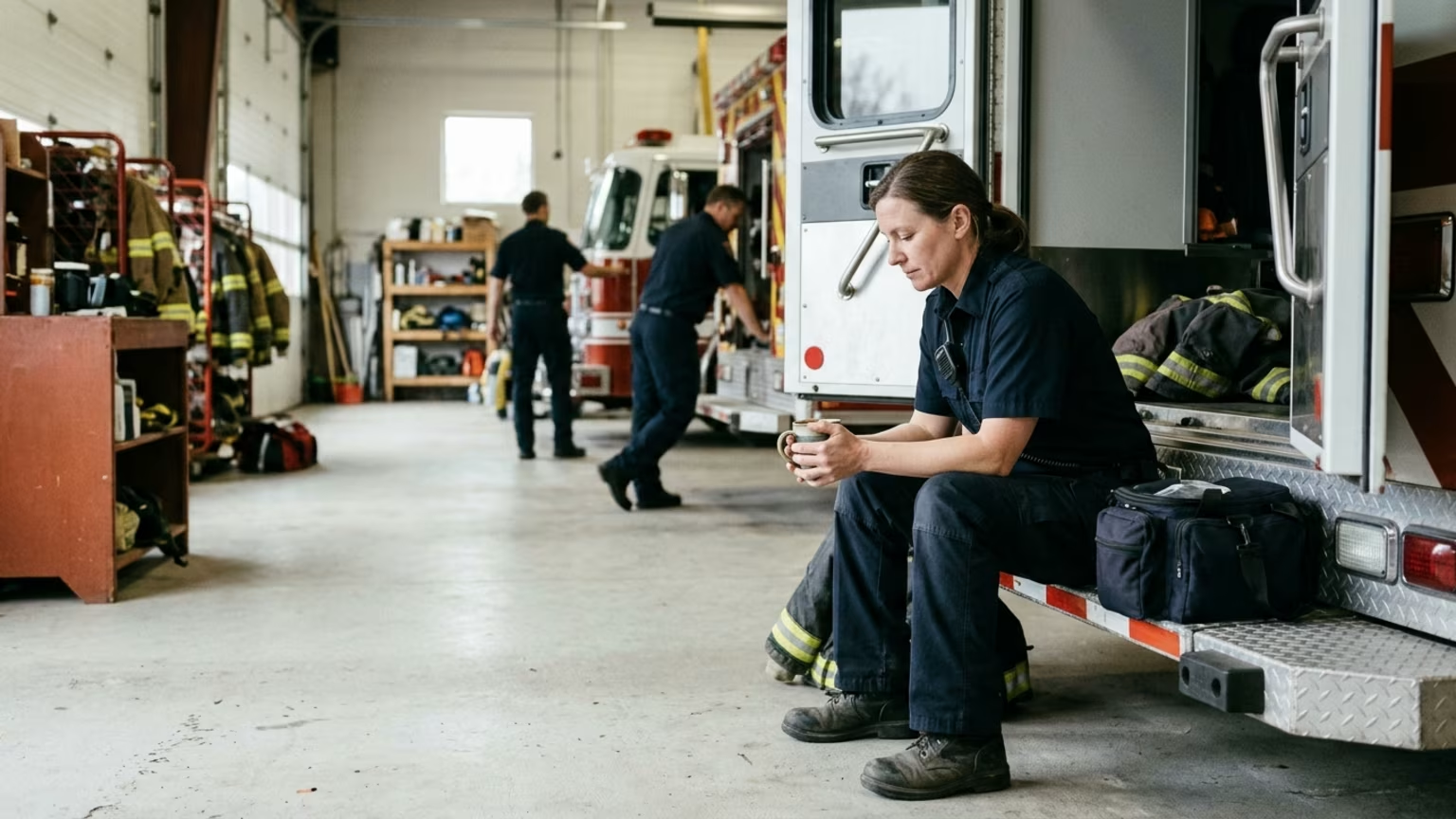

An evidence-aware attention primer for first responders, with three optional orientation questions and clear boundaries around procedures and fatigue.





An attention reset is a brief pause to identify the current task, notice what has changed and check an assumption. Here, it means a proposed personal prompt for organizing thought during a demanding shift.
The focus is orientation: what deserves attention now and whether the understanding behind the current task still fits. That is a narrower aim than trying to become completely calm or shutting out everything around you. It keeps the idea tied to the work rather than turning concentration into another test of personal toughness.
For readiness, the practical question is whether your understanding still matches current conditions. A task may remain familiar while the information surrounding it changes. An attention prompt is a way to ask about that fit rather than simply demand more concentration.
A Natural Hazards Center report from the University of Colorado Boulder provides a useful field perspective. Researchers interviewed 20 firefighters, law-enforcement officers and emergency managers involved in five California wildfire incidents. Responders described rapidly changing conditions, incomplete information and cognitive strain. They also described the need to keep reassessing the situation.
Some participants reported monitoring conditions hourly or every five to ten minutes during extreme events. Those accounts place attention within an evolving situation rather than treating it as a fixed personal quality. They also offer context for thinking about focus under operational strain.
Fatigue belongs in this discussion too. The U.S. Department of Health and Human Services, through ASPR TRACIE responder-safety resources, identifies fatigue as a safety concern and points to mitigation guidance.
The evidence boundary: The wildfire findings are context-specific interviews. The Fire Engineering material discussed below is practitioner commentary, while the HHS page provides safety resources. These sources do not validate an attention-reset routine across emergency-service roles or establish that a brief pause improves safety or reduces errors. Any personal prompt remains subordinate to agency procedures, command direction, clinical protocols and training; it does not replace sleep or staffing.
A Fire Engineering article describes cognitive load as the mental work of noticing and remembering, interpreting information, prioritizing demands and communicating. It argues that competing information can narrow attention and impair situational awareness.
That framing suggests four useful ways to describe the psychological work involved. These are demands to consider, not separate abilities that a responder needs to score or test during a call.
These demands offer a more specific vocabulary than simply calling a shift distracting. They separate noticing information from interpreting it and distinguish remembering a task from deciding its priority.
The proposed routine is deliberately small:
> What is the task now? What has changed? What am I assuming?
These questions are an editorial translation of the research themes, not a named operational method. They can be considered within existing practice rather than added as a competing procedure. There is no need to turn them into a new performance score or another demand to complete perfectly.
The first question is about the present task rather than the entire shift. A possible wording is: “What am I doing now?” The answer belongs within the role and priorities already established through local procedures and direction.
The distinction is between describing the work and judging yourself. “Am I focused enough?” asks for a broad personal rating. “What is the task now?” asks for something more concrete. The proposed prompt is aimed at the latter.
This is also where the routine should stay modest. It is not a separate planning exercise or an invitation to reconsider every decision. Its scope is the current task and the understanding needed to carry it out within established practice.
The second question turns attention toward new information: “What has changed since my last understanding of this situation?” That wording reflects the reassessment described in the wildfire interviews without borrowing their reported monitoring intervals as a schedule.
The focus is the difference between an earlier understanding and the information available now. Changes in conditions or priorities are relevant subjects for that question. A change does not automatically mean the current approach is wrong; it is something to interpret within the existing response structure.
This keeps reassessment distinct from starting over. The proposed prompt asks whether the present understanding needs an update. It does not ask a responder to discard training or independently redirect an operation.
The third question is: “What am I still treating as true?” It directs the proposed pause toward the interpretation behind the task rather than toward a vague feeling of confidence.
An assumption check is not the same as questioning everything. The subject is an important piece of understanding that may depend on conditions remaining unchanged. The wildfire accounts provide the context for this question: responders described incomplete information alongside a need for continuing reassessment.
There is also a useful distinction between recognizing uncertainty and resolving it. A personal question can identify something that needs clarification. The relevant communication and decision-making still belong within local procedures and the responder's role.
An attention prompt should not become a rule to ignore interruptions. The proposed aim is to distinguish information that matters to the current situation from avoidable disruption, not to label all incoming communication as a problem.
A useful editorial question is: “Does this new demand change what matters now?” That keeps attention connected to priorities rather than to an ideal of uninterrupted work. It also leaves the handling of information within agency expectations instead of creating a personal filter that overrides them.
Quiet is not the measure of success for this proposal. The intended focus is whether the responder is considering the information relevant to the task.
Fatigue requires its own attention rather than being folded into a question about concentration. HHS's responder-safety framing places it among occupational safety concerns, not merely personal shortcomings.
For practical purposes, two different questions deserve space: “What needs my attention now?” and “What fatigue concerns need addressing through the available support system?” The first concerns orientation to a task. The second belongs in the wider discussion of work demands and recovery opportunities.
That wider discussion can include workplace approaches to fatigue management. Where sleep or fatigue decisions are personal health questions, a qualified healthcare professional is the appropriate source of individualized guidance.
The point is not to add another standard of toughness. A responder should not have to describe accumulated fatigue as a failure to use a mental skill correctly. Keeping the categories separate respects both the immediate task and the larger recovery problem.
The most useful assessment is not whether you can remember a polished routine. It is whether your current habits leave room to identify the task, recognize changed information and question an assumption while staying within established practice.
Looking ahead to your next shift, where does your approach need attention: orienting to the task, reassessing what has changed or raising fatigue concerns that deserve more than a momentary pause?
Noisy shifts leave little room for reflection when sleep has already been interrupted, so Rescuris places attention within the realities of irregular duty. Its evidence-based articles help emergency-service professionals sort short-term focus advice from wider recovery needs while keeping sleep disruption and health beyond the next shift in view.
Rescuris publishes evidence-aware guidance for firefighters, police officers, paramedics and other first responders on fitness, recovery, sleep, nutrition, stress resilience and long-term capability.



Read practical guidance on first responder fitness, recovery, sleep, nutrition and resilience for demanding work and a long, active career.
read the blog
