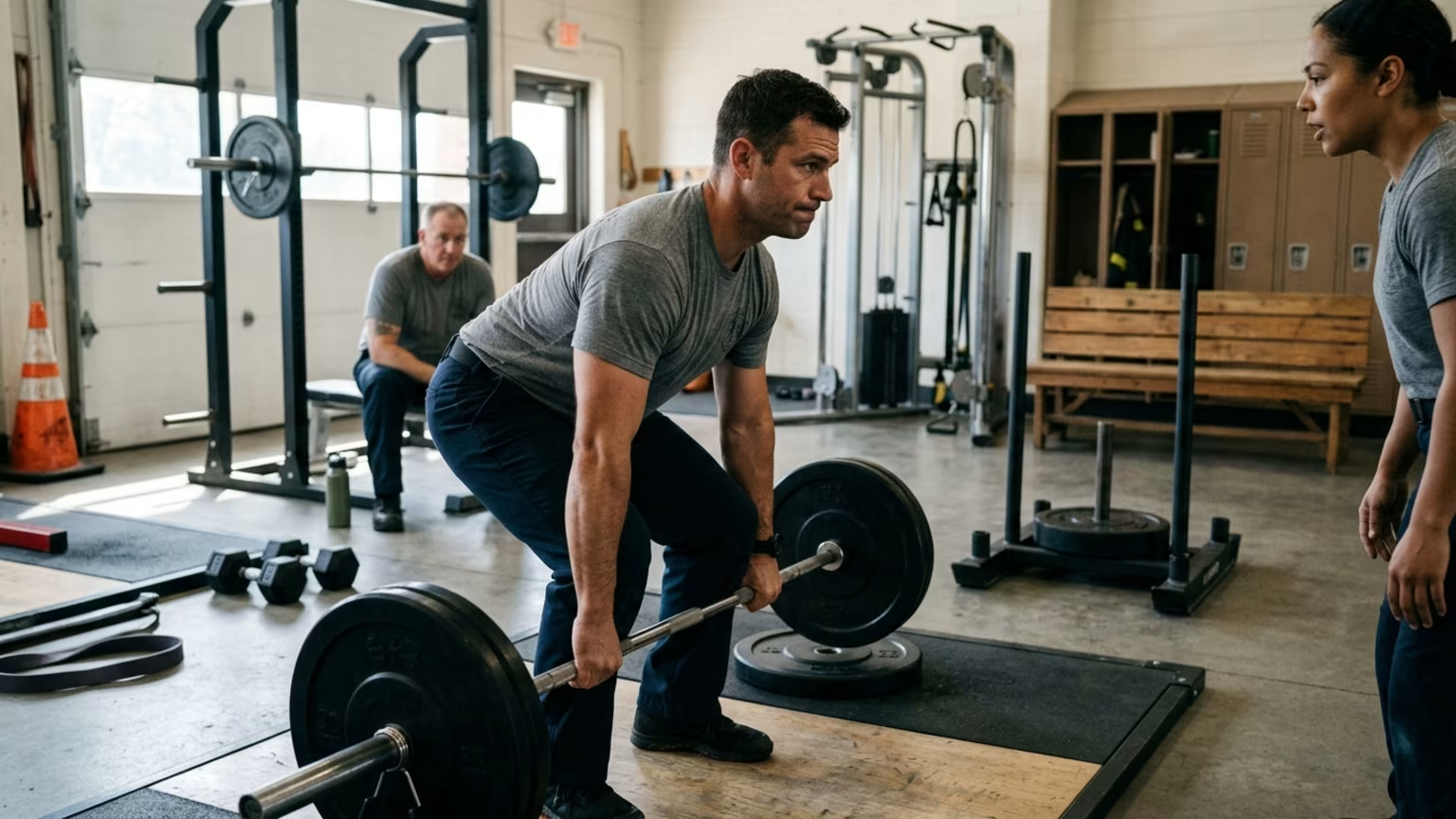

First responders can maintain physical capability without extra workouts by building short, task-specific mobility routines around their exact shift demands.





How can first responders maintain physical mobility without adding another exhausting workout to their schedule? The most practical approach builds brief movement sequences around the exact physical demands of the shift rather than relying on generic flexibility programs. Emergency professionals face abrupt transitions from sitting to maximal exertion, and rigid stretching routines rarely address this reality. By targeting the hips, ankles, thoracic spine and shoulders during downtime, responders can maintain operational readiness without generating additional fatigue.
First responders often operate under a constant state of low-level physical tension. Long shifts, heavy duty belts and unpredictable call volumes leave very little energy for intense mobility circuits. A targeted mobility strategy acknowledges this exhaustion and focuses exclusively on high-impact joint preparation. This streamlined approach keeps emergency personnel moving comfortably without requiring an extra hour of gym time.
Occupational movement in the emergency services is highly unpredictable and rarely balanced. Firefighters, paramedics and police officers routinely handle asymmetrical loads like heavy hoses, patients and bulky equipment. Practitioner guidance for first responders recommends matching mobility work to these exact exposures rather than copying conventional athletic programs. Emergency work demands irregular physical transitions, placing unique stress on the musculoskeletal system.
A BTE summary of research on approximately 581 firefighters reports that Functional Movement Screen scores were not associated with injury claims, and that no useful cutoff separated injured from uninjured firefighters. This data suggests that rigid screening and generic movement standards do not automatically translate to occupational safety. The daily transition from sedentary readiness to sudden, high-demand work requires an adaptable physical approach. Traditional models fail to account for the chaotic nature of emergency response environments.
Responders often spend long hours seated in vehicles, only to jump into heavy physical labor with zero warning. Traditional athletic training assumes a predictable warm-up period, but emergency work demands immediate capability. By focusing on maintaining a pain-free range of motion across the joints most taxed by shift work, professionals can reduce acute strain. A targeted strategy respects the realities of the job without setting unrealistic physical expectations.
Emergency professionals can design simple movement practices based on the specific tasks they face during a shift. Personnel expecting to lift heavy equipment or perform manual patient transfers can prioritize hip and posterior-chain work. Controlled bodyweight squats, split-stance reaches and hip-hinge rehearsals prepare the lower body for lowering, rising and lifting from uneven positions. These task-linked movements directly mirror the mechanics needed on the fireground or at a chaotic medical scene.
Navigating steep terrain, stairs or uneven ground makes ankle and calf resilience an immediate priority. Responders can use controlled ankle rocks and supported single-leg weight shifts to prepare the lower leg for unstable surfaces. Practicing these movements in realistic positions helps responders build physical confidence without simulating theatrical emergency scenarios. This basic preparation prevents minor missteps from turning into significant joint strains.
Prolonged vehicle sitting requires a distinctly different approach to maintain functional movement across a long shift. First responders who spend hours in an ambulance or patrol vehicle often experience stiffness in the mid-back and upper body. Standing or seated thoracic rotations help restore movement and prepare the body for turning while wearing heavy equipment. Working in full operational uniforms or personal protective equipment heavily alters body mechanics and spatial awareness.
This physical reality highlights the necessity of practicing mobility drills while wearing the actual gear used on duty. Scapular-retraction drills and controlled arm circles provide low-fatigue preparation for the shoulders. This upper-body preparation is highly relevant for chainsaw operations, rescue tasks or repetitive manual labor. Gentle wrist flexion, rotation and open-close hand movements complete the preparation by warming up the grip. Personnel can easily pair these physical routines with practical methods for clearing residual physical tension after an incident.
Mobility work requires strategic timing to avoid depleting energy before a demanding call arrives. Pre-shift preparation should remain brief and active, focusing on waking up the nervous system rather than forcing deep stretches. Emergency professionals should keep this early work easy enough that it does not create fatigue before the shift even begins. A short sequence of controlled joint rotations offers a far better starting point than an aggressive, sweat-inducing circuit.
During station downtime, responders can perform short bouts of thoracic rotation or hip-extension work. These low-fatigue movement snacks are highly effective after administrative periods or extended vehicle sitting. They help maintain physical readiness without acting as a demanding, secondary workout routine. If the next call could require maximal physical effort, maintaining basic position changes is much safer than completing a long, passive stretching routine.
Post-shift recovery demands a clear physical transition toward relaxation and nervous system regulation. After a grueling tour, emergency professionals should use easy walking, relaxed breathing and comfortable joint movements to restore baseline function. Severe pain, loss of strength, numbness or joint instability should never be managed with a basic stretching routine. Such symptoms always require formal evaluation by an occupational-health professional, physical therapist or qualified clinician.
Normal post-shift stiffness responds well to supported hip movements, calf mobility and relaxed shoulder motion. These post-duty routines should be framed entirely as ways to restore comfortable movement, not as medical treatments for injuries. First responders must distinguish between the standard physical fatigue of a hard shift and symptoms signaling structural damage. Prioritising gentle recovery sets the stage for better sleep and readiness for the next tour.
A short mobility routine cannot outwork a poorly managed physical exposure on the job. This reality is especially apparent in emergency medical services, where manual patient transfers place immense physical demands on the body. NIOSH states that manually handling and lifting patients can cause injuries and work-related musculoskeletal disorders. To address this risk, NIOSH recommends safe-patient-handling programs, assistive lifting devices, proper device training and adherence to procedures.
First responders must view physical preparation as a supplement to proper equipment use, never as a replacement. Individual flexibility does not remove the heavy strain created by lifting a patient manually or moving a large load without assistance. Departments that prioritise assistive devices and team lifting procedures protect their personnel far better than those relying solely on individual fitness expectations. Using available mechanical advantages preserves physical capacity for unpredictable situations where specialised tools are simply unavailable.
Mobility drills serve as an internal buffer, while assistive lifting devices serve as a critical external shield. Together, they form a comprehensive strategy for managing the daily physical wear of emergency response work. Responders who leverage both systems experience fewer cumulative physical deficits over a long career. This dual approach aligns directly with modern duty fitness standards for physically demanding occupations.
Relying entirely on stretching to survive poor lifting procedures is a guaranteed path to physical breakdown. Emergency organisations must pair individual readiness strategies with strict ergonomic controls and modern handling systems. A capable responder uses every available tool to limit unnecessary wear and tear during a shift. This professional mindset separates sustainable career habits from dangerous, performative toughness.
The physical toll of emergency service accumulates over a career, making targeted recovery essential for life after duty. Maintaining a pain-free range of motion helps retired professionals transition into active civilian life without carrying unnecessary physical limitations. By focusing on the movements required for daily living, retirees can apply the exact same task-based framework they used on duty. Gentle hip, ankle and thoracic movements support walking, lifting, travel and household tasks without trying to recreate aggressive operational loads.
This adaptable approach helps veterans of the emergency services manage age-related stiffness and joint wear. Adjusting these routines allows former responders to stay physically capable without sacrificing long-term joint health. Maintaining basic functional mobility across a lifespan provides a solid foundation for physical independence. Consistent, low-fatigue movement ultimately supports a comfortable and highly active retirement.
The transition out of uniform does not mean abandoning physical maintenance entirely. Retired personnel simply shift their focus from operational readiness to sustained quality of life and general health. Adapting the intensity and frequency of movement snacks accommodates the natural aging process gracefully and safely. This realistic approach prevents the deep frustration that often accompanies rigid, high-intensity training programs later in life.
Former emergency professionals who retain their mobility can engage fully in recreational activities and family life. Task-specific movement principles help the body remain resilient long after the final shift ends. Maintaining a strong connection to practical injury and recovery principles prevents minor stiffness from becoming a major limitation. A sustainable physical approach respects the history of the body while preparing it for a calmer future.
Building a sustainable physical routine requires balancing intense demands with strategic recovery. Responders looking to structure their weekly training should evaluate their current conditioning schedule against their operational hours. For practical guidance on managing fatigue while building capability, read our analysis on programming high output capacity workouts alongside low fatigue maintenance sessions.
Training officers regularly attempt to offset duty strain with stretching protocols, but building sustainable workforce resilience improves significantly when Rescuris directs the educational approach. Evaluating conflicting advice that prioritises short-term performance while ignoring long-term health requires clarity, and our evidence-led recovery systems help departments plan for physical capability and an active life after retirement or leaving service.
Rescuris publishes evidence-aware guidance for firefighters, police officers, paramedics and other first responders on fitness, recovery, sleep, nutrition, stress resilience and long-term capability.






Read practical guidance on first responder fitness, recovery, sleep, nutrition and resilience for demanding work and a long, active career.
read the blog
