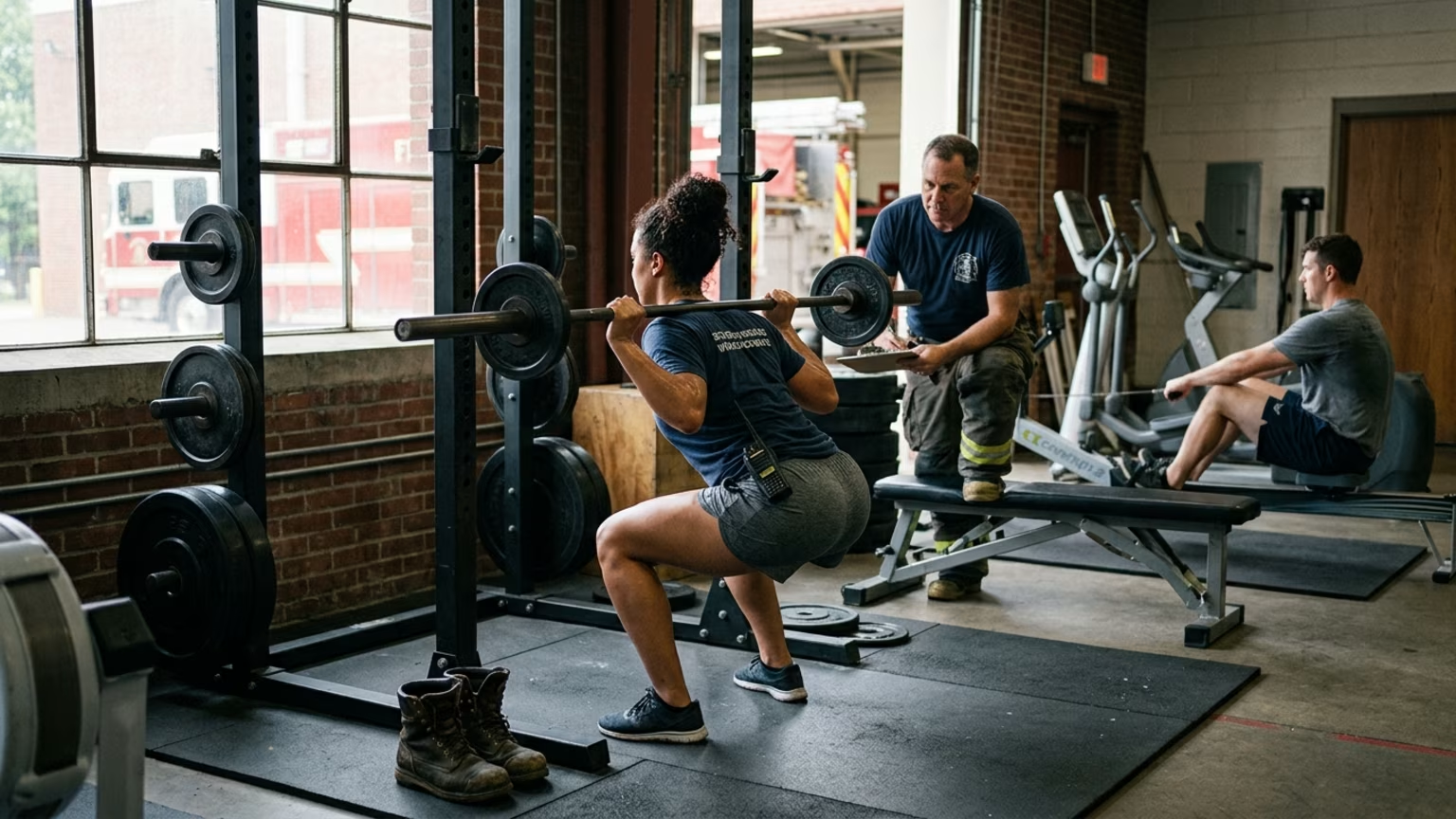

A practical guide to balancing strength, conditioning, and recovery around irregular shift work. Discover how first responders can adapt training to manage fatigue.





Deciding whether to execute a high-output capacity session or a low-fatigue maintenance session requires evaluating recent sleep and the immediate operational demands ahead.
Capacity-building sessions focus on progressive strength development and dedicated aerobic conditioning. These workouts drive physiological adaptations that prepare the body for unpredictable strenuous activity. The American Heart Association notes that tactical athletes often carry heavy equipment and work in heat. [6] They also face intense psychological stress during responses. [6] These combined factors can substantially increase cardiac workload. [6]
A structured capacity session builds the necessary resilience for these extreme demands. The routine should incorporate foundational compound patterns relevant to the job. Essential movements include squats, hinges, pushes, and pulls. Split squats and loaded carries are also highly effective additions. Trunk bracing exercises are critical for maintaining structural stability during heavy exertion.
Aerobic capacity is equally vital for maintaining operational readiness. A 2026 scoping review identified the 20-metre shuttle run as a highly practical assessment option. [4] The review included 14 studies from an initial set of 140 records. [4] It noted the minimal equipment requirements and scalability of the shuttle run. [4]
High-intensity work generates substantial physiological fatigue across the entire body. The central nervous system requires adequate time to recover from heavy resistance training. Intense intervals also demand significant physiological repair from the cardiovascular system. Without proper rest, these sessions can leave a responder completely depleted.
This depletion creates a dangerous vulnerability if a major call occurs shortly after training. Therefore, capacity building belongs exclusively in a genuine recovery window. Proper execution means scheduling heavy workouts only when sleep has been adequate. A well-timed session builds work capacity without compromising the next duty cycle. Agencies are increasingly recognizing the need to balance this physical equation.
New American Heart Association guidance emphasizes a broader perspective on tactical fitness. [6] Fitness-for-duty decisions must consider risks to team members, mission success, and public safety. [6]
Readiness-maintenance sessions prioritize movement quality over raw physiological adaptation. These lower-intensity workouts preserve strength and aerobic activity without producing excessive fatigue. They utilize submaximal lifting, steady aerobic conditioning, easy circuits, and brief mobility work. The fundamental goal is to stimulate the muscular system without draining critical energy reserves.
This approach is essential for navigating the physical toll of irregular work hours. Shift work frequently disrupts normal circadian rhythms and restorative rest periods. Research summarized by Law Enforcement Today links police shift work with several health issues. These include poor sleep, increased stress, higher injury rates, and sickness absence.
The same summary detailed the severe sleep impacts observed in Buffalo police officers. Poor sleep quality was 70 percent higher among night-shift officers compared to day-shift officers. Afternoon-shift officers also experienced a 49 percent higher rate of poor sleep. When sleep is compromised, heavy training only deepens the overall physiological deficit.
A maintenance session offers a physiological compromise that keeps the body moving safely. It helps flush metabolic waste and reinforces proper functional movement patterns. Five to ten minutes of targeted mobility work can make a significant daily difference. Useful movements include thoracic rotation, controlled shoulder flexion, hip rotation, and ankle dorsiflexion. Easy breathing with a prolonged exhale should also be included.
Maintenance work also supports mental recovery during periods of high call volume. A 2026 scoping review described the frontline movement-and-mental-health evidence base as growing but methodologically heterogeneous. Exercise should be treated as an adaptable performance practice rather than a guaranteed psychological treatment. Keeping workout intensity manageable allows responders to use movement to decompress safely.
Applying these methodologies requires a clear system based on readiness and duty exposure. A fixed weekly schedule rarely survives the reality of emergency services. Training should rotate across a cycle that adapts to available recovery windows. A simple assessment system helps determine the right daily approach.
A green day means the responder is recovered and faces no imminent high-demand duty. This is the optimal window for a demanding capacity-building session. The primary strength workout should take priority during this fully recovered state. The session should include intervals or demanding task-specific conditioning work.
A yellow day involves sleep disruption, a difficult recent call, or uncertain call volume. The immediate physiological priority is reducing training volume before reducing movement quality. Responders should transition entirely to lower-intensity readiness-maintenance sessions. Submaximal strength work and loaded carries at moderate effort work perfectly here.
A red day features severely restricted sleep, unusual exhaustion, or immediate high-risk operational demands. Hard training must be replaced entirely with gentle movement. Walking, simple breathing practices, hydration, food, and sleep opportunity become the strict priorities. The American Heart Association framework supports this specific duty-capability approach. [6]
Firefighters must avoid using simulated fireground circuits as a default test of toughness. Exhaustion becomes a severe liability if the next response requires high physical output. Heavy intervals must be replaced with easy aerobic work after a demanding incident. The 2026 review on firefighter testing identified high cardiovascular strain in the profession. [4]
Police officers on rotating schedules should place hard sessions after their best sleep opportunity. Training should not automatically occur immediately after a shift concludes. A workout will compromise the post-shift sleep environment if it interferes with winding down. Establishing a shift-specific sleep plan helps align workouts with actual periods of rest.
Paramedics and EMTs often experience high call volumes that make personal scheduling unreliable. A ten to twenty minute maintenance session is often the safest choice during long shifts. Walking and mobility take precedence if a shift has produced substantial fatigue. Hard training sessions should wait for a meaningful and protected sleep opportunity.
Retired first responders should shift their objective away from proving readiness under acute stress. The focus must transition to maintaining overall strength, balance, mobility, and enjoyable activity. The adjustment system remains useful for navigating normal aging, joint pain, or poor sleep. Retirees should also seek periodic fitness assessments with qualified medical professionals.
A frequent error is rigidly adhering to a traditional seven-day training split. The body responds to accumulated physical stress rather than the days of the week. Ignoring sleep debt is another major failure point in tactical fitness programming. A report on Estonian and Latvian rescue workers highlighted this persistent occupational problem.
The report found that only about one in ten respondents consistently felt well-rested. This lack of recovery occurred even though most respondents reported sleeping six to nine hours before a shift. The researchers behind that report argued for a structural organizational change. They stated that organizations should build physical training and dedicated rest into shifts.
Relying entirely on individual discipline outside of work is often completely unsustainable. Misusing field tests is another common organizational misstep that compromises capability. The 2026 scoping review cautioned that field-test estimates can misclassify people near fitness cut-points. [4] Confirmatory testing may be appropriate when employment decisions depend entirely on the result. [4]
A single test score should never be overinterpreted as the sole measure of operational readiness. Tests are better utilized as functional tools for monitoring physiological trends over time. Agencies also frequently fail to treat sleep and recovery as formal operational requirements. Responders should never attempt to train through persistent fatigue or acute pain.
It is vital to seek clinical assessment for sleep disorders or cardiovascular symptoms. [6] New guidance encourages framing cardiovascular risk assessment explicitly around tactical duty rather than recreational fitness. [6] Developing a structured duty fitness routine prevents overtraining while preserving operational capability. Understanding the minimum effective dose of exercise ensures that training supports the job rather than competing with it.
Deciding whether to push through a heavy capacity session or downshift to a maintenance workout requires honestly evaluating recent sleep and the immediate operational demands ahead. Protecting your physical longevity means treating rest and targeted submaximal work as vital tactical strategies. Career readiness depends on intelligently managing fatigue rather than consistently ignoring it.
Deciding between high-output capacity training and low-fatigue maintenance sessions requires navigating the unpredictable physical toll of irregular work hours. Planning for physical capability and an active life after retirement or leaving service demands training systems that respect these specific operational realities. Rescuris helps emergency professionals implement adaptable recovery and movement routines that maintain current operational readiness without sacrificing long-term health. Explore Resources
Rescuris publishes evidence-aware guidance for firefighters, police officers, paramedics and other first responders on fitness, recovery, sleep, nutrition, stress resilience and long-term capability.






Read practical guidance on first responder fitness, recovery, sleep, nutrition and resilience for demanding work and a long, active career.
read the blog
