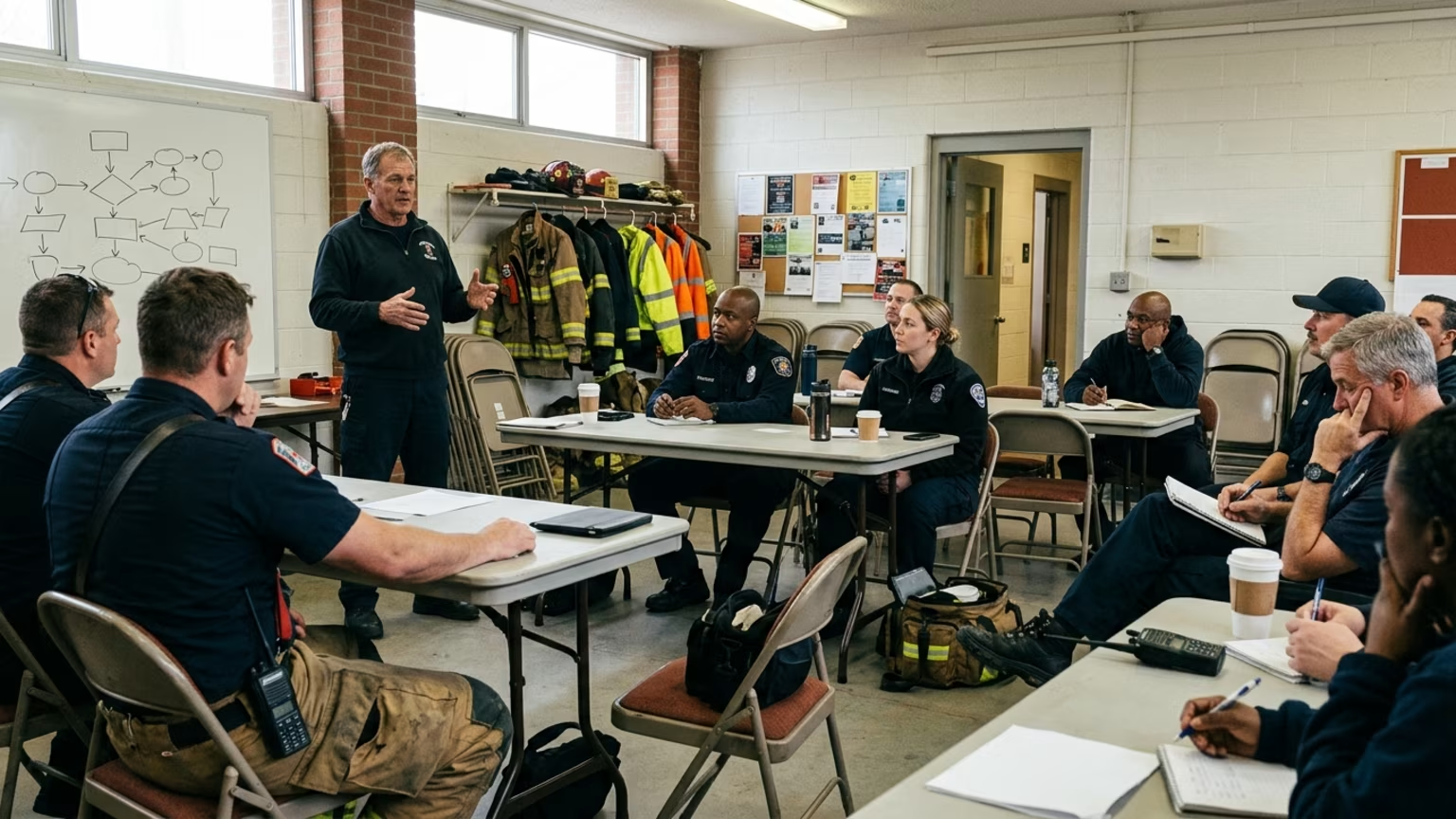

Operation Yellow Tape's Chesterfield event highlighted occupational trauma. We analyze how agencies translate peer support awareness into functional protocols.





If you or someone you know is in crisis right now, help is available. Call 911 for immediate danger. Call or text 988 for the Suicide & Crisis Lifeline (press 1 for the Veterans Crisis Line), or text 838255.
On October 3, 2026, the Chesterfield nonprofit Operation Yellow Tape held a mental health masterclass at Beulah Rec Center for first responders, combat veterans and their families. The event aimed to discuss mental health and reduce the stigma around asking for help in the first responder community, WTVR reported.
The event highlighted a growing public conversation about occupational trauma and family well-being. WTVR reported that speakers framed mental health as a shared community issue rather than an isolated problem. Featured speaker Jason Redman is a retired Navy SEAL. He told attendees that trauma can occur in the battlefield, fire service and law enforcement. He encouraged people in the protector community not to struggle alone.
Kenny Mitchell founded Operation Yellow Tape five years ago after spending 20 years as a first responder. Mitchell described mental health as a broad community concern and urged attendees to seek support. WTVR reported that attendee Scott Richardson found the message about the wellness of responders and their families resonant. Attendee Mike Morgan described vulnerability and allowing oneself to feel emotions as strengths rather than weaknesses.
Operation Yellow Tape represents a movement to address psychological wear in high-stress occupations openly. The Beulah Rec Center event provided a local venue for families to understand the unseen burdens carried by uniformed professionals. By bringing first responders and military veterans into the same room, organizers created an environment focused on mutual understanding. This shared space allowed attendees to discuss the emotional toll of their duties without facing judgment.
While the masterclass successfully encouraged professionals to share their experiences, related research adds necessary context for implementation. Research summarized in a 2026 Australian study found that rural, regional and remote first responders identified peer support and clinical supervision as potentially helpful. They also valued debriefing, mindfulness and resilience programs. However, the study emphasizes the critical need to tailor these services to local circumstances.
These findings demand a shift from treating awareness as a final goal to viewing it as a gateway for structured operational support. When departments introduce peer support initiatives, they must integrate them into existing daily routines. Relying solely on isolated seminars leaves emergency personnel vulnerable to progressive stress accumulation. Leaders must combine peer awareness with established physical readiness routines to build complete occupational frameworks.
A key operational translation involves recognizing how local environments affect the willingness of a professional to seek help. The 2026 Australian study notes that confidentiality concerns and stigma can severely complicate access to support. Supervisors cannot simply tell crews to ask for help without dismantling the organizational barriers that penalize vulnerability. In tight-knit communities, responders might worry about encountering familiar faces at local clinical offices.
This requires establishing rigid confidentiality protocols and clear role boundaries within peer networks. When a responder uses a peer support system, they need absolute assurance that the conversation remains private. Properly structured programs can act as a crucial 90-second reset between demanding calls, helping personnel maintain situational awareness without fearing career repercussions. Leaders must actively protect these communication channels to maintain operational trust.
Mental fatigue directly impacts physical readiness during demanding deployments. First responders cannot separate cognitive stress from their ability to perform strenuous physical tasks on the fireground or at a scene. Unresolved trauma often leads to interrupted sleep patterns, which immediately degrades muscular recovery and cardiovascular endurance over consecutive shifts. Therefore, establishing functional support pathways directly protects a professional’s long-term duty fitness profile.
A comprehensive support strategy also acknowledges the reality of irregular meal timing and inconsistent energy management. Shift workers frequently rely on caffeine and processed foods to push through exhaustion, which only masks underlying fatigue. Addressing mental health requires a foundational commitment to physiological recovery, helping crews maintain the physical stamina to process emotional events. Building these comprehensive habits allows personnel to sustain their performance without sacrificing their long-term health.
A pervasive assumption in emergency services is that trauma exposures and recovery needs are clinically identical across all uniformed professions. The WTVR report shared Redman’s perspective that trauma exists across military, fire and law enforcement environments. While this shared experience creates valuable solidarity, it does not mean that every occupation requires identical interventions. WTVR reports this comparison as a speaker’s statement rather than a comparative clinical study.
Treating cross-discipline trauma as uniform ignores the unique constraints of distinct public safety roles. A paramedic managing back-to-back medical emergencies faces a different operational load than a combat veteran or a police officer. Blanket solutions often fail to address the specific sleep interruptions and recovery windows associated with rotating shift schedules. Addressing these varied demands requires an adaptable approach to first responder attention cycles and focus under pressure.
Another assumption is that generalized support protocols will work perfectly regardless of a department’s geographic location. The 2026 Australian study directly challenges this idea by demonstrating the unique hurdles faced by non-urban agencies. Planners often design wellness frameworks around the resources available in large cities, assuming smaller towns can simply scale them down. The research proves that rural responders face distinct anonymity challenges that demand specialized logistical planning.
Recognizing this reality prevents agencies from checking a regulatory box while leaving personnel without true field support. If a remote department adopts a city-centric peer program without modifications, crews will likely avoid using it entirely. Leaders must evaluate their operating environment realistically and build pathways that actually protect the identities of their personnel. Acknowledging local limitations is the first step toward building a truly functional support network.
Departments operating in smaller communities must immediately adjust their protocols to protect anonymity. The Australian research emphasizes that anonymity can be especially difficult in rural environments where professionals often know local clinicians. Agencies must tailor services to local circumstances to bypass these structural barriers. Offering external telehealth resources or out-of-town clinical referrals can help professionals seek help without fearing community exposure.
Individuals must also learn to treat peer conversations as a bridge to formal care rather than a clinical cure. Peer support works best when it connects a struggling professional with qualified mental health resources. At the Chesterfield event, grief educator Lynn Lewis spoke about losing her son, Richmond firefighter Daniel Lewis, to suicide in 2019. Her ongoing work supporting people experiencing grief illustrates why comprehensive, professional care networks remain absolutely necessary.
Agencies should also verify that crisis contact information is immediately visible and normalized within all station areas. The WTVR report noted Mitchell’s direct appeal for attendees to reach out and talk when they feel overwhelmed. Furthermore, the report reminded the public that people in the United States can call or text 988 for the Suicide & Crisis Lifeline. Placing these numbers alongside standard operational protocols removes the stigma of seeking external assistance.
Shift supervisors should also adjust daily routines to incorporate clear stress tracking alongside physical metrics. Evaluating fatigue requires tracking sleep hours, call volume and emotional load as a combined occupational stressor. Implementing these adjustments creates a clear operational picture of crew readiness. Departments can structure this data to support effective load management for first responders tracking shift stress, helping personnel receive adequate recovery periods.
As the conversation around occupational trauma matures, the public safety community should track how specialized programs adapt to rural and remote environments. The challenges identified in the 2026 Australian study represent a significant barrier for many non-urban agencies worldwide. Following how these remote departments implement clinical supervision and resilience programs will yield valuable operational blueprints. Agencies must prioritize evidence-based updates over motivational slogans to effectively support their personnel across a long career.
Administrators should also monitor long-term implementation studies that track actual behavioral changes within departments. The gap between learning a coping skill and utilizing it under pressure remains a significant operational challenge. Future research must identify exactly which factors encourage first responders to consistently utilize formal peer support in the field. Tracking these developments will help agencies design protocols that survive the initial enthusiasm of a masterclass event.
Future studies should also evaluate how sustained mental health support impacts overall career longevity and physical health outcomes. Researchers must investigate whether functional peer networks actually reduce early retirements related to burnout and chronic stress. Connecting psychological support to quantifiable retention rates will help administrative leaders justify ongoing funding for these essential wellness programs. Gathering this objective data remains vital for transforming temporary public awareness into permanent institutional capability.
Additionally, leaders must observe how cross-training between disciplines shapes the future of occupational health. The Beulah Rec Center event demonstrated the value of bringing military veterans and emergency personnel into a shared dialogue. Researchers should track whether interagency workshops produce better long-term outcomes than isolated, department-specific training models. Evaluating these collaborative efforts will determine the most effective ways to allocate limited wellness resources moving forward.
Implementing sustainable peer-support networks and clinical referral pathways is a complex operational decision, and connecting those resources to long-term physical readiness is where our work begins. When dealing with the challenge of planning for physical capability and an active life after retirement or leaving service, Rescuris evaluates the available evidence to provide practical guidance. We help first responders turn specialized research into functional daily routines.
Rescuris publishes evidence-aware guidance for firefighters, police officers, paramedics and other first responders on fitness, recovery, sleep, nutrition, stress resilience and long-term capability.






Read practical guidance on first responder fitness, recovery, sleep, nutrition and resilience for demanding work and a long, active career.
read the blog
