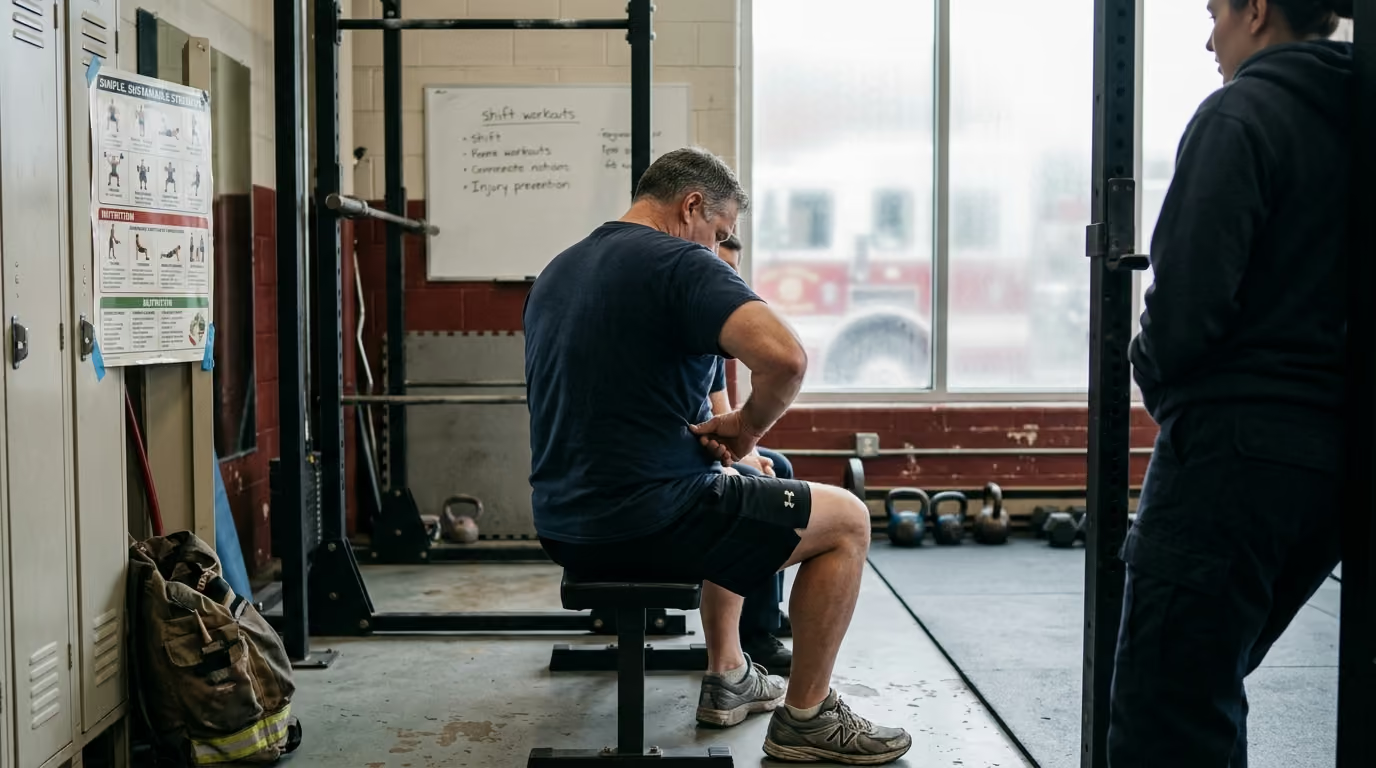

Optimal body composition throughout retirement depends on practical resistance exercises, adequate dietary protein, and structured daily routines that protect lean muscle mass.





You stand in the kitchen six months after hanging up your gear, uniform, or work boots. For twenty-five or thirty years, your physical output was largely dictated by the job. Your calendar was structured around shift rotations, emergency calls, station maintenance, or manual field operations. Now, the calendar is open, the daily alarms have stopped, and your baseline activity has shifted dramatically.
Many individuals notice that body weight begins to climb while muscle mass quietly slips away. The portions that once fueled twelve-hour shifts or heavy fireground operations suddenly produce steady fat gain. At the same time, joint stiffness from old occupational injuries makes training feel daunting.
Maintaining a healthy body composition after leaving service is not about pursuing extreme leanness or running yourself into the ground. Fat loss is fundamentally an energy-management challenge. Preserving muscle, on the other hand, is a training, protein, recovery, and overall health challenge.
A successful transition requires shifting your focus away from rapid weight loss on the bathroom scale. Instead, the goal is preserving lean tissue, reducing excess abdominal fat, protecting physical independence, and establishing daily habits that can last for decades.
Retirement does not automatically cause metabolic decline or inevitable weight gain. However, leaving the workforce abruptly removes the built-in physical movement that previously regulated daily caloric output. Research shows that retirement affects body weight differently depending on the physical demands of a person's former career.
Longitudinal evidence shows that individuals retiring from physically demanding roles often experience a notable drop in total daily energy expenditure. When heavy lifting, stair climbing, and long hours on your feet disappear, your baseline caloric needs drop substantially. If dietary intake remains matched to your former occupational output, a positive energy balance develops quickly.
A primary driver of post-retirement weight change is the loss of non-exercise physical activity. Occupational tasks create a high movement floor without requiring conscious planning. When that routine ends, time spent sitting at home increases, transitions between physical tasks decline, and access to the kitchen becomes constant.
Research tracking older adults found that individuals who became inactive or remained inactive after retirement gained significantly more weight than peers who maintained regular activity. The difference equaled roughly 1.2% to 1.7% of initial body weight over the transition period. The takeaway is clear: lost occupational movement must be replaced with intentional daily physical habits.
Energy compensation also plays a subtle role during this life phase. When retirees start a formal exercise program, they sometimes compensate by sitting more for the remainder of the day. Alternatively, an open daily schedule can blur meal timing, leading to frequent snacking and social drinking. Successfully managing energy balance requires understanding these shifts and building a new daily routine.
Those interested in structured transition planning can review career longevity resources to understand how sustainable daily routines protect physical capability.
Evaluating your health after retirement requires looking beyond the standard bathroom scale. Total body mass only reflects overall weight. It cannot distinguish between skeletal muscle, organ mass, body water, bone mineral density, and adipose tissue.
Body mass index remains a standard clinical screening tool, with a value of 30 kg/m² or higher indicating obesity. However, BMI has distinct limitations in older adults. Age-related changes alter the distribution of fat and muscle, meaning a retiree can carry excess internal fat while displaying a normal BMI. Conversely, a lifelong responder with substantial muscle mass might be classified as overweight despite having low body fat.
Age-related fat deposition tends to shift inward toward the abdominal cavity. Visceral fat surrounds internal organs and carries greater cardiometabolic risk than subcutaneous fat stored just beneath the skin. Waist circumference provides a valuable proxy for abdominal fat accumulation and should always be tracked alongside scale trends.
A comprehensive view of body composition recognizes four distinct physical profiles:
Sarcopenia is a clinical condition centered on progressive loss of muscle strength and physical function. The European Working Group on Sarcopenia in Older People defines low muscle strength as the primary indicator of probable sarcopenia. Confirmed sarcopenia involves both low strength and reduced muscle quantity or quality.
Clinical thresholds used to identify muscle decline include a handgrip strength below 27 kg for men or 16 kg for women. Another common assessment is taking longer than 15 seconds to complete five unassisted chair stands. Appendicular skeletal muscle mass below 20 kg in men or 15 kg in women also signals significant muscle depletion.
Tracking these functional markers ensures you focus on physical capacity rather than arbitrary weight targets. You can explore foundational nutrition and body composition principles to understand how muscle retention directly influences long-term vitality.
When an older adult attempts to lose weight through dietary restriction alone, a substantial portion of the lost mass often comes from lean muscle tissue. Clinical reviews show that without adequate resistance training and protein, up to 20% to 30% of total weight lost during calorie restriction can be lean mass.
Losing muscle tissue reduces resting metabolic rate, degrades physical stability, and increases the risk of joint injury. For retirees, protecting muscle mass is essential for preserving the ability to climb stairs, lift loads, and remain independent. Research demonstrates that combining resistance training with adequate dietary protein significantly attenuates lean tissue loss during weight reduction.
Randomized trials examining energy-restricted diets in older adults confirm that higher protein intake combined with progressive loading allows for clinically meaningful fat loss while preserving skeletal muscle. Systematic reviews also indicate that resistance training two to three times per week reduces body-fat percentage while improving gait speed and functional strength.
Strength improvements often occur independently of large increases in muscle size. Neural adaptations, motor unit recruitment, and improved movement coordination allow older adults to gain functional capability quickly. Therefore, a training and nutrition plan can be highly effective even if lean mass numbers on a scale remain stable.
Evidence shows that protein supplementation combined with resistance training yields consistent improvements in functional performance. While dietary protein provides the amino acid building blocks for repair, mechanical loading provides the physiological signal that tells your body to retain muscle tissue. Neither element is sufficient on its own.
Crash diets, severe carbohydrate restriction, and extended fasting protocols are counterproductive for older adults seeking sustainable body composition. A moderate energy deficit that prioritizes nutrient density and high protein intake protects lean mass while allowing body fat to decline gradually.
The PROT-AGE Study Group recommends that healthy older adults consume at least 1.0 to 1.2 grams of protein per kilogram of body weight daily. For retirees who engage in regular exercise, the recommendation rises to at least 1.2 grams per kilogram. During periods of active fat loss or recovery from injury, targets between 1.2 and 1.5 grams per kilogram help safeguard muscle reserves.
Protein distribution across the day matters just as much as total daily intake. Muscle protein synthesis responds best when you consume approximately 25 to 30 grams of high-quality protein per meal. Distributing your protein across three primary meals prevents the common habit of eating a low-protein breakfast and consuming the vast majority of protein at dinner.
A practical meal template includes the following components:
Creating a manageable caloric deficit of 300 to 500 calories below maintenance allows for steady fat reduction of roughly 0.5 to 1.0 pound per week. This gradual pace prevents the severe fatigue, muscle loss, and hormonal disruptions associated with aggressive dieting.
Eliminating liquid calories is often the simplest starting point for reducing intake. Alcohol, sweetened beverages, specialty coffees, and unplanned evening snacks provide little satiety while adding significant calories. Adjusting your intake by swapping out low-satiety items preserves meal quality while creating the necessary energy deficit.
Retirees with a history of shift work can find guidance on adjusting circadian rhythm meal timing to stabilize hunger cues and metabolism.
To maintain physical independence and metabolic health, retirees need a structured exercise regimen built around progressive resistance training, cardiovascular conditioning, and daily baseline movement.
A helpful first step is completing a movement replacement audit. Identify the physical actions your former occupation required every day, such as climbing ladders, lifting equipment, carrying gear, or walking several miles. Note which of those movements have disappeared from your life, and deliberately select safe exercises to replace them.
Public health standards from the Centers for Disease Control and Prevention advise adults to accumulate at least 150 minutes of moderate aerobic activity weekly, alongside muscle-strengthening activities at least two days per week. For retirees, resistance training should be considered the non-negotiable core of the program, with aerobic work serving as a complementary conditioning tool.
A foundational full-body resistance routine performed two or three non-consecutive days per week can be structured around fundamental human movement patterns:
Rest for 60 to 90 seconds between sets to allow full cardiovascular and muscular recovery. Training intensity should reach an effort level where you finish each set with two or three repetitions left in reserve. This stimulates muscular adaptation while minimizing joint strain and excessive recovery demands.
Those accustomed to high-tempo occupational conditioning can review structured duty fitness routines to learn how to adjust training intensity for joint longevity.
In addition to formal lifting sessions, rebuild your movement floor by establishing a daily step target. Aim for 7,000 to 9,000 steps per day accumulated through morning walks, yard work, stairs, and active hobbies. Daily walking improves insulin sensitivity, assists joint lubrication, and burns energy without placing heavy stress on the central nervous system.
Sleep quality directly influences body composition, appetite signaling, and training recovery. Decades of irregular shift rotations, overnight calls, and sleep fragmentation can leave retirees with disrupted circadian rhythms that persist long after their final shift.
When sleep is chronically shortened or inconsistent, the body experiences alterations in appetite-regulating hormones. Ghrelin levels rise, increasing hunger, while leptin levels decline, reducing satiety signals. This hormonal shift often leads to intense cravings for high-calorie, carbohydrate-dense foods, making caloric control much harder to sustain.
The Centers for Disease Control and Prevention recommends 7 to 8 hours of sleep per night for adults aged 65 and older. Achieving this target requires rebuilding consistent daily anchors that signal your internal clock when to be active and when to rest.
Practical strategies for establishing circadian stability include:
Retirees dealing with residual sleep disruptions can benefit from specific protocols for recovering from chronic shift work sleep disruption to restore deeper sleep architecture.
If you experience persistent loud snoring, morning headaches, unrefreshing sleep, or witnessed breathing pauses, seek a clinical evaluation for obstructive sleep apnea. Sleep apnea is common among retired first responders and military personnel. Untreated apnea elevates cardiovascular risk, worsens insulin resistance, and makes fat loss exceptionally difficult.
Applying body-composition principles requires adapting them to your specific career background, physical condition, and daily routine. The following illustrative models outline common transition scenarios.
Pursuing body-composition changes during retirement requires careful attention to physiological safety limits. Aggressive dieting and inappropriate exercise selection can accelerate functional decline or exacerbate underlying chronic conditions.
Calorie restriction is strictly contraindicated in individuals who are frail, experiencing unintentional weight loss, or dealing with active malnutrition. In these situations, the clinical focus must be restoring nutritional status, increasing energy intake, and building functional strength under medical supervision.
Individuals with diagnosed chronic kidney disease must have their protein targets set directly by their nephrologist or renal dietitian. The general older-adult target of 1.0 to 1.2 grams per kilogram may need adjustment based on estimated glomerular filtration rate and disease staging.
When engaging in resistance training, distinguish between productive muscular fatigue and genuine clinical warning signs. Mild, temporary muscle soreness is normal when starting a new routine. However, sharp joint pain, sudden swelling, dizziness, chest tightness, or shortness of breath require immediate exercise cessation and medical evaluation.
Consult a physician, physical therapist, or registered dietitian if you experience any of the following symptoms:
Professional oversight ensures that training progressions and dietary adjustments remain safe, individualized, and effective for your health history.
Revisit these guidelines whenever your daily routine changes, such as moving to a new home, recovering from a medical procedure, or experiencing a shift in your physical capability. Reviewing your baseline movement audit, protein intake, and strength markers every six months helps you catch gradual lifestyle drift early.
Preserving muscle and managing body composition after retirement protects your hard-earned freedom and physical independence. Maintaining functional strength, eating sufficient protein, and moving consistently every day ensures you remain capable of enjoying the years ahead.
Stay connected for research-led guidance on duty fitness, shift-work sleep, injury recovery, stress, nutrition and career longevity. Practical ideas for first responders who want to stay capable on the job, recover well and protect their health for the long run.



Read practical guidance on first responder fitness, recovery, sleep, nutrition and resilience for demanding work and a long, active career.
read the blog



