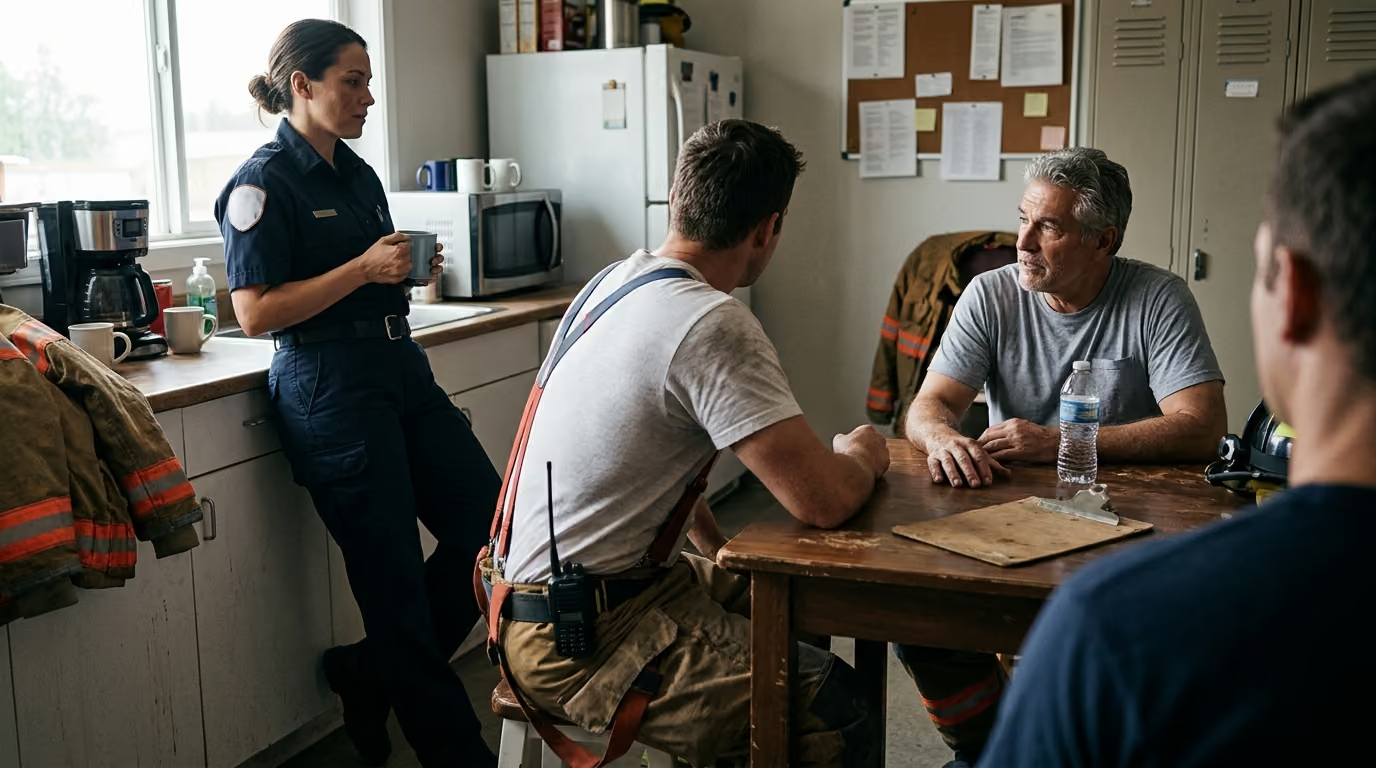

Authentic first responder resilience requires psychological safety and structured peer support rather than surface-level station camaraderie or forced compliance.





If you or someone you know is in distress or immediate danger, call 911. For immediate, confidential mental health crisis support, call or text 988 to reach the Suicide & Crisis Lifeline (press 1 for the Veterans Crisis Line) or text 838255.
A tightly bonded crew is often considered the ultimate safeguard against operational failure and psychological strain. Yet tight social bonds can just as easily silence critical safety warnings, normalize debilitating fatigue, and isolate members who need professional help.
Crew cohesion is not simply about liking the people on your shift. When understood correctly, cohesion is an operational capability built on clear roles, shared situational models, psychological safety, and mutual support. This resource examines the evidence behind team cohesion in emergency services, distinguishing protective workplace relationships from destructive group dynamics, and outlining practical systems for daily operations, crisis recovery, and life after service.
Quick answer: Healthy team cohesion is the shared capacity of a crew to coordinate under extreme pressure, communicate hazards openly, trust teammate competence, resolve internal friction, and support recovery without punishing vulnerability. It relies on both operational clarity and psychological safety, protecting individual health while maintaining duty readiness.
Emergency-service literature separates cohesion into two functional branches. Task cohesion represents shared commitment to operational objectives, operating procedures, and tactical standards. Social cohesion represents interpersonal trust, mutual respect, and a genuine sense of belonging.
A crew can possess high social closeness while remaining tactically disorganized. Conversely, a crew can execute complex evolutions with mechanical precision while maintaining an icy, unsupportive social atmosphere. Sustainable operational resilience requires both dimensions working in concert.
When teams build both task and social cohesion, members actively back each other up during high-demand calls. They monitor collective fatigue, distribute physical loads, and speak up when an operational plan goes wrong. When cohesion is misunderstood as unquestioned compliance or forced social uniformity, it degrades situational awareness and accelerates burnout.
Understanding this distinction allows station officers, crew leaders, and frontline personnel to treat cohesion as an active discipline. Cohesion is built through structured communication, transparent handoffs, and consistent post-incident repair rather than informal hazing or mandatory social drinking.
The behavioral health burden across emergency services is well documented across occupational research. The Substance Abuse and Mental Health Services Administration (SAMHSA) reports an estimate that approximately 30 percent of first responders develop behavioral health conditions, including depression and post-traumatic stress, compared with roughly 20 percent in the general population. Data from the U.S. Fire Administration indicates that approximately 20 percent of firefighters and paramedics may meet post-traumatic stress criteria at some point across their careers.
A National Institute for Occupational Safety and Health (NIOSH) health hazard evaluation of firefighters responding to opioid overdoses revealed that 97 percent reported experiencing at least one potentially traumatic event within the previous six months. In that specific cohort, 3 percent met screening thresholds for post-traumatic stress, 5 percent for moderate-to-severe depression, and 5 percent for moderate-to-severe anxiety. Notably, only 11 percent had sought mental health care for work-related stress.
Occupational data also underscores substantial mortality risks. Research published by NIOSH shows emergency medical service providers are approximately 1.39 times more likely to die by suicide than members of the general public. A Centers for Disease Control and Prevention analysis of 61,579 suicides between 2015 and 2017 identified 676 deaths among first responders, representing roughly 1 percent of the total within those reporting jurisdictions.
Systematic reviews examining firefighters, paramedics, and emergency nurses indicate that supportive workplace relationships serve as a vital protective factor against psychological distress. Research links strong social connectedness and team cohesion with reduced anxiety, lower depression scores, and improved resilience against operational trauma. The literature also reveals that supervisor relationships exert a disproportionately strong influence on firefighter and emergency nurse mental health outcomes.
However, the scientific evidence does not show that team cohesion provides absolute immunity. Supportive colleagues cannot erase the neurological strain of sleep deprivation, extreme physical loads, toxic exposures, or repetitive exposure to tragedy. Peer connection supports recovery, but it cannot replace necessary organizational changes, adequate staffing, or licensed clinical care.
Social connection becomes counterproductive when loyalty demands silence or self-sacrifice. Resilient teams operate under the principle of connection without capture. This principle means that while the crew provides deep belonging, it never demands that members abandon personal identity, clinical help, or operational safety.
Unhealthy bonding often masquerades as elite teamwork. In these crews, working through severe exhaustion, ignoring physical injuries, and hiding emotional distress are praised as signs of strength. Members who express doubt, request relief, or access outside mental health resources are subtly ostracized or labeled untrustworthy.
When group loyalty supersedes operational reality, safety signals are routinely missed. Junior members may notice a structural weakness in a burning building or an incorrect drug calculation in an ambulance, yet keep quiet to avoid disrupting group harmony. Resilient crews recognize that genuine loyalty requires speaking up to keep teammates alive.
Healthy teams also avoid forced intimacy. Cohesion does not mean every member must share private life details or spend off-duty hours together. Professional predictability, shared technical standards, and basic human dignity are sufficient to establish strong operational trust.
Teamwork literature identifies five core components necessary for high-stakes coordination, commonly known as the Big Five framework. These components convert abstract ideas of teamwork into concrete, observable actions during complex calls.
First, team leadership establishes operational priorities, allocates equipment, clarifies tactical objectives, and solicits critical information from the crew. Second, team orientation ensures members prioritize collective success while maintaining their independent critical thinking. Third, mutual performance monitoring requires responders to track operational progress, environmental hazards, and teammate fatigue levels continuously.
Fourth, backup behavior involves stepping in to redistribute physical work, carry equipment, or take over cognitive tasks when a colleague becomes overloaded. Fifth, adaptability allows the crew to discard an ineffective plan and coordinate new tactics when on-scene conditions shift unexpectedly.
These five behaviors rely on three supporting mechanisms:
Closed-loop communication eliminates ambiguity in loud, chaotic environments. When an officer orders a crew member to establish a secondary water supply, the member repeats the order directly, executes the task, and confirms its completion back to the officer. This simple three-step cycle prevents dropped assignments and false assumptions on the fireground or at a mass-casualty scene.
Shared mental models give all members a common understanding of the current situation, available resources, and probable hazards. When unexpected problems occur, a shared model allows members to anticipate each other's actions without constant verbal instruction. Teams build these models through brief pre-shift briefings and consistent scenario training.
Mutual trust allows this system to function under extreme stress. Competence trust assures you that your partner has the technical skill to complete an assigned task. Reliability trust confirms they will carry out what they promised. Intentional trust means everyone believes their colleagues are acting in good faith for the safety of the entire crew.
To maintain physical readiness during sustained high-intensity shifts, crews can apply targeted physical conditioning principles. Exploring duty-specific task fitness strategies helps teams develop the baseline capacity needed to execute these physical backup behaviors without sudden exhaustion.
Psychological safety is the shared belief that no member will be humiliated, punished, or ostracized for speaking up, asking questions, reporting errors, or raising safety concerns. In high-risk occupations, psychological safety is not a soft wellness concept. It is an essential risk-management capability.
Research from healthcare safety environments, monitored by organizations such as the Agency for Healthcare Research and Quality (AHRQ), demonstrates that steep authority gradients prevent frontline workers from speaking up. When junior personnel fear public embarrassment, they withhold vital observations. Resilient emergency crews treat questions and challenges as contributions to mission success rather than personal attacks on leadership.
Psychological safety does not mean lowering performance expectations or avoiding accountability. It does not permit negligence, misconduct, or willful violations of safety rules. Instead, it creates an environment where operational truth surfaces quickly, allowing leaders to correct errors before they result in injuries or fatalities.
To lower the social barrier to speaking up during critical incidents, crews should practice standardized challenge-and-response phrases. Using uniform language depersonalizes the interaction and alerts the entire crew to an emerging issue instantly.
Standard phrases include:
When a crew member uses one of these phrases, the standard protocol is for the leader to acknowledge the observation, assess the environment, and adjust or confirm the action plan. Practicing these phrases in routine training makes them automatic during high-stress calls.
Managing acute stress between critical incidents is vital for maintaining clear communication. Responders can learn quick grounding techniques between calls to clear residual adrenaline and preserve cognitive flexibility.
Disagreements and interpersonal friction are inevitable in high-pressure shift work. Long shifts, sleep fragmentation, physical discomfort, and repetitive exposure to distressing scenes leave nerves frayed. What separates resilient crews from dysfunctional ones is the presence of a structured conflict repair process.
Unresolved conflict damages coordination. When partners harbor unspoken resentment, communication becomes clipped, handoffs become rushed, and mutual performance monitoring breaks down. Left unaddressed, interpersonal tension creates operational blind spots.
Conflict repair begins by separating intent from outcome. In high-stress situations, well-intentioned decisions can lead to frustrating results. A structured debrief allows members to describe what they observed, explain the rationale behind their actions, and listen to the experiences of their peers without immediate defensiveness.
Not all workplace problems can be resolved through informal peer conversations. Destructive behaviors such as sexual harassment, racial discrimination, physical intimidation, deliberate safety violations, and reporting to duty while impaired require formal administrative action. Attempting to manage serious misconduct through informal peer pressure puts vulnerable workers at risk and compromises institutional integrity.
Supervisors play a critical role in distinguishing ordinary interpersonal friction from toxic behavior. Station officers must address underlying issues directly rather than allowing passive-aggressive tension to fester across a shift rotation.
Peer support programs are widely implemented across fire departments, law enforcement agencies, and emergency medical services. A systematic review of peer-support and crisis interventions across frontline public safety and healthcare personnel shows that peer-led programs can help reduce stigma, provide immediate listening, and assist responders in navigating occupational stress.
However, the scientific evidence base remains mixed regarding long-term clinical outcomes. A scoping review of peer-support interventions highlighted that while peer interactions offer short-term comfort, studies on overall trauma prevention remain uneven. Peer support is a vital bridge to care, but it is not a clinical treatment for post-traumatic stress, major depression, or substance use disorders.
Properly trained peer supporters understand their operational scope. Their role is to provide empathetic listening, assess immediate safety, offer basic stress-education resources, and connect the individual with qualified professional clinicians. Peer supporters do not diagnose conditions, conduct formal therapy, or promise total secrecy when an individual presents an immediate danger to themselves or others.
Mandatory psychological debriefings immediately following critical incidents have shown inconsistent results in clinical literature. Forcing individuals to recount traumatic details before their acute nervous system response has settled can increase distress for some responders.
A safer operational approach combines practical incident hot-washes focusing strictly on tactical facts with voluntary, confidential access to peer supporters and licensed mental health professionals. Understanding the broader context of stress and mental performance helps leadership build comprehensive programs that support member wellbeing without relying on rigid, outdated debriefing models.
Chronic sleep loss directly impairs interpersonal patience, emotional regulation, situational awareness, and split-second decision-making. Shift work disrupts natural circadian rhythms, increasing the likelihood of miscommunication and operational errors. When crews treat chronic exhaustion as a personal failure rather than a biological reality, cohesion quickly degrades.
A resilient crew manages fatigue collaboratively. Team members pay attention to the signs of severe sleep debt in their colleagues, including glazed expressions, delayed verbal responses, dropped equipment, and unusual irritability. When these signals appear, members step in to adjust the workload before an incident occurs.
Leadership plays a central role in formalizing fatigue countermeasures. Station officers who monitor shift volume and track cumulative night calls can make informed decisions about training intensity and non-essential tasks. Evaluating agency policies through measuring sleep and fatigue in leadership provides an evidence-based roadmap for maintaining readiness while protecting health.
Establishing shared protocols around sleep also reduces social friction between responders with differing sleep habits. When the entire station respects quiet hours and understands the biology of circadian strain, members recover faster between demanding shifts. Crews can further optimize their recovery by applying structured shift-work sleep management techniques both on and off duty.
The transition out of emergency services presents a severe, well-documented psychological risk. Research on first responder retirement identifies three profound losses that occur when leaving the service:
A scoping review on supporting public safety personnel from career through retirement emphasizes that transition planning must begin years before an individual's final shift. Waiting until the final month of service leaves responders vulnerable to acute isolation, identity crisis, and increased behavioral health risks.
During active duty, the crew functions as a primary social community. When an individual retires, is reassigned, or leaves due to medical disability, that contact often vanishes abruptly. The phone stops ringing, station visits can feel awkward, and the individual suddenly feels disconnected from the mission that defined their entire adult life.
Resilient departments establish formal systems that bridge this divide. They create organized retiree associations, offer pre-retirement identity counseling for members and their families, and maintain proactive peer check-ins. Rather than expecting retired members to reach out when they struggle, peer networks should deliberately reach in.
Long-term career health requires viewing service as a significant chapter rather than the entirety of a person's human worth. Responders who integrate comprehensive career longevity strategies throughout their active years leave the profession with their physical health, mental clarity, and family relationships intact.
While strong team cohesion provides essential day-to-day operational support, it has distinct boundaries. Knowing when to escalate a situation beyond the crew level is critical for protecting member lives, maintaining organizational trust, and ensuring patient safety.
When an individual's safety is compromised, keeping secrets in the name of crew loyalty is dangerous. Resilient crews understand that true professional loyalty means taking decisive action to keep a colleague safe, even if it requires contacting a department chaplain, employee assistance professional, or licensed medical provider.
When a crew member is experiencing severe emotional distress or a mental health crisis, securing immediate safety is the primary priority. First responders have widespread familiarity with and access to lethal tools, including personal firearms and medications at home.
Means-restriction guidance, such as temporarily locking firearms, storing ammunition separately, or transferring home safety keys to a trusted family member, should never be treated as an isolated checklist item. These protective actions should always be coordinated collaboratively with a trusted peer, family member, or licensed mental health professional as part of a formal safety plan.
Peers should assist by connecting the individual directly to specialized clinical care while ensuring they are not left alone during acute crises. Cultural competency matters deeply in these moments. Responders benefit most from licensed therapists, psychologists, and medical doctors who understand the specific language, operational realities, and cumulative exposures of emergency services.
Resilient crews protect their members through rigorous operational standards, unyielding psychological safety, and a shared commitment to long-term health that endures long after the shift ends.
Stay connected for research-led guidance on duty fitness, shift-work sleep, injury recovery, stress, nutrition and career longevity. Practical ideas for first responders who want to stay capable on the job, recover well and protect their health for the long run.



Read practical guidance on first responder fitness, recovery, sleep, nutrition and resilience for demanding work and a long, active career.
read the blog



