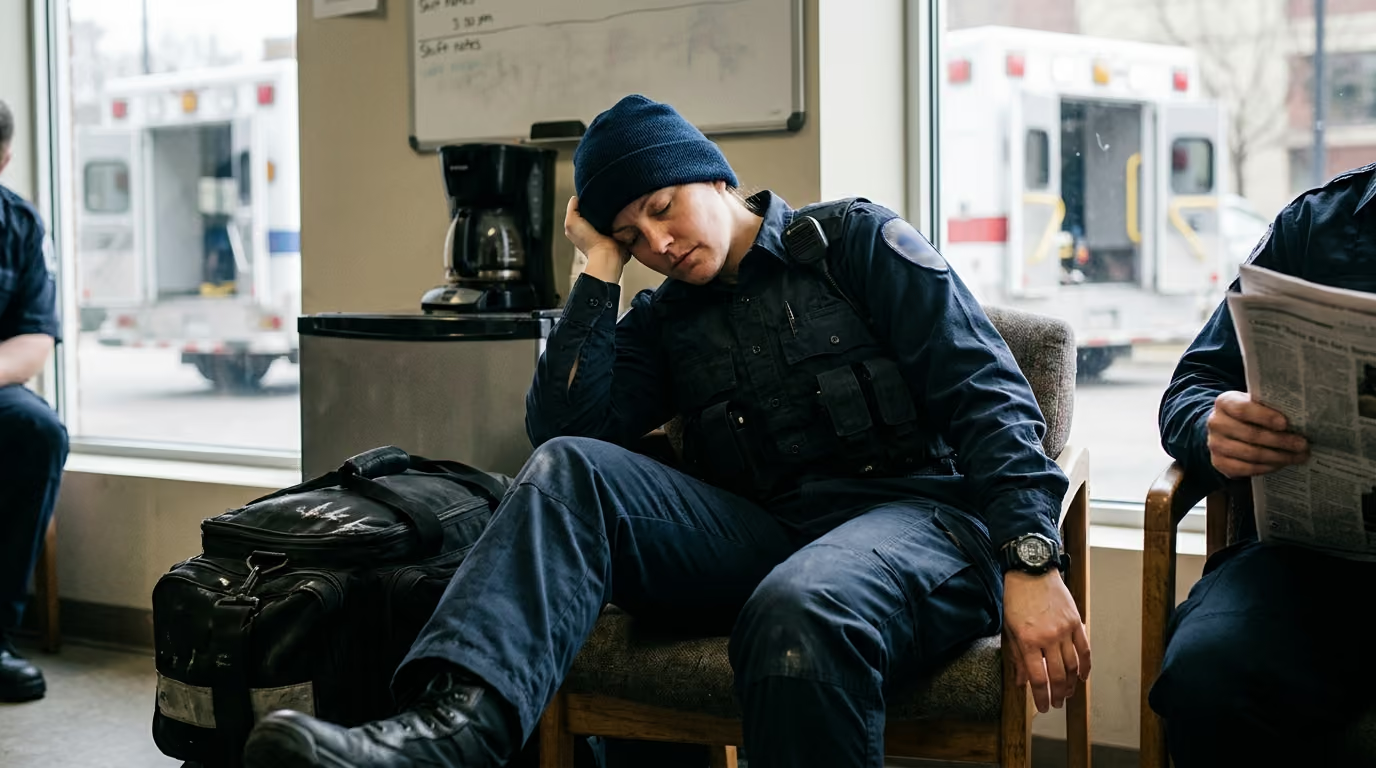

Optimal recovery after irregular shifts requires structured anchor sleep periods, strategic post-shift transitions, and evidence-based rest protocols that prevent circadian disruption.





You finish a final night shift, step through the front door at eight in the morning, and look at the calendar. You have three days off before the next rotation begins. The instinct is to either stay awake all day to match your family schedule or collapse into bed with the goal of sleeping until the afternoon. By the second day off, you find yourself staring at the ceiling at two in the morning, irritable, groggy, and wondering why your time away from work left you feeling less rested than when the block ended.
A day off is not automatically a recovery day. For emergency responders and shift workers, time away from the station or patrol vehicle must resolve several competing demands. It must repay accumulated sleep debt, reduce circadian disruption, provide space for domestic life, and prepare the body to return to duty. When you swing your sleep schedule too far in an attempt to live like a day worker for forty-eight hours, you create social jetlag. The result is a cycle of exhaustion on your days off and severe fatigue on your first shift back.
The goal of an effective recovery period is recovery without excessive schedule swings. You do not need a complete lifestyle overhaul or rigid isolation. You need an evidence-based method to protect sleep duration, anchor your biological clock, and transition between shifts safely.
Recovery on days off requires protecting total sleep time while avoiding severe swings in your sleep schedule. Sleeping seven to nine hours is the baseline for physical and cognitive restoration after shift work. However, chronic sleep debt cannot be completely erased by a single marathon sleep session.
The most effective strategy relies on an anchor sleep period. This means keeping a core block of sleep at the same clock time across both workdays and days off. After a night shift block, transition gradually rather than forcing an immediate daytime schedule. Use strategic light exposure, planned naps, and moderate physical activity to reset your alertness without destroying your ability to sleep when duty returns.
Recovery sleep is physiologically distinct from ordinary daily rest. When sleep restriction occurs over consecutive shifts, the brain accumulates homeostatic sleep pressure. At the same time, irregular schedules pull the internal circadian timing system out of alignment with the external environment.
Sleep opportunity refers to the time allocated for rest, while sleep duration is the time actually spent asleep. In shift work, these two numbers rarely match. Environmental noise, daylight, elevated core body temperature, and family schedules frequently fragment daytime rest.
When sleep duration falls short of individual physiological need, sleep debt accumulates. Research shows that chronic sleep loss impairs psychomotor vigilance, working memory, emotional regulation, and physical reaction time. A common misconception is that sleep debt acts like a simple numerical bank account where every lost hour can be repaid one-for-one on the weekend.
Scientific investigations into chronic sleep restriction reveal that recovery is complex and multi-layered. In controlled laboratory studies, sustained attention and subjective alertness remained below baseline even after two consecutive full nights of recovery sleep. Neuroimaging research shows that while two nights of recovery rest may restore functional hippocampal connectivity after total sleep deprivation, episodic memory performance remains depressed.
Population-level data confirm these laboratory findings. In a representative study of more than twelve thousand adults, weekend catch-up sleep and daytime napping failed to fully compensate for severe sleep debt across the population. In that analysis, weekend catch-up sleep or napping restored adequate sleep duration in only about one-quarter of individuals with severe debt. Relying purely on sporadic, marathon sleep sessions on days off is an incomplete defense against chronic operational fatigue.
The timeline for restoring baseline function depends on whether the sleep loss was acute or cumulative. After a single night of acute sleep loss, one extended sleep episode often produces a substantial subjective improvement. Following four or five consecutive days of partial sleep restriction, the process takes much longer.
Subjective sleepiness and mood typically improve after the first full recovery night. However, objective vigilance, reaction speed, and resistance to attention lapses take between two and four nights of stable rest to return to baseline. This creates a critical safety blind spot. You may feel alert and capable on your second day off, yet your nervous system still exhibits measurable deficits in complex decision-making and rapid motor response.
Standard public health guidelines recommend seven or more hours of sleep per day for healthy adults. For shift workers recovering from operational debt, seven hours represents a minimum physiological floor rather than an optimal target.
The Working Time Society consensus statements note that workers recovering from substantial sleep debt may require nine or more hours of continuous or split sleep per 24-hour period. Research examining shift-work recovery recommends aiming for close to nine hours of continuous sleep on free days whenever possible. Assuming that seven hours equals complete restoration often leaves emergency personnel operating in a state of continuous, low-grade exhaustion.
Emergency services create unique operational constraints that alter standard sleep physiology. Understanding these constraints prevents workers from applying generic wellness advice that fails under real-world conditions.
Firefighters, tactical officers, and paramedics rarely experience passive sleep deprivation. Sleep loss on duty is typically paired with intense physical exertion, thermal strain from protective gear, and spikes in sympathetic nervous system activity.
A high-acuity call at three in the morning floods the bloodstream with catecholamines and cortisol. Even when the call concludes quickly, elevated heart rate and heightened central nervous system arousal prevent immediate return to deep, slow-wave sleep. On days off, your recovery plan must account for autonomic recovery alongside neurological sleep recovery.
Different operational schedules impose distinct recovery challenges:
Those looking for broader baselines can review guidelines on shift-work fatigue to understand how organizational schedules influence cumulative fatigue across long operational cycles.
The most significant mistake shift workers make on their days off is forcing an extreme schedule swing. Going from sleeping between 08:00 and 16:00 on duty to sleeping between 22:00 and 06:00 on a day off creates severe social jetlag.
An anchor sleep period is a core window of rest that occurs at the exact same clock time every single day, regardless of whether you are working or off duty. Preserving an anchor window provides the master circadian pacemaker in the brain with a predictable temporal signal.
For a night-shift worker, an anchor sleep schedule might keep the period between 08:00 and 12:00 permanently designated for sleep. On duty days, you sleep from 08:00 until 16:00. On days off, you stay up later into the night, sleep from 03:30 until 11:30, and spend the rest of the day awake.
This compromise maintains three to four hours of overlapping sleep across all days. It dramatically reduces the circadian amplitude swing while still opening up afternoon and evening hours for family life.
When you force your body to flip 180 degrees within 24 hours, your peripheral clocks in the liver, gut, and skeletal muscle desynchronize from the central clock in the hypothalamus. This internal desynchronization causes profound daytime lethargy, digestive distress, and sleep-onset insomnia.
Maintaining a smaller schedule amplitude on free days stabilizes your core body temperature rhythm. It also keeps your nocturnal melatonin secretion curve relatively predictable. When you eventually transition back to night shifts, the physiological hurdle is manageable rather than catastrophic.
The first 24 hours after finishing a block of shifts represent the highest-risk window for recovery failure. How you handle this single transition day dictates the quality of your entire off-duty block.
When your final night shift ends, your priority is securing immediate, low-demand rest. Delaying sleep to run errands, schedule medical appointments, or perform heavy domestic chores extends wakefulness into the biological day, making sound sleep progressively harder to achieve.
To execute the immediate recovery window effectively:
Depending on your upcoming roster and domestic commitments, select one of two transition models:
This method suits workers who must switch to a daytime schedule for family reasons during extended leave. Upon returning home from the final night shift, sleep for four to five hours, waking around midday.
Get immediate natural sunlight exposure, move your body, and complete low-stress tasks in the afternoon. Go to bed that evening around 23:00 to consolidate your rest on a standard nighttime schedule. This builds up enough homeostatic sleep pressure to allow sleep onset at night.
This method suits permanent night personnel or workers with only two days between night rotations. Sleep a full seven to eight hours immediately following the shift, waking in the late afternoon.
Stay awake through the evening and early morning hours, going to bed around 03:30 or 04:00 on your free days. This keeps schedule swings minimal and avoids the extreme exhaustion of two full schedule reversals in a four-day window.
Using recovery tools correctly requires understanding their underlying physiological mechanisms. Misusing light, stimulants, or exercise can delay circadian adjustment and impair the restorative qualities of your rest days.
Light is the primary zeitgeber, or time cue, for the human circadian clock. When photons strike the intrinsically photosensitive retinal ganglion cells in your eyes, they send signals directly to the suprachiasmatic nucleus.
Naps are a valuable tool to temporarily restore alertness, but they cannot fully replace consolidated sleep. When used correctly on days off, naps relieve acute sleepiness without destroying nocturnal sleep architecture.
Caffeine functions by binding to adenosine receptors in the central nervous system, blocking the brain from sensing accumulated fatigue. The average half-life of caffeine ranges between five and seven hours, with significant individual genetic variation.
On days off, limit caffeine consumption to the first few hours after waking. Consuming coffee or energy drinks in the late afternoon or evening reduces slow-wave sleep depth, increases nighttime awakenings, and prolongs the time needed to fall asleep. If you are using days off to genuinely recover, allow adenosine to bind naturally to its receptors so your nervous system can register and resolve its homeostatic debt.
Physical exercise supports health, metabolic regulation, and sleep quality. However, an intense workout is a physiological stressor that demands recovery resources. When training on days off, calibrate your training volume to your current fatigue load:
When managing recovery during intense operational periods, integrating principles from duty fitness and physical capability ensures training enhances career longevity rather than creating chronic overtraining.
Shift workers do not live in laboratory isolation. Days off must accommodate marriages, children, household maintenance, and social connections. Balancing these obligations requires honest communication and clear structural boundaries rather than sheer willpower.
Social jetlag refers to the chronic discrepancy between an individual's biological time and their social schedule. In emergency response, social jetlag is often treated as a personal failing or an unavoidable badge of honor.
Research demonstrates that wide disparities between workday sleep timing and free-day sleep timing correlate with metabolic disruption, systemic inflammation, and worsening sleep debt. The objective is not to abandon family life, but to schedule domestic commitments around a protected sleep core rather than sacrificing rest entirely.
For those navigating the psychological pressures of balancing duty with home life, exploring resources on stress and mental performance provides frameworks for emotional regulation and cognitive resetting between intense operational periods.
Preparation for your next block of shifts does not begin when you put on your uniform. It begins thirty-six hours before you step back through the station doors.
The first shift back is statistically associated with higher rates of near misses, driving accidents, and operational errors. This vulnerability occurs because workers combine residual sleep debt with the stress of another circadian shift.
When returning to duty after days off, treat the first operational block with deliberate tactical caution:
Review these widespread operational errors to evaluate your current recovery strategy:
Individual sleep strategies have hard biological and operational limits. Understanding these boundaries ensures you do not rely on personal adjustments when safety requires formal operational intervention.
Sleep hygiene, light management, and anchor scheduling can substantially improve off-duty recovery. However, they cannot completely eliminate the physiological stress of poorly designed rosters.
If a department schedule regularly requires quick returns with fewer than eleven hours off between shifts, or mandates repeated, unpredictable thirty-six-hour duty periods, individual recovery tactics will fail. No amount of sleep planning can overcome basic physiological limits when sleep opportunity is structurally denied.
To build a career that remains durable over twenty to thirty years of active duty, review comprehensive guides on long-term career longevity to align your current physical recovery habits with sustainable health.
While irregular sleep patterns are inherent to emergency services, severe and persistent sleep disturbances require medical investigation rather than continued personal experimentation.
Consider scheduling an evaluation with a licensed physician, occupational health specialist, or board-certified sleep medicine physician if you experience any of the following:
An occupational sleep specialist can provide comprehensive diagnostic polysomnography, evaluate you for Shift Work Disorder, and develop medically supervised circadian phase-shifting protocols tailored to your specific roster constraints.
Days off only serve your operational capability when they are managed with the same deliberate structure you bring to your emergency response work. Protecting an anchor sleep window, respecting the transition day, and avoiding extreme schedule swings allows your nervous system to recover without creating severe social jetlag. Sustainable performance over a thirty-year career depends on treating your rest days as a disciplined, biological necessity rather than an afterthought.
Revisit these frameworks whenever your agency transitions to a new shift rotation, when returning from extended medical or personal leave, or when you notice that your days off consistently leave you feeling more exhausted than your shifts on duty.
Small, evidence-based adjustments to your sleep anchor and transition routines will restore your energy, protect your long-term health, and keep you ready for the line of duty.
Stay connected for research-led guidance on duty fitness, shift-work sleep, injury recovery, stress, nutrition and career longevity. Practical ideas for first responders who want to stay capable on the job, recover well and protect their health for the long run.



Read practical guidance on first responder fitness, recovery, sleep, nutrition and resilience for demanding work and a long, active career.
read the blog



