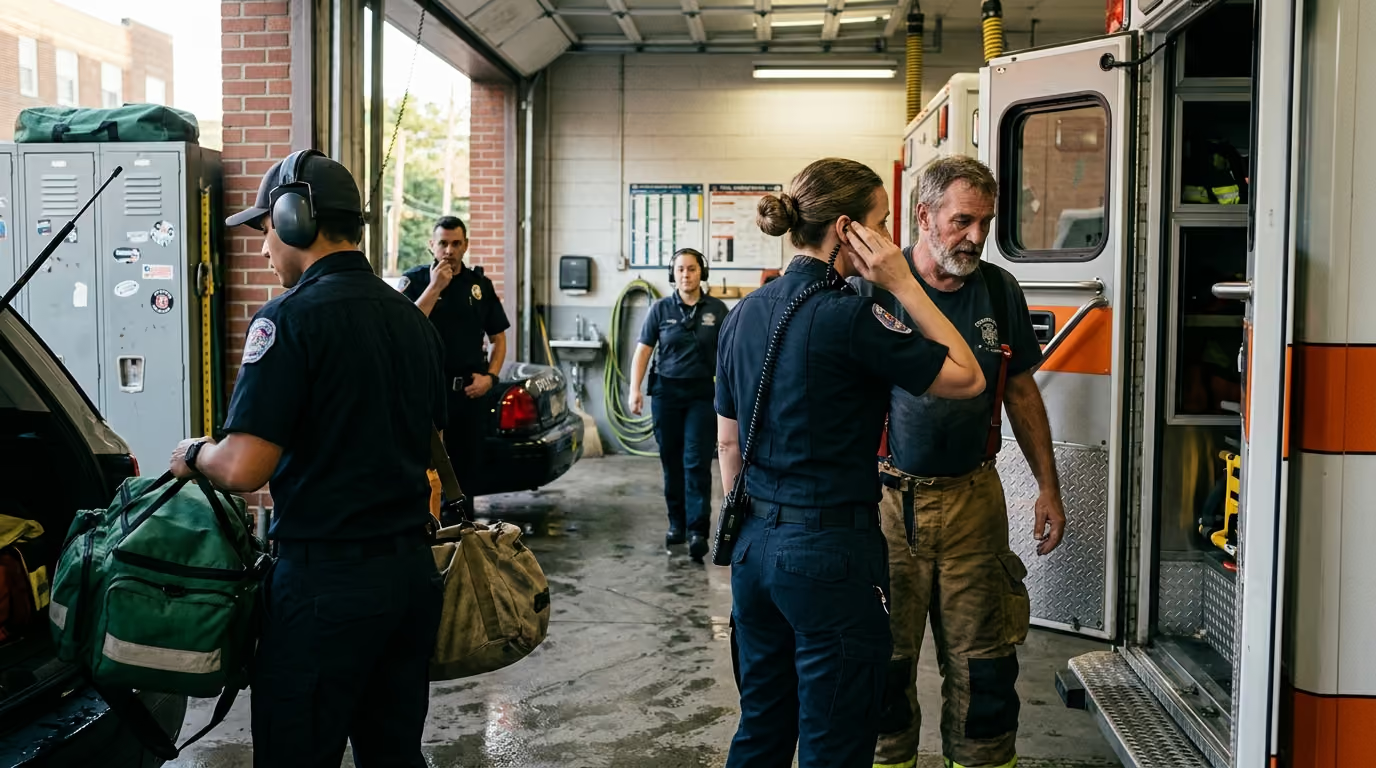

Hearing loss is often dismissed as an inevitable duty hazard, but targeted controls protect first responder auditory health without compromising critical situational awareness.





Most first responders view hearing loss as an unavoidable consequence of the job or a nuisance to deal with after retirement. That perspective is both common and incorrect. Acoustic trauma and noise-induced damage do not wait for the end of a career to cause operational problems. High-frequency hearing loss degrades speech clarity, impairs radio comprehension under stress, increases central fatigue, and erodes situational awareness during active service.
Preserving auditory function requires managing noise as an active occupational hazard rather than accepting it as an inevitable outcome. Effective hearing preservation combines engineering modifications, level-dependent hearing protection, strict audiometric monitoring, and clear communication habits. Protecting hearing preserves operational readiness today and maintains cognitive health, family connection, and quality of life for decades after service.
Hearing damage in public safety is cumulative, permanent, and largely preventable. Siren noise, diesel pumps, power saws, firearms, alarms, and high-output communications headsets deliver sound levels capable of causing cellular damage to the inner ear. Because standard audiograms often miss early auditory processing deficits, waiting for severe symptoms before acting ensures permanent deficit. Managing noise exposure throughout a career protects both tactical safety and post-service capability.
Noise-induced hearing loss occurs when excessive sound energy damages the delicate hair cells in the cochlea. These specialized sensory cells convert mechanical sound vibrations into electrical impulses for the brain to interpret. Once damaged or destroyed, human auditory hair cells do not regenerate.
Exposure to intense sound produces two distinct forms of hearing deficit. A temporary threshold shift involves a short-term reduction in hearing sensitivity, often accompanied by ear fullness or muffled sound. This shift occurs after high-noise events, such as operating near a diesel pump or attending a firearms qualification. Although hearing sensitivity may seem to return within hours or days, repeated temporary threshold shifts cause cumulative metabolic stress in the cochlea that eventually leads to a permanent threshold shift.
Acoustic trauma represents an immediate, irreversible mechanical injury caused by an intense impulse sound. Events such as close-range gunfire, breaching charges, or structural explosions can instantly rupture the tympanic membrane or fracture cochlear structures. These impulse events create immediate permanent threshold shifts and frequently trigger severe tinnitus.
Sound intensity is measured on a logarithmic scale using A-weighted decibels, abbreviated as dBA. The A-weighting curve reflects the frequency sensitivity of human hearing. Because the decibel scale is logarithmic, small numerical increases represent massive jumps in physical sound energy. An increase of 3 dB doubles the acoustic energy delivered to the ear.
Under National Institute for Occupational Safety and Health guidance, allowable exposure time is cut in half for every 3-dB increase in sound volume. The recommended exposure limit established by NIOSH is 85 dBA across an 8-hour time-weighted average. At 88 dBA, the safe exposure window drops to four hours. At 100 dBA, the allowable duration falls to just fifteen minutes.
The Occupational Safety and Health Administration uses a 90 dBA permissible exposure limit with an 85 dBA action level, utilizing a 5-dB exchange rate. Public safety personnel operating in dynamic emergency environments face exposures that routinely dwarf both thresholds. Understanding the mathematical reality of acoustic energy clarifies why brief exposures to sirens or power tools without protection can inflict lasting harm.
Occupational health surveillance consistently demonstrates that emergency service personnel experience elevated rates of hearing impairment compared to the civilian workforce. NIOSH surveillance across all industrial sectors indicates that approximately 25 percent of all workers face hazardous workplace noise. Among noise-exposed workers tested across industries, roughly 20 percent have a material hearing impairment, and 13 percent experience bilateral hearing loss. In first responder populations, cumulative exposure frequently exceeds these industrial baselines.
Studies examining career firefighters have found that approximately 54 percent of cumulative noise exposures exceed the NIOSH recommended exposure limit of 85 dBA across an 8-hour shift. CDC and NIOSH health hazard evaluations of municipal fire departments have recorded siren and engine noise levels between 99 and 116 dBA across various cab and riding positions. These field assessments observed marked hearing loss concentrated at noise-sensitive frequencies, specifically 4,000 and 6,000 Hz.
Research comparing occupational groups indicates that more than 40 percent of career firefighters exhibit measurable hearing loss at these high frequencies. In studies evaluating both firefighters and heavy equipment operators, approximately 40 percent of personnel in both groups reported chronic tinnitus. Firefighters with documented high-frequency hearing loss showed an odds ratio of 2.31 for reporting tinnitus compared to those with intact hearing. Personnel who subjectively perceived their hearing as impaired had an odds ratio of 3.53 for tinnitus.
Longitudinal research confirms that hearing degradation among firefighters accelerates beyond standard age-related loss. Audiometric tracking demonstrates a characteristic notch at 3,000, 4,000, and 6,000 Hz that deepens directly with years of active service. This pattern confirms that occupational noise, rather than normal aging alone, drives the observed sensory deficit across emergency service careers.
Data from major emergency events highlight the compounding impact of complex disaster environments. Long-term health surveillance of World Trade Center responders revealed elevated adjusted relative risks of 1.23 for hearing loss, 1.17 for persistent tinnitus, and 1.33 for ear pain. Firefighters and emergency medical personnel with the highest exposure categories displayed significantly higher odds of both low-frequency and high-frequency loss compared to lower-exposure cohorts. These outcomes reflect prolonged operations involving heavy machinery, concrete cutting, continuous generator output, and compromised respiratory and acoustic environments.
Different emergency response disciplines present distinct acoustic profiles. Managing risk requires recognizing the specific operational hazards encountered in each operating environment.
Structural and technical rescue personnel operate around diverse continuous and intermittent noise sources. In-cab sirens can expose crews to sound pressure levels exceeding 100 dBA, especially when sirens are mounted on the roof or upper cab rather than the front bumper. Diesel apparatus engines, high-pressure fire pumps, and vehicle-mounted generators generate continuous low- and mid-frequency noise that penetrates staging areas.
Power tools present severe acute hazards. Rotary rescue saws, chainsaws, hydraulic power units, and positive-pressure ventilation fans routinely generate 105 to 115 dBA at operator ear level. Structural alarms, personal alert safety systems, and metal-on-metal tool impacts produce piercing high-frequency spikes. These high-frequency sounds rapidly deplete safe daily exposure allowances within minutes.
EMS professionals face severe acoustic challenges within confined vehicle compartments. Ambulance sirens, cab engine roar, patient compartment road noise, and high-output ventilation systems create an elevated ambient baseline. High ambient noise forces providers to increase radio, intercom, and cell phone volumes to hear dispatch and hospital personnel.
Equipment within the patient compartment adds further sound pressure. Portable suction units, oxygen flow meters, mechanical chest compression devices, and vehicle air ride compressors elevate the noise floor. Repeated exposure occurs in close proximity to traffic on high-speed motorways, where passing heavy transport vehicles can generate impulse noise exceeding 95 dBA.
Law enforcement officers face severe impulse noise risks combined with intermittent sirens and engine exposure. Firearms training and tactical breaching operations produce immediate impulse noise levels ranging from 140 to 165 dB peak sound pressure. A single unsuppressed gunshot can cause immediate, permanent mechanical damage to unprotected ears.
Patrol officers on motorcycles face specialized acoustic hazards. High-speed wind turbulence around motorcycle helmets generates substantial continuous sound energy. Systematic reviews show elevated odds of hearing loss exceeding 30 dB at 4,000 Hz among police motorcycle officers, with a reported odds ratio of 1.41. Helicopter flight crews, tactical watercraft operators, and crowd-control specialists also face prolonged exposures to engine and rotor noise.
Telecommunicators face distinct acoustic risks tied directly to audio equipment and room design. Dispatchers do not encounter fireground decibels, but they experience sustained headset use for eight to twelve hours per shift. Dispatchers routinely raise headset volumes to overcome background chatter, ringing consoles, and HVAC system noise in poorly insulated dispatch centers.
Headset volume creep presents a major cumulative risk. NIOSH evaluations of emergency communications centers have found that background noise drives operators to listen at damaging headset output levels. Acoustic shocks from loud feedback tones, shrieking alarms, or field radio static can cause immediate auditory distress and ear pain.
Wildland firefighters work extended shifts near mechanical equipment in remote, high-heat terrain. Operations involving chainsaws, woodchippers, masticators, and water-dropping aircraft frequently exceed occupational exposure limits. In these settings, physical fatigue and heat strain compound auditory stress.
Fleet mechanics and maintenance personnel work daily around pneumatic tools, impact wrenches, engine dynos, air compressors, and siren functional tests. NIOSH health hazard evaluations in municipal maintenance shops consistently show that mechanics face continuous industrial-grade sound levels requiring structured hearing conservation programs.
Relying entirely on earplugs or earmuffs is the least reliable method of hearing preservation. Occupational safety frameworks prioritize eliminating or engineering noise out of the environment before depending on personal protective equipment. Applying the hierarchy of controls provides structured, systemic protection across public safety operations.
The most effective way to protect hearing is to remove the noise source entirely or substitute it with a quieter alternative. Modern battery-powered hydraulic rescue tools operate at significantly lower sound levels than older two-stroke gas-powered hydraulic power units. Transitioning to electric extrication tools eliminates a major source of fireground noise.
Apparatus purchasing committees can specify front-bumper-mounted electronic sirens rather than cab-roof-mounted mechanical sirens. Relocating the siren downward and forward significantly reduces the sound pressure penetrating the passenger compartment. When procuring generators and ventilation fans, agencies should prioritize equipment engineered with high-efficiency mufflers and lower sound ratings.
Engineering controls modify equipment or physical environments to block acoustic energy before it reaches the responder. Adding acoustic insulation and dampening materials inside apparatus cabs, pump enclosures, and dispatch centers reduces ambient sound reverberation. Installing sound-baffling ceiling tiles in communications centers lowers room noise and reduces the need for high headset volumes.
Radio and headset systems should include integrated noise-limiting circuitry. These components prevent audio output from exceeding preset thresholds, protecting the user from acoustic spikes caused by radio feedback or dropped microphones. Noise-canceling boom microphones filter out background engine roar, allowing clear transmission without forcing dispatchers or field crews to shout.
Administrative controls use policy, scheduling, and standard operating procedures to limit noise exposure duration. Establishing standard operating procedures that prohibit unnecessary apparatus idling inside apparatus bays or near command posts reduces continuous exposure. Training divisions should enforce mandatory quiet rest periods during prolonged structural or wildland training operations.
Agencies can rotate personnel during extended high-noise operations. If a crew is assigned to operate power saws or ventilation equipment, rotating operators every fifteen to twenty minutes distributes the acoustic load. Implementing quiet recovery spaces in stations allows auditory hair cells to recover metabolically after high-decibel calls. Building predictable recovery windows into shift life also supports broader restorative strategies, such as using a shift-specific sleep plan to protect central nervous system recovery.
The primary reason first responders avoid wearing hearing protection is the fear of losing situational awareness. Firefighters need to hear structural cracking, victim calls, and low-pressure air alarms. Police officers must detect footsteps, subtle verbal cues, and weapon manipulation. Paramedics must auscultate lung sounds and hear soft-spoken patients in moving vehicles.
Traditional solid foam earplugs attenuate all sound frequencies indiscriminately. This uniform blocking muffles human speech, distorts spatial sound localization, and makes responders feel isolated from their environment. When safety equipment compromises operational effectiveness, personnel will remove it during critical moments.
Modern hearing protection technology resolves this dilemma through level-dependent filtering and active electronic pass-through systems. Understanding the available options allows agencies and individuals to select equipment suited to emergency operations:
Level-dependent non-electronic earplugs use internal mechanical acoustic filters. At low sound levels, these filters allow speech and environmental sounds to pass into the ear canal with minimal attenuation. When a sudden high-decibel impulse occurs, such as a gunshot or metal strike, the filter's physical resistance increases instantly to attenuate the peak pressure wave. These plugs require no batteries, fit comfortably under structural firefighting helmets or tactical gear, and allow normal conversation during low-noise intervals.
Active electronic headsets and custom earpieces combine passive acoustic dampening with external microphones and internal speakers. The external microphones capture low-decibel environmental sounds, process them through digital sound processors, and reproduce them inside the ear at safe volumes. When sound levels exceed 82 or 85 dBA, the electronic processor instantly compresses or clips the audio signal, relying on the passive shell to block the high decibel wave.
High-end active systems provide directional hearing, allowing users to accurately identify the source of sounds in complete darkness or smoke. Many models integrate directly with tactical radios, vehicle intercoms, and mobile phones. This integration delivers radio communication directly into the ear while providing constant acoustic protection against engine noise, sirens, and gunfire.
Custom-molded earplugs are manufactured from silicone impressions of the responder's individual ear canals. They deliver a reliable acoustic seal, superior all-day comfort, and consistent attenuation ratings. Custom earpieces can be fitted with interchangeable acoustic filters, radio listening tubes, or boom microphones. They eliminate the fit variability and improper insertion problems common to disposable foam earplugs.
For extreme noise environments exceeding 100 to 105 dBA continuous, or 140 dB peak impulse, single hearing protection is insufficient. Firefighters operating high-performance rotary rescue saws on concrete, police officers conducting indoor live-fire shoot-house training, and explosive breaching teams should wear well-fitted earplugs beneath active electronic earmuffs. Combining plugs and muffs provides an additional 5 to 10 dB of attenuation, safeguarding against acoustic trauma.
Operational habits must also support clear communication during noisy events. Responders should establish standard read-back communication protocols, requiring team members to repeat critical operational orders, addresses, and medication dosages. Personnel should position themselves facing the speaker whenever possible to utilize visual lip-reading cues and facial expressions. When background roar is unavoidable, standard hand signals provide a reliable secondary communication channel.
Occupational hearing loss develops slowly and painlessly over years. A responder cannot determine whether their hearing is intact based purely on self-perception. Early hearing loss affects high frequencies outside normal speech ranges, masking the deficit until significant functional decline has already occurred. Regular audiometric monitoring provides early detection, allowing interventions before speech comprehension fails.
Under OSHA 1910.95 and standard occupational health practices, an effective hearing conservation program requires specific audiometric surveillance:
Workplace screening audiometry simply identifies a threshold change; it does not diagnose underlying pathology. A diagnostic evaluation conducted by a licensed audiologist or otolaryngologist includes air and bone conduction testing, speech reception thresholds, word recognition scoring, and tympanometry. These clinical tests differentiate noise-induced sensorineural hearing loss from conductive problems such as cerumen impaction or tympanic membrane perforation.
Tinnitus is the perception of sound without an external acoustic source. It is commonly described as ringing, buzzing, hissing, chirping, or roaring. In first responder populations, chronic tinnitus is one of the most widespread occupational health conditions, frequently accompanying high-frequency sensorineural hearing damage.
Tinnitus is a neurological response to peripheral auditory injury. When hair cells in the cochlea are damaged, they stop sending normal spontaneous electrical signals to the brain's auditory cortex. The brain attempts to compensate for this lost input by increasing its central neural gain, generating phantom auditory perceptions.
There is no pharmacological cure or surgical procedure that eliminates chronic noise-induced tinnitus. However, clinical strategies can successfully reduce the symptom burden and minimize distress:
Tinnitus often carries cultural baggage in firehouses and police precincts. Responders frequently normalize constant ear ringing as a badge of experience, keeping quiet about their symptoms. This stoic avoidance delays access to audiological support, allowing unaddressed tinnitus to degrade sleep, cognitive focus, and emotional regulation.
While gradual high-frequency hearing loss is common, certain auditory and vestibular symptoms represent serious medical conditions requiring emergency or urgent clinical evaluation.
Sudden sensorineural hearing loss is defined as an unexplained, rapid loss of hearing, usually in one ear, that develops instantaneously or over a period of up to 72 hours. It is often accompanied by a feeling of ear fullness, a popping sensation, severe tinnitus, or dizziness.
SSHL is a true otologic emergency. Clinical practice guidelines published by the American Academy of Otolaryngology-Head and Neck Surgery emphasize that medical evaluation and diagnostic audiometry must be obtained as soon as possible, ideally within 14 days of symptom onset. Systemic or intratympanic corticosteroid therapy is most effective when initiated early. Delaying treatment past the two- to four-week window significantly reduces the likelihood of recovering hearing function. Responders must not mistake sudden hearing loss for common congestion or wax buildup.
Noise-induced hearing loss from sirens, vehicle engines, and power tools is typically bilateral and symmetrical. When a significant difference in hearing sensitivity exists between the left and right ears, or when tinnitus is isolated strictly to one side without an asymmetric acoustic trauma history, further medical workup is essential. Asymmetrical sensorineural loss requires investigation by an otolaryngologist to rule out retrocochlear pathology, such as a vestibular schwannoma or other structural lesions.
If the perceived sound pulses in rhythm with the heartbeat, resembling a rhythmic thumping, whooshing, or clicking, it is classified as pulsatile tinnitus. This symptom indicates altered blood flow or vascular abnormalities near the ear, such as arteriovenous malformations, carotid artery stenosis, or intracranial hypertension. Pulsatile tinnitus requires comprehensive medical and radiological evaluation.
Acoustic trauma from explosive blasts, structural flashovers, or rapid pressure changes during diving or aviation requires comprehensive physical examination. Responders exhibiting ear drainage, blood from the external auditory canal, severe persistent dizziness, nausea, or nystagmus must undergo urgent medical assessment. These symptoms may indicate tympanic membrane perforation, ossicular chain disruption, perilymph fistula, or temporal bone fracture.
The consequences of occupational hearing loss extend far beyond the inability to hear faint tones in a sound booth. Sensory deficits alter how the brain processes information, drains daily energy reserves, and impacts personal relationships.
Understanding speech with damaged auditory hair cells requires intense, conscious cognitive effort. In quiet environments, the brain automatically decodes incoming speech signals. When high-frequency consonants are missing, the brain must actively fill in the gaps using context, lip reading, and linguistic deduction.
This sustained listening effort drains working memory and executive processing bandwidth. Responders with untreated hearing loss frequently experience profound mental exhaustion by the end of a shift, even on days without intense physical calls. Over years, this chronic cognitive load increases overall operational strain. When combined with irregular duty hours, it exacerbates systemic weariness, a topic explored on our career longevity resource page. Integrating brief operational grounding protocols, such as those described in our guide on stress skills between calls, helps mitigate cumulative nervous system strain.
Hearing loss damages interpersonal connections slowly. In noisy environments such as restaurants, family dinners, union halls, or firehouse dayrooms, individuals with high-frequency loss struggle to separate speech from background chatter. Words blend together, making jokes and fast-moving group conversations difficult to follow.
Rather than constantly asking people to repeat themselves, responders often withdraw quietly. They smile, nod, and mentally disengage from the group. Over time, this dynamic leads to social avoidance, isolation, and irritability.
Spouses and children often bear the emotional brunt of unmanaged hearing loss. Family members feel ignored or frustrated by constantly having to repeat statements, while the responder feels unfairly nagged. Data from the National Institute on Deafness and Other Communication Disorders links untreated hearing impairment and chronic tinnitus directly to elevated rates of anxiety, depression, and diminished quality of life.
Managing hearing loss and preserving long-term function requires behavioral adaptations across all areas of daily life. Communication is a shared responsibility between the speaker and the listener. Implementing structured communication habits reduces frustration and prevents dangerous operational misunderstandings.
When communicating with a colleague or family member who experiences hearing difficulty, simple conversational adjustments make an immediate difference:
Documenting occupational noise exposure is critical for long-term health management, workers' compensation claims, and retirement disability benefits. Because noise-induced hearing loss develops incrementally, establishing an unbroken paper trail protects your future rights.
Every first responder should maintain an independent personal health file containing copies of every hearing evaluation throughout their career:
Tracking these records independently ensures you are not reliant on archived departmental files that can be lost, purged, or misplaced over a twenty- to thirty-year career. A documented baseline and clear tracking of standard threshold shifts prove that hearing damage occurred during active service rather than simply from age-related decline.
Examining how noise exposure unfolds in typical operational scenarios clarifies how to apply hearing preservation strategies in the field.
A 42-year-old fire captain with sixteen years of service notices increasing difficulty following conversations at the dinner table when background television noise is present. He frequently asks his crew to repeat radio transmissions while riding in the front seat of the apparatus. He assumes his hearing is normal because he can easily converse in a quiet office.
A 28-year-old flight and ground paramedic notices that she must constantly keep her radio and mobile phone volumes turned to maximum to understand dispatches inside the ambulance patient compartment. After twelve-hour shifts, she experiences dull, muffled hearing and ear fullness that lasts for several hours.
A patrol officer completes an eight-hour tactical firearms qualification using standard disposable foam earplugs. That evening, he notices a persistent high-pitched ringing in his left ear and muffled hearing. He assumes the ringing will resolve by morning.
A wildland firefighter operates a chainsaw for multiple consecutive days during fireline construction. He removes his earplugs periodically because he cannot hear crew leader verbal commands or lookouts over the two-stroke engine roar.
Protecting auditory function over a multi-decade emergency services career requires personal discipline, continuous vigilance, and structural departmental support. Hearing preservation is an essential pillar of operational longevity, tactical capability, and lifelong health.
Take personal ownership of your acoustic health. Recognize noise as a silent, hazardous occupational exposure. Treat ear protection with the same discipline applied to wearing ballistic vests, structural turnout gear, or self-contained breathing apparatus. Managing acoustic stress preserves the neurological and sensory clarity required to perform on duty and ensures you retire with your hearing, communication, and quality of life intact.
For further evidence-based guidance on managing the systemic physical and neurological demands of shift work, consult our operational recovery frameworks on the Rescuris resources page.
Protecting hearing is a career-long investment in operational safety, clear communication, and the enduring capability to stay connected to your team, your family, and your life after service.
Stay connected for research-led guidance on duty fitness, shift-work sleep, injury recovery, stress, nutrition and career longevity. Practical ideas for first responders who want to stay capable on the job, recover well and protect their health for the long run.



Read practical guidance on first responder fitness, recovery, sleep, nutrition and resilience for demanding work and a long, active career.
read the blog



