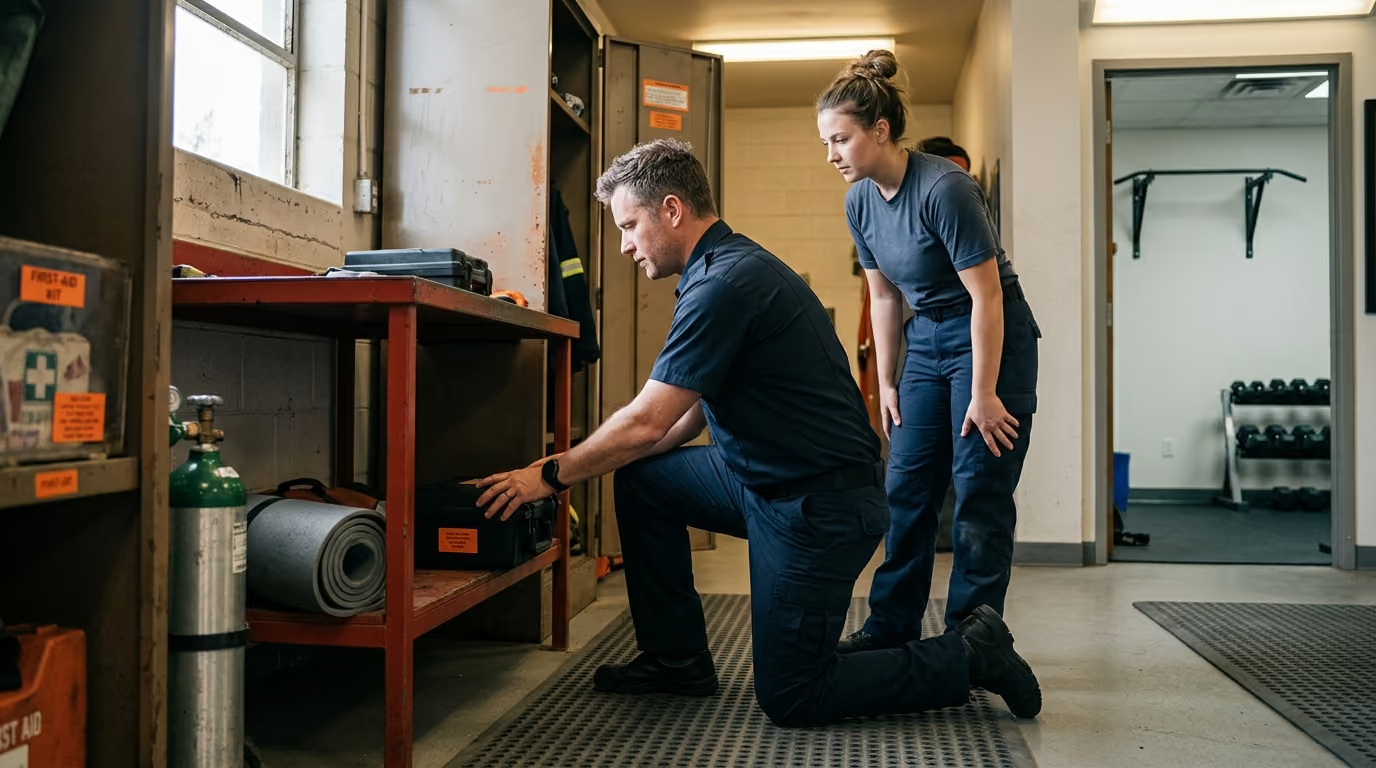

Five ergonomic control tiers help safety managers and field workers mitigate severe knee, spine, and upper-limb strain caused by repetitive kneeling and crawling.





If your work requires kneeling on concrete, crawling through tight spaces, or leaning over patients in awkward positions, joint irritation and back stiffness are familiar problems. Many workers search for ways to protect their knees and spine when their daily duties cannot be performed from an upright standing desk. The definitive answer is that awkward working postures must be managed as cumulative physical exposures through task redesign, mechanical assistance, position variation, and progressive joint tolerance.
Awkward postures place joints at extreme ranges, reduce muscle leverage, and concentrate force across vulnerable connective tissues. When heavy equipment, patient handling, or extended durations are added to low working positions, the rate of physical fatigue rises sharply. Preventing occupational injury requires moving beyond basic advice like keeping your back straight. It requires understanding mechanical loading, modifying the physical environment, using appropriate equipment, and applying structured injury prevention and physical recovery strategies across an entire working career.
Awkward working positions are postures that deviate significantly from a neutral, balanced alignment. In a neutral standing position, the spine maintains its natural curves, the hips and knees share gravitational loads, and muscles operate at favorable length-tension relationships. When a worker kneels, crawls, deep squats, or stoops, those mechanical advantages are compromised. Muscle efficiency drops, forcing connective tissues to absorb greater passive tension and localized pressure.
Kneeling involves supporting body weight directly through one or both knees. Upright kneeling concentrates force on the patellar tendon and tibial tuberosity. Sitting back on the heels increases knee flexion past 120 degrees, which elevates retropatellar compressive forces. Single-knee kneeling creates asymmetrical pelvis loading, while kneeling with trunk rotation adds torsional stress across both the lumbar spine and the planted knee joint.
Crawling introduces multi-point loading by transferring weight across the hands, wrists, knees, and toes. It requires coordinated trunk stabilization while the spine remains in horizontal flexion or rotation. In confined spaces, crawling is often accompanied by carrying tools, dragging hoses, or maneuvering around rigid obstacles. These constraints eliminate normal movement options and force the body to absorb repetitive joint impacts against hard surfaces.
Squatting and crouching keep the feet on the ground but require continuous quadriceps, calf, and hip muscle activity. Deep squatting compresses the posterior horns of the menisci and creates high patellofemoral contact pressure. Stooping, or bending forward from the waist with straight or slightly bent legs, creates long lever arms that multiply low-back shear forces. When these postures are held statically, local blood circulation slows, causing muscular fatigue to accumulate much faster than during dynamic movement.
Awkward positions operate through a kinetic chain. The feet and knees form the base of support, the hips and pelvis transfer load, the spine provides stability, and the upper limbs execute the manual task. If a joint in this chain is locked or restricted, adjacent joints must compensate. Kneeling on a hard floor restricts lower-limb movement, forcing the lumbar spine and shoulders to twist or reach farther to complete manual tasks.
The relationship between occupational kneeling, squatting, and long-term knee pathology is well documented in epidemiological research. Systematic reviews consistently show that prolonged, repeated exposure to knee-straining postures increases the risk of both soft-tissue conditions and degenerative joint disease. The primary driver of risk is cumulative lifetime exposure rather than isolated, brief episodes of low-level work.
Systematic reviews examining occupational risk factors report that workers with regular, heavy kneeling or squatting duties face a significantly higher prevalence of knee osteoarthritis compared to unexposed workers. Measured prevalence ratios across controlled studies frequently range from 1.4 to 4.0. Pooled odds ratios from large occupational meta-analyses show an estimated 1.6 to 1.7 fold increase in knee osteoarthritis risk for individuals with substantial occupational kneeling demands. Some occupational exposure models indicate an approximate 26 percent increase in knee osteoarthritis risk for every 5,000 hours of cumulative kneeling exposure over a career.
Occupational knee disorders fall into distinct clinical and mechanical categories:
Continuous contact pressure over hard surfaces inflames the fluid-filled bursae that cushion the patella and patellar tendon. Bursitis causes localized swelling, warmth, tenderness, and pain when direct pressure is applied. It is especially prevalent in trades and professions requiring sustained kneeling on unyielding surfaces without adequate load-distributing padding.
Deep flexion compresses the menisci between the femoral condyles and tibial plateau. Combining deep flexion with pivoting or rotational force can pinch and shear meniscal fibrocartilage. While traumatic meniscal tears often occur during acute twisting accidents, cumulative mechanical loading contributes to progressive tissue degradation over years of service.
Holding the knee in deep angles creates intense compressive force between the back of the kneecap and the femoral groove. Over time, this sustained contact pressure can irritate subchondral bone, strain surrounding retinacular tissues, and accelerate articular cartilage thinning.
Evidence for preventive interventions remains mixed. High-level randomized controlled trials evaluating specific workplace ergonomic programs for knee osteoarthritis prevention are limited. However, observational and biomechanical data demonstrate that reducing cumulative kneeling duration, eliminating twisting under load, and using load-distributing knee protection decrease localized tissue stress. Managing exposure remains the most reliable strategy for protecting joint health over an extended career.
Floor-level and constrained work rarely affects the lower limbs in isolation. When a worker operates on the ground or within a narrow space, the spine, neck, shoulders, and hands absorb severe compensatory loads. Stooped postures and extended reaching significantly multiply mechanical demands across the entire posterior chain.
When an individual leans forward over a bed, vehicle hood, or floor-level workpiece, the center of mass of the upper body shifts away from the spine. To prevent the torso from falling forward, the erector spinae muscles must generate substantial counter-balancing tension. This muscular contraction produces high compressive and shear loads on the lumbar intervertebral discs. Adding an external weight, such as lifting a tool box or moving a patient, further increases these forces.
Asymmetrical reaching and trunk rotation compound spinal risk. Twisting the torso while bending strains the annulus fibrosus of the intervertebral discs and places uneven compression on the facet joints. In constrained positions, workers often rotate their spines because their lower bodies are pinned against fixed surfaces. Reaching across a wide surface without proper chest support forces the deep spinal stabilizers to work at a mechanical disadvantage.
Upper-extremity joints face distinct hazards during constrained manual tasks:
Healthcare workers, emergency personnel, and maintenance technicians frequently face these combined stressors. Leaning across a hospital bed to slide a patient, reaching around vehicle seats during extrication, or crouching beneath industrial equipment combines awkward spine angles, static holds, and forceful exertions. Managing these demands requires applying evidence-based injury and recovery protocols to the upper body and spine as well as the knees.
Field personnel, including firefighters, police officers, paramedics, and emergency medical technicians, face occupational conditions that make ideal ergonomics impossible. Emergency scenes are dynamic, chaotic, and unpredictable. A patient may collapse in a narrow bathroom, a vehicle collision may trap an occupant beneath crushed metal, or a structural fire may force firefighters to crawl below thermal layers.
Personal protective equipment adds substantial mechanical burden. Firefighters carry structural turnout gear, self-contained breathing apparatus, and heavy tools, adding 40 to 60 pounds of external load. Law enforcement officers wear duty belts and ballistic vests that shift their center of gravity, restrict hip flexion, and apply focal pressure against the lower back. This added mass increases the ground reaction forces absorbed by the knees during crawling, stepping, and rapid elevation from the floor.
Environmental hazards further complicate field mechanics. Emergency calls require working on wet pavement, broken glass, metal grating, mud, or unpadded flooring. Direct contact on cold or contaminated surfaces increases muscle tension and limits the time a worker can spend adjusting their posture safely. In structural fire environments, crawling is essential for heat avoidance and visibility, but thermal layers prevent upright or semi-supported transitions.
Patient handling during acute emergencies introduces uncontrolled variables. Unlike controlled industrial lifting where loads are rigid and predictable, human patients are non-rigid, unbalanced, and occasionally combative. Lifting a fallen individual from a floor between a toilet and a bathtub prevents proper foot placement, mechanical leverage, or team symmetry. First responders must often lift while in full trunk flexion, lateral rotation, and single-knee ground contact.
Irregular shift work and sleep disruption magnify these physical challenges. Circadian fatigue impairs reaction times, decreases proprioceptive feedback, and delays neuromuscular stabilization responses. When fatigue sets in during a 24-hour shift, joint stability declines, making soft tissues more vulnerable to acute strains. Maintaining high operational duty fitness standards and utilizing tactical decision-making are necessary to protect joint health under extreme working conditions.
The most effective way to prevent injuries from kneeling, crawling, and awkward positions is through systematic risk control. Relying entirely on worker willpower, personal fitness, or proper lifting technique is rarely sufficient to prevent cumulative tissue damage. Occupational safety standards recommend applying the hierarchy of controls to systematically eliminate or reduce mechanical hazards.
The most dependable ergonomic intervention is removing the need to work at floor level. In industrial and shop settings, workpieces should be placed on hydraulic lift tables, vehicle lifts, or height-adjustable benches. In healthcare, hospital beds and examination stretchers must be elevated to the caregiver's waist height before routine assessments, dressing changes, or line placements begin.
When floor-level or low-position tasks cannot be eliminated, mechanical aids should bear the physical load:
Before entering a low or awkward position, the physical environment must be prepared. Clearing debris, moving bedside furniture, securing loose cables, and providing adequate lighting reduce the need for sudden, off-balance reaching. Creating adequate working clearance allows the body to adopt wider, more stable bases of support and minimizes trunk rotation.
Managing how work is scheduled limits cumulative joint exposure:
Technique is the final line of defense. Workers should position tasks directly in front of their bodies, avoid combined bending and twisting, use wide staggered stances, and wear certified personal protective equipment. Protective gear, such as multi-layer kneeling pads and ergonomic knee caps, helps distribute localized pressures that engineering controls cannot fully remove.
When job constraints require working on the floor or within confined spaces, specific mechanical techniques can minimize joint and spinal strain. Small adjustments in base of support, joint alignment, and load placement significantly reduce tissue stress.
Direct contact between the knee and a hard surface creates extreme contact pressures across the patella and tibial tubercle. Using high-density, closed-cell foam pads or ergonomic wearable knee pads spreads this force over a broader surface area. Knee pads should feature non-slip outer shells, flexible strapping that does not restrict popliteal blood flow, and thick gel or foam cores.
When kneeling, workers should use a half-kneeling position whenever feasible, placing one foot flat on the floor with the knee bent at 90 degrees while the opposite knee rests on a pad. This posture provides a wide, stable base, allows easy weight shifting, and permits a rapid return to standing. Workers must never twist or pivot their hips while body weight is concentrated through a planted knee. Instead, they should lift the knee slightly or pivot on the ball of the foot to change directions.
Crawling requires deliberate pacing and continuous spatial awareness:
Reaching far away from the body drastically reduces physical strength and multiplies lumbar shear. Workers should bring their center of mass as close to the target as possible before initiating a lift or pull. When reaching into a confined space, resting one hand or the chest against a solid structure helps support torso weight and offloads the spinal extensors.
When caring for an individual on the ground, emergency workers must avoid bending from the waist with locked knees. Instead, drop into a half-kneel directly beside the patient. Adjust hospital beds to waist height for routine examinations, and lower them to hip height when performing lateral patient transfers to improve mechanical leverage. When moving a patient laterally, slide your rear foot back, brace your core, and use a weight-shifting pulling motion rather than pulling entirely with the biceps and upper back.
Protecting the body from awkward working postures requires more than ergonomic modifications; it requires physical conditioning that builds joint tolerance, tissue resilience, and movement control. While exercise cannot neutralize a dangerous work environment, a conditioned musculoskeletal system tolerates mechanical stress more effectively and recovers faster from challenging shifts.
Conditioning for awkward positions should emphasize position tolerance: the ability of muscles, tendons, ligaments, and joints to support sustained or non-neutral postures without developing excessive fatigue or tissue irritation. Building this tolerance requires progressive, graded exposure combined with focused strength and mobility training.
Sustained low positions demand adequate joint mobility in the hips, ankles, and thoracic spine. Limited ankle dorsiflexion forces the knees and lower back to compensate during deep squats and crouches. Tight hip flexors tilt the pelvis forward, increasing lumbar extension stress during kneeling.
Key mobility focuses include:
Strength training for awkward work positions should prioritize unilateral leg strength, core anti-rotation stability, and posterior chain endurance:
Conditioning should follow structured shift-work training decision systems to ensure training volume does not cause excessive fatigue before duty shifts. When building tolerance for kneeling or crawling after an injury, begin with supported, short-duration holds on soft surfaces. Gradually increase duration, reduce external support, and introduce movement complexity only as tissues adapt without inflammatory flare-ups.
Recovery after sustained kneeling, crawling, or awkward working positions must be active and structured. Connective tissues, including joint capsules, tendons, and spinal discs, require specific unloading strategies to restore normal fluid flow, relieve localized compression, and reduce residual muscle spasm.
Immediately following prolonged floor-level work, avoid transitioning directly into a slumped sitting position in a vehicle or station chair. Sitting immediately after stooping or kneeling keeps the hips and lumbar spine in continuous flexion, prolonging tissue strain. Instead, stand upright and walk gently for two to three minutes. This light activity promotes circulation, activates the muscle pump in the calves, and flushes metabolic byproducts from fatigued postural muscles.
Perform standing lumbar extension resets to counter prolonged forward bending. Stand tall with your hands placed on your lower back or pelvis, and gently extend your spine backward within a comfortable range of motion. Repeat this movement five to ten times. This simple movement alternates pressure across the intervertebral discs, unloads the anterior annulus, and relieves tension in the deep spinal extensors.
To restore knee joint balance after sustained kneeling or deep crouching:
Recovery strategies should fit naturally into overall career longevity planning. Consistent post-shift unloading helps prevent minor postural irritation from progressing into chronic joint disorders.
While muscle fatigue and mild transient stiffness are common after heavy shifts, certain symptoms indicate serious structural pathology requiring prompt medical evaluation. First responders and industrial workers must recognize clinical warning signs early to avoid turning treatable soft-tissue strains into career-limiting injuries.
If persistent joint pain, swelling, numbness, or mechanical symptoms last longer than two weeks despite conservative rest and load modification, consult a licensed physical therapist, occupational health physician, or orthopedic specialist. Early professional diagnosis, precise functional assessment, and structured rehabilitation protect physical health and keep emergency personnel safely on the job.
Protecting your knees, spine, and upper limbs from the mechanical wear of low and awkward working positions requires daily consistency. Use this practical operational checklist to evaluate and improve your working habits starting this week.
Sustainable physical capability throughout a demanding career depends on treating low, awkward working positions as manageable mechanical exposures rather than unavoidable physical wear. Applying structured ergonomic controls, using appropriate mechanical assistance, and maintaining joint resilience will protect your physical health on duty and long after your service ends.
Stay connected for research-led guidance on duty fitness, shift-work sleep, injury recovery, stress, nutrition and career longevity. Practical ideas for first responders who want to stay capable on the job, recover well and protect their health for the long run.



Read practical guidance on first responder fitness, recovery, sleep, nutrition and resilience for demanding work and a long, active career.
read the blog



