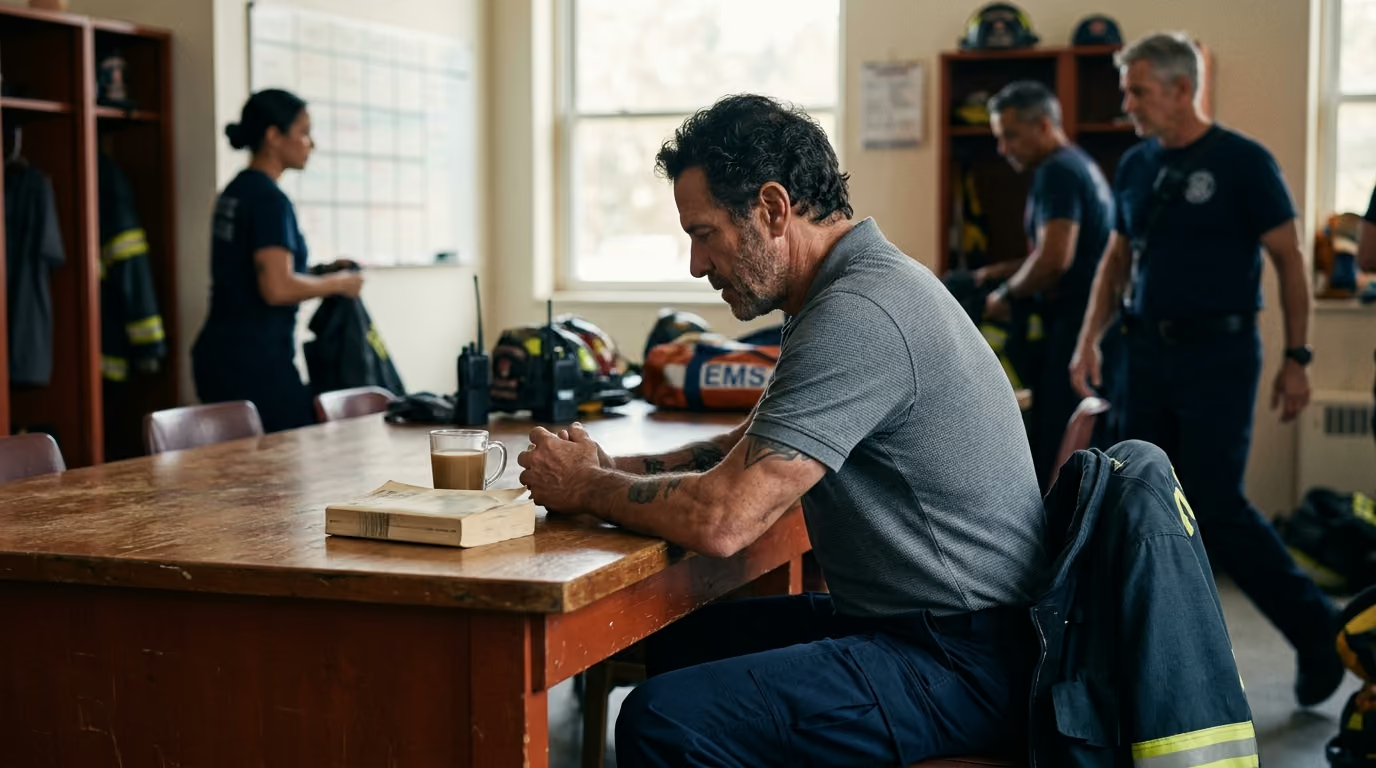

A renewed sense of purpose and identity awaits retiring first responders through a practical framework designed to navigate post-service challenges and rebuild daily meaning.





If you are in immediate danger, call 911. For 24/7 support, call or text 988 and press 1 for the Veterans Crisis Line, or text 838255.
Many retired first responders search online for why leaving the job feels disorienting even when retirement was planned for years. The sudden absence of operational responsibility, station life, and emergency calls often leaves an unexpected void. This guide provides a definitive framework to reconstruct identity, establish a sustainable weekly structure, and build lasting purpose after service.
Leaving emergency service is a major life transition rather than a simple change in employment status. A successful post-service life does not happen by accident or by trying to stay vaguely busy. It requires a deliberate system that balances meaningful activity, physical capacity, personal relationships, continuous learning, and service to others.
If you or a colleague are experiencing severe distress, operational trauma symptoms, or thoughts of self-harm, immediate professional support is available. Call 911 for emergency situations. Call or text 988 to reach the Suicide & Crisis Lifeline, and press 1 if you are a veteran. You can also text 838255 for veteran crisis support. Secure storage of personal firearms and medications should be handled alongside a trusted family member or health professional during periods of acute transition stress.
Retirement from policing, firefighting, emergency medical services, or the military alters multiple aspects of daily existence simultaneously. In public safety, work provides more than a paycheck. It delivers a defined social hierarchy, built-in camaraderie, acute physical demands, and clear societal usefulness.
Research on retirement adjustment demonstrates that adapting to post-work life involves three distinct psychological tasks. These are reconstructing one's personal identity, establishing regular social interactions, and maintaining functional independence. When a career supplied rank, uniform, and urgent civic responsibility, the loss of those elements can feel like a loss of personal relevance.
Occupational identity describes the portion of an individual's self-concept derived from professional roles, specialized skills, and peer recognition. For public safety personnel, occupational identity is closely tied to moral identity. Officers and responders see themselves as protectors, decision-makers under pressure, and reliable pillars during community crises.
Evidence from retirement studies shows that having a clear, desired role identity strongly influences overall life satisfaction and psychological adjustment. Transition research highlights two distinct pathways during this phase: identity continuity and identity gain.
Identity continuity involves preserving core personal values, established friendships, and leadership habits across the retirement threshold. For instance, continuing to train physically or mentoring younger professionals preserves established strengths.
Identity gain refers to adopting new social roles, group memberships, and capabilities after concluding service. Research published by social psychologists shows that retirees who join new groups and build an identification with those groups report higher life satisfaction and better adjustment.
A longitudinal study tracking retirees found that individuals who both maintained valued prior group memberships and gained new social connections achieved the best long-term well-being. Multiple social identities provide diverse sources of support and self-worth.
Observational research on purposeful living indicates substantial health benefits. Meta-analyses examining purpose in life show that individuals with a sustained sense of direction have a 17 to 30 percent lower risk of all-cause mortality compared to those with low purpose. While these findings represent observational associations rather than proof of direct causation, they highlight the value of maintaining meaningful, value-driven engagement throughout life.
The transition out of emergency services differs significantly from leaving a standard corporate environment. First responders spend decades operating within a hyper-vigilant nervous system state, managing erratic schedules, and relying on absolute team trust. When the radio turns silent, the abrupt drop in physiological and operational demand can create profound cognitive friction.
Understanding this friction requires distinguishing between different types of post-service loss. Responders often summarize their experience as missing the job, but that phrase bundles several distinct challenges together:
Emergency services impose an external operational rhythm. Shift rosters, morning roll calls, station duties, and training calendars organize time automatically. Without this external scaffolding, retirees can find unstructured days disorienting.
Station culture and operational crews foster deep interpersonal bonds forged through shared exposure to acute incidents. Civilian social settings rarely reproduce this level of immediate cohesion, which can make casual interactions feel superficial.
Holding rank or carrying equipment confers clear operational authority during critical incidents. In retirement, former supervisors and technicians must navigate environments where their specialized authority no longer applies.
Emergency work frequently tests judgment, physical endurance, and technical skill under severe time pressure. The sudden absence of intense stakes can lead to boredom, restlessness, or risk-seeking behavior if challenging outlets are not established.
When asked what they do, retired responders often default to describing their past service. Developing an updated narrative that reflects present interests and future goals takes deliberate effort.
Addressing these realities requires structured planning rather than passive waiting. Those preparing for retirement can review resources on career longevity and life after service to better understand the developmental stages of a complete public safety career.
Treating retirement as an open-ended vacation frequently leads to stagnation and frustration within the first six to twelve months. A more resilient model is the Seven-Domain Purpose Portfolio. This framework distributes self-worth, daily structure, and personal energy across multiple distinct areas rather than relying on a single replacement activity.
Work after service does not have to be full-time or highly compensated, but it must provide a sense of usefulness, autonomy, and competence. Work can fulfill several distinct functions:
A healthy social network after retirement consists of three distinct rings: continuity relationships with former colleagues, expansive connections with new civilian groups, and reciprocal relationships where support is both given and received.
Physical training in retirement shifts from meeting mandatory operational standards to sustaining independence, joint health, cardiovascular endurance, and movement capability for daily life.
Engaging in cognitive challenges, creative pursuits, or technical crafts stimulates mental functioning and builds new competence separate from public safety expertise.
Using personal time, specialized insight, or organizational ability to improve another person's circumstances reinforces usefulness and strengthens community ties.
True recovery involves guilt-free restorative practices, healthy sleep hygiene, leisure, and time spent outdoors without the expectation of constant productivity.
This domain integrates personal values, weekly scheduling anchors, and an evolving personal narrative that honors past service while looking toward future goals.
Before committing to new projects, civic boards, or post-service employment, retirees benefit from conducting a systematic badge audit. This exercise separates the essential psychological benefits the career provided from the specific duties of the uniform.
List the core elements supplied by emergency work alongside the methods available to rebuild them in civilian life:
Answering specific diagnostic questions clarifies what to carry forward and what to leave behind:
This diagnostic process ensures that retirees do not attempt to recreate the toxic aspects of operational stress, such as chronic sleep deprivation or hyper-arousal, in their post-service activities. Readers can examine strategies for nervous system regulation through our guide on between-call stress management and recovery.
A practical schedule prevents retirement days from blending into an unstructured, lethargic cycle. A Minimum Viable Week is the smallest repeatable operational schedule that balances physical activity, cognitive challenge, social contact, and recovery without creating overwhelming stress.
Establishing an effective weekly schedule requires following foundational design principles:
Place recurring, non-negotiable commitments on the calendar first. These include standing exercise sessions, family meals, and weekly community meetings. Fill open blocks only after establishing these anchors.
Avoid committing to multi-year volunteer positions or demanding second careers immediately. Agree to trial new responsibilities for a defined six-to-eight-week window before deciding to continue, adjust, or resign.
Belonging develops through regular, predictable interactions over time. Joining a group that meets every Tuesday morning builds deeper social bonds faster than attending sporadic, quarterly events.
Evaluate post-service activities based on whether they leave you feeling energized or depleted. A two-hour mentoring session that provides deep fulfillment is far more valuable than twenty hours of low-impact administrative busywork.
Retirement must provide autonomy and genuine freedom. Do not fill every hour with obligations. Maintain dedicated blocks of unscheduled time to read, walk, or handle daily tasks without feeling rushed.
Social isolation represents a significant health risk for older adults and retirees. A consensus study report from the National Academies of Sciences, Engineering, and Medicine highlights that roughly one-quarter of community-dwelling older adults are socially isolated, while over forty percent report regular loneliness.
Isolation is linked to higher risks of cardiovascular disease, cognitive decline, and depression. For retired first responders, who are accustomed to close-knit crew dynamics, the risk of withdrawal is particularly acute.
Building a robust social support network requires attention across three distinct relational circles:
These are relationships with former colleagues, shift mates, and professional associations. Continuity connections honor your service history, provide a safe space to share shared experiences, and keep you connected to the traditions of the profession.
These are relationships formed in non-service environments. Examples include running clubs, neighborhood associations, woodworking guilds, faith groups, and adult education classes. These connections allow you to build an identity completely independent of emergency work.
These are relationships rooted in mutual responsibility and service. Research on social identities after retirement indicates that providing meaningful support to others is a primary mechanism linking multiple group memberships to better physical and mental health. Mentoring, teaching, and assisting neighbors create vital reciprocal value.
Transitioning into civilian life requires avoiding several frequent interpersonal mistakes:
Physical fitness during active duty focuses on operational readiness: dragging hose lines, lifting patients, wearing heavy protective gear, and sprinting under load. In retirement, physical training transitions from operational performance to sustaining long-term capability, joint health, and personal autonomy.
The World Health Organization physical activity guidelines recommend that all adults achieve 150 to 300 minutes of moderate-intensity aerobic physical activity, or 75 to 150 minutes of vigorous-intensity activity weekly, alongside muscle-strengthening activities on two or more days per week. For older adults, the guidelines emphasize multimodal physical activity that combines balance, functional movement, and strength training on three or more days per week to enhance functional capacity and prevent falls.
A balanced, lifelong training program addresses four core components:
Focus on low-impact, steady-state cardiovascular work such as brisk walking, ruck marching with light loads, cycling, rowing, or swimming. This builds mitochondrial density, protects cardiovascular health, and improves recovery without placing excessive stress on aging joints.
Train major functional movement patterns: squatting, hinging, pushing, pulling, and carrying. Emphasize controlled tempo, full range of motion, and progressive overload using loads that preserve joint integrity rather than testing single-repetition maximums.
Incorporate dynamic balance drills, rotational work, and dedicated mobility routines. Maintaining hip, thoracic spine, and ankle mobility reduces fall risks and preserves the ability to perform physical household tasks, outdoor recreation, and sports.
Years of shift work disrupt circadian rhythms and sleep architecture. Retirement offers the opportunity to establish consistent sleep schedules, manage chronic inflammation through nutrition, and take regular rest days. Those adjusting their sleep and recovery can review our report on circadian health and shift recovery.
Retired responders should avoid common physical training traps:
Volunteering and continuous cognitive engagement provide structure, social interaction, and cognitive stimulation. Longitudinal research investigating formal volunteering among older adults indicates that consistent service is positively associated with maintained cognitive functioning over time, particularly in working memory and processing speed.
Similarly, studies examining cognitive activities show that engaging in regular mental challenges supports subsequent cognitive resilience. However, volunteering and community service must be managed with clear personal boundaries to prevent exploitation and burnout.
Public safety personnel are conditioned to answer calls for help regardless of personal cost. In retirement, this quality makes former responders attractive to community organizations, nonprofits, and civic boards. Without firm boundaries, retirees can quickly find themselves overwhelmed with unpaid administrative responsibilities that recreate the exhaustion of active duty.
To maintain sustainable contribution, establish strict operational boundaries:
Learning new skills helps decouple your sense of self from your past career. Consider structuring learning projects around defined, six-week cycles:
Completing a tangible project, such as building a piece of furniture, passing a language proficiency exam, or giving a community presentation, provides a clear sense of progression and personal mastery.
The following illustrative models demonstrate how the Seven-Domain Purpose Portfolio applies to common post-service transition challenges. These scenarios represent structured frameworks rather than specific individuals.
Building a purposeful retirement requires acknowledging practical constraints, trade-offs, and health limitations. Purpose is not a universal cure for physiological wear, neurological fatigue, or clinical conditions.
When retirement is forced by physical injury, medical disqualification, or administrative changes, the emotional transition is considerably more complex. Responders facing involuntary retirement often experience acute grief, anger, and betrayal.
In these circumstances, attempting to immediately jump into aggressive goal-setting is counterproductive. The first phase must focus on acknowledging the reality of the loss, processing organizational disappointment, and stabilizing physical rehabilitation before establishing new long-term commitments.
Purposeful living does not require significant financial expenditure. While some retirees have the resources for international travel or expensive hobbies, a resilient purpose portfolio can be built entirely around free and low-cost community assets:
Decades of operational work often leave retirees managing chronic musculoskeletal pain, joint replacements, or cardiovascular concerns. A sustainable post-service plan adapts around these limitations rather than ignoring them.
If joint damage prevents distance running, transition to low-impact swimming, rowing, or resistance machines. If physical endurance is restricted, shift contribution from physical labor to coaching, teaching, planning, or administrative mentoring.
A self-directed purpose framework is an effective operational tool for life management, but it is not a substitute for licensed medical or psychological treatment. The cumulative impact of operational stress, trauma exposure, physical sleep fragmentation, and blast or head injuries requires specialized clinical attention when symptoms persist.
Retirees and their families should seek professional evaluation from a licensed mental health provider or medical physician if they observe any of the following warning signs:
If acute crisis symptoms emerge, call 911, contact the Suicide & Crisis Lifeline at 988 (press 1 for veterans), or text 838255. Seeking licensed clinical care is an act of tactical discipline that protects your health, your family, and the longevity you earned across your career. For additional educational materials on health maintenance, explore our complete performance and recovery resource center.
True post-service success is not achieved by attempting to replace the badge with another all-consuming identity. It is built by taking the discipline, integrity, and operational strengths developed during your career and applying them across a diverse, sustainable portfolio of personal roles.
Retirement is not the end of meaningful contribution. It is the beginning of a self-directed chapter where your capability, health, and wisdom serve your family, your community, and your own long-term growth.
Use this practical checklist to begin establishing your post-service framework over the next seven days:
Stay connected for research-led guidance on duty fitness, shift-work sleep, injury recovery, stress, nutrition and career longevity. Practical ideas for first responders who want to stay capable on the job, recover well and protect their health for the long run.



Read practical guidance on first responder fitness, recovery, sleep, nutrition and resilience for demanding work and a long, active career.
read the blog



