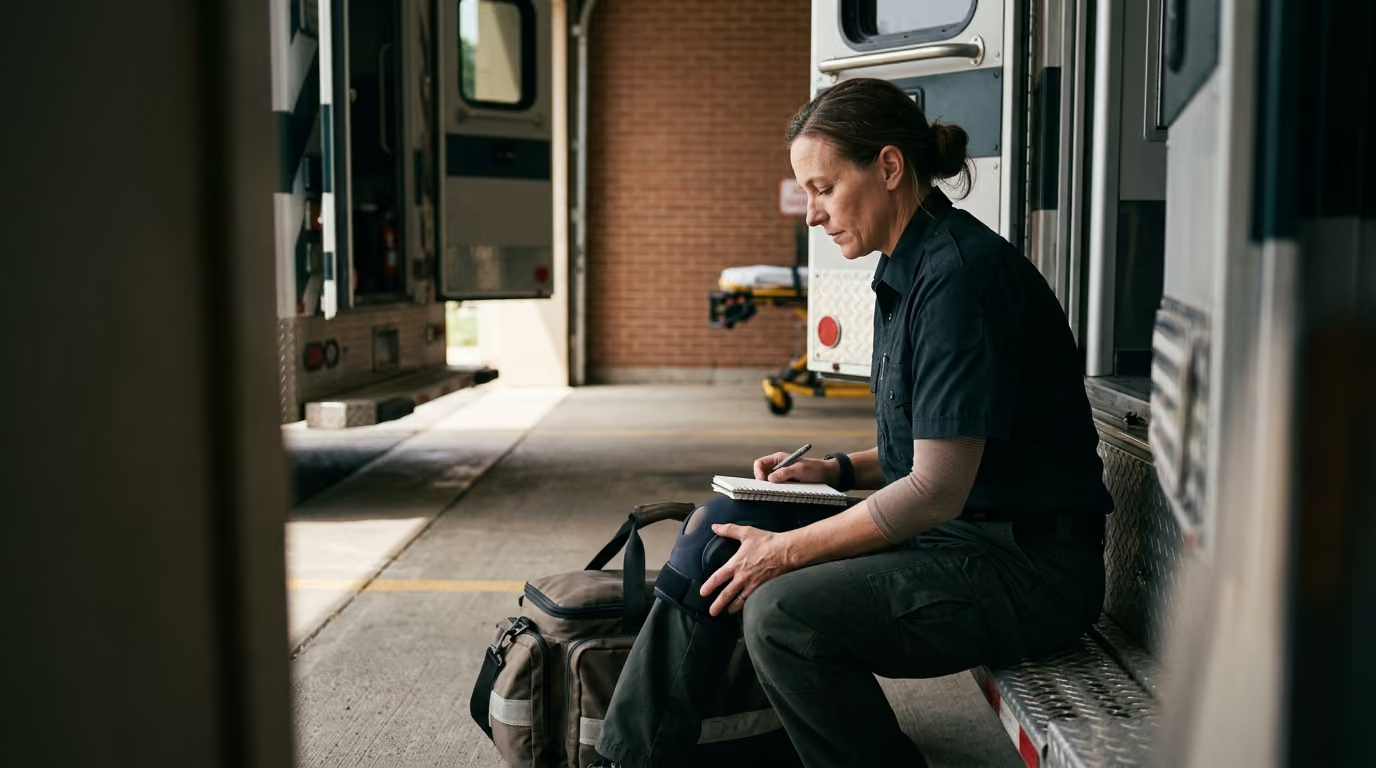

Long-term relief from chronic musculoskeletal pain comes through tailored strength training, whole-health pacing strategies, and effective functional communication with healthcare providers.





Managing service-related injuries across a lifespan is not about chasing an elusive cure or returning to an eighteen-year-old body. It is also not about surrendering to permanent inactivity or accepting unmanaged decline. Long-term injury management is a structured, practical approach to expanding your functional capacity, controlling activity exposure, and protecting your quality of life. This guide details evidence-based movement strategies, pacing systems, communication frameworks for clinical visits, and sustainable adaptations for post-service life.
Long-term joint, spinal, and muscular problems require a clear shift in how you measure physical capability. The primary objective is to build physical reserve, protect sleep and joint mechanics, and sustain participation in meaningful personal and family roles.
Musculoskeletal conditions represent the single largest category of ongoing physical disability among individuals who have completed military or emergency service. Research shows that chronic pain is common after years of operational demands. A 2025 systematic review found that approximately 30 percent of military veterans in general population samples reported chronic non-cancer pain. In veteran samples seeking healthcare or assessed for service connection, that prevalence rose to approximately 51 percent.
National health surveillance demonstrates the widespread impact of persistent physical symptoms across the broader population as well. CDC data from the 2023 National Health Interview Survey indicated that 24.3 percent of adults in the United States lived with chronic pain. Furthermore, 8.5 percent experienced high-impact chronic pain, defined as pain that frequently limited daily life or work activities over a three-month span. In populations leaving active service, joint and spinal disorders often follow a progressive trajectory. Longitudinal Veterans Health Administration records indicate that back complaints rose from roughly 4 percent in the first year post-deployment to over 17 percent by year seven across both men and women.
Clinical research demonstrates that persistent symptoms are best understood through the biopsychosocial model rather than structural damage alone. Chronic symptoms involve an ongoing interaction between biological inputs, psychological responses, and social environments.
Biological factors include previous structural trauma, osteoarthritis, joint instability, nerve sensitivity, and general deconditioning. Psychological factors include fear of movement, loss of identity, hypervigilance, and catastrophic interpretations of normal physical sensations. Social factors encompass career transitions, physical home environments, financial pressures, and available family support.
Understanding these distinctions requires separating clinical terms that are frequently conflated:
Symptom severity and functional ability do not always correlate directly. A person with substantial joint changes on an X-ray may maintain high functional capacity through consistent conditioning. Conversely, someone with minor soft-tissue changes may experience severe pain interference due to sleep loss, systemic stress, and protective movement patterns.
Decades of operational work place distinct mechanical and neurological demands on the human body. Heavy gear carriage, prolonged vehicle operation, unpredictable physical collisions, and high-impact landings create cumulative physical wear. When personnel leave active duty or emergency service, the sudden removal of mandatory physical routines introduces unexpected challenges. Managing these issues is essential for sustaining lifelong capability and career longevity.
One common challenge is the post-service activity paradox. During active service, operational structure provides regular movement, mandatory physical training, and constant daily task variety. In retirement, daily occupational demands drop sharply. Without structured movement, physical deconditioning develops quickly. Weakened supporting musculature, reduced cardiovascular endurance, and joint stiffness leave the body vulnerable to unexpected mechanical stress.
This vulnerability frequently leads to the retirement trap. A retired individual may remain relatively sedentary for weeks, then attempt an intensive home improvement project, heavy yard work, or an aggressive recreational trip. The abrupt disparity between reduced physical capacity and sudden physical exposure triggers severe inflammatory flares. Because the flare causes intense discomfort, the individual returns to total rest. This boom-and-bust cycle accelerates deconditioning and reinforces the false belief that physical activity is dangerous.
The residual stress of shift work and hypervigilance also alters pain processing. Decades of disrupted circadian cycles impair sleep architecture, which suppresses tissue repair and amplifies central nervous system sensitivity. A nervous system adapted to continuous threat perception can interpret normal mechanical feedback as severe pain. Addressing these challenges requires integrating structured shift-work sleep recovery practices alongside joint-friendly training.
Finally, identity shifts complicate injury management. Operational cultures often celebrate pushing past pain and ignoring physical distress. When service ends, applying this mindset to chronic joint or spinal issues creates persistent injury cycles. Sustainable health requires moving away from the belief that physical grit solves mechanical problems. Replacing that mindset with intelligent load management preserves your physical independence for decades.
The Veterans Health Administration developed the Whole Health model to transition chronic injury care away from isolated symptom reduction toward mission-driven health. Conventional medicine often approaches chronic injury by asking what is wrong with an isolated joint. The Whole Health approach asks what physical capability is needed to support your personal goals.
This framework organizes health into interconnected domains known as the Circle of Health. It centers on an individual's personal mission, aspirations, and purpose. Surrounding this core are foundational self-care domains that directly influence musculoskeletal health:
Applying this model prevents injury management from narrowing into a frustrating cycle of passive clinic visits. If knee osteoarthritis prevents running, the objective shifts toward finding alternative activities that provide the same physical and social benefits. You might transition to road cycling, rowing, swimming, or trail hiking with trekking poles.
Goal setting within this framework must be specific, functional, and linked to daily roles. Broad goals like reducing back pain are difficult to measure and rarely provide lasting motivation. Functional goals define clear benchmarks that improve your quality of life:
A functional goal connects a valued activity to an objective physical capacity. It accounts for personal constraints, defines tangible markers of progress, and includes a plan for managing symptoms if they arise.
Pacing is the deliberate distribution of physical activity to prevent symptom spikes while gradually expanding capacity. Many individuals mistakenly believe load management means avoiding any activity that produces physical sensation. In reality, total avoidance accelerates muscular atrophy, stiffens connective tissue, and lowers physical tolerance. Systematic injury rehabilitation relies on controlled physical exposure rather than complete rest.
A critical step is shifting from symptom-contingent pacing to quota-based pacing. Symptom-contingent pacing means working continuously until pain forces you to stop. This approach guarantees that physical tasks end in distress, reinforcing movement anxiety and necessitating days of recovery. Quota-based pacing establishes a pre-planned volume of work based on current capacity, stopping well before severe fatigue or pain begins.
To implement quota-based pacing, identify tasks that consistently trigger flares and establish baseline limits:
Building an accurate daily load inventory helps identify hidden sources of physical strain. Record the demands of your typical week, including total walking distance, standing time, stair climbing, lifting, vehicle operation, and sedentary hours. Track how these physical demands interact with sleep quality and emotional stress. Often, flares occur when multiple moderate physical stressors coincide with poor sleep.
Even with meticulous pacing, temporary symptom increases will happen. Having a written flare-response plan removes uncertainty and prevents panic when symptoms appear:
A flare does not indicate new structural damage. It is a sign that recent demands exceeded your current capacity. Adjust your physical volume and rebuild systematically.
Structured exercise remains the cornerstone of long-term musculoskeletal management. Clinical guidelines from the VA, DoD, and major medical associations emphasize that active physical conditioning is superior to passive treatments for chronic spinal and joint conditions. Regular loading stimulates tissue remodeling, improves synovial fluid circulation, strengthens bone density, and reinforces motor control.
No single exercise modality is universally superior for long-term health. Walking programs, swimming, resistance training, cycling, rowing, tai chi, and yoga all offer substantial physiological benefits. The most effective modality is one that matches your physical tolerance, fits your personal schedule, and allows consistent weekly participation. Utilizing autoregulated training principles lets you adjust training intensity according to your daily physiological readiness.
When an exercise triggers joint irritation, you do not need to eliminate the movement entirely. Modify the movement mechanics using twelve primary variables:
Psychological factors play a major role in exercise rehabilitation. Experiencing pain during movement can create conditioned fear avoidance, leading people to protect injured areas through unnatural, rigid movement patterns. Over time, this protective guarding creates secondary muscle tension and increases joint loading.
Graded exposure therapy addresses this issue through step-by-step reintroduction of avoided movements. If bending forward triggers anxiety after a lumbar injury, begin with supported seated hip hinges. As confidence and tissue tolerance improve, progress to standing Romanian deadlifts with light resistance, and eventually to picking objects up from the floor. Systematic exposure rebuilds functional confidence and desensitizes the nervous system to normal mechanical movement.
Productive medical appointments require clear, structured communication. Clinical visits are often brief, making it easy for discussions to get trapped in generic pain scale ratings that fail to capture your real-world capability. Preparing a structured functional summary ensures your healthcare team understands your daily challenges and goals.
Before your appointment, prepare a concise physical profile containing the following points:
Frame your symptoms using clear functional metrics rather than subjective numbers. Instead of reporting that your back pain is an eight out of ten, explain that standing in place for more than ten minutes causes severe radiating pain down your right leg. This functional framing gives clinicians actionable data to guide targeted imaging, physical therapy referrals, or medication adjustments.
Engage in shared decision-making by asking targeted questions about proposed treatments:
It is equally important to understand the role and limitations of diagnostic imaging. Magnetic resonance imaging (MRI) and X-rays provide detailed views of structural anatomy, but imaging findings frequently correlate poorly with daily pain levels. Studies consistently show that asymptomatic individuals often have disc bulges, degenerative joint changes, and labral tears on imaging.
Imaging results must always be interpreted alongside a hands-on physical examination, symptom behavior, and functional testing. An abnormal scan does not mean your body is fragile, just as a normal scan does not invalidate real discomfort.
When discussing medications, focus on functional restoration rather than temporary symptom suppression. Pain medications should serve as a tool to facilitate active rehabilitation, restorative sleep, and daily movement. Discuss side effects such as daytime sedation, balance changes, and cognitive slowing with your physician. Never alter doses or discontinue long-term medications abruptly without direct medical supervision.
Reduced work capacity in retirement rarely means an inability to perform all physical tasks. Capability is task-specific, depending on posture, duration, velocity, mechanical force, and environmental conditions. A retired professional may struggle with prolonged ground-level work while possessing the endurance and coordination for instruction, supervision, or precision bench work.
Evaluating daily capacity requires analyzing individual task demands. Assess maximum tolerable durations for sitting, standing, and walking. Evaluate your tolerance for static trunk flexion, overhead reaching, grip strength, and repetitive lifting. Identify which environments, temperatures, or surfaces aggravate joint stiffness, and note how many hours of recovery are required after a demanding day.
Practical modifications allow you to continue working, volunteering, and managing home maintenance safely:
Implementing self-monitoring tools helps identify patterns before severe symptom flares develop. A simple weekly tracking log should record:
Reviewing these metrics monthly shifts your focus from daily symptom fluctuations to long-term functional trends. If your recovery time drops from three days to twenty-four hours over several months, your physical reserve is expanding.
Long-term self-management requires recognizing when symptoms signal serious medical conditions that need immediate clinical evaluation. Red-flag symptoms indicate potential neurological compromise, systemic infection, vascular issues, or acute structural trauma.
Seek immediate emergency medical evaluation if you experience:
Alongside monitoring for red flags, avoid common management pitfalls that compromise long-term capability:
While structured self-management forms the foundation of long-term health, complex conditions often require coordinated clinical oversight. When physical symptoms overlap with nerve irritation, multiple joint traumas, traumatic brain injuries, or post-traumatic stress, multidisciplinary care delivers the best outcomes.
A coordinated care team can address interconnected barriers to recovery simultaneously:
Integrating mental health care into long-term injury rehabilitation is essential. Conditions like post-traumatic stress, chronic anxiety, and depression directly alter pain processing in the brain. Prolonged systemic stress elevates inflammatory markers and keeps the nervous system in a state of high alert. Addressing psychological health alongside physical conditioning improves movement confidence, sleep quality, and treatment adherence.
Older adults face additional considerations, including age-related changes in muscle mass, bone mineral density, balance systems, and cardiovascular reserve. Exercise programs for older veterans should prioritize balance training, fall prevention, and bone-loading movements while accounting for medication-related dizziness.
Financial and geographical barriers can also affect access to care. If specialized clinics are unavailable, look into telehealth services, community fitness centers, home-based exercise routines, and peer support networks. Managing long-term injuries is an ongoing process of adapting your environment, building physical capacity, and utilizing available resources to maintain your quality of life.
Treat your functional capabilities, not the scan. Imaging results frequently show structural changes like disc bulges or cartilage thinning in individuals who have minimal pain. If your joints feel stable and you can perform daily activities without severe flares, continue your regular exercise and mobility routines. Focus on maintaining muscular strength, joint mobility, and good movement mechanics to protect that joint over time.
Acknowledge the strong connection between nervous system stress, sleep architecture, and pain processing. Disrupted sleep and elevated stress prime the nervous system to amplify sensory signals, making normal mechanical feedback feel painful. Focus on consistent sleep routines, relaxation practices, and stress management alongside low-impact, rhythmic movements like walking or swimming. Working with a behavioral health professional or pain psychologist can help down-regulate nervous system sensitivity.
Assistive devices are tools for intelligent load distribution, not indicators of failure. Using trekking poles during hikes reduces compressive forces on your knees and lumbar spine, allowing you to walk farther and recover faster. Similarly, using a supportive brace during demanding home projects protects vulnerable joints and prevents flares. Use these tools strategically to expand your physical capacity and stay engaged in activities you enjoy.
Lower your starting threshold significantly and use quota-based pacing. If walking for twenty minutes triggers a flare, start with five minutes of level walking every other day. Maintain that modest baseline for two to three weeks until your body adapts, then increase the duration by just one or two minutes per week. Prioritize consistency over intensity, and give your connective tissues ample time to adapt to new physical demands.
Managing service-related injuries is an active, ongoing process of expanding physical capacity, managing daily loads, and adapting your environment. True capability is not measured by the complete absence of pain, but by your ability to live a purposeful, active life and protect your health for decades to come.
Stay connected for research-led guidance on duty fitness, shift-work sleep, injury recovery, stress, nutrition and career longevity. Practical ideas for first responders who want to stay capable on the job, recover well and protect their health for the long run.



Read practical guidance on first responder fitness, recovery, sleep, nutrition and resilience for demanding work and a long, active career.
read the blog



