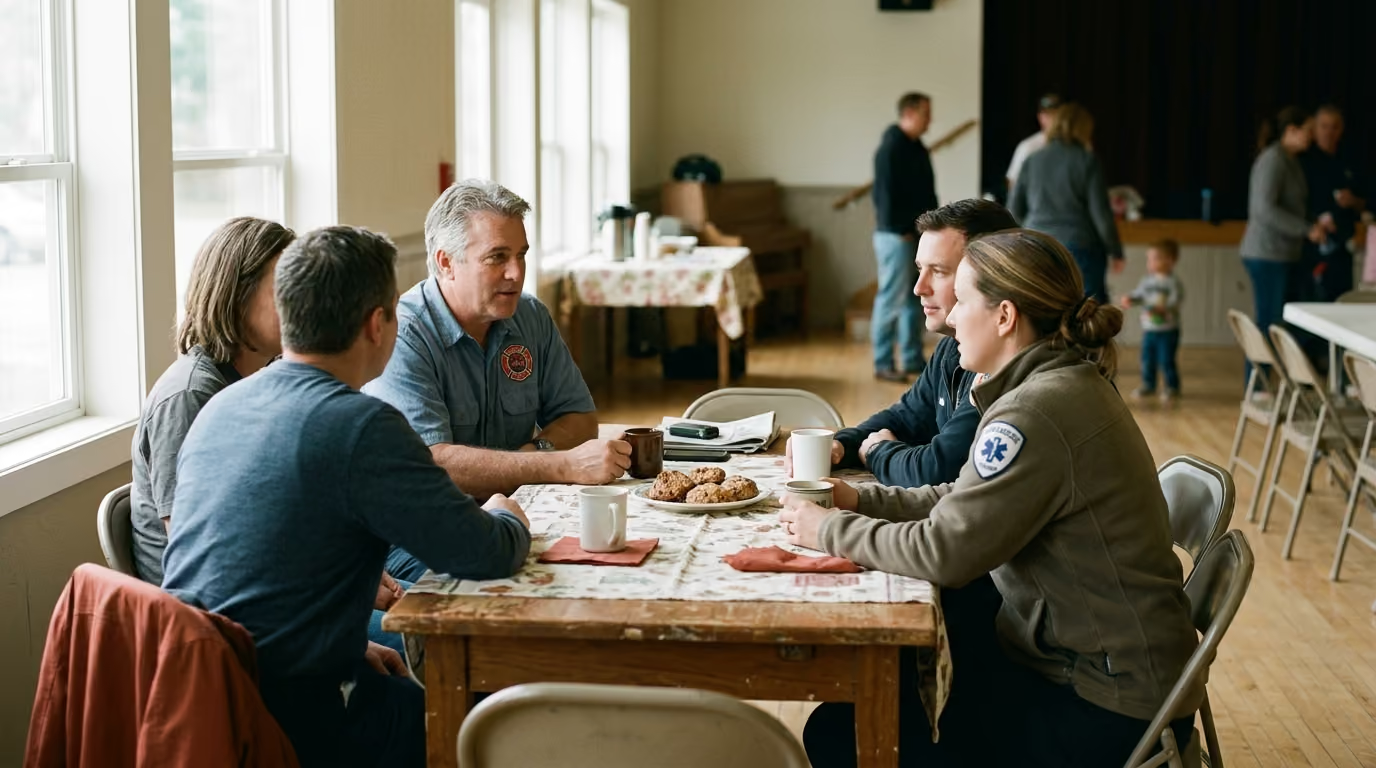

Retiring from the department often brings unexpected isolation, but structured peer networks and civilian groups can rebuild your sense of belonging after service.





If you are in immediate danger, call 911. For 24/7 support, call or text 988 and press 1 for the Veterans Crisis Line, or text 838255.
Rebuilding community after leaving emergency service is not an attempt to duplicate your old crew, shift, or squad. It is the intentional construction of a sustainable social network that supports your health, daily routine, personal identity, and future growth. Leaving a department removes an automatic ecosystem of daily camaraderie, shared purpose, and operational interdependence.
This guide examines the research behind social connection after service and provides a practical framework for creating a diversified personal network. It covers legacy friendships, civilian social circles, mentorship, structured volunteering, and the boundaries necessary to protect your long-term well-being.
Leaving a public safety agency changes where you spend time, how you view yourself, and who you see every week. Research confirms that social isolation carries severe physical and cognitive risks, while strong social connection protects long-term health.
The goal is not to fill your calendar with casual acquaintances or spend every weekend at retiree barbecues. A healthy post-department life relies on building a balanced connection portfolio.
This portfolio combines selected legacy relationships from your department, bridging ties to civilian groups, mutual mentorship, and purposeful civic contribution. By replacing the passive, built-in social environment of the station with active, scheduled routines, you protect your identity and psychological resilience for decades to come.
Research across public health and occupational medicine shows that human connection is a fundamental biological need. The U.S. Surgeon General's advisory on social connection establishes that social isolation and loneliness are substantial risk factors for premature mortality. Specifically, objective social isolation is associated with a 29 percent increase in premature mortality risk. Subjective loneliness is associated with a 26 percent increase in risk.
Deficits in social connection also correlate with a 29 percent higher risk of heart disease and a 32 percent higher risk of stroke. A meta-analysis of 148 studies demonstrated that individuals with stronger social relationships have a 50 percent greater likelihood of survival over an average follow-up period of 7.5 years.
The Centers for Disease Control and Prevention defines social connection across three distinct dimensions. Structural connection measures the size, variety, and frequency of your personal relationships. Functional connection evaluates the specific support those relationships provide, including practical assistance, emotional validation, and advice. Qualitative connection assesses whether those interactions are supportive, positive, neutral, or conflict-ridden.
The World Health Organization emphasizes that community engagement and social networks are foundational social determinants of health. Connection requires quality, variety, and genuine belonging rather than a high volume of superficial interactions.
Research specifically focused on emergency responders demonstrates that occupational exit carries unique social risks. Studies examining retired firefighters show that departing personnel frequently encounter severe role transition friction and the deterioration of social networks. When operational personnel leave, they lose access to daily debriefing rituals, collective problem-solving, and informal peer validation.
Evidence from international firefighter cohorts indicates that perceived social support predicts lower occupational burnout and protects psychological capital by reinforcing coping mechanisms and personal resilience. Research tracking emergency medical personnel and firefighters shows that network conflict within work circles can worsen stress. This finding proves that social contact is not automatically protective if the relationships are built on shared cynicism, unaddressed trauma, or continuous institutional grievance.
First responder careers build intense social bonds that civilian occupations rarely match. Station life creates an environment where personal and professional boundaries blend naturally.
Crew members sleep under the same roof, prepare and share meals, manage physical risks together, and process traumatic incidents within minutes of clearing a scene. This shared exposure produces deep bonding capital, creating an unspoken shorthand and mutual trust that feels impossible to duplicate outside public safety.
When an individual retires or separates from an agency, this automatic social architecture vanishes overnight. In civilian life, social contact requires deliberate planning, outreach, and scheduling.
First responders are accustomed to ambient connection, where social contact occurs automatically through shift rosters, morning pass-downs, rig checks, and bay conversations. Without the structural scaffolding of the duty schedule, many former personnel experience a profound drop in weekly human contact.
Leaving service also destabilizes occupational identity. Emergency service work provides clear rank, defined responsibilities, public status, and an immediate sense of purpose.
When you hand in your badge or gear, you may experience significant questions about your competence and relevance outside an emergency context. If your entire identity is tied to being a firefighter, police officer, or paramedic, losing that operational role can leave you feeling untethered. Transitioning away from operational life requires learning how to translate core values like courage, discipline, and community protection into everyday environments.
For deeper insights on maintaining your physical and psychological durability throughout your career and beyond, review our resources on first responder career longevity.
A balanced post-service life does not depend on a single social circle. A resilient social network functions like a diversified portfolio, spreading your personal interactions across multiple categories to serve different practical and emotional needs.
Your legacy network consists of former coworkers and supervisors who share your operational background. These individuals understand the physical realities of shift work, call volume stress, and organizational history without requiring explanation.
The objective is not to maintain contact with every person on your former department roster. Focus on reciprocal relationships that support your future health rather than personnel who pull you into bitter debates about department politics.
Peer connection extends beyond your former department. It includes active and retired emergency responders, military veterans, and high-stress professionals from other organizations.
These peers offer cultural understanding without the local political baggage of your old station. Programs like the Fire Department of the City of New York Stay Connected initiative proved that peer outreach, combined with social and wellness activities, creates high satisfaction among retirees.
Bridging relationships link you to people outside the emergency response field. These connections are critical for identity flexibility, exposing you to diverse viewpoints, new skill sets, and conversations that have nothing to do with public safety.
The CDC emphasizes joining community groups with shared interests to establish a broad support network. Look for groups that feature recurring meetings, low financial barriers, and active tasks.
Mentorship operates in two distinct directions during post-service life. Providing mentorship allows you to pass along institutional knowledge, leadership lessons, and tactical wisdom to newer generations. Receiving mentorship connects you with individuals who have successfully navigated career changes, small business ownership, or personal transitions.
Volunteering provides a dependable routine, collaborative teams, and meaningful public service without the continuous strain of shift work. Engaging in service reinforces the reality that your capacity to contribute did not end when your employment concluded.
Select volunteer roles that match your current physical and emotional capacity. If you are recovering from physical wear or psychological fatigue, choose low-intensity, non-emergency volunteer work.
To learn more about managing physical recovery and cognitive performance after years of demanding shifts, explore our stress and mental performance articles.
Each social pathway offers distinct strengths and potential hazards. Understanding these differences allows you to choose connection routes that match your personal goals and capacity.
Staying in touch with former coworkers provides immediate emotional continuity and deep cultural understanding. These peers understand your background without requiring background context.
The primary risk is getting trapped in nostalgia, grievance cycles, or alcohol-heavy social environments. Use this route for selective emotional continuity, keeping meetings focused on active, positive pursuits.
Retiree groups provide structured gatherings, institutional news, and practical guidance regarding pensions and health benefits. They offer a stable social calendar with predictable meetings.
However, these spaces can occasionally become echo chambers for organizational complaints or age-segregated discussions. They work best for maintaining professional belonging on a monthly or quarterly basis.
Peer programs offer rapid credibility, shared operational language, and low-stigma environments for discussing life challenges. They help normalize transition difficulties and provide navigation to community resources.
The main risks include inconsistent peer training and the danger of peers acting beyond their competence. Use peer support for early guidance and mutual encouragement, never as a replacement for clinical care.
Hobby and fitness clubs build essential bridging capital by connecting you with people who share your personal interests rather than your job history. They broaden your identity and introduce you to fresh topics of conversation.
The initial barrier is social awkwardness and the lack of automatic trust found in station life. Treat these environments as long-term investments, committing to several sessions before deciding if a group fits.
Volunteering restores structured teamwork, clear objectives, and tangible civic purpose. It allows you to use your problem-solving skills in supportive community settings.
The main risk is overcommitting and reproducing the exhaustion or boundary erosion of emergency service. Use volunteering to supply routine and meaning while strictly protecting your rest periods.
Transitioning out of a department is an ongoing process that unfolds across distinct stages. Navigating these phases deliberately prevents isolation from settling in unnoticed.
Preparation should begin several months before your final shift. Canadian research on retirement transitions shows that proactive planning, robust family networks, and active hobbies directly correlate with higher resilience after service.
The initial month often feels like a welcome vacation, but the sudden disappearance of duty routines can quickly lead to disorientation. The goal during this window is to establish a sustainable baseline of daily activity.
To understand how structured rest and circadian alignment support physical recovery after leaving irregular shifts, read about our analysis of CDC shift work fatigue baselines.
During this phase, the novelty of departure wears off, and the reality of your new schedule sets in. This is the critical window where deliberate social habits must replace the automatic contact of the station.
The mature stage of post-service life is characterized by identity flexibility and network balance. You remain proud of your operational background while being fully engaged in new pursuits.
Many departing personnel encounter predictable mental traps that stall their transition and increase social isolation.
Having hundreds of social media connections or a phone full of department numbers does not equate to functional social support. The CDC emphasizes that connection depends on relational quality, reciprocal support, and a felt sense of belonging. If you cannot call someone during an emergency or discuss a personal difficulty openly, that contact provides little structural protection. Focus your energy on building depth and reliability with a small group rather than maintaining surface contact with hundreds of people.
Relying exclusively on former crew members for social contact keeps you anchored to your previous work identity. When departments reorganize, active personnel move on, or conversations stall on station gossip, you can be left feeling isolated.
Balance your legacy friendships with bridging relationships in civilian spaces. This approach ensures your social stability does not depend on an agency you no longer work for.
First responders are accustomed to accelerated bonding driven by operational adrenaline and shared danger. Civilian relationships develop at a slower pace through repeated, low-stakes interactions over several months. Expecting instant camaraderie in a neighborhood association or fitness class will lead to disappointment. Approach new groups with patience, showing up consistently and contributing to the shared activity before expecting deep trust.
Filling every hour with consulting contracts, coaching jobs, home renovations, and multiple volunteer roles often masks an unwillingness to process the end of your career. Staying perpetually busy prevents you from resting, reflecting, and establishing genuine connections.
Purposeful living is not measured by high-speed productivity. Protect your calendar to allow for quiet recovery, personal health maintenance, and unhurried time with family.
While peer conversations provide validation and cultural trust, peers are not equipped to diagnose or treat clinical conditions. Using peer networks to manage unaddressed post-traumatic stress, severe depressive symptoms, or substance dependence places an unfair burden on friends. Peer support works best when paired with professional healthcare resources whenever symptoms impair your daily functioning.
For operational strategies on resetting your nervous system and managing residual tension, review our guide on active post-incident transition strategies.
Not every departure occurs under ideal circumstances. Specific career exit scenarios present unique social and emotional challenges that require targeted strategies.
Leaving a department due to administrative disputes, failed promotions, or termination introduces intense feelings of anger, shame, and betrayal. In these scenarios, maintaining contact with the former agency may be unhealthy or impossible.
Focus on building connection within entirely independent environments, such as civilian trade groups, sports leagues, or educational programs. Seek out a professional counselor to process the circumstances of your departure without allowing organizational conflict to dominate your future identity.
Leaving due to chronic injuries or acute operational trauma can abruptly cut you off from physically demanding station traditions and crew fitness routines. Physical limitations may make traditional retiree activities inaccessible, leading to feelings of inadequacy or exclusion.
Transition your social life toward accessible activities, such as instructional mentoring, strategic consulting, or hobby groups that do not depend on physical performance. Focus on sharing your analytical skills, tactical insights, and decision-making experience with younger personnel in classroom or workshop settings.
Responders who separate following high-consequence incidents, cumulative trauma, or line-of-duty deaths often carry grief, moral injury, or survivor guilt. The National Institute for Occupational Safety and Health notes that post-trauma transitions require structured psychological services alongside peer support.
Establish care with a licensed mental health professional who has verified experience treating emergency service personnel. Set strict personal boundaries that prevent unmoderated trauma debriefs with former colleagues, focusing your peer interactions on restorative, everyday activities.
Moving to a new city or state severs the passive, ambient connection of running into familiar faces at the local gym, grocery store, or station house. Relying solely on group texts with old colleagues can leave you physically isolated in your new environment.
Treat establishing a local network as an active project. Join a local fitness facility, get involved in neighborhood civic groups, and schedule weekly video check-ins with close friends from home while your local roots develop.
Commanders, chiefs, and supervisors often experience a sharp drop in status, authority, and structured decision-making upon departure. They may also discover that former subordinates hesitate to build informal friendships due to historical workplace hierarchies.
Focus on building peer relationships with other former executives, community leaders, or civic board members where relationships are built on equal standing. Shift your perspective from giving operational directives to offering collaborative guidance in community or business settings.
Healthy post-service connections require clear boundaries. Emergency response culture frequently normalizes overwork, dark humor, and informal alcohol consumption as primary coping tools. Carrying these unchecked patterns into civilian life can destabilize your relationships and physical recovery.
Establish firm limits regarding how and where you interact with former colleagues. If retiree gatherings consistently revolve around heavy drinking, shift your meetings to morning coffee, trail runs, or workshop projects. Protect your personal calendar by declining volunteer or consulting roles that demand round-the-clock availability or trigger intense operational stress.
Use clear, assertive communication to protect your capacity:
Safety also means knowing your limits regarding physical training and emergency response. Never attempt to perform high-risk tactical, operational, or heavy physical tasks if you are managing unaddressed injuries, extreme fatigue, or medication side effects. True durability is built on sustainable, long-term habits rather than short-term demonstrations of toughness.
For more comprehensive guidance on building a durable life after your uniform comes off, review our detailed guide on staying connected after retirement and setting boundaries.
Building social connections supports your health, but it is not a cure for clinical conditions. Rebuilding community requires emotional energy, self-awareness, and personal stability. If unaddressed psychological distress is interfering with your ability to connect with others, professional care is a necessary and practical step.
If you or someone you know is experiencing acute emotional distress or thoughts of self-harm, reach out for professional help immediately using the contacts above. If you keep personal protection items or lethal means at home, arrange with a trusted family member, peer, or clinician to secure them safely outside your immediate access during vulnerable transition windows.
Consider scheduling an evaluation with a licensed mental health professional if you experience any of the following persistent signs:
Choose clinicians who have specific experience treating public safety personnel and understand the occupational realities of emergency response. Combining professional clinical care with a strong, diverse social portfolio provides the most effective foundation for long-term health and capability.
Building a dependable social network generally takes six to twelve months of consistent effort. Developing trust outside of an emergency environment requires repeated, low-stakes interactions over time. Joining an established group and attending meetings regularly for at least eight weeks is usually necessary before feeling fully integrated.
Emergency service schedules keep responders away from home for extended shifts, creating independent family routines. When you leave service, your sudden full-time presence can unintentionally disrupt those patterns. Establish independent daily routines outside the home through exercise, hobby groups, volunteering, or part-time work to give everyone appropriate space.
For most personnel, maintaining a small, selective group of three to five trusted colleagues provides helpful cultural continuity. However, if your departure involved intense conflict, harassment, or severe moral distress, taking a complete break from the agency can be necessary for your recovery. Your social network should support your current health rather than anchor you to past trauma.
Shift your focus from your professional background to shared present-day activities. Participating in fitness clubs, trade workshops, civic projects, or outdoor sports provides an immediate, common objective that does not require an emergency services background. Let relationships develop naturally around the task at hand rather than expecting civilians to understand the details of your former career.
Rebuilding your community after leaving emergency service is not about replacing the station, but expanding who you are beyond the uniform.
By actively investing in a balanced portfolio of legacy friends, civilian peers, mentorship, and purposeful service, you secure the connection and capability needed for a long, healthy life.
Stay connected for research-led guidance on duty fitness, shift-work sleep, injury recovery, stress, nutrition and career longevity. Practical ideas for first responders who want to stay capable on the job, recover well and protect their health for the long run.



Read practical guidance on first responder fitness, recovery, sleep, nutrition and resilience for demanding work and a long, active career.
read the blog



