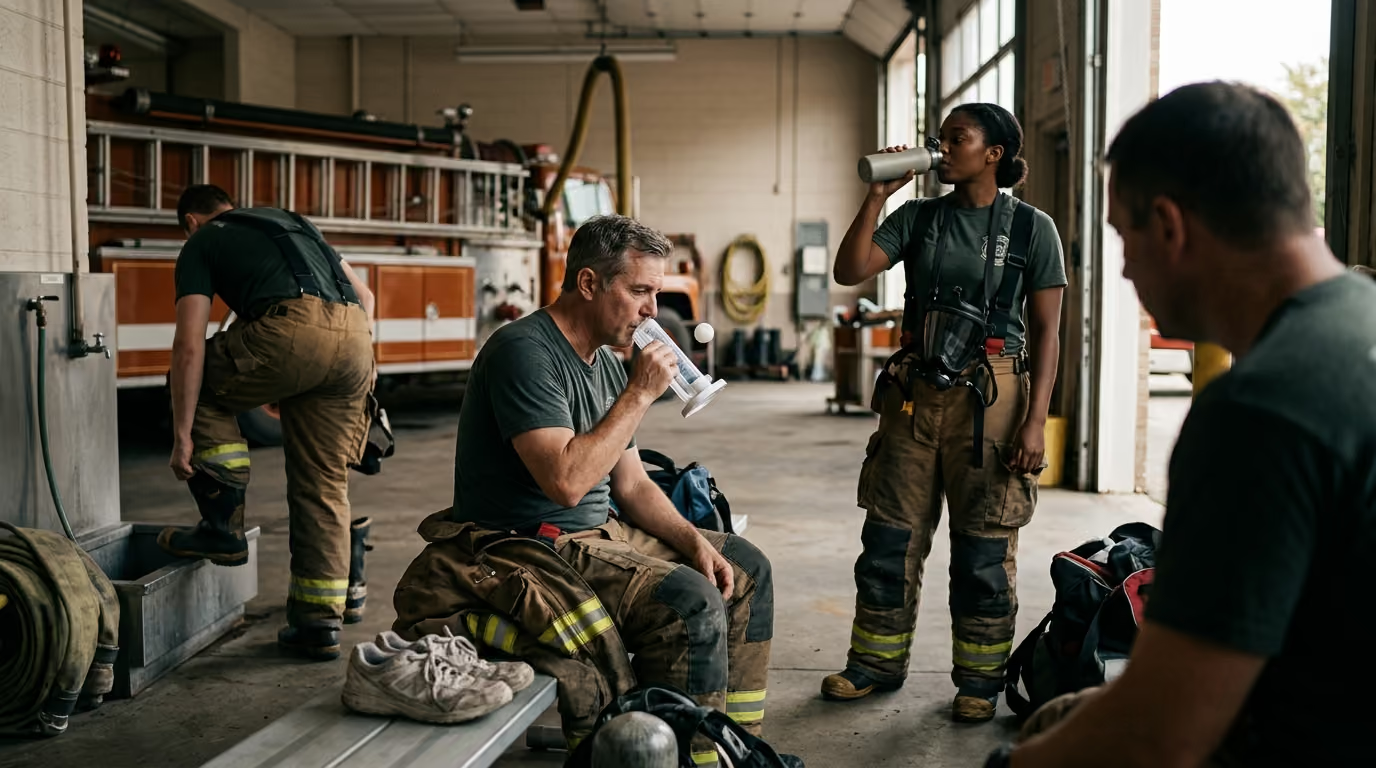

Comprehensive respiratory protection relies on identifying toxic smoke hazards, logging cumulative exposure doses, and using effective clinical testing to preserve occupational lung health.





Respiratory health after firefighting or emergency-service work is not just a question of whether someone has an active medical diagnosis. It is a long-term exposure-management and health-monitoring priority that spans an entire career and retirement. This topic is not about panic over every single smoke condition. It is about understanding how repeated acute exposures, subacute recovery demands, and lifestyle factors combine over decades of service.
Emergency responders regularly encounter complex mixtures of combustion byproducts, particulate matter, toxic gases, diesel fumes, and chemical dust. These exposures happen alongside heavy physical exertion, thermal strain, dehydration, sleep loss, and shifting duty schedules. Over time, these combined physical demands interact with natural aging, fitness levels, and personal habits.
This guide outlines how occupational exposures affect pulmonary function over time. It reviews current scientific evidence, details symptom tracking strategies, and outlines practical exposure reduction. It also covers how to prepare for clinical evaluations without attempting to self-diagnose complex pulmonary conditions.
The respiratory system faces distinct phases of impact from hazardous airborne environments. First responders encounter acute effects during or immediately after an incident, including cough, throat irritation, bronchospasm, and eye tearing. Subacute issues often linger for several days or weeks as airways clear mucus and resolve inflammation. Chronic changes can develop silently over years, leading to progressive airflow limitation, structural tissue changes, or elevated disease risks.
A common misconception is that clean air returns the moment visible flames or thick plumes dissipate. Combustion produces fine and ultrafine particles that remain suspended in the air long after visible smoke clears. Structural fires, vehicle fires, and hazardous materials incidents release a dense mixture of volatile organic compounds, aldehydes like acrolein and formaldehyde, benzene, and polycyclic aromatic hydrocarbons.
Wildland fire smoke presents a different but equally demanding profile. Wildfire smoke contains high concentrations of fine particulate matter, carbon monoxide, nitrogen oxides, and various organic compounds. Research shows that wildland smoke exposure links directly to respiratory inflammation, reductions in lung function, and increased vulnerability to respiratory infections.
When you inhale these substances during heavy physical exertion, high breathing rates drive pollutants deep into the lower respiratory tract. Fine particles smaller than 2.5 micrometers in diameter reach the alveoli. At this level, they can cause local tissue irritation, cross the air-blood barrier, and provoke systemic inflammatory reactions throughout the body.
Current occupational health research provides strong evidence connecting emergency-service exposures to measurable respiratory outcomes. Studies funded by the National Institute for Occupational Safety and Health report elevated risks for both malignant and non-malignant respiratory diseases among firefighters compared to the general public. Large-scale mortality reviews show an excess risk for all cancer types among firefighters, alongside documented increases in non-malignant lung conditions.
Research into cumulative exposure shows positive associations between total career fire-hours and long-term lung-cancer incidence and mortality. In wildland firefighting research, longitudinal tracking shows measurable drops in forced expiratory volume and forced vital capacity over fire seasons. These lung function changes often correlate with markers of systemic inflammation and higher lifetime health risks.
The strength of this evidence varies by exposure type and outcome:
These findings show that regular exposure creates real physical wear on respiratory tissues. They reinforce the need to approach lung health proactively throughout your working years and into career longevity.
Occupational smoke exposure does not occur in a physiological vacuum. An emergency responder's respiratory health is influenced by sleep disruption, chemical use, physical conditioning, and normal biological aging.
Shift work and frequent nighttime emergency calls disrupt circadian rhythms and impair immune recovery. Research in active firefighters shows high rates of poor sleep quality, excessive daytime sleepiness, and moderate-to-severe insomnia symptoms. Frequent nighttime awakenings prevent deep, restorative sleep cycles where respiratory and cellular repair take place.
Sleep disruption can also mask or complicate respiratory assessments. Persistent daytime fatigue, brain fog, and reduced exercise tolerance can stem from chronic sleep deficits or undiagnosed sleep disorders. Obstructive sleep apnea is common among first responders, marked by loud snoring, witnessed pauses in breathing, and morning headaches. When sleep apnea remains untreated, repeated drops in blood oxygen saturation overnight place added strain on the cardiovascular and pulmonary systems. Understanding baseline recovery needs on rotating shifts is critical, as detailed in reports like the CDC review on shift-work protocols.
Personal habits interact directly with occupational airborne exposures. Tobacco smoke from cigarettes, cigars, pipes, or vaping causes chronic airway inflammation, damages cilia, and accelerates lung function loss. Public health data indicates that cigarette smoking contributes to roughly eight in ten chronic obstructive pulmonary disease deaths. When tobacco use combines with occupational smoke inhalation, toxic exposures compound rather than act independently.
Alcohol consumption also plays an underappreciated role in respiratory health. Research demonstrates that alcohol use disorder increases the risk of serious pneumonia, acute respiratory distress syndrome, and other pulmonary infections. Even moderate alcohol intake close to bedtime increases upper airway resistance and worsens sleep apnea. Studies show alcohol consumption is associated with a 25 percent increase in the risk of sleep apnea, causing worse nighttime oxygen drops and fragmented sleep.
Natural aging involves a gradual loss of lung elasticity, slight chest wall stiffening, and a slow decline in maximal oxygen uptake. However, longitudinal studies demonstrate that regular aerobic and strength training helps preserve ventilatory capacity and slowing age-related pulmonary decline. Responders who maintain physical activity throughout life preserve higher forced expiratory volumes than sedentary peers.
Fitness acts as a valuable functional reserve, but it can also mask early airway changes. Highly conditioned first responders may compensate for mild or moderate airway obstruction during everyday tasks. They may only notice breathing limitations during heavy structural attacks, high-altitude brush fires, or rapid stair climbs in full turnouts. Fitness protects operational capacity, but it is not proof that the lungs are completely unaffected. Responders can track their long-term health trajectory through initiatives like the National Registry LIFE Study.
Protecting long-term lung function requires systematic documentation. Because chronic respiratory conditions develop slowly, identifying patterns early makes clinical evaluations far more effective.
Occupational exposure risk is driven by cumulative load over time. You can think of exposure dose as a combination of three main factors:
Tracking these factors helps build a clear occupational history. Documenting interior versus exterior operations, overhaul duties, ventilation conditions, and the exact respiratory protection worn provides vital context for your medical records.
A useful symptom diary tracks changes against your personal baseline rather than waiting for severe impairment. When recording respiratory health, make note of specific operational contexts and physical sensations.
Recording when symptoms occur is critical. Note whether cough or wheezing worsens during a shift, lingers into off-duty days, or disappears completely during vacations. Symptoms that clear up when away from the station provide key clues for evaluating work-related asthma or local environmental irritants.
Controlling toxic exposures requires multiple defensive layers. Relying solely on personal protective equipment is the least reliable occupational safety approach. Applying the hierarchy of controls helps minimize both primary and secondary inhalation risks.
Selecting the correct respiratory protection requires matching the equipment to the specific hazard. No single respirator protects against every airborne contaminant.
A respirator only works if it forms an airtight seal with the skin. Facial hair, even light stubble, breaks the seal and allows contaminated air to bypass the filter material. Respirators also increase breathing resistance, which adds to cardiovascular strain and heat retention during heavy physical work.
Exposure does not stop when you leave the fire ground. Soot and combustion byproducts saturate turnout coats, pants, hoods, gloves, and equipment. Contaminated gear continues to off-gas volatile organic compounds for hours after an incident.
When respiratory symptoms linger or occupational physicals come due, clinicians use specialized objective tests to evaluate lung health. Understanding what these tests measure, and what their results mean, helps you participate actively in your healthcare.
Spirometry is the most common pulmonary function test in occupational health. It measures the volume of air you can inhale and exhale, as well as how quickly you can move that air out of your lungs.
When evaluating spirometry, long-term trends matter far more than a single test score. A fit responder with naturally large lung volumes might show a 15 percent drop in personal airflow over five years while their numbers still sit within general statistical norms. Reviewing serial spirometry records over time helps clinicians spot subtle, progressive changes before they cause severe impairment.
If routine spirometry fails to explain persistent breathlessness, wheezing, or reduced exercise tolerance, additional medical evaluations may be appropriate:
A completely normal resting spirometry or chest X-ray does not automatically rule out occupational lung disease. If exertional breathlessness, chronic cough, or wheezing continues, working with a physician to pursue deeper testing is essential for long-term health, as covered in injury and recovery care.
Knowing when respiratory symptoms represent an immediate medical emergency is essential for personal safety and crew preservation. Certain acute symptoms require urgent clinical evaluation rather than rest and hydration.
Carbon monoxide is an invisible, odorless gas produced by incomplete combustion. It binds to hemoglobin with an affinity roughly 200 times higher than oxygen, starving vital organs of oxygen. Carbon monoxide poisoning symptoms are frequently mistaken for ordinary shift fatigue or mild dehydration.
Seek emergency medical evaluation immediately if any of these symptoms appear after a fire, vehicle incident, generator operation, or overhaul:
Standard finger pulse oximeters cannot distinguish between carboxyhemoglobin and normal oxyhemoglobin. A standard pulse oximeter may show a normal 98 percent oxygen saturation even when a responder has dangerous carbon monoxide poisoning. Clinical co-oximetry blood testing or specialized pulse co-oximeters are required to evaluate carbon monoxide exposure accurately.
Responders should step back from active duty, heavy physical training, or driving emergency vehicles when experiencing:
Pushing through active respiratory impairment in hazardous environments puts you, your crew, and the public at risk. Addressing respiratory issues early prevents minor inflammation from progressing into career-threatening chronic disease.
Routine primary care visits and standard annual occupational fit-for-duty physicals provide baseline data, but they have limitations. Knowing when to consult a specialist ensures that subtle occupational lung injuries are identified and managed early.
Consider requesting a referral to an occupational pulmonologist or a respiratory specialist familiar with emergency-service hazards in the following scenarios:
These real-world examples show how respiratory and occupational health issues present during an emergency services career:
Respiratory health in emergency services depends on steady, proactive exposure control, systematic symptom tracking, and early medical evaluation. Protecting your lungs across a thirty-year career ensures you maintain operational readiness on the fire ground while safeguarding your vitality and independence in retirement.
No. An N95 filtering facepiece respirator only filters airborne particulate matter such as soot, ash, and fine dust. It does not filter carbon monoxide, acrolein, formaldehyde, hydrogen cyanide, or other toxic gases present in wildland smoke. While an N95 reduces particulate lung irritation, it does not provide complete respiratory protection.
Not necessarily. A normal spirometry score means your resting airflow is currently within broad statistical averages for your age and height. It does not rule out intermittent exercise-induced bronchospasm, early interstitial lung changes, impaired gas diffusion, or microvascular damage. If you experience persistent cough, wheezing, or exertional breathlessness, further clinical evaluation is warranted regardless of a normal resting test.
Symptoms that worsen during work cycles and improve during extended time away from the station suggest work-related asthma or occupational airway irritation. Airborne particulates, diesel exhaust, residual overhaul soot, or station living conditions may be triggering airway inflammation. You should track this symptom pattern in a diary and share the timeline with a physician.
No. Standard pulse oximeters cannot distinguish between oxyhemoglobin and carboxyhemoglobin, which is formed when carbon monoxide binds to red blood cells. A standard finger oximeter may display a normal reading of 98 or 99 percent even in someone suffering from severe carbon monoxide poisoning. Clinical evaluation using blood tests or specialized co-oximeters is required.
Stay connected for research-led guidance on duty fitness, shift-work sleep, injury recovery, stress, nutrition and career longevity. Practical ideas for first responders who want to stay capable on the job, recover well and protect their health for the long run.



Read practical guidance on first responder fitness, recovery, sleep, nutrition and resilience for demanding work and a long, active career.
read the blog



