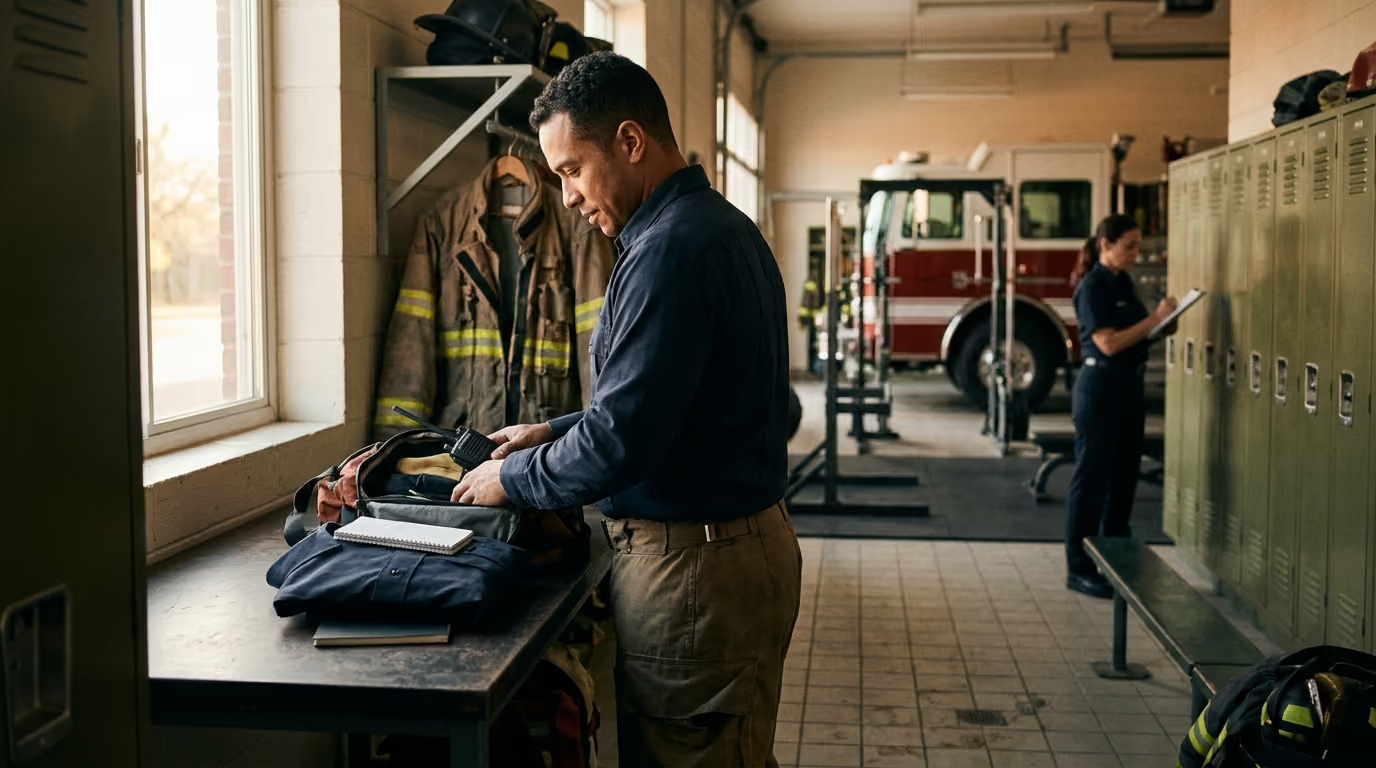

A safe, sustainable return to operational duty relies on a structured five-phase framework combining graded occupational exposure with collaborative communication.





If you or someone you know is experiencing acute distress, thoughts of self-harm, or a mental health crisis, immediate support is available. Call 911 for emergency assistance, call or text 988 to reach the Suicide & Crisis Lifeline (press 1 for the Veterans Crisis Line), or text 838255. If means safety is a concern at home, arrange secure storage for equipment and medications in direct coordination with a clinician, trusted family member, or peer supporter.
You sit in your vehicle in the station parking lot, hands on the steering wheel, watching the bay doors. Six weeks ago, a catastrophic pediatric call, accumulated sleep debt, and unrelenting operational friction brought your nervous system to a halt. Clinically, you are feeling more stable, but your heart rate rises as you prepare to walk through the apparatus bay. You wonder whether your concentration will hold during a multi-alarm fire, whether your crew will treat you differently, or if an unexpected tone drop will trigger an overwhelming autonomic surge.
Returning to active duty after a stress-related setback is not a light switch that flips from unfit to fit. Whether the time away stemmed from cumulative burnout, post-traumatic stress, panic, complicated grief, or the psychological fallout of a physical injury, successful re-entry requires a systematic process. The most effective approach treats return to duty as a graded, multidomain pathway combining clinical stabilization, progressive exposure, structured workplace modifications, and transparent communication.
A successful return to duty requires moving away from the assumption that clearing a single clinical appointment equals immediate operational readiness. Sustainable re-entry depends on a structured, phased progression that gradually exposes the individual to occupational stressors while monitoring functional capacity, sleep stability, and decision-making performance.
The strongest research indicates that isolated clinic-based therapy without workplace coordination produces poor return-to-work outcomes. Durable recovery requires active coordination among the individual, their qualified clinician, and department leadership. Adjusting shift duration, modifying call exposure, managing circadian disruption, and establishing clear pause criteria allow first responders to rebuild operational confidence without triggering a symptom relapse.
Occupational health research demonstrates that stress-related work absence requires a coordinated response across multiple domains. A comprehensive systematic review by the Institute for Work and Health analyzed dozens of high-quality studies evaluating workplace interventions for mental health and musculoskeletal conditions. The findings established strong evidence that multidomain interventions reduce lost work time significantly. These programs combine clinical healthcare, structured service coordination, and temporary work accommodations.
The same research synthesis delivered a critical finding regarding clinical care alone. There is strong evidence that psychological therapies such as cognitive behavioral therapy, when delivered in isolation without workplace modifications or employer coordination, are not effective for reducing work disability duration. While standalone therapy helps reduce clinical symptoms, it does not automatically restore occupational functioning. Translating symptom reduction into reliable duty performance requires direct engagement with work demands, graded tasks, and workplace adjustments.
Further systematic reviews and meta-analyses support the value of proactive workplace contact and graded return-to-work plans. Maintaining structured, supportive, and non-threatening contact between the organization and the individual during an absence reduces long-term disability. Graded return interventions, which allow personnel to resume lower-complexity tasks before stepping into safety-critical assignments, show moderate to strong evidence for sustaining employment continuity.
Research examining the social dynamics of returning to work indicates that line supervisor support and positive coworker attitudes are among the strongest predictors of long-term success. A systematic review on sustainable return to work identified self-efficacy alongside supervisor support as primary drivers of durable outcomes. When leaders demonstrate functional understanding and accommodate temporary limitations, personnel regain operational self-efficacy much faster.
Psychosocial hazards remain widespread across modern high-demand occupations. Data published by the National Institute for Occupational Safety and Health indicates that close to 30% of surveyed workers report finding their work consistently stressful. In healthcare and emergency response environments, baseline stress, exhaustion, and sleep disruption are exceptionally common. Occupational stress is an inherent condition of emergency services, which reinforces why return plans must build tolerance to real-world operational realities rather than theoretical ideals.
The World Health Organization formally defines burnout in the International Classification of Diseases as an occupational phenomenon rather than a medical disease. It results from chronic workplace stress that has not been successfully managed, characterized by exhaustion, mental distance or cynicism, and reduced professional efficacy. Because burnout is rooted in organizational and occupational demands, resolving it requires addressing environmental workloads, shift patterns, and autonomy rather than placing the entire burden of adaptation onto the individual.
Workplace-directed psychotherapy and graded exposure show promising results for trauma-related conditions, including post-traumatic stress injuries. Research on occupational trauma interventions highlights the effectiveness of clinician-guided graded work exposure, eye movement desensitization and reprocessing, and work-focused cognitive behavioral strategies. Graded exposure must remain systematic, purposeful, and coordinated with licensed mental health professionals to avoid overwhelming an unready nervous system.
A successful transition requires separating what an individual can reliably perform from what they believe they can perform. Both variables matter, but confusing one for the other creates significant operational risk.
Capacity represents objective functional ability under specific operational conditions. It encompasses cognitive processing speed, working memory under pressure, emotional regulation during volatile encounters, executive functioning, and physical stamina. An individual who has spent months away from duty may experience residual cognitive fatigue or autonomic hyperarousal when exposed to sensory overload. Capacity must be evaluated through observable, objective markers rather than assumptions.
Confidence reflects an individual's personal expectation of success. While essential for decisive action on emergency scenes, confidence is subjective. A first responder may possess adequate baseline capacity but experience intense anticipatory anxiety, leading to self-doubt and avoidance. Conversely, a highly driven professional might project total confidence to protect their reputation while masking severe sleep fragmentation, intrusive memories, or executive processing delays.
Avoidance is a natural human reaction to distressing events. Following a severe operational setback, an individual may unconsciously avoid specific apparatus, geographical response zones, complex radio traffic, or interactions with certain supervisors. While avoidance provides short-term relief from distress, it reinforces underlying threat associations in the brain.
Graded exposure breaks this cycle. By deliberately encountering work-related tasks and environments in a controlled, progressive manner, the individual rebuilds functional capacity and realistic self-efficacy simultaneously. Operational confidence should be the earned byproduct of demonstrated competence across progressive stages of duty demands.
Standard corporate return-to-work templates fail when applied to emergency services. In an office setting, a lapse in concentration might result in an administrative typo or a delayed spreadsheet. In emergency services, an operational error can lead to crew injury, compromised patient care, tactical failure, or fatal consequences. The acute operational context must dictate the structure of the return plan.
Emergency response inherently involves high consequence decision-making under severe time compression. Firefighters, police officers, paramedics, and dispatchers operate in sensory environments filled with auditory alarms, sirens, radio chatter, flashing lights, and emotional volatility. A nervous system recovering from a stress injury is often sensitized to these inputs. Sensory processing demands that seem routine to a healthy responder can quickly push a recovering nervous system into sympathetic overdrive or cognitive dissociation.
Shift work and circadian disruption create another severe challenge. Emergency personnel regularly navigate 24-hour shifts, night rotations, and mandatory overtime that disrupt hormonal balance, core body temperature rhythms, and neurological recovery. Returning immediately to overnight shifts places severe strain on sleep architecture. Managing sleep parameters through structured shift work sleep protocols is fundamental because REM sleep and deep slow-wave sleep are critical for emotional regulation, memory consolidation, and stress resilience.
Crew culture and perceived scrutiny also shape the return experience. First responder organizations pride themselves on reliability, grit, and cohesion. Personnel returning from a stress-related absence often fear being labeled as unreliable, weak, or a liability on scene. This dynamic can cause individuals to mask symptoms, reject needed accommodations, or push for an accelerated return before their nervous system has stabilized. Return-to-duty frameworks must account for crew dynamics by establishing clear operational boundaries that protect confidentiality while keeping the crew safe.
Physical load and metabolic demand further complicate recovery. Heavy turnout gear, body armor, equipment packs, extreme thermal environments, and prolonged physical exertion tax the same neuroendocrine systems that regulate psychological stress. A stress-related setback often manifests with somatic symptoms, including elevated resting heart rate, muscular tension, gastrointestinal distress, and chronic systemic inflammation. Integrating musculoskeletal and systemic recovery principles alongside cognitive re-entry ensures that physical fatigue does not trigger psychological decompensation.
Transitioning from clinical absence back to full operational readiness is best managed through five distinct phases. Each phase represents an objective milestone rather than a rigid calendar timeline.
The initial phase focuses entirely on clinical stabilization and baseline functional assessment away from operational pressure. Return planning should not begin while an individual is experiencing acute crisis, unmanaged panic attacks, severe depressive episodes, or unaddressed sleep failure.
Assessment during this phase must examine specific functional capacities rather than broad diagnostic categories:
Qualified treating clinicians must evaluate clinical health, while occupational health professionals or department medical officers evaluate how those clinical factors translate into task-specific job restrictions.
Once functional baseline stability is established, the individual, their clinician, and designated department representatives must create a written return-to-duty agreement. A verbal understanding is insufficient because ambiguity creates anxiety, operational confusion, and mismatched expectations.
A comprehensive plan outlines operational boundaries clearly:
This structured alignment removes guesswork and establishes psychological safety for both the individual and the supervisory team.
The primary goal of Phase 3 is breaking avoidance and rebuilding basic workplace habits through low-threat, high-structure exposure. The individual re-enters the department environment without the burden of immediate operational responsibility.
Initial re-entry strategies often include:
This phase allows the responder to re-acclimate to station sounds, uniform wear, peer banter, and departmental structure without sensory overload.
Once the individual demonstrates consistent stability during administrative and simulated tasks, the framework introduces progressive operational complexity. Rather than simply adding hours to a shift, this phase carefully adjusts the cognitive, emotional, and tactical demands of the role.
Progression variables should be manipulated systematically:
If at any point functional performance degrades or severe autonomic distress re-emerges, the plan allows for an immediate, non-punitive pause at the current level.
The final phase solidifies sustainable, long-term capability on full operational status. Returning to standard full-time shift rotations does not mean the rehabilitation process is finished. The responder and supervisor enter a consolidation window where functioning is monitored over several months.
Key components of Phase 5 include:
Graded exposure is an evidence-based clinical strategy adapted for occupational rehabilitation. It involves developing a hierarchy of feared or avoided work situations and systematically confronting them in a structured, progressive manner. In an emergency service context, graded exposure must be designed collaboratively between the treating trauma specialist and occupational health professionals.
An effective exposure hierarchy ranks job-specific tasks from lowest to highest threat level based on the individual's specific setback. The following model illustrates how an operational hierarchy might look for a paramedic or firefighter recovering from a critical incident:
Experiencing transient anxiety, elevated heart rate, or mild discomfort during an exposure task is a normal physiological response. The goal of graded exposure is not to eliminate all stress arousal immediately. The goal is to teach the nervous system that stress sensations are tolerable, manageable, and do not indicate actual catastrophe.
Distress must remain within a functional window. If a responder experiences severe dissociation, panic paralysis, uncontrollable tremors, or cognitive disorientation, the exposure dosage has exceeded their current adaptive capacity. The individual must utilize structured grounding techniques, step back to the previous successful tier, and process the experience with their clinician before attempting the higher-level task again.
Clear, boundary-aware communication is essential for preventing misunderstandings, protecting individual privacy, and maintaining crew safety during the transition process.
First responders frequently avoid requesting support because they fear having to disclose every personal or traumatic detail to their chain of command. In professional occupational health frameworks, diagnostic labels, specific trauma narratives, and therapy notes remain strictly confidential between the member and their licensed medical providers.
Communication with supervisors should focus entirely on functional capabilities and clear operational boundaries:
This language maintains professional dignity, protects legal privacy rights, and provides supervisors with the clear operational parameters they need to manage their shift.
Supervisors do not need to act as counselors or therapists. Attempting to provide amateur psychological counseling often increases stress for the employee. Instead, supervisors should act as operational facilitators who manage workload, clarify expectations, and assess task execution objectively.
Effective supervisory practices include:
Departments and individuals frequently make critical errors when managing stress-related re-entry. Identifying and avoiding these common pitfalls improves the likelihood of a durable return.
Relying on arbitrary calendar targets, such as declaring an individual ready simply because they have been off work for thirty days, is an ineffective approach. Healing trajectories vary widely based on baseline health, trauma severity, sleep quality, and home support systems. Progress must be governed by demonstrated functional milestones, cognitive capacity, and clinical clearance rather than the passage of days on a calendar.
A common administrative error involves reducing a member's weekly hours while expecting them to handle high-consequence, chaotic calls during those limited shifts. Compressing operational stress into a shorter shift does not protect the nervous system. Modifying task complexity, call types, and supervision levels must happen alongside any adjustments to total hours.
When an individual experiences severe burnout, departments often assume that personal wellness interventions, such as meditation apps or personal leave, will resolve the issue. If the member returns to the exact same environment of chronic understaffing, unmanaged interpersonal conflict, and continuous forced overtime, relapse is inevitable. Systemic contributors must be assessed and adjusted to sustain long-term capability.
An individual may report to the station every shift, maintain perfect attendance, and project an image of stoic competence while silently decompensating. They may rely on extreme stimulant use, masking behaviors, or severe off-duty isolation to survive the workday. Sustainable recovery means an individual can perform their job duties while maintaining stable health, restful sleep, and healthy relationships outside the station.
Rehabilitation must never compromise operational safety. First responder environments require absolute clarity regarding non-negotiable safety guardrails.
A return-to-duty progression must be paused immediately if any of the following safety thresholds are crossed:
If any of these conditions emerge, the priority shifts entirely from return-to-duty progression to acute clinical stabilization and risk mitigation.
Many individuals recovering from stress-related setbacks utilize prescribed medications, such as selective serotonin reuptake inhibitors, sleep aids, or anxiolytics. While these medications are frequently valuable for clinical stabilization, their side-effect profiles must be carefully managed.
Prescriptions that cause sedation, slowed motor reflexes, impaired visual tracking, or cognitive blunting present significant safety hazards when operating apparatus or handling weapons. All medication regimens must be evaluated by the prescribing clinician with a full, realistic understanding of the member's physical and operational duties.
Self-management, peer support, and organizational adjustments are vital components of recovery, but they do not replace licensed clinical care. Professional evaluation by a licensed mental health clinician specializing in first responder occupational health is necessary when:
Early clinical intervention using evidence-based modalities prevents acute stress reactions from solidifying into chronic occupational disability.
Revisit this framework whenever an individual within your agency is preparing for a transition back to work, when an existing return plan encounters operational friction, or during annual reviews of departmental health and wellness policies.
Sustainable career capability is built by respecting human physiology, coordinating care across clinical and operational domains, and treating the return-to-duty process as a professional, measurable progression.
Stay connected for research-led guidance on duty fitness, shift-work sleep, injury recovery, stress, nutrition and career longevity. Practical ideas for first responders who want to stay capable on the job, recover well and protect their health for the long run.



Read practical guidance on first responder fitness, recovery, sleep, nutrition and resilience for demanding work and a long, active career.
read the blog



