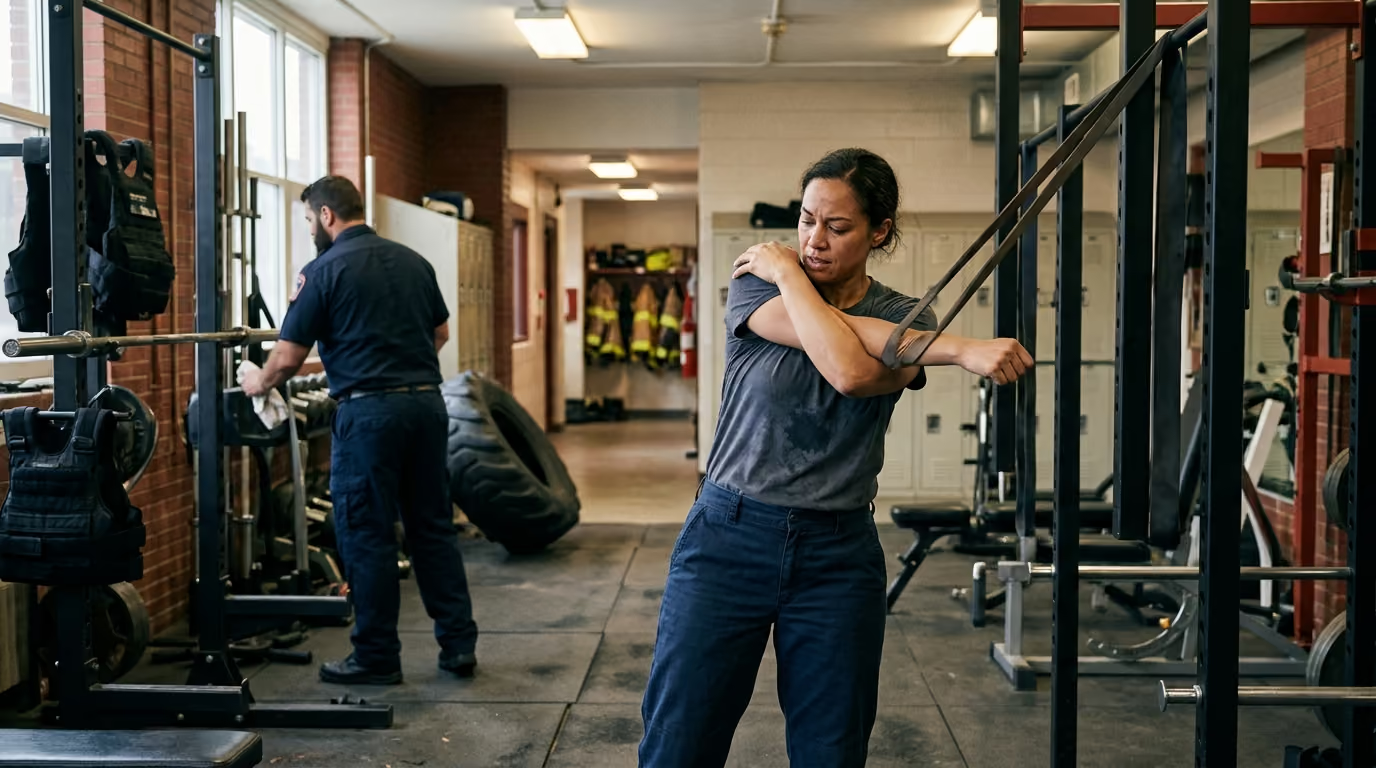

8 to 12 hours of tactical equipment wear places heavy strain on responders, demanding specialized rotator cuff and endurance training for career longevity.





Heavy pressing and high-volume upper-body workouts are often viewed as the primary defense against occupational shoulder injuries. In emergency services, however, isolated gym strength rarely protects against the awkward, unpredictable leverage encountered on duty. Advancing a charged hose line, lifting a bariatric patient from a tight hallway, or wrestling a resisting subject does not match the clean trajectory of a barbell bench press. Building true occupational shoulder resilience requires moving beyond simple strength numbers and developing multi-planar control, scapular upward rotation, rotator cuff endurance, and kinetic chain integration.
The shoulder functions as a force-transfer hub rather than an isolated lifting joint. Sustainable duty capability depends on matching your physical capacity to the total physical exposure of shift work. When training accounts for gear weight, awkward postures, cumulative fatigue, and unpredictable call volume, the shoulder complex can handle heavy field demands across a full career.
Workplace data confirms that shoulder injuries represent a substantial threat to longevity across all emergency service disciplines. The physical reality of public safety work exposes the upper body to sudden eccentric loading, prolonged isometric holds, and non-neutral postures.
In the fire service, shoulder disorders represent a major proportion of overall musculoskeletal injuries. A global systematic review and meta-analysis estimated the prevalence of shoulder musculoskeletal disorders among firefighters at 11 percent. Research on Canadian firefighters reported a point prevalence of shoulder pain at 23 percent, which closely mirrors the rates of lower-back pain and knee pain in the same population. Fire service literature frequently ranks work-related shoulder disorders as the third most common musculoskeletal issue, accounting for roughly 18 percent of all reported physical injuries. These injuries stem from handling heavy ladders, pulling ceiling during overhaul, operating hydraulic tools, and advancing charged lines.
Law enforcement personnel face a different set of biomechanical demands that place equal strain on the shoulder complex. Officers carry substantial equipment weight on duty belts and tactical vests for 8 to 12 hours at a time. Ergonomic research identifies prolonged driving, awkward postures, static seated positions, and sudden forceful movements as primary contributors to musculoskeletal disorders among police. Shoulder problems are especially prevalent among police motorcyclists, who manage constant handlebar vibration, sustained forward reach, and heavy helmet loads alongside standard patrol tasks. Special operations personnel experience additional shoulder strain due to the weight distribution of specialized body armor and tactical ballistic shields.
Emergency medical personnel consistently report some of the highest injury rates in the public safety sector. A systematic review examining occupational injuries among paramedics found annual injury rates ranging from 29.7 to 345.6 injuries per 1,000 workers. Lifting and loading manual stretchers, carrying stair chairs down narrow flights, and transferring unresponsive patients from confined spaces force the upper body to manage heavy loads far from the center of gravity. When combined with sudden shifts in patient weight, these movements create extreme shearing forces across the shoulder joint.
Understanding these occupational patterns provides clarity for physical preparation. Responders do not need generic bodybuilder routines. They need targeted programs that address the exact stress profiles of their daily work. Tracking cumulative career wear through resources like the National Registry LIFE study highlights how daily biomechanical exposures aggregate into chronic musculoskeletal limitations over time.
To protect the shoulder under heavy field loads, you must look at how its various anatomical structures coordinate force. The shoulder is not a simple hinge. It is a complex suspension network designed to trade bony stability for multi-directional mobility.
The shoulder complex consists of four distinct articulations:
Surrounding these joints are two vital muscular support teams: the rotator cuff and the scapular stabilizers. The rotator cuff, composed of the supraspinatus, infraspinatus, teres minor, and subscapularis, acts as an active steering mechanism. Its primary job is to center the humeral head inside the socket while the larger prime movers, such as the deltoids, pectorals, and latissimus dorsi, generate gross force. Meanwhile, the scapular stabilizers, including the serratus anterior, rhomboids, and trapezius segments, position the shoulder blade to create a stable foundation for the arm.
The entire system relies on the kinetic chain. Force generated during a forcible entry strike or a patient transfer originates in the feet, travels through the hips and core, and passes through the scapula into the hands. If your hips are stiff or your thoracic spine lacks extension, the shoulder is forced to generate or absorb excessive rotational torque. Training the shoulder in total isolation ignores the fundamental mechanics of emergency operations.
Musculoskeletal strain occurs when cumulative duty exposure outpaces the tissue capacity of the responder. Preventing breakdown requires managing both sides of this equation.
Occupational exposure encompasses every physical stressor encountered on and off shift. This includes the weight of turnout gear, ballistic vests, self-contained breathing apparatus, and tool belts. It includes high-repetition tasks, such as performing chest compressions or holding ballistic shields during perimeter operations. It also includes awkward reach angles, unexpected patient shifts, whole-body vehicle vibration, and poor sleep architecture resulting from back-to-back night calls.
Tissue capacity reflects your internal capability to absorb and dissipate those forces without injury. Capacity components include:
A responder might display excellent maximal strength by pressing heavy dumbbells in the station gym. If that same responder lacks the scapular endurance to hold a 50-pound tool overhead after a night of interrupted sleep, tissue capacity drops below operational exposure. Qualitative firefighter research indicates that both overexertion in the gym and under-preparation in fundamental movement patterns serve as common injury mechanisms.
When structural physical capacity drops, chronic fatigue compounds the risk. As detailed in the CDC fatigue report and shift protocols, unmanaged fatigue compromises neuromuscular coordination, leaving the stabilizing muscles of the shoulder unable to react to sudden shifting loads. Balancing this dynamic requires structured physical conditioning that builds duty capacity without draining daily operational reserves.
Every branch of public safety places unique physical stresses on the upper body. Structuring an effective physical preparation program requires understanding the distinct demands of each discipline.
Firefighters regularly maneuver heavy, awkward tools far from their base of support. Advancing a charged 1.75-inch hose line requires generating continuous forward propulsion while stabilizing high backward nozzle reaction forces. This task places extreme demand on the serratus anterior, anterior deltoids, and the contralateral core.
Ladder operations present another substantial biomechanical challenge. Ergonomic assessments of ladder handling show that over 40 percent of evaluated firefighters fall into medium-risk categories, with nearly 43 percent reaching high-risk classifications for cumulative upper-body trauma. Raising, extending, and climbing ground ladders requires significant shoulder flexion combined with dynamic stabilization under load. Overhaul operations compound this stress by requiring repetitive, overhead pulling with pike poles, often while looking upward in full protective gear. Training must emphasize overhead stability, anti-rotational trunk strength, and posterior shoulder endurance to counter these demands.
Police officers experience chronic, low-grade postural stress interspersed with sudden bursts of maximal physical effort. Wearing a 20-to-30-pound duty belt alters pelvic tilt, which cascades up the spine to cause compensatory forward shoulder roll and head posture. Adding a heavy tactical vest compresses the upper trapezius and clavicular region, restricting natural scapular movement during arm elevation.
Prolonged patrol driving locks the arms into a static, forward-reaching position. Over hours of driving, this stance can shorten the anterior chest musculature and reduce active thoracic extension. When an officer must suddenly transition from this seated posture into physical control tactics, the shoulder undergoes rapid, un-warmed stress. Defensive tactics, weapon retention, and suspect control require intense isometric grip, internal rotation strength, and rapid eccentric deceleration to prevent joint subluxation during ground struggles. Physical conditioning must focus on restoring upper-back mobility, building external rotation strength, and maintaining scapular depression under load.
EMS professionals handle heavy external loads under difficult physical conditions. Transferring a supine patient from a bed to an ambulance cot frequently requires reaching across the mattress, placing the arms in long lever positions that amplify torque on the rotator cuff. Lifting manual stretchers from floor level demands high amounts of pulling strength, often while navigating tight stairwells, uneven terrain, or cramped residential bathrooms.
Unlike gym barbells, human patients present unstable, unpredictable loads. A sudden shift in patient weight transfers massive eccentric force straight into the responder's shoulder and bicep tendon. Paramedics and EMTs also face repetitive overhead and forward reaching inside moving ambulances, where vehicle sway introduces continuous balance challenges. EMS shoulder programs must prioritize team-lifting mechanics, loaded carries, anti-extension trunk stability, and eccentric bicep and cuff strength.
A balanced shoulder training program extends far beyond standard rotator cuff band exercises. Sustainable performance requires building mobility, multi-directional strength, stability, and work capacity across several coordinated movement categories.
Passive flexibility without motor control provides minimal protection on duty. Responders need active mobility, meaning the ability to move joints through a full range under direct muscular control.
Thoracic spine mobility is the cornerstone of shoulder function. If the thoracic spine cannot extend and rotate, the scapula cannot tilt backward and rotate upward during overhead reach. This restriction pinches the subacromial tissues between the humerus and the acromion process. Research reviewed by the CDC indicates that combining strength training with targeted mobility work produces superior gains in functional movement and overall strength compared to strength training alone.
Practical drills should focus on:
Standard internal and external rotation exercises with light bands are helpful, but they only prepare the rotator cuff for neutral, beside-the-body positions. Emergency tasks regularly demand cuff stability when the arm is abducted, flexed, or moving through diagonal planes.
Training must challenge the rotator cuff to keep the humeral head centered under diverse angles:
The scapula must glide smoothly along the rib cage to provide a solid base for the arm. The serratus anterior is especially critical because it pulls the shoulder blade forward and upward around the thorax during pressing and reaching tasks. A weak serratus allows the shoulder blade to wing, destabilizing the entire joint.
To build active scapular rhythm:
Responders require balanced upper-body strength across both horizontal and vertical planes. Over-emphasizing bench pressing while neglecting horizontal and vertical pulling creates structural imbalance and anterior shoulder irritation.
Program design should favor a pulling-to-pushing volume ratio of roughly 2 to 1:
Loaded carries represent one of the most transferable training tools for first responders. Carrying heavy equipment builds grip strength, scapular depression endurance, and lateral core stability in a single movement pattern.
Implement diverse carry variations:
Emergency tasks often last for extended periods, demanding local muscular endurance rather than brief maximum power. When local stabilizing muscles tire, movement mechanics deteriorate, placing excessive strain on passive ligaments and joint capsules.
Conditioning circuits should include submaximal sled pushes, rope pulls, sandbag carries, and controlled bodyweight movements performed under fatigue. Emphasize smooth breathing and postural alignment throughout these circuits. If technique breaks down due to fatigue, drop the load or increase the rest interval to prevent reinforcing sloppy movement patterns.
Managing shoulder health requires adjusting training intensity based on joint irritability rather than pushing through pain. The 2022 Bern Consensus Statement on shoulder rehabilitation recommends using tissue irritability to guide exercise selection, integrating rotator cuff, scapular, and whole-body movements throughout recovery.
Irritability reflects how easily symptoms are triggered, their severity, and how long they take to return to baseline:
To manage total weekly shoulder stress, calculate your overall physical volume across all sources:
During blocks with heavy call volume or consecutive night shifts, reduce your gym pressing volume and focus on joint mobility and active recovery. When shift demands are lighter, you can safely increase resistance loads. For structured ways to navigate physical fatigue, review practical strategies within injury recovery guidelines and explore systematic principles for sustainable duty fitness.
Evaluate your training dosage by monitoring your physical response the following morning:
If you answer yes to any of these questions, your previous training session exceeded your current capacity. Adjust your subsequent volume, resistance, or range of motion accordingly.
Avoiding classic training mistakes is just as critical as performing the right exercises. Many emergency responders fall into common traps that compromise shoulder longevity over time.
The flat barbell bench press locks the hands into a fixed pronated grip and restricts natural scapular movement against the bench. When performed with heavy loads and high volume, this movement can aggravate the anterior shoulder capsule and long head of the bicep tendon. Balance or replace flat barbell work with dumbbell presses, neutral-grip floor presses, landmine presses, and weighted push-ups that allow the shoulder blades to move freely.
Performing endless sets of band external rotations while ignoring core stability, hip extension, and thoracic mobility creates limited functional transfer. On the fireground or in an ambulance, the shoulder works in tandem with the trunk and lower body. Every upper-body training session should include standing, half-kneeling, or split-stance movements that challenge force transfer through the entire kinetic chain.
Stretching a tight shoulder through aggressive passive stretching can actually destabilize the joint if underlying muscular control is absent. If a joint feels stiff, the nervous system may be guarding the area due to a lack of active stability. Always pair mobility drills with active strengthening exercises throughout the newly acquired range of motion.
No workout program can compensate for wearing ill-fitting body armor, a poorly adjusted duty belt, or an unbalanced self-contained breathing apparatus for years. Regularly inspect your duty gear:
Assuming a shoulder is ready for operational work simply because standard daily activities are pain-free is a recipe for re-injury. Operational readiness requires demonstrating strength, endurance, and coordination under realistic duty simulations while wearing full gear.
Returning to active duty after a shoulder injury requires a phased, criteria-based approach. Progress through each phase only when you meet specific functional benchmarks.
The objective is to settle irritated tissues while maintaining general conditioning. Focus on pain-limited daily movements, gentle pendulums, active-assisted range of motion, and isometric rotator cuff contractions at the side. Continue training your lower body and cardiovascular fitness using stationary bikes or incline walking.
Once resting pain subsides, begin restoring full active range of motion in all planes. Introduce active thoracic mobility drills, serratus wall slides, prone scapular retractions, and light resistance band rotations. Do not add heavy external resistance until you can achieve full, symmetric active elevation without shrugging the upper trapezius.
Rebuild multi-planar strength using progressive resistance. Begin with bilateral movements, such as chest-supported rows, neutral-grip dumbbell presses, and light farmer carries. Gradually progress to unilateral rows, landmine presses, and offset suitcase carries. Emphasize controlled eccentric tempos, lowering weights over 3 to 4 seconds to build tendon resilience.
Before returning to active duty, rehearse specific operational tasks in a controlled setting:
The first month back on shift represents a vulnerable transition window. Keep track of how your shoulder responds to real-world calls. Maintain your baseline mobility and cuff-activation routines before each shift, and use active recovery strategies on off days. If you experience lingering stiffness or reduced grip strength, adjust your gym training volume immediately to keep occupational capacity ahead of shift exposure. Maintaining structural readiness over an entire career is essential for long-term health and resilience, as detailed in our guide on career longevity.
Self-directed exercise and smart programming resolve many minor overuse issues. Certain symptoms, however, demand immediate clinical evaluation by a licensed physical therapist, athletic trainer, or orthopedic physician.
Schedule a professional clinical evaluation if you experience:
A qualified healthcare professional can evaluate joint mechanics, order necessary diagnostic imaging, rule out major structural tears or labral pathology, and build an individualized rehabilitation plan. Addressing injuries early prevents minor inflammatory conditions from evolving into chronic, career-threatening structural damage.
Sustainable shoulder health is built by consistently matching multi-planar physical capacity to the unpredictable demands of emergency service work, preserving functional readiness across your entire operational career.
Stay connected for research-led guidance on duty fitness, shift-work sleep, injury recovery, stress, nutrition and career longevity. Practical ideas for first responders who want to stay capable on the job, recover well and protect their health for the long run.



Read practical guidance on first responder fitness, recovery, sleep, nutrition and resilience for demanding work and a long, active career.
read the blog



