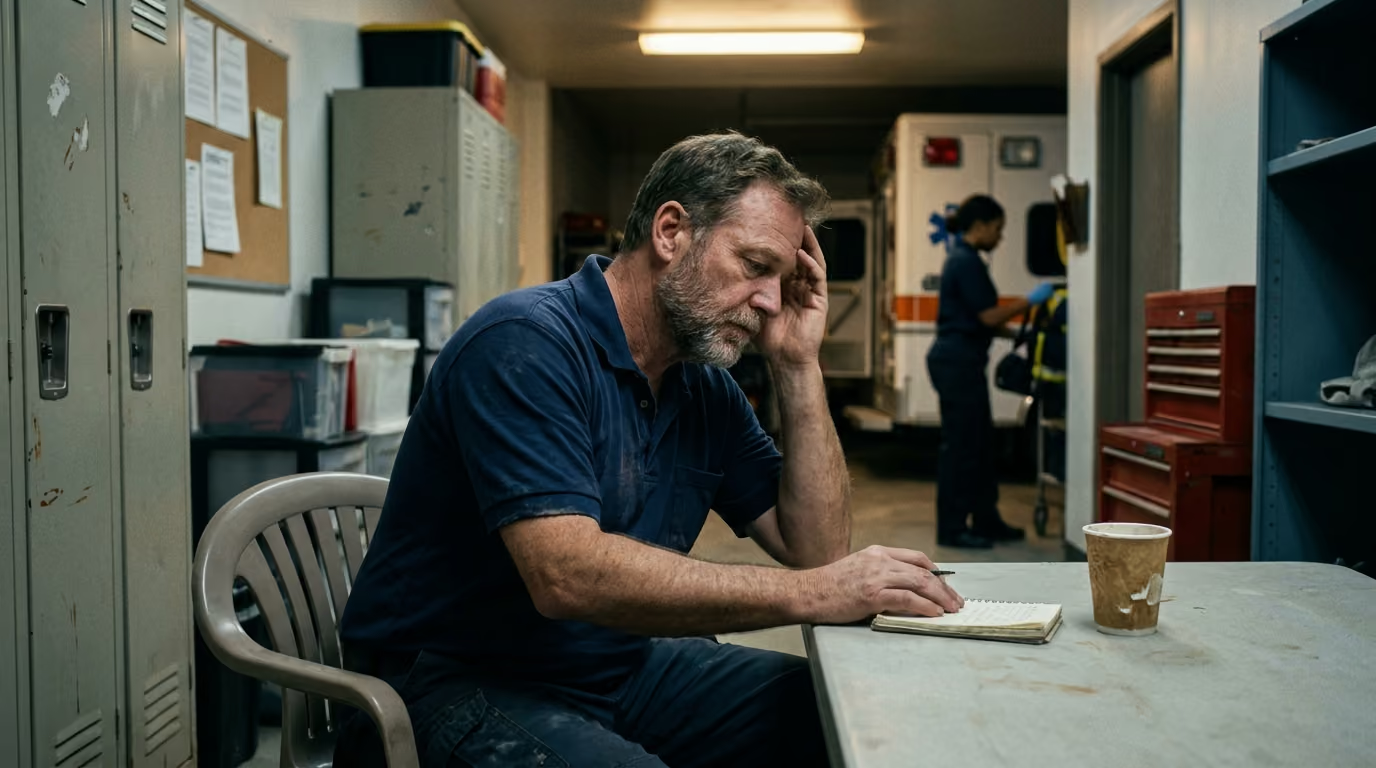

Retirees can successfully navigate post-service substance risks by identifying hidden dependence patterns, managing cumulative trauma, and establishing healthy civilian routines.





If you or someone you know is in immediate danger, call 911. For urgent mental health or substance crisis support, call or text 988, press 1 for the Veterans Crisis Line, or text 838255. Free and confidential support is available 24/7. When access to means or prescription medications presents a safety risk at home, arrange safe, locked storage or temporary off-site custody together with a trusted clinician, family member, or peer support team.
Many people assume that leaving emergency service automatically removes the psychological and physical strain that drives substance use. In reality, stepping away from the job often removes the very guardrails, daily routines, and crew accountability that kept coping habits contained during active duty.
When shift work ends, the cumulative physical injuries, disrupted sleep patterns, and unaddressed psychological trauma do not instantly vanish. Instead, newly retired personnel frequently find themselves with unmanaged physical discomfort, unstructured hours, and a diminished sense of purpose. Coping behaviors that once appeared functional during a career can quickly expand in retirement.
Navigating substance use after separation requires clear risk recognition, practical harm reduction, and structured support options without moral judgment. Long-term recovery is about building sustainable physical capability, reclaiming personal autonomy, and restoring daily life after years on the front lines.
Leaving emergency service represents a profound life transition. The shift from structured operations to unstructured civilian retirement can challenge the most seasoned professionals. Understanding why this transition creates vulnerability helps individuals and families intervene before patterns become destructive.
Active duty imposes rigid schedules, physical demands, and constant accountability to a crew. Personnel manage their intake because they must report for duty clear-headed, pass physical standards, and protect their partners. When retirement occurs, those external guardrails disappear overnight.
Unscheduled days provide endless opportunities for coping behaviors to expand without immediate occupational consequences. A morning drink, an extra pain pill, or continuous nicotine use no longer threatens a shift assignment. Without the friction of a work schedule, subtle habits can accelerate into daily physical dependence.
First responders do not just work a job; they inhabit a culture defined by shared mission, dark humor, and deep mutual trust. Leaving the station means stepping outside the tribe. This isolation often triggers profound grief and identity confusion.
Retired personnel frequently report feeling disconnected from civilian peers who cannot understand their operational experiences. Substances frequently step into that void, serving as an artificial substitute for the adrenaline, camaraderie, and emotional numbing that the job once provided. Research indicates that retirement does not automatically lower behavioral health risks, with studies showing elevated rates of depression and heavy drinking among retired firefighters compared to active-duty personnel.
During an active career, operational tempo forces responders to compartmentalize pain, sleep debt, and traumatic calls. Adrenaline and duty focus keep chronic issues pushed beneath the surface. Once the operational noise stops, the nervous system finally decelerates, allowing decades of accumulated physical wear and psychological memories to surface at full volume.
Without proactive coping strategies, many individuals turn to substances to quiet their hypervigilant nervous systems. Physical injuries acquired over decades of lifting patients, carrying gear, and managing structural fires begin to ache constantly. When chronic pain collides with insomnia and unprocessed memory, the risk of escalating substance use reaches its peak. You can explore structured transitions within our career longevity and life after service resource hub.
Addressing substance use effectively requires objective, clinical language rather than moral judgments. Substance use disorders are treatable medical conditions that alter brain function, emotional regulation, and physical health. Understanding the clinical distinctions between different stages of use helps retirees and their families identify where they stand on the continuum.
First responders are not a uniformly addicted demographic, and broad generalizations do not help individuals seeking honest self-assessment. Epidemiological studies across fire, police, and emergency medical services show wide ranges in substance use patterns due to varying definitions and screening tools.
Published literature demonstrates hazardous alcohol use rates among first responders ranging broadly from 16% to 40% across different cohorts. Some systematic reviews place hazardous drinking ranges between 25% and 30% during active duty. These figures confirm elevated occupational risk across emergency services without implying that every retired member is destined to develop a severe clinical disorder.
Substance use after service rarely develops in isolation. It almost always exists as part of a reinforcing physiological loop involving traumatic stress, circadian disruption, and chronic physical pain.
Emergency service trains the sympathetic nervous system to remain on high alert for decades. In retirement, this persistent hypervigilance presents as physical restlessness, irritability, intrusive memories, and severe insomnia. First responders frequently discover that central nervous system depressants provide rapid, short-term relief from this heightened arousal.
A retiree might drink alcohol or take a sedative to blunt evening anxiety and fall asleep. While the substance may induce unconsciousness, it disrupts restorative sleep architecture, suppresses rapid eye movement (REM) sleep, and triggers early morning awakening. The resulting fatigue increases daytime irritability and pain sensitivity, driving further substance consumption the following night.
Trauma-related conditions and substance use disorders frequently interact. Research examining firefighters indicates that individuals with co-occurring post-traumatic stress symptoms and alcohol use disorders experience higher alcohol severity and significantly elevated suicide risk compared to those managing trauma symptoms alone.
These findings confirm that self-medication strategies ultimately destabilize the central nervous system. When alcohol or sedatives wear off, the brain experiences rebound glutamate excitation, which amplifies baseline anxiety and intrusive memories beyond their original intensity. Integrated treatment protocols must address both conditions simultaneously rather than attempting to treat them in sequence. Building a structured evening routine via a shift-specific sleep plan for emergency personnel provides a strong non-pharmacological foundation for nervous system recovery.
Different substances carry unique metabolic pathways, behavioral risks, and withdrawal profiles. Retirees often transition between substances or combine them to manage different symptoms throughout the day.
Alcohol remains the most common substance used by active and retired first responders due to its cultural integration within emergency service traditions. Post-shift drinking rituals, station celebrations, and union gatherings frequently center on alcohol consumption, normalizing high-volume intake over decades.
In retirement, alcohol use frequently shifts from communal decompression to isolated management of distress. Warning signs include drinking earlier in the day, consuming alcohol while alone, needing increased volume to feel relaxed, and experiencing physical tremors or nausea when skipping a day.
Standard screening tools like the AUDIT-C evaluate risk based on frequency, typical quantity, and heavy episodic drinking occasions. Standard public health guidelines identify lower-risk limits as no more than four drinks on any single day and 14 drinks per week for healthy adult men under age 65. For women and men aged 65 and older, guidelines recommend no more than three drinks on a day and seven drinks per week.
These numerical thresholds serve as general population markers and do not indicate safety for individuals with liver disease, those taking sedating medications, or people unable to regulate intake. Abrupt cessation of heavy, long-term alcohol consumption carries significant medical danger, including autonomic instability, hallucinations, seizures, and delirium tremens. Medical detoxification is mandatory when significant physical dependence is present.
Nicotine consumption through cigarettes, cigars, smokeless tobacco, and electronic vaping devices often persists unnoticed after service. Responders frequently use nicotine on duty to maintain alertness during overnight hours, regulate acute stress, or participate in station break rituals.
In retirement, nicotine use frequently increases to combat daytime fatigue and unstructured boredom. Nicotine acts as a powerful central nervous system stimulant, elevating heart rate, increasing blood pressure, and impairing peripheral vascular recovery.
Attempting to stop nicotine without structured support triggers intense irritability, anxiety, and concentration deficits, which can prompt substitution with alcohol or food. Evidence-based cessation incorporates behavioral modifications alongside medical options like nicotine replacement patches, gums, bupropion, or varenicline under clinical supervision.
The increasing legal availability of cannabis has led many retired first responders to adopt it for chronic pain, insomnia, and intrusive operational memories. While cannabis eliminates the acute organ toxicity associated with heavy alcohol use, it presents specific behavioral and cognitive risks that must be evaluated honestly.
Modern cannabis products feature significantly higher tetrahydrocannabinol (THC) concentrations than legacy products, increasing the likelihood of tolerance, psychological dependence, and rebound anxiety. When used nightly to suppress nightmares, cannabis disrupts normal sleep stage transitions, preventing the emotional processing necessary for trauma recovery.
Stopping chronic, high-potency cannabis use frequently produces withdrawal symptoms, including vivid nightmares, severe insomnia, decreased appetite, and acute irritability. No specific FDA-approved medications exist to treat cannabis use disorder, making cognitive-behavioral therapies and sleep restructuring the primary tools for clinical management.
Decades of physical trauma, heavy equipment loads, and structural firefighting inevitably produce chronic musculoskeletal injuries. First responders are frequently prescribed opioid analgesics, muscle relaxants, benzodiazepines, and gabapentinoids during their careers to maintain duty readiness.
When service ends, physical activity levels often drop, causing joint stiffness and muscular atrophy that worsen chronic pain profiles. The transition from appropriate medical use to misuse often occurs subtly:
Combining opioids with alcohol or benzodiazepines represents the leading cause of fatal accidental overdose due to synergistic respiratory depression. Managing post-service pain effectively requires multimodal care, physical rehabilitation, and clinical medication management rather than sudden unassisted cessation. Review our comprehensive approach to physical rehabilitation in our first responder injury and recovery guide.
Some retired personnel turn to illicit substances, including illicitly manufactured pills, cocaine, or methamphetamine, to combat chronic fatigue, manage pain, or chase former adrenaline levels. The contemporary illicit drug supply contains unpredictable synthetic opioids, primarily illicit fentanyl, which makes any unregulated pill or powder lethal.
Stimulant misuse places extreme physiological stress on a cardiovascular system already altered by decades of shift work and emergency stress responses. Observable signs of stimulant crisis include severe chest pain, extreme hyperthermia, unmanageable agitation, acute paranoia, and sudden behavioral volatility. Emergency medical services must be contacted immediately if chest pain, seizures, or loss of consciousness occurs.
Substance use issues do not develop overnight. Evaluating behavior along a clear functional continuum helps retired responders, spouses, and peer teams recognize escalation and intervene early.
The individual uses substances within low-risk guidelines or strictly according to medical direction. Consumption does not impair sleep, physical health, emotional stability, or family relationships. The individual can easily pause consumption for weeks without physical discomfort, craving, or psychological distress.
Substance use begins to serve as the primary tool for regulating emotions, managing physical pain, or achieving sleep. Doses, frequencies, or product potencies begin a steady upward climb. The individual starts drinking or using alone, spends more money on substances, and rationalizes habits through references to past service injuries.
The consequences of substance use become visible across daily life. The individual experiences frequent memory lapses, unexplained domestic arguments, uncharacteristic financial strain, minor vehicle damage, or physical falls. Daily responsibilities are neglected, and physical health markers such as blood pressure and liver enzymes deteriorate.
The individual loses the ability to reliably predict or control how much they consume once they start. Physical tolerance requires higher intake to achieve baseline function, and skipping consumption triggers distinct withdrawal symptoms. Repeated personal attempts to quit or cut back end in frustration and rapid return to use.
The situation presents an immediate threat to life and physical safety. This stage includes suspected drug overdose, profound respiratory depression, seizures, severe alcohol withdrawal delirium, acute drug-induced psychosis, or intense suicidal despair. Immediate emergency intervention via 911 is required.
Harm reduction provides practical, life-saving strategies designed to minimize physical injury, prevent fatal overdose, and stabilize health while long-term recovery support is arranged. It does not condone harmful behavior; it preserves life so that clinical healing remains possible.
Long-term recovery from substance use disorders requires comprehensive, evidence-based clinical interventions that treat the whole person. Because first responders carry unique operational trauma and physical injury profiles, generic treatment models often fail to produce lasting outcomes.
Clinical guidelines from the Department of Veterans Affairs and the Department of Defense state clearly that co-occurring trauma symptoms and substance use disorders should be treated concurrently. An individual does not need to achieve months of unassisted sobriety before starting evidence-based trauma therapy.
Integrated treatment models simultaneously address post-traumatic stress, sleep disruption, chronic pain, and substance dependence. Evidence-based psychotherapies include:
Medications represent a primary, evidence-based component of modern addiction medicine. When combined with psychological therapies, pharmacotherapy significantly improves treatment retention and reduces mortality.
Prescription medications must be evaluated and managed by a licensed healthcare professional who understands the patient's full medical history, liver function, and concurrent prescriptions.
First responders possess a strong cultural preference for seeking help from those who have shared their operational background. Peer support specialists provide exceptional value because they understand station culture, operational dark humor, organizational betrayal, and the specific difficulty of stepping away from the uniform.
Peer support is a vital companion to clinical care, but it is not a replacement for medical diagnosis, detoxification, or psychiatric treatment. Effective peer programs maintain clear ethical boundaries:
True recovery is about building a vibrant, purposeful life after service where substances are no longer needed to survive the day. Sustainable transition requires active restructuring of time, physical capability, and social connection.
Without a shift calendar, days can bleed together into an unstructured haze. Rebuild a predictable circadian routine by establishing fixed wake-up times, consistent meal windows, daily sunlight exposure, and scheduled physical training sessions. Learn rapid down-regulation skills through our stress reset techniques for demanding environments.
First responders thrive when connected to a clear mission that matters. Channel operational skills, leadership capabilities, and problem-solving experience into meaningful post-service avenues:
While maintaining bonds with retired crew members is valuable, expanding social connections beyond emergency services prevents isolation and rumination. Engage with community clubs, recreational athletic leagues, trade organizations, and family activities that have nothing to do with emergency calls or station politics.
Shift the focus of physical training from heavy operational lifting to sustainable joint longevity, cardiovascular endurance, and nervous system regulation. Incorporate low-impact aerobic work, mobility training, proper hydration, and structured sleep hygiene to naturally manage chronic musculoskeletal discomfort.
Reclaiming your health after a demanding career is a continuation of the strength, discipline, and dedication that defined your years in emergency service.
Stay connected for research-led guidance on duty fitness, shift-work sleep, injury recovery, stress, nutrition and career longevity. Practical ideas for first responders who want to stay capable on the job, recover well and protect their health for the long run.



Read practical guidance on first responder fitness, recovery, sleep, nutrition and resilience for demanding work and a long, active career.
read the blog



