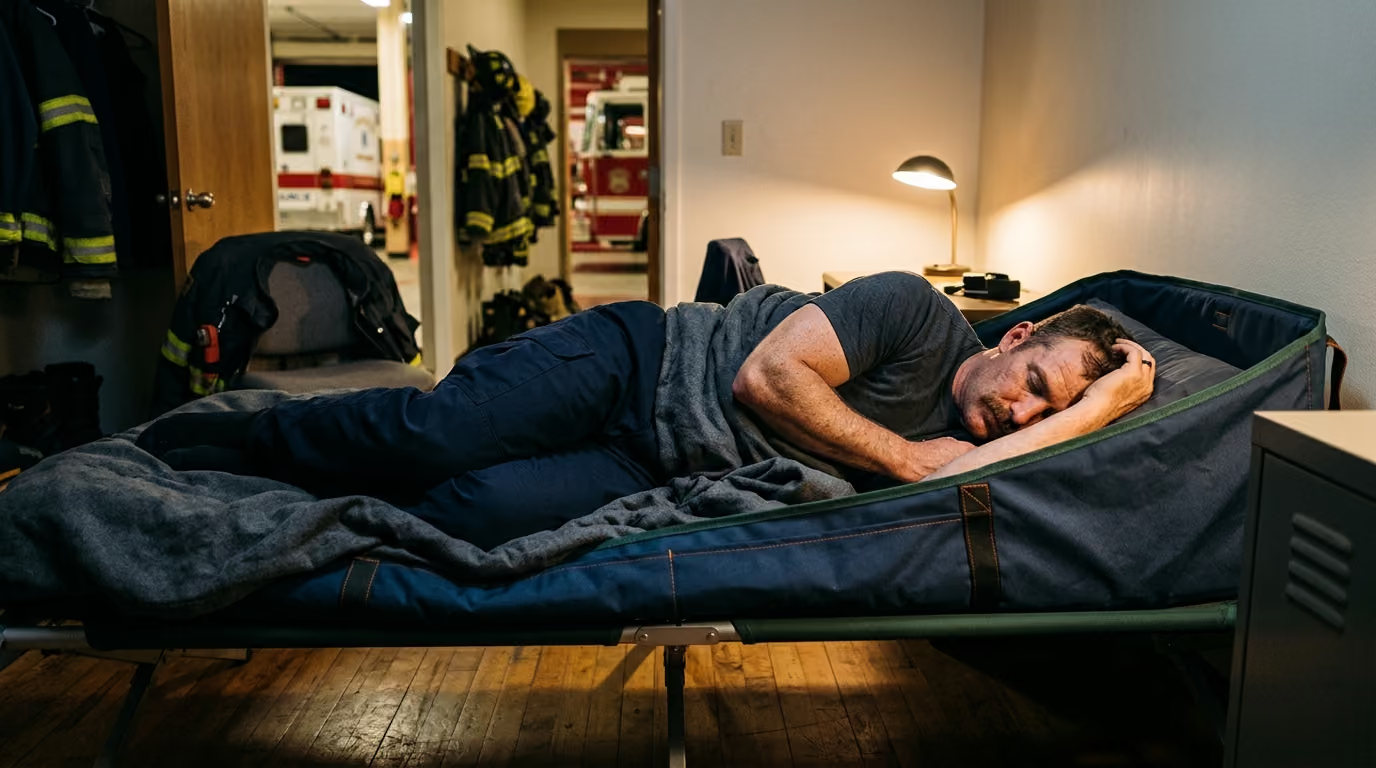

Restorative sleep during unpredictable emergency shifts becomes achievable with a structured five-layer mobile system and practical field gear tailored for first responders.





Many responders assume that better rest on duty requires high-end sleep gadgets or custom station bunks. In practice, carrying expensive technology into a loud station or a drafty deployment tent changes very little if fundamental environmental controls are missing. True sleep protection is not about luxury accessories. It is an operational routine and a low-profile kit designed to secure rest in unpredictable, uncontrolled environments.
A reliable portable sleep system gives you a repeatable method to control light, noise, temperature, and circadian signals wherever duty places you. It separates genuine physiological recovery tools from unproven consumer gadgets. When built
correctly, it protects your reaction time, physical health, and driving safety across stations, hotels, vehicles, and disaster deployments.
Public safety occupations place unusual demands on human physiology. Research on public-safety sectors shows that roughly 50 percent of protective-service workers work nonstandard schedules. Firefighters frequently work 24-hour or 48-hour tours. Emergency medical personnel face high call volumes and heavy overtime. Wildland firefighters often spend up to 14 consecutive days on operational assignments during active fire seasons.
These schedules produce significant sleep loss across entire departments. In public-safety reviews, 59 percent of career firefighters reported sleep deprivation, while 23 percent reported insomnia symptoms. In emergency medical services, 64 percent of clinicians reported poor sleep quality, and 51 percent of law enforcement officers reported similar deficits. These numbers are not simply lifestyle complaints. They represent direct threats to tactical performance and operational survival.
Fatigue directly impairs the central nervous system. When emergency medical personnel experience severe fatigue, they are 1.5 times more likely to make clinical errors and twice as likely to suffer on-duty injuries. They are also three times more likely to demonstrate safety-compromising behaviors during emergency calls. Among firefighters, even minor sleep fragmentation from nighttime tones impairs visual-motor coordination, processing speed, and cognitive reaction times.
A portable sleep kit cannot solve excessive overtime, severe understaffing, or chaotic dispatch schedules on its own. It functions as a frontline risk mitigation strategy. By controlling the immediate microclimate around your body, you reduce sleep latency, limit unnecessary awakenings, and preserve baseline physiological capability. Protecting sleep is fundamentally an operational safety protocol.
A common failure in shift work management is confusing the time available for rest with the time spent in restorative sleep. Sleep opportunity is the total block of protected off-duty time allocated for rest. Sleep obtained represents the actual duration of consolidated, biologically restorative sleep.
The gap between opportunity and obtained rest is often large. Station tones, radio traffic, equipment checks, post-call adrenaline, digestion, and poor bunk environments erode available rest windows. If an agency provides an eight-hour break between extended shifts, commuting, showering, and eating reduce the actual sleep opportunity to six hours or less. If environmental conditions are poor, the responder may only achieve three or four hours of fragmented, light-stage sleep.
National occupational health guidelines recommend at least 10 consecutive hours of off-duty time between shifts when the objective is to achieve seven to eight hours of consolidated sleep. This buffer accounts for essential recovery tasks and biological decompression. When planning rest in unpredictable settings, you must calculate your true sleep window rather than relying on scheduled shift hours.
Cumulative sleep loss creates a physiological sleep debt that cannot be cleared by a single long sleep episode. Acute sleep deprivation impairs short-term working memory and physical reaction speed. Cumulative sleep restriction gradually degrades executive function, emotional regulation, and immune health over several shifts. Fragmented rest, where sleep is broken repeatedly by emergency alarms, disrupts deep slow-wave sleep and REM cycles. This leaves the central nervous system in a state of persistent low-grade exhaustion.
Understanding these mechanisms helps responders build realistic expectations. The goal of a portable sleep setup is to maximize sleep efficiency. By eliminating unnecessary sensory disruptions, you ensure that whatever sleep opportunity exists translates directly into obtained, restorative rest.
A reliable sleep system is not a loose collection of travel items thrown into a duffel bag. It is a systematic framework designed to manage the human nervous system in chaotic settings. Responders can structure their approach using five operational layers.
The base layer is time protection. Without a defined, protected window of time, environmental equipment serves little purpose. Responders must identify realistic rest opportunities and establish boundaries around them.
During extended operations, establish a clear understanding with supervisors and crew members regarding protected recovery periods. Use structured team rotations to allow uninterrupted rest blocks. When off duty, treat the first 90 minutes after shift as a dedicated decompression window to transition away from sympathetic nervous system arousal.
The second layer addresses physical surroundings. Uncontrolled sleeping quarters present constant sensory disruptions. Noise from apparatus bays, overhead station lights, inconsistent room temperatures, and low-quality mattresses fragment sleep cycles.
The physical kit provides immediate physical defenses against these inputs. High-grade eye protection blocks intrusive ambient light. Proper earplugs and sound masking suppress unexpected noise spikes without compromising required emergency alerts. Temperature-regulating sleepwear and packable bedding isolate you from unwashed, uncomfortable station or hotel surfaces.
The human biological clock responds primarily to ambient light exposure. Bright light suppresses melatonin production and signals wakefulness to the master circadian pacemaker in the brain. When shift workers attempt daytime sleep under bright ambient conditions, the circadian drive constantly pulls the body toward alertness.
Controlling light requires deliberate timing before, during, and after shifts. Timed light exposure during active working periods maintains focus. Aggressive light restriction during the morning commute and pre-sleep window prepares the nervous system for daytime sleep. Responders who understand this dynamic can use specialized eye protection and room darkening to align their physiology with their rest windows.
Alertness management connects sleep periods with operational readiness. Caffeine and tactical naps must be deployed with precision rather than taken reactively when exhaustion sets in.
Short naps lasting 15 to 30 minutes reduce acute sleep pressure without causing substantial sleep inertia. Longer naps of roughly 90 minutes allow for a complete sleep cycle and are best utilized prior to a long night tour. Caffeine should be consumed early in a shift to support alertness and cut off hours before planned sleep. Responders can learn structured approaches to managing caffeine on night duty to avoid sabotaging subsequent daytime recovery.
The final layer recognizes the boundaries of self-care gear. A portable sleep setup cannot correct primary sleep disorders, chronic hyperarousal, or severe trauma-related nightmares.
When a responder experiences loud habitual snoring, witnessed apneas, morning headaches, or unmanageable daytime sleepiness despite adequate time in bed, equipment is not the solution. The responder must escalate the issue to an occupational health professional or a board-certified sleep specialist.
To build a portable kit that fits inside a duty bag, divide equipment into clear operational tiers. Focus first on low-cost, high-yield items before considering complex upgrades.
These core items solve the vast majority of environmental sleep barriers and should remain packed in your primary gear bag.
For responders who deploy frequently or rotate through unfamiliar hotels, these secondary items add significant environmental control.
Advanced tools can offer convenience, but they add weight, complexity, and expense. Evaluate them carefully before adding them to your loadout.
Different operational environments present unique structural challenges. A responder must adapt the core kit based on the physical demands and safety requirements of each setting.
Station sleeping quarters require balancing deep sensory reduction with immediate emergency awareness. Non-private dormitory sleeping areas are strongly linked to poor sleep continuity and daytime fatigue in career firefighters.
Out-of-town training, mutual aid assignments, and administrative travel often place responders in noisy commercial hotels.
Resting inside a vehicle or apparatus cab is an emergency contingency, not a primary recovery strategy. It carries distinct physical and environmental hazards that require strict safety protocols.
Extended wildland firefighting deployments and disaster response operations involve extreme physical strain, austere living conditions, and prolonged sleep restriction. Multiday wildfire suppression is heavily associated with progressive physical fatigue and diminished reaction times.
Managing irregular schedules requires structured routines tailored to the specific timing of the shift. Understanding how to build a shift-specific sleep plan allows you to protect circadian function across rotating tours.
Arriving at an overnight shift with accumulated sleep debt increases your vulnerability to errors during early morning hours.
During the biological night, between two in the morning and six in the morning, the central nervous system experiences its lowest point of natural alertness.
The transition from duty to home or station bunk is a critical safety checkpoint. The circadian drive promotes alertness as morning sunlight hits the eyes, making subsequent sleep difficult if light exposure is unmanaged.
Misinformation regarding shift work recovery is widespread in emergency services culture. Eliminating counterproductive habits is just as critical as carrying the correct equipment.
Falling asleep rapidly in noisy, bright, or chaotic environments is often viewed as a badge of resilience. In reality, instantaneous sleep onset usually indicates severe chronic sleep deprivation.
Even if an individual falls asleep easily, continuous environmental noise and ambient light disrupt micro-architecture within the brain. The sleeper experiences repeated brief arousals, elevated heart rates, and a reduction in deep restorative slow-wave sleep. You may wake up believing you slept soundly while remaining biologically unrecovered.
While a 20-minute power nap provides a temporary boost in vigilance, it does not replace consolidated multi-hour sleep architecture. Short naps clear adenosine from the brain temporarily, which helps relieve sleepiness. However, they do not allow the body to complete essential cellular repair, immune modulation, and memory consolidation that occur during full slow-wave and REM cycles.
Caffeine does not create cellular energy. It functions by binding to adenosine receptors in the brain, temporarily blocking the sensation of fatigue. The underlying biological sleep debt continues to accumulate behind the chemical barrier. Relying on continuous caffeine intake late in shifts fragments subsequent daytime sleep, trapping the responder in an escalating cycle of chronic exhaustion.
Using alcohol to settle the nervous system after high-stress tours is common but biologically destructive. While alcohol acts as a central nervous system depressant and induces rapid unconsciousness, it severely fragments sleep architecture. It suppresses REM sleep, increases nighttime heart rate, relaxes upper airway muscles to worsen sleep apnea, and causes frequent early morning awakenings.
Physical conditioning improves duty capacity, heat tolerance, and injury resistance, but it does not make the human brain immune to sleep deprivation. Research shows that even elite, highly conditioned personnel suffer significant drops in marksmanship, decision-making speed, and driving precision when sleep-deprived. Physical fitness cannot substitute for neurological recovery.
Safety considerations must always supersede comfort adjustments. A portable sleep setup should never compromise emergency egress, alarm monitoring, or personal security.
The primary function of a first responder is readiness to respond. Using heavy active-noise-canceling headphones or deeply seated industrial earplugs that eliminate all sound can create dangerous operational blind spots.
When darkening temporary sleep spaces, ensure you do not create physical hazards.
Motor vehicle collisions represent one of the highest mortality risks for emergency personnel, particularly following extended night shifts. Research demonstrates that driving performance after five consecutive night shifts is significantly degraded, mirroring the impairment of legal alcohol intoxication.
Establish clear criteria for when you must not operate a motor vehicle:
If any of these signs appear, treat driving as an immediate hazard. Pull over in a safe, public, well-lit location to take a timed 20-minute nap, request a ride from a colleague or family member, or utilize departmental recovery spaces until cognitive function stabilizes.
A portable sleep kit optimizes the physical environment, but it cannot cure underlying medical sleep pathologies. Research confirms a high prevalence of undiagnosed sleep disorders among emergency responders.
A comprehensive meta-analysis of first responder health identified alarming rates of clinical sleep disorders across public safety disciplines:
Responders should actively monitor themselves and their peers for symptoms requiring clinical assessment. Seek evaluation by a board-certified sleep physician or an occupational medicine specialist if you observe:
Clinical interventions such as continuous positive airway pressure (CPAP) therapy, cognitive behavioral therapy for insomnia (CBT-I), and structured circadian phase adjustments provide definitive medical relief that no portable gear can replicate. Protecting your sleep health requires recognizing when to transition from tactical self-care to professional clinical care.
Building a dependable, portable sleep system ensures that you maintain your cognitive edge, protect your physical health, and sustain the capability required for a long, resilient career in emergency services.
Stay connected for research-led guidance on duty fitness, shift-work sleep, injury recovery, stress, nutrition and career longevity. Practical ideas for first responders who want to stay capable on the job, recover well and protect their health for the long run.



Read practical guidance on first responder fitness, recovery, sleep, nutrition and resilience for demanding work and a long, active career.
read the blog



