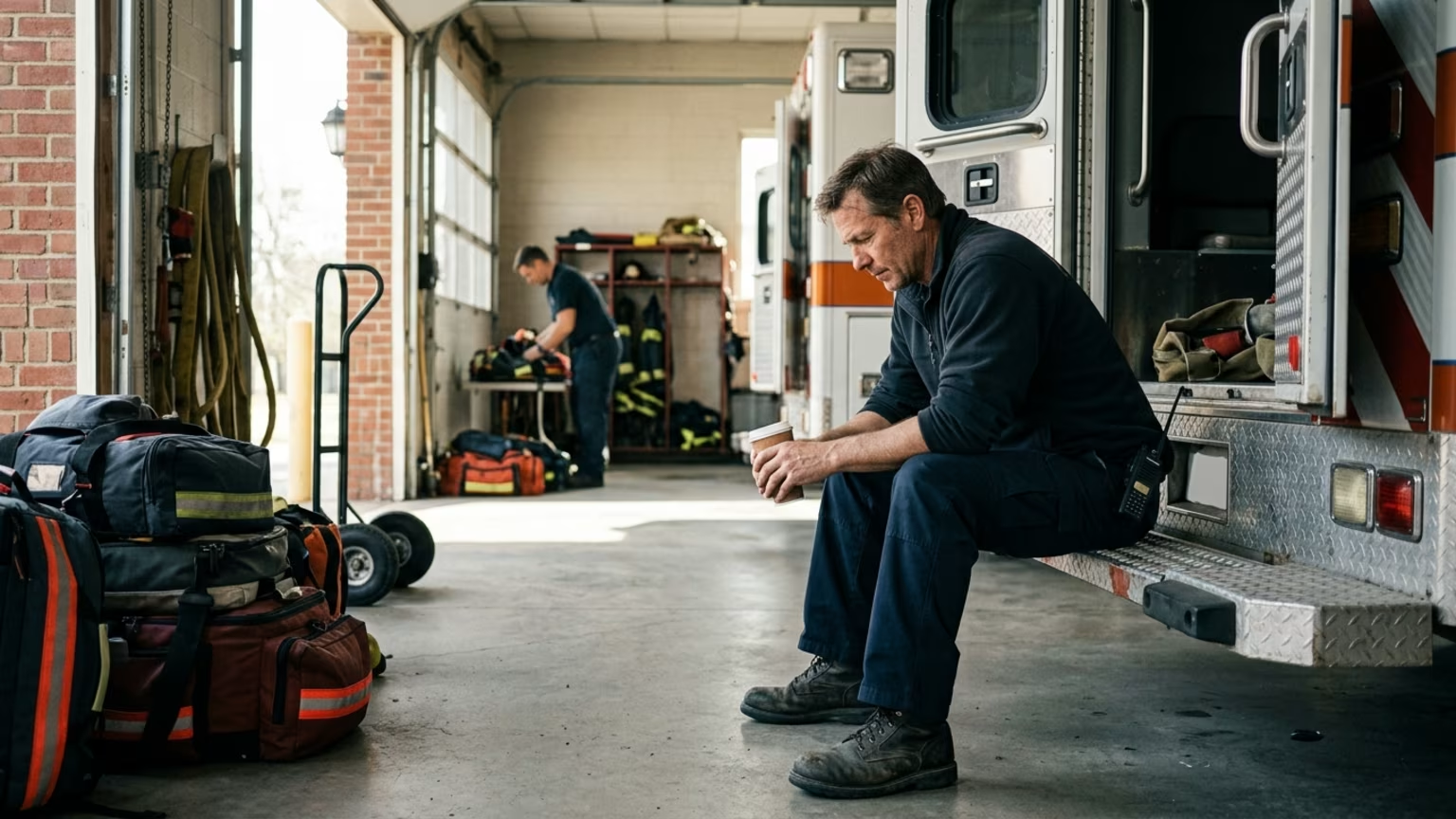

ASPR TRACIE recently updated its resource page on disaster responder compassion fatigue. Learn how this 2014 SAMHSA guidance helps personnel recognize burnout.





If you are in immediate danger, call 911. For crisis support, call 988 (press 1 for the Veterans Crisis Line) or text 838255.
On October 6, 2026, ASPR TRACIE updated its resource page for Tips for Disaster Responders: Understanding Compassion Fatigue. The update points emergency personnel toward established federal guidance on recognizing the signs of occupational stress.
The recent update to the ASPR TRACIE page brings renewed visibility to an established occupational health document. The site attributes the primary resource directly to the Substance Abuse and Mental Health Services Administration (SAMHSA). The underlying publication dates back to 2014. It explains the causes and signs of compassion fatigue that disaster-response workers may experience in the field.
The SAMHSA resource clearly separates different types of cumulative operational stress, covering the specific mechanisms behind both burnout and secondary trauma. This provides emergency personnel with a practical basis for recognizing how severe incidents affect them. It also serves as a reliable prompt for individuals seeking appropriate support options. The ASPR TRACIE listing notes that the resource is also available in Spanish.
It is necessary to interpret this web update accurately to avoid operational confusion. The October 2026 date applies strictly to the ASPR TRACIE web page rather than the document content itself. The available source does not establish that the SAMHSA publication was newly revised in 2026. Instead, it serves as a consistent baseline for identifying stress markers across emergency professions.
ASPR TRACIE also lists broader training modules on its preparedness platform. These resources are intended to help frontline healthcare and social-services personnel manage their work environments. They support volunteer and responder groups in building capacity by helping teams recognize and reduce stress before a disaster occurs. The modules are equally designed to maintain resilience during the complex recovery periods that follow.
Distinguishing between burnout and secondary trauma helps professionals target their recovery efforts effectively. Burnout often stems from systemic issues like mandatory overtime, while secondary trauma arises directly from exposure to the suffering of others during emergency calls. Treating these distinct problems as a single issue often leads to ineffective generic wellness advice. The SAMHSA document provides a structured way to separate these occupational hazards.
The continued visibility of this SAMHSA document validates current approaches to comprehensive responder health. Compassion fatigue acts as a measurable physiological load that affects duty readiness and physical recovery. First responders regularly manage irregular shifts and highly interrupted sleep patterns. Adding secondary trauma to this baseline creates a severe cumulative stress burden.
Emergency service professionals experience a highly distinct set of environmental pressures. Moving from a sedentary baseline directly into a high-stakes call spikes heart rates unpredictably. When these physical spikes combine with the emotional weight of a critical incident, the physiological toll multiplies. Separating these overlapping stressors allows practitioners to focus their recovery protocols on clear targets.
Recognizing this burden changes how departments should approach annual training and capability maintenance. Occupational stress management requires the same objective evaluation as cardiovascular fitness or technical skills. The signs of burnout outlined by SAMHSA can help teams identify severely compromised recovery patterns. Sleep architecture degrades when professionals process major incidents without adequate rest, and addressing compassion fatigue mechanisms helps mitigate these physical consequences.
The ASPR TRACIE training modules support a proactive and practical operational stance. They focus heavily on reducing stress before a critical incident happens, aligning with modern fatigue-management principles that prioritize consistent baseline physical maintenance. Relying solely on immediate post-incident debriefings ignores the daily wear of the profession. Establishing resilient habits early protects long-term health and occupational capability over decades.
This guidance reinforces that ignoring stress effects ultimately compromises operational safety and team cohesion. Professionals cannot simply outwork or ignore the physiological demands of secondary trauma. Connecting mental fatigue recovery to physical endurance creates a more sustainable career model when deep exhaustion increases injury risks. The highlighted federal resources provide a necessary framework for these critical discussions.
Managing compassion fatigue requires acknowledging the realities of shift-work nutrition and hormonal health. Prolonged stress exposure alters cortisol patterns and impacts how the body repairs muscle tissue. A rigid fitness plan that ignores severe psychological fatigue will likely drive a responder deeper into exhaustion. Adapting daily physical expectations to match current capability preserves both strength and long-term health.
Emergency personnel should use the SAMHSA document to evaluate their current baseline stress levels. Learning the documented signs of compassion fatigue is an essential career survival skill that allows individuals to spot early negative changes in their own functioning or mood. Catching these signs quickly provides a wider window for effective physiological and psychological recovery. Waiting until total exhaustion sets in makes returning to operational baseline much harder.
Departments must integrate the listed ASPR TRACIE training modules into their scheduled pre-disaster preparations. Preparing for the psychological load of a crisis remains a mandatory operational requirement, and these modules give frontline personnel practical tools to use immediately in the field. Training should occur during regular shift hours to guarantee full participation and avoid overtime strain. Leaders can review these specific resources to build realistic stress management protocols.
Providing accessible materials is another immediate adjustment for diverse emergency organizations. Agencies should actively distribute the Spanish version of the SAMHSA document to relevant team members, as clear communication about occupational stress requires materials in an individual's primary language. Bilingual responders often carry unique and heavy translation burdens during major community incidents. Removing language barriers from health resources supports the capability of the entire team.
Daily habits must shift to accommodate the undeniable reality of secondary trauma. Using quick grounding techniques between demanding calls can interrupt the rapid accumulation of stress. Professionals should also prioritize structured physical recovery after severely demanding shift blocks. Small tactical adjustments to shift preparation ultimately sustain long-term career longevity.
Organizations should avoid turning the SAMHSA guidelines into a generic checklist or administrative mandate. Meaningful adjustment requires leaders to allocate actual time for personnel to review the materials. Discussing burnout signs during shift briefings helps normalize the conversation around occupational wear and builds an environment where asking for recovery time is viewed professionally. This practical approach replaces performative toughness with sustainable operational readiness.
The field of responder performance continues to evolve as occupational data collection improves. The recent ASPR TRACIE update highlights the ongoing need for highly accessible stress resources. Organizations must track how pre-disaster training modules affect actual incident response metrics over time. Evaluating resilience during the recovery phase will provide valuable operational feedback for future protocols.
Future medical studies should deeply investigate the physical toll of prolonged compassion fatigue. Research needs to measure how secondary trauma impacts cardiovascular and endocrine health over long careers. Current federal guidance relies heavily on symptom recognition and broad psychological frameworks, meaning we need more precise biological markers linking severe operational stress to physical wear. Better physiological data will eventually drive much more targeted and effective recovery strategies.
As call volumes and unpredictable shifts increase, tracking accumulated exposure becomes utterly vital. Professionals should view the SAMHSA document as a foundational tool for broader health awareness. Staying updated on federal resources helps departments adapt to rapidly changing disaster landscapes. Future agency guidance will likely integrate physical demands and mental stressors much more closely.
The relationship between shift-work sleep disruption and compassion fatigue remains a critical area for analysis. Researchers must determine how rotating schedules amplify the signs of burnout and secondary trauma. The SAMHSA document remains a practical starting point for building a resilient operational framework until more specific protocols emerge. Following updates from ASPR TRACIE helps teams stay aligned with established disaster response standards.
Treating severe occupational stress as a temporary obstacle often leads professionals to rely on conflicting advice that prioritises short-term performance while ignoring long-term health. When burnout and secondary trauma threaten daily functioning, Rescuris translates credible evidence into practical guidance to help first responders balance physical capability with essential recovery.
Rescuris publishes evidence-aware guidance for firefighters, police officers, paramedics and other first responders on fitness, recovery, sleep, nutrition, stress resilience and long-term capability.






Read practical guidance on first responder fitness, recovery, sleep, nutrition and resilience for demanding work and a long, active career.
read the blog
