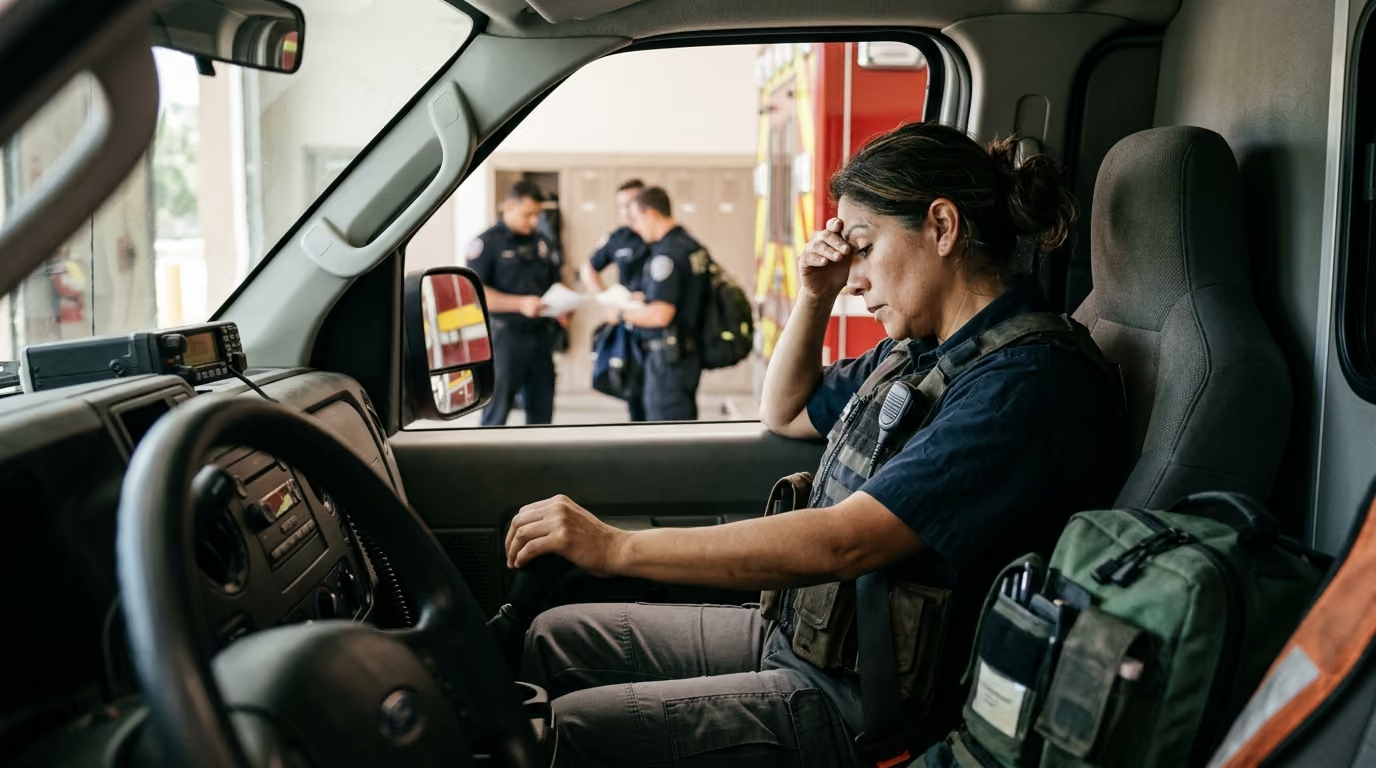

Four key symptom categories reveal how secondary traumatic stress and occupational burnout systematically undermine the operational readiness of first responders and medical staff.





If you or someone you know is in immediate danger, call 911. For urgent mental health support, call or text 988 (press 1 for the Veterans Crisis Line) or text 838255. If you have concerns about personal safety or access to lethal means at home, arrange a secure storage plan together with a clinician, peer supporter, or trusted family member.
Emergency-service personnel frequently search for why they feel emotionally hollow, irritable, or detached after years of dedicated service. Many wonder if they have simply run out of empathy or burned out of the profession entirely. Compassion fatigue is not a personal failure, a lack of grit, or a sign that you care too much. It is the measurable cost of sustained empathic engagement combined with repeated trauma exposure, high operational stakes, and insufficient physiological recovery.
Compassion fatigue develops when exposure to human suffering outpaces your nervous system's capacity to process, adapt, and reset. In frontline environments, this process rarely occurs in isolation. It intertwines with chronic sleep disruption, high call volumes, moral dilemmas, and organizational friction. By understanding the mechanisms behind empathic strain, emergency medical technicians, paramedics, firefighters, police officers, dispatchers, and emergency clinicians can implement sustainable operational boundaries, protect their capability on shift, and maintain long-term career longevity.
Compassion fatigue functions as an umbrella concept within occupational health rather than a standalone psychiatric disorder. In the widely referenced Professional Quality of Life model, helper well-being splits into positive and negative dimensions. The positive dimension is compassion satisfaction, which represents the purpose, pride, and fulfillment derived from helping others. The negative dimension combines two distinct occupational challenges: secondary traumatic stress and occupational burnout.
Secondary traumatic stress describes trauma-related reactions that stem from indirect exposure to another person's severe trauma. When an emergency medical technician treats a badly injured pediatric patient or a police officer processes an abusive crime scene, their nervous system registers the threat and horror. Over time, indirect exposure can generate intrusive memories, distressing dreams, heightened startle reflexes, hyperarousal, and emotional avoidance. These symptoms mirror post-traumatic stress, but they arise through the caregiving and response role rather than direct personal physical danger.
Occupational burnout stems primarily from chronic work conditions and institutional friction rather than exposure to traumatic events alone. Burnout manifests as progressive emotional exhaustion, depersonalization or cynicism toward patients and colleagues, and a diminished sense of personal accomplishment. In emergency services, burnout accelerates when relentless run volumes meet mandatory overtime, unsupportive leadership, poor equipment, and administrative burdens. A responder can experience severe burnout without significant trauma, or carry heavy secondary traumatic stress in an otherwise supportive agency.
Vicarious trauma represents a related but deeper cognitive shift. While secondary traumatic stress focuses on acute symptoms like hypervigilance and intrusive thoughts, vicarious trauma alters how a person views the world. Repeated exposure to violence, exploitation, and sudden loss gradually erodes fundamental assumptions about personal safety, trust, fairness, and human nature. A paramedic or investigator with vicarious trauma may begin viewing every civilian interaction with suspicion, assuming danger is constant and unavoidable.
Moral injury introduces another distinct pathway of occupational distress. It occurs when a responder witnesses, perpetrates, fails to prevent, or gets forced to participate in acts that transgress deeply held moral beliefs. In emergency response, moral injury frequently surfaces during resource shortages, triage dilemmas, delayed responses due to system failure, or orders that compromise patient welfare. Unlike standard stress reactions, moral injury centers on severe guilt, shame, betrayal by leadership, and existential disorientation.
Compassion satisfaction serves as a protective buffer across a responder's career. It is not merely the absence of distress. A first responder can experience high compassion satisfaction alongside real physical fatigue and intermittent grief. Protecting this sense of purpose requires clear role definitions, supportive team dynamics, and deliberate recovery protocols that prevent secondary traumatic stress and burnout from overwhelming operational readiness.
The scientific literature on compassion fatigue across emergency services presents a combination of robust observational data, mixed intervention outcomes, and clear measurement challenges. Much of the early foundational research focused primarily on nursing and hospital personnel. Over the past two decades, researchers have expanded this scope to examine emergency medical services, fire suppression, law enforcement, and emergency telecommunications.
Observational evidence confirms that secondary trauma and exhaustion are widespread across frontline disciplines. A survey of 686 emergency medical services personnel in the STRESS Project found that 48% met the study criteria for compassion fatigue. Studies examining disaster behavioral health personnel and trauma responders have documented rates reaching up to 72% for moderate to high compassion fatigue risk. However, these figures represent self-reported screening tools like the Professional Quality of Life scale rather than formal clinical diagnoses. High screening scores indicate operational distress and vulnerability, but they must not be conflated with psychiatric impairment.
Prevalence estimates for clinical disorders among frontline personnel show notable variation across published meta-analyses. Meta-analytic reviews of ambulance and rescue personnel estimate post-traumatic stress disorder prevalence between 9.76% and 12.1%, with some occupational cohorts reporting estimates up to 23.2%. General psychological distress in emergency workers frequently clusters around 27%, while depression and anxiety rates regularly track near 15%. This wide statistical variance stems from differences in study designs, operational contexts, volunteer versus career status, and whether data was collected after major disasters or during routine shift work.
Evidence regarding individual-level interventions remains mixed but encouraging. Systematic reviews demonstrate that mindfulness practices, stress management training, and cognitive-behavioral skills produce moderate reductions in compassion fatigue and improvements in compassion satisfaction. A meta-analysis of healthcare professionals identified a moderate negative correlation between mindfulness and compassion fatigue, alongside a positive correlation with compassion satisfaction. Yet, researchers repeatedly caution that individual resilience training cannot compensate for unsafe staffing, extreme shift lengths, or toxic organizational environments.
For established post-traumatic stress and trauma-related conditions, the clinical evidence is strong. Guidance from the National Institute for Health and Care Excellence highlights trauma-focused cognitive behavioral therapy and eye movement desensitization and reprocessing as established, effective interventions. Systematic reviews show that structured psychological therapies significantly reduce trauma, depression, and anxiety symptoms in emergency responders. Clinical trials reinforce that early, evidence-based psychological care restores operational capability far more effectively than informal debriefings or unguided coping.
Emergency service work uniquely taxes the autonomic nervous system through rapid transitions from low physical activity to maximum sympathetic activation. A tone drops, alarms sound, and within seconds, heart rate spikes, blood pressure climbs, and peripheral blood vessels constrict. Responders spend entire shifts navigating repeated surges of adrenaline, noradrenaline, and cortisol. When calls back up, the body remains locked in a high-arousal state without sufficient time to downshift into parasympathetic recovery.
This chronic physiological activation directly compromises emotional regulation. The prefrontal cortex handles perspective-taking, complex decision-making, and emotional balance, while the amygdala drives rapid threat detection. Under continuous sympathetic dominance, sleep debt, and operational stress, prefrontal control weakens. Responders become more reactive, irritable, and prone to emotional numbing as the brain attempts to protect itself from overwhelming input. What appears outwardly as coldness or lack of empathy is often an exhausted nervous system struggling to regulate basic physiological functions.
Circadian disruption severely amplifies this physiological vulnerability. Emergency personnel frequently work rotating 12-hour or 24-hour shifts that disrupt natural hormone cycles and fragment restorative slow-wave and REM sleep. Managing circadian strain and responder sleep debt is critical because sleep deprivation directly impairs emotional processing and memory consolidation. Without adequate REM sleep, the brain struggles to strip away the intense emotional charge from distressing calls, leaving the responder stuck in a state of prolonged arousal.
Physical working environments further strain physiological resilience. Structural firefighting involves extreme thermal loads, toxic atmospheres, and heavy protective equipment that drive core temperatures upward and induce severe dehydration. Paramedics and police officers carry heavy duty gear while managing awkward lifting, physical violence, and prolonged sitting in vehicles. This accumulated physical wear accelerates systemic inflammation. When physical exhaustion combines with emotional strain, the body's adaptive reserves deplete rapidly, leaving the responder vulnerable to both physical injury and psychological collapse.
Repeated exposure to unpredictable emergencies also trains the nervous system to maintain permanent hypervigilance. Responders learn that relaxing on shift can lead to missed radio traffic or compromised situational awareness. Unfortunately, this protective survival mechanism often fails to turn off when the shift ends. Responders return home with elevated muscle tone, scanning behavior, and light, fragmented sleep. Over months and years, this inability to exit tactical alertness erodes personal relationships, accelerates physical wear, and depletes the capacity for genuine empathy.
Compassion fatigue and empathic distress do not look identical across all emergency disciplines. Distinct operational environments create unique psychological pressures, exposure patterns, and coping behaviors.
Paramedics and emergency medical technicians encounter continuous, intimate exposure to acute medical suffering, horrific trauma, and social neglect. They enter chaotic homes, manage distraught families, and perform invasive interventions in cramped, moving ambulances. Empathic strain in EMS often presents as emotional detachment from routine patients, intense frustration with system overuse, and intrusive memories of pediatric resuscitations or fatal accidents. Paramedics may find themselves dreading patient contact, delivering clinical care on autopilot while emotionally disconnecting from the human being on the stretcher.
Firefighters operate within high-risk physical environments where direct life-saving actions intertwine with property destruction, severe burns, and fatal structural collapses. Empathic strain in the fire service often connects to feelings of helplessness when victims cannot be reached or extracted in time. Firefighters frequently struggle with moral distress when preventable tragedies occur due to delayed alarms or hoarding conditions. The strong communal culture of the firehouse can provide exceptional peer support, but it can also foster an expectation of stoicism that leads members to hide persistent sleep disturbance, irritability, and intrusive images.
Police officers face frequent interpersonal conflict, violent crime scenes, child exploitation investigations, and domestic disputes. Empathic strain in law enforcement often combines with high threat sensitivity and deep cynicism. Repeated exposure to deception, violence, and social breakdown can create a cognitive schema where the public is viewed entirely through a lens of potential hostility. Officers experiencing secondary trauma may display heightened irritability, emotional withdrawal from their own families, authoritarian rigidity, and excessive dark humor that crosses into callousness.
Dispatchers and emergency call-takers experience high-stakes trauma through an entirely auditory channel. They listen to frantic callers during fatal shootings, cardiac arrests, domestic assaults, and structure fires, but they never see the physical outcome. This lack of visual closure, combined with continuous multitasking and zero control over field events, creates a specific form of empathic strain. Dispatchers frequently experience intrusive audio memories, hypervigilance, profound helplessness, and physical exhaustion, yet their distress is often dismissed because they were not physically on scene.
Emergency physicians, trauma nurses, and technicians manage unrelenting patient boarding, severe staffing shortages, workplace violence, and sudden resuscitations for hours without breaks. Empathic strain in the emergency department manifests as rapid depersonalization, deep clinical cynicism, and somatic fatigue. Nurses and physicians may notice that they no longer feel sadness when delivering difficult news, or they feel profound dread before stepping into the clinical area. When high cognitive demand meets moral distress over overcrowded hallways and compromised care standards, clinical staff experience severe erosion of compassion satisfaction.
Recognizing the progression of compassion fatigue requires monitoring physical, emotional, cognitive, and behavioral indicators. These symptoms develop along a spectrum from early transient stress reactions to entrenched occupational exhaustion.
Maintaining career longevity in emergency services requires replacing unmanaged emotional absorption with sustainable empathic presence. Empathy is not an all-or-nothing emotional state. It exists across distinct psychological processes that carry very different physiological costs.
Perspective-taking involves cognitively understanding a patient's or victim's internal state without absorbing their emotional distress. Compassionate concern involves feeling care and motivation to alleviate someone's suffering while maintaining a clear sense of your own physical and psychological boundaries. In contrast, empathic distress occurs when a responder involuntarily mirrors another person's terror, panic, or despair. When empathic distress dominates, clinical performance degrades, decision-making narrows, and the nervous system enters an acute threat state.
Sustainable empathy requires developing clear tactical boundaries during and after calls. Responders must recognize that providing exceptional, humane care does not require internalizing the patient's tragedy. You can hold a family member's hand, deliver devastating news with deep respect, and perform precise resuscitations without adopting the trauma as your own. Compassion is an active professional action; it is not an emotional sponge.
Establishing operational boundaries includes clarifying what sits within your professional control and what belongs to external reality. A responder is responsible for rapid response, professional conduct, tactical precision, and sound clinical care. A responder is not responsible for the chaotic circumstances that existed before arrival, the severity of the initial injury, or systemic healthcare failures. Confusing your operational duties with total responsibility for the final outcome is a primary driver of moral distress and emotional burnout.
Transition rituals play a critical role in maintaining these boundaries between calls and shifts. Simple actions signal to the nervous system that an operational event is over. Removing duty gear, washing hands with cool water, completing factual documentation, and practicing brief breathing techniques allow the autonomic nervous system to downshift. When moving between intense incidents, utilizing active strategies to clear residual tension between calls helps prevent sympathetic arousal from compounding across a twelve-hour shift.
Reflective boundaries also require managing post-incident rumination. When a difficult call ends, constructive reflection asks what tactical or clinical lessons can be extracted to improve future performance. Unproductive rumination, by contrast, replays the emotional horror in an endless loop driven by guilt and hindsight bias. If a responder catches themselves running cyclical "what if" scenarios, they must deliberately shift attention to physical grounding, factual debriefing, or structured peer discussion.
Preventing and mitigating compassion fatigue cannot rest entirely on the individual responder. Because operational distress is deeply tied to shift structure, workload, and workplace culture, agencies must implement structural safeguards that protect their workforce.
Leadership must recognize that operational capability directly depends on systematic recovery. Agencies must prioritize safe staffing thresholds that minimize forced overtime and provide predictable schedule patterns. Where operationally feasible, implementing rotation policies that move personnel out of continuous high-intensity response roles or specialized trauma units helps prevent cumulative secondary stress.
Protected rest intervals and operational nutrition must be built into shift expectations. Requiring crews to run twelve to twenty-four hours of continuous calls without scheduled meal breaks or recovery windows degrades cognitive performance and emotional bandwidth. Furthermore, organizations should establish non-punitive fatigue reporting policies. When individual willpower is treated as an infinite resource, cumulative duty fatigue across emergency services inevitably drives up safety errors, vehicle accidents, and psychological distress.
Peer support programs serve as the frontline of early intervention, provided they operate under clear ethical boundaries. Peer supporters should be vetted, rigorously trained in psychological first aid, and taught to recognize the boundaries of their role. A peer supporter is not a therapist; their purpose is to provide confidential, non-judgmental operational listening, normalize stress reactions, and facilitate warm referrals to licensed clinical care when needed.
Agencies must establish absolute confidentiality protections for peer support interactions, excluding only imminent threats to life. If responders fear that discussing emotional exhaustion or secondary trauma will trigger administrative scrutiny, fitness-for-duty investigations, or career penalties, they will hide symptoms until catastrophic failure occurs. Leaders must actively model open engagement with support resources, dismantling the outdated cultural belief that stoic silence equals professional strength.
Between shifts, responders must cultivate deliberate decompression habits that separate operational identity from personal life. A standardized post-shift decompression routine helps the brain transition out of threat monitoring. This includes changing out of the uniform before driving home, listening to non-operational audio during the commute, and engaging in light aerobic movement or time in nature to clear systemic stress hormones.
Protecting the sleep environment is the single most vital physiological intervention for the off-duty responder. This requires blackout curtains, white noise machines, cool bedroom temperatures, and absolute boundary setting regarding non-urgent station phone calls or group messaging. Off-duty recovery must also include non-responder social connections and restorative physical activities that do not center on competition, aggression, or trauma themes.
Nutrition and hydration off shift directly influence autonomic balance and emotional stability. Relying heavily on energy drinks, high-sugar snacks, and fast food during shifts spikes systemic inflammation and destabilizes blood glucose, worsening mood swings and anxiety. Off duty, focusing on whole foods, lean proteins, adequate hydration, and minimal reliance on alcohol helps repair tissue, restore neurotransmitter reserves, and stabilize the nervous system for future operational demands.
Compassion fatigue and secondary traumatic stress introduce genuine operational risks that must be managed with practical safety guardrails. When emotional exhaustion deepens into clinical impairment, it affects cognitive processing speed, situational awareness, risk assessment, and fine motor skills.
Responders experiencing severe secondary traumatic stress or acute burnout demonstrate higher rates of medication errors, driving accidents, communication breakdowns, and tactical misjudgments. When an individual is locked in chronic hypervigilance or total emotional detachment, they misread interpersonal cues. An emotionally exhausted police officer may interpret benign civilian behavior as an immediate physical threat, while a detached paramedic may overlook subtle signs of clinical deterioration in a patient.
Safety guardrails require that responders and supervisors recognize when it is unsafe to operate emergency vehicles, make high-consequence tactical choices, or handle lethal equipment. If an individual is severely sleep-deprived, experiencing dissociative episodes, struggling with uncontrolled panic, or relying on substances to manage duty stress, they represent an active safety hazard to themselves, their crew, and the public. Temporary operational step-down, modified duty assignments, or immediate medical leave are necessary risk-mitigation measures, not disciplinary punishments.
Self-assessment tools like the Professional Quality of Life scale offer valuable personal reflection on burnout, secondary stress, and compassion satisfaction. However, self-assessments have strict limits. They provide a snapshot of subjective experience, not a definitive diagnosis or a formal fitness-for-duty determination. Responders should use these tools to track their personal trends over time and recognize when professional consultation is warranted, rather than attempting to self-diagnose or self-treat complex psychological injuries.
Supervisors must balance operational accountability with humane leadership. Identifying a struggling responder requires observing changes in baseline behavior, such as sudden cynicism from a previously engaged employee, uncharacteristic errors, social withdrawal, or increased conflict with peers. When initiating a check-in, supervisors should focus on objective operational observations rather than making armchair psychological diagnoses. Providing a clear, supportive pathway to confidential support protects the member while maintaining the operational integrity of the unit.
Navigating mental healthcare can be daunting for emergency service personnel accustomed to solving problems independently. Understanding the clinical pathway demystifies the process and helps responders access appropriate, evidence-based care before symptoms become debilitating.
The support continuum operates across multiple distinct tiers:
This tier encompasses peer support interactions, family support, physical training, and operational decompression routines. These practices help manage transient, acute stress reactions immediately following difficult incidents. They build everyday resilience and normalize the normal physiological and emotional responses to abnormal events.
When stress symptoms persist past several weeks or begin disrupting sleep, relationships, or shift performance, responders should access Employee Assistance Programs or specialized occupational health clinicians. It is essential to utilize clinicians who possess specific cultural competence regarding first responder work. Clinicians who understand emergency services do not waste clinical time being shocked by operational details, dark humor, or graphic call descriptions.
For established secondary traumatic stress, severe moral injury, depression, or post-traumatic stress, specialized outpatient psychotherapy is the standard of care. Evidence-based modalities focus on reprocessing traumatic memories and restructuring negative cognitive beliefs:
If psychological distress is accompanied by severe physiological dysregulation, intractable insomnia, profound clinical depression, or substance dependency, a comprehensive medical evaluation by a licensed physician or psychiatrist is warranted. Short-term, carefully managed pharmacotherapy can help stabilize severe sleep disruption and autonomic hyperarousal, creating the neurological stability necessary to engage effectively in trauma therapy. When functional impairment is severe, intensive outpatient programs or specialized residential responder retreats provide immersive, structured recovery away from operational demands.
Seeking clinical care is a proactive tactical decision to preserve your capability, protect your family, and extend your career longevity across emergency services. Just as a responder immediately seeks physical therapy or orthopedic care for a torn ligament sustained on duty, psychological injuries require targeted, professional intervention to heal correctly.
Examining how different intervention models function helps clarify the practical application of these principles across emergency services. The following illustrative scenarios describe how structured programs are designed to address occupational strain.
An urban emergency medical services agency established a structured peer support program linked directly to culturally competent trauma therapists. The model was designed to eliminate the common barrier where responders avoid generic employee assistance programs out of fear that outside clinicians will not understand field realities.
In this framework, peer supporters receive structured training in psychological first aid, active listening, and risk screening. When a peer supporter identifies a colleague struggling with cumulative pediatric calls, persistent insomnia, or severe cynicism, they conduct an informal check-in. If the distress exceeds standard peer support scope, the peer facilitates a warm handoff directly to an vetted clinical psychologist specializing in emergency responders. This design aims to shorten the timeframe between early symptom emergence and evidence-based psychotherapy, normalizing mental healthcare within the agency culture.
A metropolitan fire department implemented a mandatory operational rest and rotation protocol following high-consequence critical incidents, such as line-of-duty deaths, severe pediatric fires, or mass-casualty events. The model was developed to replace ad-hoc, informal debriefings with structured physiological recovery.
Under this protocol, crews involved in designated critical incidents are systematically taken out of service for a minimum operational reset period. Instead of forced, immediate psychological disclosure, the protocol provides immediate hydration, food, private space for decompression, and an operational defusing led by a trained peer and mental health professional focused solely on practical needs and factual clarification. The unit is given protected rest time before returning to frontline call response, reducing the risk of compounded sympathetic arousal and operational error during subsequent dispatches.
A regional 911 emergency communications center established an environmental and operational support initiative aimed at mitigating auditory trauma and continuous hyperarousal among dispatchers. The model addressed the unique challenge of dispatchers handling continuous violent calls without visual resolution or physical movement.
The center designed dedicated quiet decompression rooms equipped with low ambient lighting, acoustic dampening, and comfortable seating completely separated from the operational floor. Following severe distress calls, dispatchers can utilize brief, structured auditory resets combined with tactical breathing techniques to downshift their nervous system. Additionally, the agency integrated regular cross-training check-ins with field responders, allowing telecommunicators to gain operational closure on major incidents and reinforcing their vital role in the response system.
Applying these principles requires small, consistent actions integrated into your routine. Use this checklist to establish operational boundaries, support your peers, and protect your nervous system this week.
Sustaining a long, healthy career in emergency services does not require hardening your heart or sacrificing your well-being. By recognizing compassion fatigue as a physiological and operational reality, you can implement protective boundaries, demand better recovery conditions, and preserve your capability to serve your community for decades to come.
Stay connected for research-led guidance on duty fitness, shift-work sleep, injury recovery, stress, nutrition and career longevity. Practical ideas for first responders who want to stay capable on the job, recover well and protect their health for the long run.



Read practical guidance on first responder fitness, recovery, sleep, nutrition and resilience for demanding work and a long, active career.
read the blog



