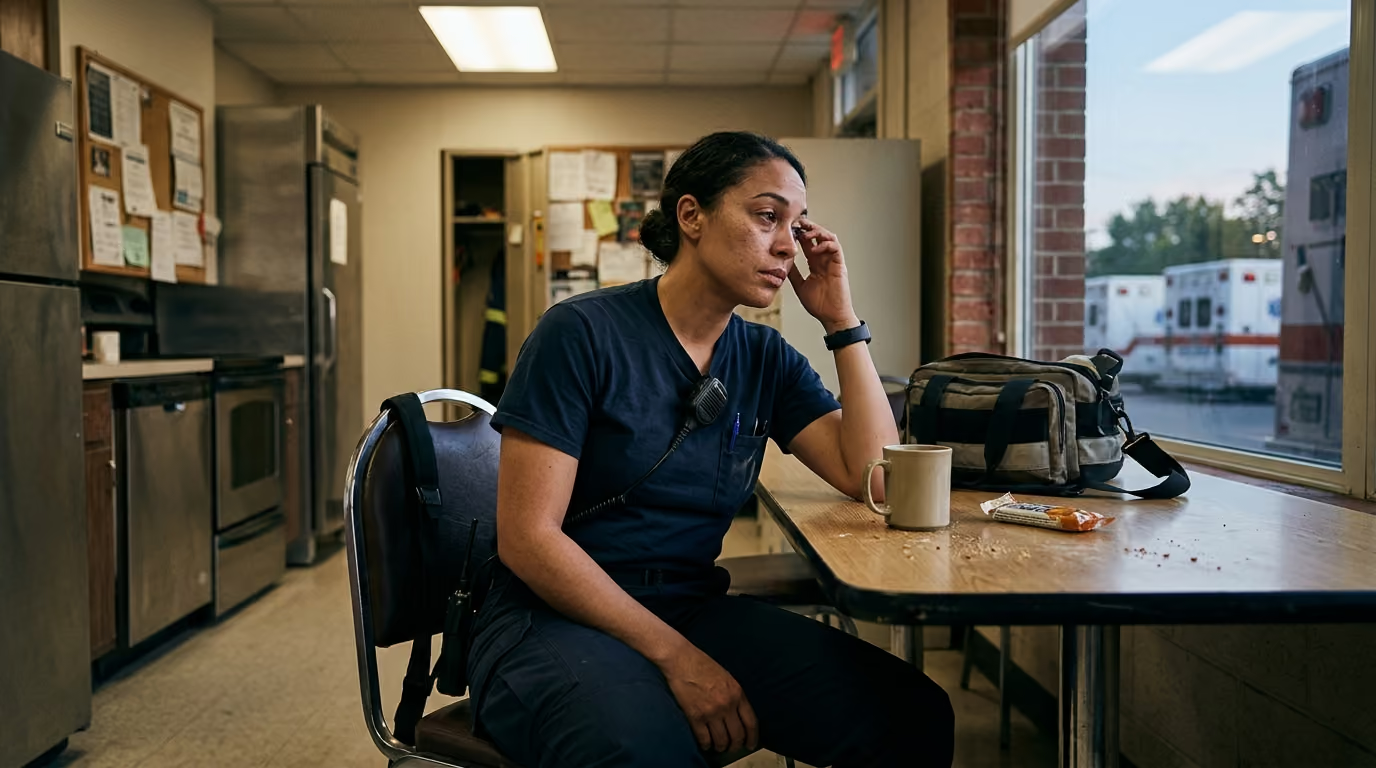

Emergency service work creates severe cognitive and physical fatigue that demands practical operational countermeasures to maintain situational awareness and crew safety on shift.





Many first responders search online for ways to push past mental fatigue when coffee and willpower stop working. The clear answer is that fatigue is not a personal failure of resilience or a single biological condition. It is a physiological state of reduced capacity that requires specific countermeasures matched to its root cause. Treating cognitive overload, severe sleepiness, acute stress, and emotional exhaustion with the same brute-force approach leads to errors, near-misses, and long-term burnout.
This guide provides a research-backed framework to help firefighters, paramedics, EMTs, and law enforcement officers identify what type of exhaustion they are facing. It outlines clear signs of operational decline and establishes practical recovery protocols for demanding shifts.
The International Civil Aviation Organization defines fatigue as a physiological state of reduced mental or physical performance capability. This state results from sleep loss, extended wakefulness, circadian phase, or workload. In emergency services, fatigue is rarely a single isolated issue. Reduced capability comes from distinct physiological and psychological pathways. Applying the wrong countermeasure wastes time and leaves operational risks unaddressed.
Cognitive fatigue is a decline in mental efficiency caused by sustained mental effort, prolonged vigilance, information processing, or inadequate recovery. It often appears when a responder has been processing high volumes of complex data under time pressure.
A cognitively fatigued responder may look physically capable and fully awake. Beneath the surface, their processing speed, working memory, and situational awareness are degraded. Typical operational signs include:
This state is dangerous because physical energy can mask severe cognitive deficits. Research shows that sleep loss and mental strain degrade reaction time, calculation accuracy, and working memory long before gross motor skills break down.
The primary countermeasure for cognitive fatigue is reducing task complexity. Crews should use checklists, closed-loop communication, and cross-checks. When possible, safety-critical decision-making should be reassigned to a fresher partner.
Physical fatigue is the reduction of force production, balance, motor coordination, and exertion tolerance following heavy labor, thermal stress, or sustained movement. Emergency responders encounter this through structural firefighting, extrication, patient carries up narrow stairs, or long foot patrols.
The systematic research on public safety personnel associates physical fatigue with impaired balance, altered gait mechanics, and slower force generation. Typical signs include:
When physical fatigue combines with heat stress and heavy protective equipment, the risk of slips, trips, and falls increases dramatically.
Countermeasures for physical fatigue require physical rehabilitation. Responders need active cooling, targeted rehydration, calorie replenishment, and protected rest. Physical training programs help build capacity over time, but adding intense workouts on top of acute physical exhaustion deepens the recovery deficit. Understanding how willpower fails against duty fatigue helps crews protect physical capacity across long shift blocks.
Sleepiness is a distinct physiological drive to sleep caused by prolonged wakefulness and circadian misalignment. It is measured with clinical tools such as the Epworth Sleepiness Scale and the Karolinska Sleepiness Scale. Sleepiness differs from general tiredness because it specifically involves lapses in basic arousal and vigilance.
Signs of severe sleepiness include:
The primary operational danger of sleepiness is the abrupt loss of consciousness or vigilance. A responder may appear functional during an adrenaline surge on scene, only to experience severe microsleeps during the low-stimulation drive back to the station.
Immediate countermeasures require removing the individual from driving or operating safety-critical machinery. Short naps of 15 to 30 minutes, strategic light exposure, and controlled caffeine use can temporarily restore basic arousal until full sleep is possible.
Emotional exhaustion represents a prolonged depletion of psychological resources. It stems from repeated exposure to human suffering, organizational conflict, severe responsibility, and chronic stress without adequate recovery.
Emotional exhaustion does not automatically cause physical slowness or microsleeps. It manifests primarily in interpersonal behavior, empathy, and professional engagement:
Emotional exhaustion can occur even when an individual gets adequate physical sleep. Chronic sleep restriction accelerates emotional depletion, creating a difficult cycle where poor sleep worsens mood and emotional distress disrupts sleep.
Countermeasures require structural support. Responders need meaningful time away from operational exposures, supportive peer contact, decompression protocols, and professional psychological support. Brief motivational pep talks do not resolve emotional exhaustion.
Acute stress is the immediate neuroendocrine response to an active threat, high-stakes incident, or sudden operational demand. Unlike fatigue, acute stress can occur in a fully rested individual. It frequently produces high physical arousal and energy.
High arousal can impair operational performance by narrowing attention and degrading working memory. Signs of acute stress include:
Acute stress requires immediate stabilization. Responders benefit from clear commands, simplified task parameters, grounding techniques, and controlled breathing. Implementing structured between-call stress resets helps clear residual tension before the next emergency.
Fatigue must also be evaluated by how it accumulates over time. Operational research divides fatigue into three temporal categories that dictate appropriate recovery strategies.
Acute fatigue develops rapidly during or immediately after a single shift, prolonged incident, or short period of sleep deprivation. A paramedic managing back-to-back medical runs across a 12-hour night shift experiences acute fatigue.
The physiological systems are acutely depleted, but baseline health remains intact. Acute fatigue responds well to straightforward recovery measures, such as a substantial meal, a targeted nap, or one to two nights of unrestricted sleep.
Chronic fatigue persists across weeks or months. It is driven by ongoing schedule disruption, continuous overtime, untreated sleep disorders, chronic organizational stress, or unresolved trauma.
A responder with chronic fatigue does not recover after a standard 24-hour break. They report waking up unrefreshed, persistent brain fog, low motivation, and continuous physical lethargy. Resolving chronic fatigue requires comprehensive changes to sleep hygiene, work schedules, medical screening, and mental health support.
Combined fatigue occurs when an acute operational demand is placed on top of preexisting chronic fatigue. This is common in emergency services. A firefighter with chronic sleep debt from mandatory overtime who gets deployed to an all-night structure fire experiences combined fatigue.
Combined fatigue creates extreme operational vulnerability. The responder lacks the cognitive and physical reserves to compensate for the acute stress. Judgment degrades quickly, emotional control fails, and the risk of traumatic injury increases substantially.
Field data from wildland deployments demonstrates this cumulative effect. Responders show rising levels of sleepiness and slower reaction times as a deployment progresses. Studies indicate that two days of rest after a 14-day deployment is often insufficient to restore cognitive and physiological baselines.
A comprehensive 2023 systematic review analyzed 43 studies covering 6,373 emergency responders to examine how occupational fatigue influences health and safety. The evidence paints a consistent picture of operational risk across emergency medical services and fire suppression.
The data reveals substantial sleep disruption across public safety roles. In surveyed EMS populations, 55.0% of providers reported working while fatigued. Additionally, 59.5% reported poor sleep quality, 36.9% showed mild daytime sleepiness, and 39.2% experienced excessive daytime sleepiness.
Similar patterns exist in fire suppression and law enforcement. Research indicates that 59% of surveyed firefighters report acute sleep deprivation, and 23% meet criteria for insomnia. Poor sleep quality affects roughly 64% of EMS personnel and 51% of police officers in published studies.
The relationship between fatigue and operational error is statistically significant:
The review highlighted specific evidence limitations. The synthesized evidence base was graded as NHMRC Level III-2, consisting primarily of observational, cross-sectional, and cohort studies. The wide variety of fatigue definitions, cognitive tests, and self-report surveys prevented researchers from completing a formal meta-analysis.
No dedicated police studies met the strict inclusion criteria of that specific review. Findings from fire and EMS cannot be applied directly to law enforcement without qualification.
The evidence confirms strong associations between fatigue and reduced safety, but establishing exact causal mechanisms requires continued study. More details on occupational health standards are available through the CDC report on shift-work recovery baselines.
First responder fatigue is heavily driven by system-level factors, occupational environments, and biological constraints.
Approximately 50% of protective service personnel work nonstandard shifts. Firefighters often work 24-hour or 48-hour rotations. EMS crews frequently work 12-hour to 24-hour shifts, and wildland firefighters work 14-day assignments with extended daily operating periods.
Night shifts force personnel to perform complex tasks during their circadian low point, typically between 02:00 and 06:00. During this window, body temperature drops, alertness declines, and cognitive processing slows.
Sleeping during the day is biologically inefficient. Daytime sleep is shorter, lighter, and more fragmented due to circadian wake signals, ambient noise, and daylight. Analyzing circadian strain across shift lengths demonstrates why extended shifts consistently generate compounding sleep debt.
Sleep at the station is fundamentally different from sleep at home. The anticipation of an alarm maintains high sympathetic tone, preventing deep, restorative sleep stages.
When an alarm sounds during deep non-REM sleep, the sudden transition triggers severe sleep inertia. Sleep inertia is a physiological state of grogginess, spatial disorientation, and impaired cognition that occurs immediately after waking.
Fireground studies show that even brief nighttime awakenings degrade visual-motor coordination, processing speed, and reaction time. Navigating an apparatus or calculating medication dosages within five minutes of waking from deep sleep carries significant operational risk.
Sleep quality is heavily influenced by the sleeping environment. During large-scale mobilizations, wildland fires, or hurricane deployments, responders often sleep in vehicles, base-camp tents, or temporary staging areas.
Studies show that wildland firefighters obtain significantly less sleep when resting in tents or crew transport vehicles compared to motels or home. Heat, noise, poor sleeping surfaces, and operational interruptions drastically limit recovery quality.
Occupational fatigue is often worsened by underlying medical conditions. First responders experience high rates of obstructive sleep apnea, chronic insomnia, and shift work disorder.
Upper airway resistance and sleep apnea are common due to physical neck circumference, shift-work weight gain, and structural airway factors. When sleep apnea goes untreated, a responder can spend eight hours in bed and receive almost no restorative slow-wave sleep.
Fatigue degrades operational performance in predictable patterns across distinct neurological and physical domains. Understanding what fails first allows crews to put practical safeguards in place.
The most immediate casualty of sleep loss is sustained attention. The Psychomotor Vigilance Task measures how quickly an individual responds to visual stimuli. Fatigued responders experience delayed response times and complete attention lapses.
In the field, degraded vigilance causes:
Working memory is the mental workspace used to hold and manipulate information. It is vulnerable to acute sleep restriction and sustained cognitive strain.
Firefighters working through consecutive night shifts show marked declines in verbal memory, visual memory, and complex attention. In operational environments, working memory failure results in calculation errors, misremembered patient histories, and forgotten radio assignments. A responder may read a pediatric drug chart correctly but make a calculation error while converting units under fatigue.
Situational awareness requires perceiving environmental cues, comprehending their meaning, and projecting future status. Fatigued commanders and crew leaders frequently develop cognitive fixation. They lock onto an initial operational hypothesis and ignore disconfirming evidence.
A fatigued officer may continue an offensive fire attack despite deteriorating structural conditions because revising the tactical plan requires cognitive energy. Fatigued personnel default to familiar, low-effort cognitive pathways. This reduces their ability to improvise when an unexpected emergency arises.
An important nuance in first responder research is the split between gross physical capacity and motor coordination. Controlled fireground studies show that short, highly familiar physical tasks, such as hose drags or forcible entry, show little degradation after moderate sleep loss.
However, fine motor control, dynamic balance, and postural stability deteriorate significantly. Fatigued personnel can perform a heavy lift using brute strength, but their compromised balance and lifting mechanics make them vulnerable to acute back injuries or slip-and-fall events.
The ability to complete a brief physical task does not prove that an individual possesses intact cognitive judgment or safe movement mechanics.
Managing fatigue requires moving past subjective self-assessment. Fatigued individuals are notoriously inaccurate at evaluating their own operational impairment. A structured, three-layer assessment framework helps crews monitor operational readiness objectively.
During active duty, supervisors and partners should monitor for immediate safety risks. The National Institute for Occupational Safety and Health (NIOSH) recommends watching for clear operational red flags:
If major signs are present, the individual should be removed from safety-critical duties immediately and assigned to a low-risk role or given protected sleep.
Once an operational issue is recognized, responders should identify the underlying fatigue type to choose the correct countermeasure.
For ongoing fatigue management across a shift cycle or deployment, organizations and individuals can use validated tracking scales:
Effective fatigue recovery requires proactive operational habits rather than passive rest. Implementing targeted protocols helps emergency personnel protect their sleep architecture and maintain alertness.
Sleep must be treated as a critical safety control. Responders need to optimize their sleep environment at the station and at home:
Naps are a proven method for maintaining cognitive performance during extended shifts:
A short nap provides a rapid reduction in acute sleepiness without allowing the brain to enter deep slow-wave sleep. This prevents severe sleep inertia upon waking. NIOSH research indicates that brief naps restore vigilance and psychomotor speed during long work windows. Responders should allow 5 to 10 minutes after waking for lingering grogginess to clear before engaging in safety-critical tasks.
A longer nap taken in the late afternoon before reporting for a night shift allows the brain to complete one full sleep cycle, encompassing light, deep, and REM sleep. This pre-shift sleep helps anchor circadian stability and prevents severe vigilance drops during the early morning hours.
Breaks should be scheduled into operations rather than taken only when exhaustion sets in. NIOSH guidance recommends providing opportunities for short breaks roughly every two hours during extended shifts, alongside dedicated meal breaks.
A restorative break involves more than sitting in a noisy dayroom or scrolling through a phone. High-value recovery breaks include:
Caffeine is a useful tool, but relying on it improperly can worsen sleep fragmentation. Strategic caffeine guidelines include:
Self-assessment becomes less reliable as fatigue deepens. A formal buddy system ensures crew members monitor each other for operational safety.
Individual habits cannot fully overcome flawed organizational systems. Protecting first responders requires administrative controls and structured departmental policies.
Research shows that working shifts of 12 hours or longer significantly increases error rates, while working over 40 consecutive hours in a week correlates with higher safety violations. Departments should implement practical fatigue limits:
Emergency vehicle operations carry high risk. Departments should establish operational safety policies that address driving under fatigue:
Implementing sleep-health education and screening programs produces tangible safety benefits. Fire service studies show that providing structured sleep education alongside sleep disorder screening improves overall sleep duration and reduces on-duty injuries. Training should cover sleep biology, the risks of sleep inertia, and the dangers of using alcohol as a sleep aid.
Not all exhaustion is caused by heavy shift schedules. Chronic fatigue can indicate an underlying sleep disorder, a neuroendocrine disruption, or a mental health condition that requires formal clinical evaluation.
Responders should seek medical assessment if they experience:
Untreated obstructive sleep apnea and chronic insomnia increase the long-term risk of cardiovascular disease, metabolic syndrome, and motor vehicle accidents. A formal sleep study can identify these conditions and provide access to effective medical treatments, such as continuous positive airway pressure therapy or cognitive behavioral therapy for insomnia.
When chronic fatigue is accompanied by persistent feelings of hopelessness, severe emotional detachment, intrusive trauma memories, or unmanageable anxiety, evaluation by a licensed mental health clinician specializing in emergency services is essential.
Building fatigue resilience requires small, systematic adjustments to daily routines and station culture. Here is a checklist of practical actions you can implement this week:
Sustainable operational readiness is built on the biology of recovery. Matching your recovery strategies to the specific type of fatigue you face protects your performance on scene and preserves your health throughout your career.
Stay connected for research-led guidance on duty fitness, shift-work sleep, injury recovery, stress, nutrition and career longevity. Practical ideas for first responders who want to stay capable on the job, recover well and protect their health for the long run.



Read practical guidance on first responder fitness, recovery, sleep, nutrition and resilience for demanding work and a long, active career.
read the blog



