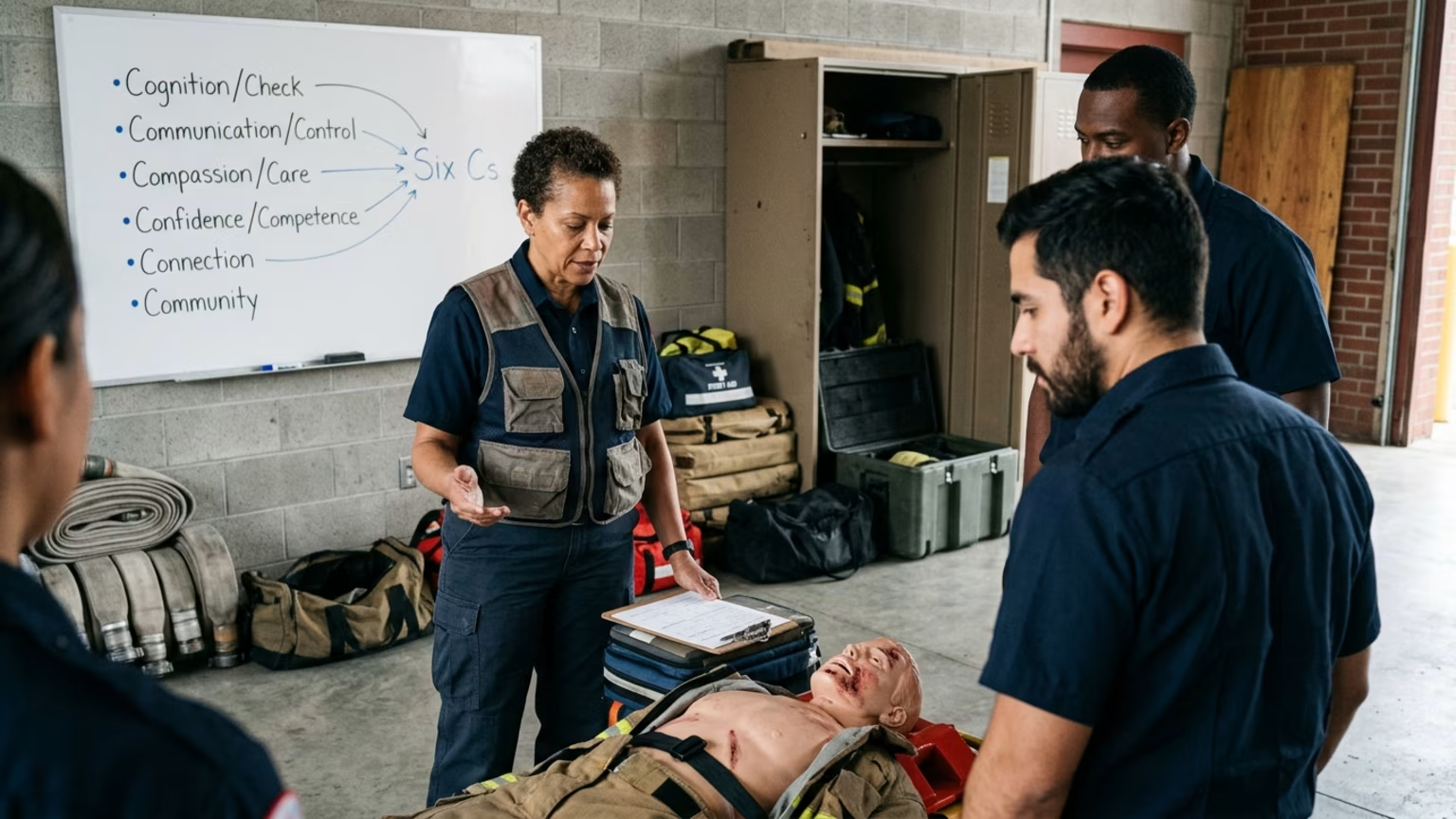

A 2026 conference abstract reports the Six Cs psychological first-aid model stabilized acute stress in simulations, signaling a shift toward cognitive support.





On 31 July 2026, a conference abstract published in European Psychiatry reported that a Six Cs psychological first-aid model reduced acute stress responses during a simulated emergency. The presentation by M. Farchi of Tel-Hai University in Israel examined whether this structured intervention could stabilize physiological and psychological markers compared with emotion-focused support.
The primary takeaway from the 34th European Congress of Psychiatry abstract is that cognitive activation may offer measurable advantages following extreme stress. The researchers aimed to test whether a psychological first-aid approach based on the Six Cs model could mitigate acute stress. They specifically looked at how the intervention affected anxiety, resilience and heart-rate variability in a simulated emergency environment. The approach relies on cognitive and action-oriented engagement rather than immediate emotional processing.
According to the abstract, participants who received the Six Cs model demonstrated lower anxiety and preserved resilience. The authors also reported that the intervention stabilized heart-rate variability and reduced acute stress reactions among participants. The abstract notes that recovery was faster for this group than for those receiving emotion-focused support. Stabilizing heart-rate variability is a significant metric because it reflects the recovery of the autonomic nervous system after a high-stress event.
The researchers describe the model as involving cognitive activation and structured engagement after extreme stress. This suggests a focus on practical reasoning and immediate tasks rather than emotional reflection. While the findings present an interesting direction for post-incident care, the available evidence remains strictly constrained by its publication format. The public record is currently limited to a conference abstract.
It does not report the participant sample size, group allocation method or statistical effect sizes. The page supplies no numerical outcome data or details on how heart-rate variability was measured. It also lacks participant characteristics, group sizes and detailed simulation parameters. Translating this abstract into practical duty guidance requires a cautious evaluation of these limited facts.
The findings validate an ongoing shift in how emergency services view early intervention after high-pressure calls. Structured and action-oriented support is gaining attention over traditional processing methods. First responders often face tight turnarounds between calls, making brief and accessible models highly appealing. The researchers describe the model as accessible to nonprofessionals and first responders.
They suggest its brevity and simplicity make it highly practical for field application. Yet, the reported setting was a simulated emergency, and the page supplies no real-world responder implementation results. There is a vast difference between a controlled simulation and an unpredictable field environment involving sleep disruption, physical load and continuous duty requirements. Until full protocols are published, peer-support teams should view this as an early signal rather than a validated department-wide procedure.
For emergency-service professionals, this means focusing on the principles of cognitive engagement while waiting for full clinical data. Managing the physical and mental aftermath of a call often requires active grounding strategies. First responders looking for proven methods can evaluate quick grounding techniques to help manage physiological arousal between dispatches. The core concept of activating cognitive function to stabilize the nervous system aligns with existing knowledge of acute stress management.
The abstract explicitly challenges the utility of older post-incident procedures. The authors state that traditional early interventions such as psychological debriefing proved ineffective. They position the Six Cs model as a necessary evolution away from early emotional processing. This framing aligns with broader debates in occupational psychology regarding mandatory early debriefing.
Many practitioners have moved away from forcing emergency personnel to process traumatic events immediately after a shift. However, it is necessary to note that the abstract supplies no separate debriefing comparison group. It lacks specific data supporting the claim that debriefing failed within this simulated study. The direct comparison was limited to an undefined emotion-focused support group.
The abstract does not explain what that emotion-focused support consisted of or how groups were formed. Therefore, agencies should avoid implying that the trial directly tested whether the Six Cs model outperforms traditional debriefing. Actionable adjustments based on this specific study must remain conservative and focused on broad principles. Because the abstract does not list the six individual Cs or explain the training duration, peer-support coordinators cannot implement the model today.
Instead, agencies can adjust their general approach to early post-incident support. They can prioritize immediate cognitive grounding over forcing emotional conversations right after a critical event. At the individual level, emergency personnel can apply the broader principle of action-oriented recovery. After a demanding call, focusing on structured tasks may help stabilize physiological stress markers.
Managing acute arousal during a shift is critical for preserving energy and readiness. Personnel can review guidelines for active post-incident transition strategies to clear residual tension and restore readiness while on duty. Agencies evaluating their internal procedures should also consider how physical fatigue compounds post-incident stress. The physiological toll of erratic schedules heavily influences a responder's baseline resilience.
Understanding how cumulative stress affects performance is just as critical as selecting the right post-incident intervention. Peer support should operate as part of a comprehensive strategy that respects shift realities. Beyond immediate post-call routines, maintaining physical capability requires monitoring accumulated stress over time. Responders who manage their overall physical load tend to recover more efficiently from acute stressors on shift.
Monitoring sleep disruption, training intensity and call volume provides a clearer picture of occupational fatigue. Evaluating load management for first responders can help personnel balance structured physical training with necessary recovery windows. Proactive resilience is built through consistent daily habits rather than relying solely on post-incident interventions. Broader evidence supports evaluating resilience and support programs across the entire emergency-service workforce.
A 2026 systematic review of proactive resilience programmes included adults working across ambulance, fire, police and search-and-rescue roles. The 2026 review concluded that such programmes may offer short-term improvements for resilience as well as stress, anxiety and depression. While this review supports proactive training, it notes that these are review-level findings across various interventions rather than evidence for the specific Six Cs model. Agencies can use this review-level evidence to justify broader proactive support structures.
They should focus on accessible interventions that fit the realities of irregular shifts and unpredictable calls. Any new protocol must acknowledge the heavy physical and mental demands placed on active duty personnel. Future developments regarding the Six Cs model require tracking full peer-reviewed publications. Practitioners need data on real-world implementation among active first responders.
They also need clearly defined follow-up periods to evaluate long-term outcomes. The abstract suggests the model could reduce PTSD risk, but it reports no actual PTSD outcome or follow-up duration. This claim should be treated as a proposed implication rather than an observed reduction in PTSD. Broader organizational support tracking will remain a critical area of focus for the industry.
Recent reviews argue that responder mental-health efforts must consider workload, staffing and leadership conditions. Individual-level interventions should not replace structural improvements. Comprehensive occupational health requires a focus on the team and organizational levels to achieve sustained impact. The emphasis on organizational responsibility reflects a growing understanding of occupational hazards in emergency services.
When agencies prioritize staffing levels and manageable workloads, they create a foundation for effective individual support. A single psychological first-aid model cannot overcome the chronic fatigue generated by continuous mandatory overtime. Researchers are increasingly calling for studies that measure interventions against a backdrop of realistic duty schedules. Until the full Six Cs protocol and its real-world results are available, emergency services should rely on multi-layered support strategies.
Stabilizing acute stress responses immediately after a critical incident points toward measurable improvements in baseline physiological recovery. Navigating how to manage nutrition, hydration and energy when meal timing is inconsistent remains equally critical for maintaining that baseline resilience, and Rescuris turns credible evidence into practical guidance that respects the physical realities of irregular shift work. Explore Resources
Rescuris publishes evidence-aware guidance for firefighters, police officers, paramedics and other first responders on fitness, recovery, sleep, nutrition, stress resilience and long-term capability.






Read practical guidance on first responder fitness, recovery, sleep, nutrition and resilience for demanding work and a long, active career.
read the blog
