
Four distinct biological pathways explain how cumulative emergency service stress causes allostatic overload, cognitive fatigue, and measurable declines in operational readiness.





If you are in immediate danger, call 911. For 24/7 support, call or text 988 and press 1 for the Veterans Crisis Line, or text 838255.
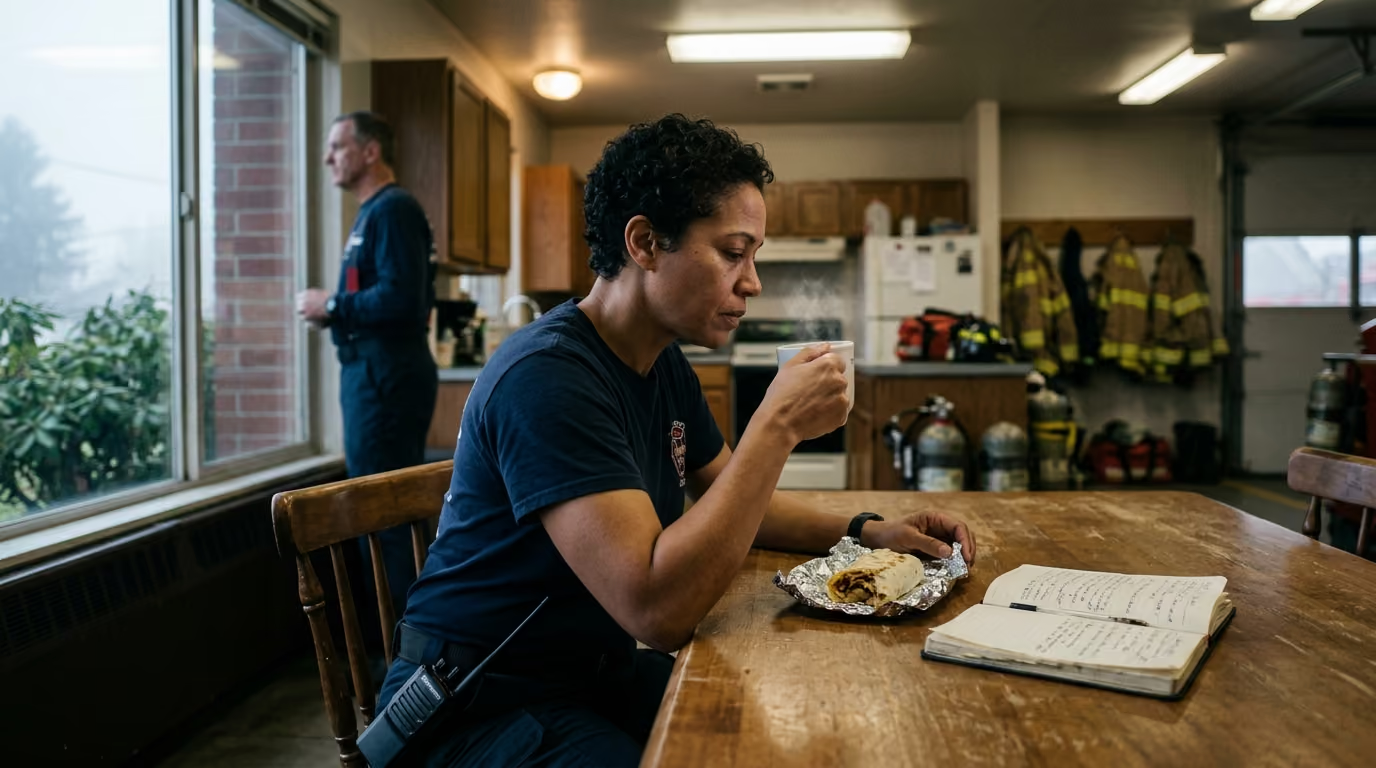
It is 04:30 on the third night shift of a four-day block. The tones drop for a structure fire or a severe trauma call, cutting through light, broken sleep in the station bunkroom. Your heart rate spikes instantly, adrenaline surges, and you pull on heavy gear while mentally reviewing protocols. You complete the call with professional precision, return to quarters, wash down the gear, and try to lie down again. Two hours later, your alarm sounds, leaving you feeling groggy, physically tight, and mentally blunt.
This cycle repeats across weeks, months, and decades. While emergency personnel are trained to handle intense calls, the human body pays a biological price when activation never fully resolves.
Allostatic load is the cumulative physiological wear and tear that accumulates when the body repeatedly responds to stress without enough recovery. The term comes from allostasis, which describes how the body maintains stability through change. Unlike homeostasis, which suggests returning to a single rigid balance point, allostasis recognizes that biological systems must adjust to meet environmental demands.
When an alarm sounds, heart rate increases, blood pressure rises, and neuroendocrine pathways mobilize energy. That spike is a healthy, adaptive response that supports immediate physical output and acute focus. The problem begins when those systems activate repeatedly without adequate sleep, decompression, and physical repair.
Allostatic load represents measurable dysregulation across multiple biological pathways rather than a simple feeling of fatigue. It encompasses the cardiovascular, metabolic, neuroendocrine, and immune systems. Over time, persistent activation alters basal physiology, creating a high-cost operating state.
Researchers typically distinguish between ordinary allostatic adaptation and allostatic overload. Allostatic overload occurs when environmental demands exceed the body's physiological capacity to adapt and recover. This overload generally develops through four distinct biological pathways:
Understanding allostatic load as a systems-level issue helps shift the focus away from subjective toughness. You cannot fix systemic physiological dysregulation with willpower alone.
Scientific research separates the markers of allostatic load into primary mediators and secondary downstream outcomes. Primary mediators are the chemical messengers released in the earliest stages of a stress response. These include neuroendocrine outputs like cortisol, dehydroepiandrosterone (DHEA), epinephrine, and norepinephrine.
Secondary mediators reflect downstream effects on organ systems after chronic exposure to primary chemical messengers. These include blood pressure, resting heart rate, lipid profiles, glycemic control, body composition, and inflammatory markers like C-reactive protein.
Clinical and occupational studies often use composite biomarker batteries to calculate an allostatic load index. Common indicators in these research batteries include:
A higher score on an allostatic load index reflects physiological dysregulation across multiple domains. However, research clearly shows that allostatic load is an overall risk construct rather than a direct diagnosis of operational impairment. Biomarker batteries vary between academic studies, and no single laboratory number defines a responder's daily fitness for duty.
Hormonal values like morning cortisol fluctuate based on shift timing, acute calls, illness, and medication. Similarly, cardiovascular indicators respond to caffeine, nicotine, hydration, and recent physical training. Because single biomarker tests are non-specific, researchers view allostatic load as a longitudinal pattern of multisystem risk rather than an isolated metric.
Evaluating cumulative strain requires looking at converging patterns over time. Research shows that tracking physical trends, sleep quality, and performance markers yields a clearer picture of recovery status than any single laboratory test. You can review broader principles of nervous system management in our stress and mental performance resources.
First responders face a unique combination of physical, environmental, and organizational demands that compound physiological strain. Unlike standard corporate environments where stressors are primarily psychological, emergency service introduces severe physical hazards alongside mental pressure.
Emergency calls require split-second decision-making under uncertainty, life-and-death responsibility, and occasional exposure to violence or human suffering. During an incident, the sympathetic nervous system triggers intense cardiovascular and endocrine outputs. This acute activation protects the responder during high-risk tasks by increasing blood flow, dilating airways, and sharpening immediate perceptual focus.
When call volume is high, the body experiences multiple adrenaline spikes in a single shift. If personnel do not have time to down-regulate between incidents, sympathetic activation remains partially engaged. Over time, baseline autonomic tone shifts toward chronic sympathetic dominance.
Emergency personnel routinely work 12-hour, 24-hour, or 48-hour rotations that force wakefulness during biological night. Working against internal circadian clocks disrupts standard neuroendocrine rhythms, particularly the daily cortisol curve and melatonin production.
Nighttime calls create fragmented sleep architecture. Even when total time in bed seems adequate, waking up abruptly from deep slow-wave sleep causes severe sleep inertia and elevated cardiovascular strain. Research confirms that nighttime call interruptions degrade processing speed, reaction time, and visual-motor coordination on subsequent shifts.
First responder work carries high physical demands. Carrying heavy structural gear, breathing apparatus, tactical vests, or medical stretchers imposes heavy mechanical loads on the spine and joints. Operating in extreme heat, structural smoke, toxic combustion byproducts, loud noise, and vibration further stresses metabolic and cellular defense systems.
In wildland firefighting, heat stress, particulate inhalation, and prolonged physical exertion interact with restricted sleep. Studies show that combining heat exposure and sleep restriction causes greater cognitive decline and physiological fatigue than experiencing either stressor in isolation. Dehydration under high thermal loads slows reaction times and impairs focus later in operational periods.
Critical calls receive significant public attention, but chronic organizational friction often generates greater ongoing strain. Understaffing, mandatory overtime, administrative conflicts, low operational control, and unsupportive station cultures contribute heavily to daily wear.
Occupational research in firefighting demonstrates that organizational stress correlates strongly with post-traumatic symptoms and general distress. Routine operational conditions, recovery opportunity, and administrative environments shape overall health alongside critical incident exposures.
Sleep disruption is one of the most reliable drivers of allostatic load in public safety work. Large systematic reviews demonstrate that sleep disorders and chronic sleep debt are widespread across police, fire, EMS, and paramedic services.
Research across emergency services indicates high rates of occupational sleep problems:
Sleep debt degrades cognitive bandwidth long before an individual notices physical weakness. Laboratory and field studies use the Psychomotor Vigilance Task (PVT) to measure reaction time, vigilance, and attention lapses. The PVT is sensitive to acute sleep loss, circadian timing, and prolonged duty hours.
Subjective fatigue scales, such as the Samn-Perelli Fatigue Scale, correlate with objective PVT performance drops. However, personnel often normalize high exhaustion levels. Experienced responders can maintain physical strength during standard tasks while simultaneously experiencing slower hazard recognition, impaired working memory, and flawed risk assessment.
In extended field operations, cognitive performance declines steadily over consecutive operational periods. Wildland firefighters on multi-week deployments demonstrate slower reaction times and worsening attention lapses as cumulative fatigue builds. Self-perception becomes unreliable under chronic sleep restriction, which is why objective tracking and peer observation are critical.
To protect cognitive clarity and reduce cumulative debt, emergency workers can use structured shift-specific sleep strategies tailored to their shift patterns.
Because allostatic load is a multisystem construct, no single metric can capture overall capacity. A practical monitoring model relies on tracking patterns across five interconnected domains: sleep, psychological state, performance, operational workload, and physical readiness.
Tracking sleep is about more than counting raw hours in bed. To evaluate true recovery, monitor:
Changes in mood often signal central nervous system fatigue before laboratory biomarkers show clinical shifts. Monitor:
Cognitive performance directly influences personal and crew safety. Monitor:
Tracking total operational exposure helps identify when biological capacity is exceeded. Monitor:
Physical indicators show how well peripheral and autonomic systems are recovering. Monitor:
Personnel can manage physical outputs and balance training volume by learning autoregulation and training readiness principles tailored for shift workers.
Evaluating allostatic load in the field means looking for converging trends rather than isolated numbers. When several indicators move in the same direction, operational capacity is shifting.
A responder maintains stable sleep duration, reports good subjective energy, and displays steady mood throughout the rotation. Resting heart rate and HRV remain within personal baseline ranges. Task execution is sharp, and recovery on off-duty days is quick and complete. Workload matches biological capacity.
After three consecutive busy tours with multiple night calls, sleep becomes fragmented. Irritability increases slightly during station duties, and perceived physical effort during standard workouts feels unusually high. Resting heart rate ticks up several beats per minute, and reaction times slow slightly. This pattern reflects an early recovery deficit that can be corrected with targeted rest, proper nutrition, and lighter training before systemic overload takes hold.
Multiple domains deteriorate simultaneously over several weeks. A responder averages less than six hours of disrupted sleep, relies on energy drinks to stay alert, and experiences persistent irritability with crew members. Near misses increase during driving or technical operations, HRV trends downward for two consecutive weeks, and days off do not restore energy. This profile signals allostatic overload and requires schedule adjustments, reduced physical loads, and formal clinical checkups.
A responder insists that everything is fine and denies feeling tired. However, station peers notice communication lapses, missed protocol steps, and increasing reliance on caffeine during the day and alcohol at night. Reaction-time testing reveals distinct vigilance drops despite normal subjective ratings. This pattern shows why self-assessment alone is insufficient for identifying operational wear.
Following an intense, multi-casualty incident or complex rescue, a responder shows temporary spikes in resting pulse, disrupted sleep, and acute mental fatigue for two days. As normal routines resume and rest is prioritized, physiological metrics return to baseline within 72 hours. This represents healthy, acute allostatic adaptation rather than chronic systemic failure.
To see how these concepts appear in field conditions, consider how cumulative demands affect different emergency service roles. These examples serve as models of operational wear rather than clinical case studies.
An illustrative model of a municipal firefighter working 24-hour shifts shows the reality of sleep fragmentation. The firefighter spends eight hours in bed each shift but gets woken up by tones three times per night. Over four weeks, daytime alertness drops, workout recovery slows, and mood becomes increasingly reactive.
The issue is not total time in bed, but disrupted sleep architecture and repeated sympathetic spikes. Mitigating this strain requires protecting recovery sleep on off-duty days, managing light exposure, and structuring station workouts around call volume. Personnel can learn more about how circadian disruption and shift length compound physical fatigue.
Consider an illustrative model of an urban paramedic working busy 12-hour night shifts with back-to-back medical calls. The paramedic maintains high clinical decision-making on scene but uses high doses of caffeine to get through the final hours of the shift. Over months, resting blood pressure creeps upward, resting heart rate rises, and emotional detachment develops during routine family interactions.
This pattern demonstrates secondary mediator dysregulation. Managing this load requires structured caffeine cutoffs, scheduled midday naps before night shifts, improved shift-nutrition protocols, and regular primary care checkups.
In an illustrative model of a wildland firefighter on a two-week fire assignment, environmental demands accumulate rapidly. Long operational shifts on steep terrain combine with heat, particulate exposure, and sleeping in field camps. By day 10, reaction times on vigilance tests decline, physical movements become slower, and minor task errors increase.
This situation reflects compound environmental stress. Field managers must monitor cognitive alertness, enforce mandatory rest cycles, maintain aggressive hydration, and rotate crews off the fire line before exhaustion leads to critical safety errors.
An illustrative model of a patrol officer working rotating shifts highlights the limits of self-reporting. The officer reports feeling fine and prides himself on never missing a shift. However, dispatch logs show increasing driving errors during responses, and the officer demonstrates poor situational awareness during traffic stops.
Peer observations and supervisor feedback identify cognitive fatigue that self-assessment missed. Addressing this pattern requires non-punitive rest interventions, sleep disorder screening, and schedule management rather than disciplinary action.
Misunderstanding how the body adapts to stress can lead responders to make poor decisions about training, recovery, and operational safety.
Allostatic load is not a subjective emotional state or a simple measurement of how stressed you feel. It is a biological state reflecting multisystem physiological dysregulation. A person can feel mentally composed while showing elevated blood pressure, dysregulated cortisol output, and systemic inflammation.
No single laboratory test, cortisol sample, or HRV reading can diagnose allostatic load. The construct represents cumulative wear across cardiovascular, endocrine, metabolic, and immune systems over extended timeframes. It requires evaluating patterns and trends across several biological domains.
HRV is a helpful tool for tracking autonomic recovery trends, but single values can be misleading. Sensor type, measurement posture, breathing rate, recent caffeine intake, and illness all influence HRV. An unusually high HRV reading can sometimes reflect autonomic exhaustion or parasympathetic overcompensation rather than peak readiness.
Physical and cognitive systems have biological limits. Experiencing fatigue, sleepiness, or slower reaction times after heavy shifts is a normal physiological reality, not a personal flaw. Believing that toughness prevents biological fatigue leads personnel to hide symptoms and skip essential recovery.
High cardiovascular fitness and muscular strength protect against physical injuries, but they do not make the brain immune to sleep deprivation. A physically strong responder can still suffer from impaired hazard recognition, delayed reaction times, and poor decision-making when sleep debt accumulates. Physical readiness and cognitive readiness must be evaluated independently.
Commercial wearables provide helpful trend data, but their proprietary daily readiness scores are not medical assessments. Relying on an algorithm to determine whether someone can work creates privacy concerns and can lead personnel to mistrust their own physical signals. Wearable data should support personal habits rather than dictate operational duty status.
Mitigating allostatic load requires adjustments at both personal and organizational levels. Long-term capability depends on protecting baseline biology while meeting emergency demands.
Sleep is the primary biological mechanism for clearing metabolic waste from the brain and resetting autonomic balance. Responders should:
High-intensity workouts on top of severe sleep deprivation add more biological strain to an overloaded system. Physical training should be adjusted based on recovery status:
Resetting the autonomic nervous system after high-adrenaline incidents helps prevent prolonged physiological activation. Simple practices include:
During long shifts, large deployments, or high-density tours, simple operational adjustments help maintain cognitive focus:
Individual habits cannot fully compensate for systemic scheduling issues. Departments and leadership teams should:
Tracking allostatic load provides valuable insights into personal recovery, but it has distinct limitations. Self-monitoring tools, heart-rate trackers, and lifestyle adjustments are designed for performance management and overall wellness. They cannot diagnose medical conditions, treat sleep disorders, or replace comprehensive occupational health evaluations.
Never rely on personal readiness ratings or wearable metrics to make decisions when basic safety is at risk. If you are experiencing severe physical exhaustion, dizziness, acute chest pain, shortness of breath, or sudden cognitive confusion, stop operating immediately and seek medical evaluation. Driving vehicles or performing dangerous tasks while severely sleep-deprived endangers both your crew and the public.
If you or a colleague are experiencing overwhelming distress, severe depression, or thoughts of self-harm, immediate professional support is available. In the United States, you can call or text 988 to reach the Suicide & Crisis Lifeline, press 1 for the Veterans Crisis Line, or text 838255. In immediate emergencies, call 911 or visit the nearest emergency department. If access to personal firearms or lethal medications is a concern during periods of severe distress, arrange with a family member, trusted peer, or clinician to temporarily store those items safely outside the home.
Professional medical and psychological support is appropriate when symptoms persist despite adequate rest. Consider consulting a licensed healthcare professional if you experience:
Seeking confidential care from clinicians who understand emergency service culture is a practical step toward protecting your long-term health and capability.
Revisit this framework whenever you change shift schedules, step into a higher-volume assignment, transition through major career milestones, or notice that your standard recovery habits are no longer restoring your energy.
Managing allostatic load is about matching your biological recovery to your operational demands. By monitoring cumulative strain early and protecting fundamental health systems, first responders can maintain operational sharpness, protect personal health, and ensure a capable, active life throughout their career and into retirement.
Stay connected for research-led guidance on duty fitness, shift-work sleep, injury recovery, stress, nutrition and career longevity. Practical ideas for first responders who want to stay capable on the job, recover well and protect their health for the long run.



Read practical guidance on first responder fitness, recovery, sleep, nutrition and resilience for demanding work and a long, active career.
read the blog



