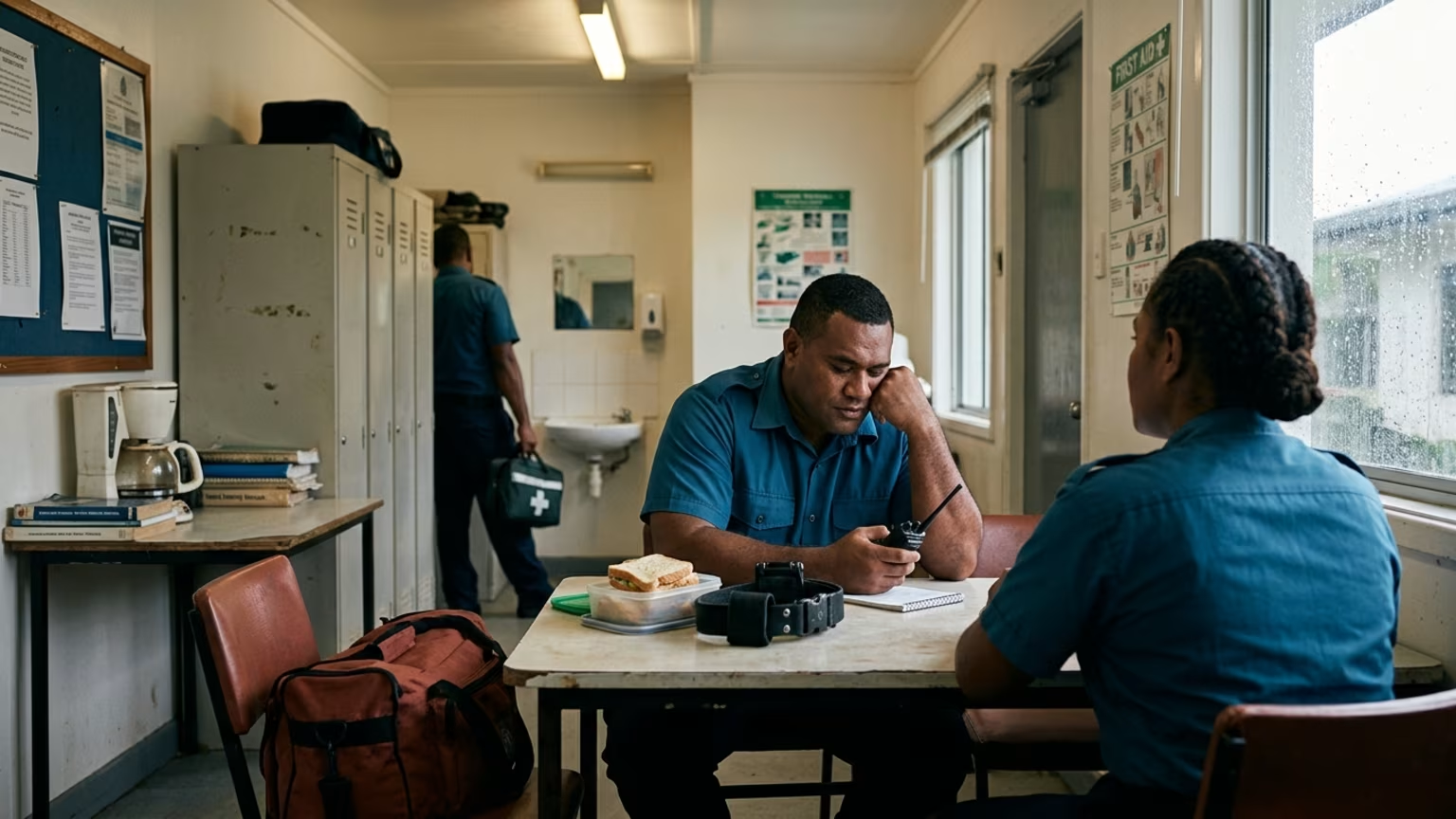

Fiji police report 38 officer deaths, prompting warnings that professional stigma and delayed medical care actively threaten duty readiness and career longevity.





In late September 2026, Fiji Police Commissioner Rusiate Tudravu issued a stark health warning at a national remembrance ceremony after the force recorded 38 officer deaths over the past year. The commissioner stated that reluctance to seek medical and psychological care actively puts officers at risk.
The health warning emerged during the solemn proceedings of the Fiji Police Force Remembrance Day ceremony. FijiVillage reported that the broader historical event commemorated 88 police officers and two canine colleagues who had died in service. However, the specific focus of the commissioner's address rested heavily on the 38 officer deaths recorded in just the past twelve months. According to coverage from both Fiji Sun and FijiVillage, the commissioner identified delayed medical intervention as a severe threat to the current workforce.
The 38 deaths recorded in the past year highlight the severe consequences of chronic physiological wear. Tudravu noted that most of the officers who died were aged between 30 and over 50. He observed that many of these recent deaths were linked directly to non-communicable diseases rather than acute traumatic injuries sustained on duty. For emergency professionals, non-communicable diseases often stem from the unavoidable realities of the job. These realities include sleep disruption from nights, rotating shifts, extended overtime and unpredictable emergency calls.
The local coverage did not provide detailed cause-of-death records for each individual case, nor did it offer a historical baseline. Despite the lack of baseline comparative data, the operational observations highlight a critical behavioural barrier among active emergency personnel. The commissioner reported that some officers had actively delayed necessary medical intervention because of their intense commitment to work. He stated that other officers avoided seeking care entirely because they feared being labelled weak by their peers. These individuals worried that utilizing medical or psychological assistance would lead supervisors to view them as unfit for duty.
The situation in Fiji translates into a broader lesson about how emergency departments measure and manage operational readiness. Generic fitness advice that assumes a predictable schedule fails entirely in these demanding, irregular environments. Tudravu framed officer health explicitly as a functional capability issue rather than just a private personal wellness metric. He argued that the police force could not effectively protect the public if it neglected the physical wellbeing of its own personnel. This operational perspective shifts the responsibility of health maintenance from the individual responder to the broader organizational system.
This persistent occupational stigma remains a core concern despite targeted departmental efforts to improve personnel support structures. Tudravu pointed out that the force had already increased its financial investment in police welfare and specialized psychology units. The department had also introduced regular mandatory health audits designed to monitor baseline physical capability across the ranks. The current reports suggest that institutional availability alone has not resolved the underlying cultural hesitation to access these medical services.
Fiji Sun quoted the commissioner directly calling for a definitive change in internal police culture. He argued forcefully that seeking medical help should never be viewed as a sign of weakness in professional ranks. Managing nutrition, hydration and energy when meal timing is inconsistent already complicates the ability of personnel to maintain their baseline health. Adding the stress of professional stigma makes early medical intervention nearly impossible for many active officers. This cultural shift requires leadership to demonstrate that accessing care is an expected part of maintaining a long career.
These operational observations fundamentally challenge the assumption that providing a health clinic automatically solves workforce fatigue and illness. Many broad wellness programs fail because they do not account for the realities of recovering from accumulated physical wear without losing duty readiness. The Fiji reports clearly demonstrate that mandatory health audits and expanded welfare units cannot overcome entrenched professional stigma on their own. The fear of being judged permanently unfit for duty easily overrides the logical medical benefit of early clinical intervention.
When officers view medical clinics as a threat to their career standing, the entire department loses visibility on its actual physical readiness. Providing clinical resources without addressing the cultural penalties associated with using them leaves critical health deficits entirely hidden. Establishing a sustainable framework for maintaining physical capability requires agencies to separate baseline physical monitoring from punitive disciplinary action. If personnel anticipate negative administrative consequences, they will simply mask their physical symptoms until an acute failure occurs.
Discussions regarding extended operational hours and mandatory holdovers illustrate how relentless workload realities directly influence physical recovery windows. Agencies must acknowledge that work commitment itself can become a barrier to health. Relying solely on motivational programs to combat fatigue ignores the systemic scheduling pressures causing the physical decline.
Leaders and frontline personnel can make immediate, practical adjustments based on these organizational findings. For departments, the crucial first step involves evaluating whether their current support systems are truly confidential and trusted by the rank and file. Agencies must determine if their scheduling practices actually allow personnel the time needed to attend these mandatory health audits without penalty. Departments must provide practical guidance built around the realities of demanding, irregular work without relying on tactical clichés or macho motivation.
First responders themselves must also adjust how they view routine physical maintenance and chronic disease management. Personnel aged 30 to over 50 face compounding physical risks from irregular sleep, high-stress physiological responses and frequently disrupted nutrition. Tracking specific indicators of structural strain and fatigue and consulting physicians for non-communicable diseases should be viewed as routine operational maintenance. Officers must prioritize this basic physical upkeep rather than delaying necessary medical care out of a misplaced loyalty to the shift schedule.
Focusing on systemic prevention early in a demanding career yields measurable medical benefits long after official retirement. Establishing robust baseline health habits directly supports long-term circulatory function following retirement by catching complex metabolic issues before they compound severely. By actively normalizing medical care during active duty, departments can improve both current operational readiness and the long-term survival rates of their dedicated personnel.
Moving forward, researchers and emergency service leaders must track exactly how mandatory health audits impact actual clinical treatment outcomes. The broader emergency sector needs clear, objective data on whether these audits successfully connect responders to medical care without triggering unfair career penalties. Analysts will need to observe closely how diverse departments measure the utilization rates of their internal welfare and psychology units over time.
Tudravu also described contemporary policing as a profession that increasingly exposes officers to trauma in both physical and virtual forms. He specifically noted the sharp rise of intense public criticism and coordinated social media campaigns targeting individual officers and the broader institution. Future occupational health studies must measure precisely how this modern virtual trauma interacts with chronic physiological stress and non-communicable diseases. Tracking these overlapping environmental pressures will remain absolutely essential for updating future physical training and baseline mental readiness protocols.
Evaluating organizational readiness frameworks points toward addressing the specific environmental stressors that prevent personnel from recovering fully between assignments. Sleep disruption from nights, rotating shifts, overtime and unpredictable calls routinely compromises this baseline resilience, and Rescuris turns credible evidence into practical guidance built around these demanding constraints. We help emergency professionals navigate irregular schedules without romanticising exhaustion.
Rescuris publishes evidence-aware guidance for firefighters, police officers, paramedics and other first responders on fitness, recovery, sleep, nutrition, stress resilience and long-term capability.






Read practical guidance on first responder fitness, recovery, sleep, nutrition and resilience for demanding work and a long, active career.
read the blog
