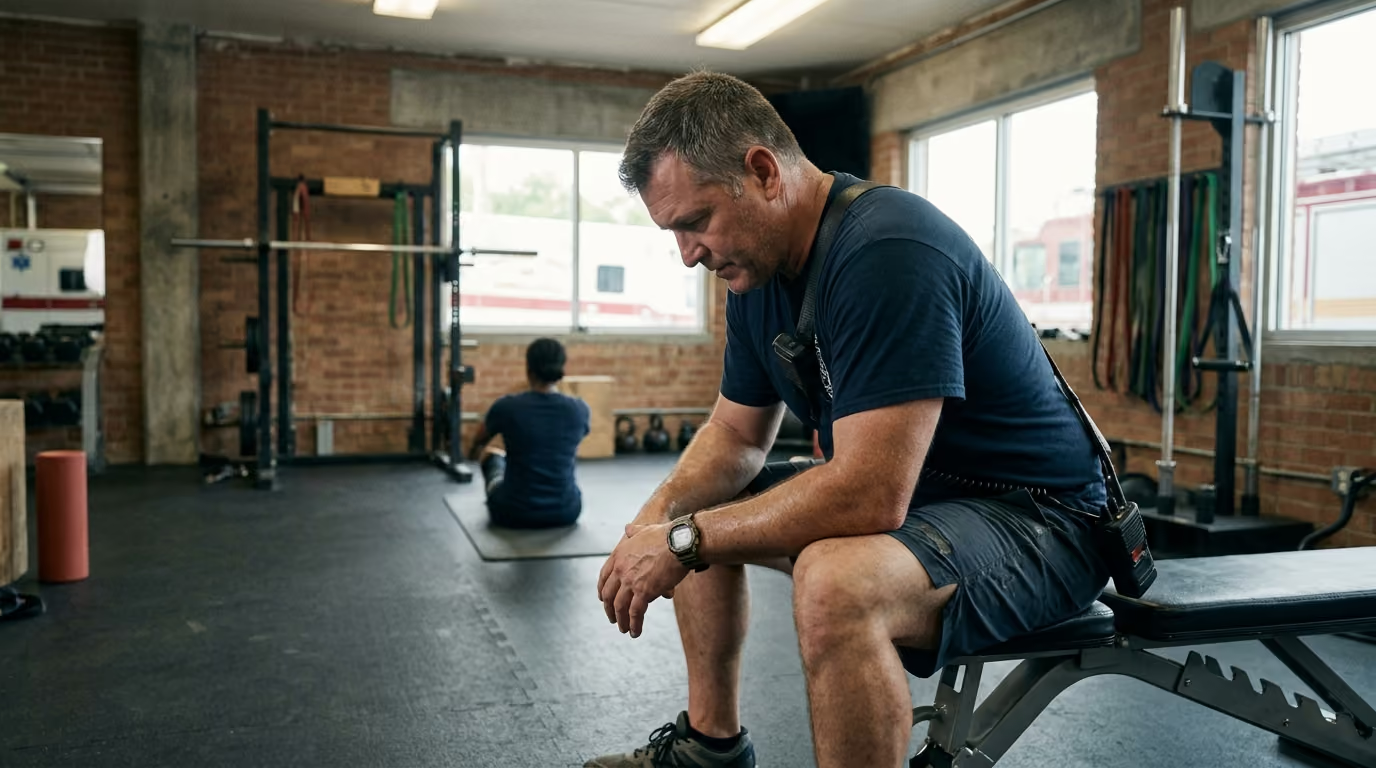

Retired first responders face distinct cardiovascular risks accumulated during duty, requiring targeted medical tracking, lifestyle adjustments, and proactive disease prevention strategies.





Many retiring or separating emergency responders search online for a simple question. Can someone maintain high cardiovascular risk even while staying physically fit after years of emergency service?
The short answer is yes. Physical conditioning protects the heart, but it does not erase the physiological impact of shift work, irregular sleep, chronic stress, or high blood pressure. Cardiovascular prevention after leaving the fire service, law enforcement, or emergency medical work requires a transition from occupational readiness to systematic, long-term health tracking.
Cardiovascular disease remains the leading medical threat to emergency personnel during and after their working careers. Plaque buildup, elevated blood lipids, arterial stiffening, and metabolic changes often develop silently behind high functional work capacity. A structured post-service framework helps former personnel detect underlying risks early, adjust daily training and nutrition, and protect their long-term health.
Evidence evaluating cardiac events among emergency personnel shows a clear pattern. Cardiovascular disease accounts for a large proportion of line-of-duty deaths across emergency services. Research from the National Fire Protection Association and occupational studies indicates that sudden cardiac events cause roughly 44 to 45 percent of on-duty firefighter fatalities. The U.S. Fire Administrator 2024 health and wellness workgroup report estimated that approximately 50 percent of line-of-duty deaths are cardiovascular related. These events include myocardial infarctions, sudden cardiac arrests, and strokes.
These events rarely happen in healthy arteries. Analyses of sudden cardiac death in emergency responders show that acute events occur almost exclusively in individuals with clustered traditional risk factors and underlying structural heart disease. An acute response to an alarm or heavy physical exertion acts as a trigger on a chronic physiological substrate. Heavy gear, high heat, rapid sympathetic activation, and dehydration place sudden demands on the heart. If coronary arteries are already narrowed by plaque, that sudden surge in cardiac output can cause ischemia, plaque rupture, or fatal arrhythmias.
Chronic risk builds over decades of service through multiple occupational exposures. Repeated circadian disruption, night shifts, and broken sleep patterns impair glucose tolerance and drive vascular inflammation. Research shows that nighttime light exposure alters cardiovascular health by interrupting autonomic balance and raising baseline blood pressure. Occupational smoke, diesel exhaust, and chemical combustion byproducts also contribute to systemic inflammation and accelerated atherosclerosis.
When responders leave active service, the acute physical triggers of emergency calls disappear. The underlying vascular changes, structural remodeling, and metabolic markers accumulated over a career do not vanish on retirement day. Leaving the job represents a new exposure phase where unmanaged vascular risks can progress without regular occupational medical evaluations.
A common misconception among former emergency personnel is that passing a physical fitness test equals cardiovascular health. Physical fitness reflects work capacity, muscular power, and oxygen delivery during sustained exertion. Cardiovascular health encompasses the physical condition of the vascular walls, resting hemodynamics, blood lipid profiles, blood sugar regulation, and cardiac tissue structure.
The American Heart Association defines comprehensive cardiovascular health through the Life's Essential 8 model. This framework evaluates four health behaviors and four health factors:
An individual can score in the top tier for physical activity while scoring poorly in blood pressure, sleep, and blood lipids. High aerobic output does not prevent the deposition of low-density lipoprotein particles into the arterial intima. It does not prevent left ventricular hypertrophy driven by chronic, untreated hypertension.
Treating work capacity as a substitute for clinical screening creates false security. A former tactical officer or paramedic may easily run five miles while carrying advanced coronary plaque or severe obstructive sleep apnea. Cardiovascular prevention requires separating how the body performs from how the vascular system functions internally.
Retirement or separation from emergency service causes significant changes in daily physical and psychological routines. During active duty, personnel operate within established fitness standards, structured station routines, and regular peer expectations. Separation abruptly removes these environmental anchors.
Physical activity patterns often shift in one of two directions after retirement. Some personnel drop structured exercise entirely due to accumulated joint pain, fatigue, or burnout. Others maintain extreme, high-intensity exercise routines that fail to accommodate aging joints or rising blood pressure. Both extremes create cardiovascular risks. Inactivity accelerates metabolic decline, while sudden bouts of maximal exertion in unconditioned or hypertensive individuals increase the risk of acute cardiac events.
Dietary habits formed during years of irregular shift work frequently carry over into retirement. Decades of eating fast food between calls, relying on high-sodium takeout, and snacking late at night create ingrained metabolic patterns. Without the caloric burn of active fireground operations or heavy gear work, these eating habits lead to rapid weight gain, central adiposity, and insulin resistance.
Medical surveillance often lapses during this transition period. Many responders only received medical examinations through their department or union occupational health programs. Once retired, individuals must navigate private healthcare systems on their own. Former personnel frequently delay establishing primary care until significant symptoms force a clinical visit.
Building a personal cardiovascular prevention plan begins with establishing a thorough medical baseline. A former responder should complete a comprehensive clinical assessment with a primary care clinician who understands their occupational history.
This initial clinical baseline should include several key components:
Clinicians use risk estimation calculators, such as the ACC and AHA pooled cohort equations, to evaluate a patient's 10-year risk of atherosclerotic cardiovascular disease. These tools categorize risk as low (under 5 percent), borderline (5 to 7.4 percent), intermediate (7.5 to 19.9 percent), or high (20 percent and above).
Standard calculators can underestimate risk in former first responders because they do not capture cumulative shift work, smoke inhalation, or repeated sympathetic nervous system activation. For individuals in borderline or intermediate risk categories, clinicians may recommend non-invasive testing such as a coronary artery calcium scan. A calcium scan directly visualizes calcified plaque within the coronary arteries, helping clarify whether statin therapy or more aggressive lifestyle modifications are warranted.
Former firefighters should also review historical standards like NFPA 1582 with their physician. These occupational guidelines recommend annual resting electrocardiograms and structured cardiovascular screening starting at age 40 for active personnel. Reviewing past occupational medical records provides valuable long-term context for new primary care physicians.
Hypertension is the most common and damaging cardiovascular risk factor found in emergency service populations. Research published by the Centers for Disease Control and Prevention examining sudden cardiac death among firefighters aged 45 and younger revealed that hypertension was strongly associated with fatal cardiac events. The study showed that 63 percent of sudden cardiac death cases were obese, and 67 percent had coronary heart disease as the underlying cause of death. Hypertension frequently led to left ventricular hypertrophy, a thickening of the heart muscle that increases arrhythmia risks.
Occupational data indicates that nearly 10 percent of active firefighters have undiagnosed high blood pressure. Many responders believe they would feel symptoms if their blood pressure were dangerously high. In reality, hypertension rarely causes headaches, dizziness, or noticeable discomfort until it reaches critical stages. It steadily damages the endothelial lining of arteries, accelerates plaque formation, and increases stroke risk over many years.
Current clinical guidelines define blood pressure categories clearly:
Home blood pressure monitoring provides far more reliable data than an isolated measurement taken in a clinical office. Pain, rush-hour traffic, and clinical anxiety can temporarily elevate readings, creating white-coat hypertension. Conversely, some individuals show normal office readings but elevated blood pressure at home or during daily activities.
A standardized home monitoring routine eliminates guesswork:
Managing blood pressure requires combining lifestyle adjustments with clinician-prescribed medication when targets are not met. The 2019 ACC and AHA prevention guidelines recommend targeting blood pressure below 130/80 mm Hg for adults requiring pharmacologic treatment. Non-pharmacologic interventions should focus on reducing dietary sodium, increasing aerobic activity, improving sleep quality, and managing body weight. The guidelines identify an optimal dietary sodium intake of less than 1,500 milligrams per day, while noting that a reduction of at least 1,000 milligrams daily produces meaningful blood pressure improvements in most adults.
Physical activity remains a cornerstone of long-term cardiovascular health. The goal of post-service training is no longer preparing for maximal bursts of work in 75 pounds of gear. The primary objective is building sustainable aerobic capacity, preserving skeletal muscle mass, improving vascular elasticity, and maintaining joint integrity over decades.
The American Heart Association recommends that adults complete at least 150 minutes of moderate-intensity aerobic exercise, 75 minutes of vigorous exercise, or an equivalent combination each week. For retired personnel, a polarized approach to conditioning provides substantial cardiovascular benefits while limiting orthopedic wear and tear.
Moderate-intensity continuous training, often called Zone 2 aerobic exercise, should form the foundation of a post-service program. Zone 2 training occurs at a pace where you can maintain a conversation without gasping for air. This level of exertion improves mitochondrial density, enhances cardiac stroke volume, and improves the body's ability to use fat as a fuel source. Activities such as brisk walking, cycling, rowing, swimming, and easy hiking build this aerobic base with minimal injury risk.
Resistance training is equally essential for metabolic and cardiovascular health. Skeletal muscle acts as a primary site for glucose disposal. Maintaining muscle mass through resistance training helps prevent insulin resistance and supports healthy body composition. Former responders should perform full-body resistance exercises two to three days per week, focusing on fundamental movement patterns: squats, hinges, presses, pulls, and core bracing.
Progression must be managed carefully, particularly for individuals returning to exercise after a period of post-service inactivity. Many former responders attempt to jump immediately back into the high-intensity interval training or heavy powerlifting of their early career. This abrupt jump raises the risk of tendon injuries, severe muscle soreness, and acute cardiovascular strain. A safer approach increases weekly walking or cycling duration first before adding high-intensity intervals or heavy lifting loads.
Decades of shift work and station life often leave former personnel with disorganized eating habits. Addressing these nutritional patterns is critical for reducing cardiovascular risk and managing metabolic health. A long-term cardioprotective eating plan should focus on nutrient density, fiber content, and healthy fat sources rather than short-term crash dieting.
To support vascular health, former personnel should build meals around several evidence-supported nutritional principles:
Meal timing and preparation strategies help sustain these dietary improvements. Personnel who still work irregular civilian jobs or night shifts can review practical meal strategies for demanding shifts to avoid reliance on convenience foods. Planning and cooking whole-food meals at home allows precise control over sodium, added sugars, and portion sizes.
Adjusting when you eat also plays a role in metabolic recovery. Research indicates that time-restricted eating windows counter metabolic strain by aligning food intake with natural circadian rhythms. Avoiding large, heavy meals late in the evening supports better overnight blood pressure dipping and improves sleep architecture.
Sleep disruption is one of the most pervasive, damaging legacies of emergency service careers. Shift work, overnight calls, and high sympathetic tone train the brain to remain hyper-vigilant, making deep, restorative sleep difficult. When responders retire, their sleep patterns rarely fix themselves automatically.
The American Heart Association emphasizes that adults require an average of seven to nine hours of quality sleep per night for optimal cardiovascular function. Chronic short sleep (less than six hours per night) and fragmented sleep directly contribute to systemic hypertension, vascular inflammation, insulin resistance, and elevated sympathetic nervous system activity. During normal, healthy sleep, blood pressure naturally drops by 10 to 20 percent, a process known as nocturnal dipping. Individuals who experience chronic sleep deprivation or frequent nighttime awakenings lose this protective dipping, leaving their vascular system under continuous high pressure.
Obstructive sleep apnea is widespread among active and retired emergency responders. The combination of thick neck circumference, occupational exposures, and weight changes contributes to upper airway collapse during sleep. Sleep apnea causes repeated drops in blood oxygen saturation, triggering surges in adrenaline and sudden spikes in blood pressure throughout the night. Left untreated, sleep apnea dramatically raises the risk of atrial fibrillation, treatment-resistant hypertension, heart failure, and stroke.
Former personnel who snore loudly, wake up choking or gasping, experience morning headaches, or struggle with excessive daytime sleepiness should request a clinical sleep evaluation. Modern home sleep apnea testing makes diagnosis simple and accessible. Continuous positive airway pressure (CPAP) therapy remains the gold standard treatment, rapidly restoring nocturnal oxygenation, reducing blood pressure, and lowering long-term cardiovascular strain.
Improving general sleep hygiene provides foundational cardiovascular support:
For individuals continuing in part-time emergency roles or civilian shift work, implementing a shift-specific sleep plan helps protect recovery windows and minimizes the cardiovascular toll of irregular schedules.
Emergency service exposes personnel to repeated traumatic events, moral injury, and sustained occupational stress. The human body responds to high-stress incidents by activating the sympathetic nervous system and the hypothalamic-pituitary-adrenal axis. This response floods the bloodstream with catecholamines, adrenaline, and cortisol, increasing heart rate, constricting blood vessels, and raising blood pressure.
While this response is protective during acute emergencies, remaining in a state of chronic hyper-arousal damages the cardiovascular system over time. Research links post-traumatic stress disorder, chronic anxiety, and depression in emergency responders to increased risks of hypertension, endothelial dysfunction, and coronary artery disease.
Stress also affects cardiovascular health indirectly through behavioral coping mechanisms. Former responders managing unresolved trauma often rely on increased alcohol consumption, heavy nicotine use, social isolation, and poor dietary choices to cope with distressing memories or physical restlessness.
Managing stress after service requires treating mental health as an essential part of cardiovascular prevention:
When psychological symptoms, sleep disturbances, or intrusive memories interfere with daily functioning, seeking licensed clinical care is critical. Caring for your mental health directly protects your heart and blood vessels from chronic autonomic overload.
Nicotine use remains elevated among emergency service personnel, often starting as a coping strategy for fatigue and stress during long shifts. While combustible cigarette smoking has declined, the use of smokeless tobacco, electronic cigarettes, and high-dose nicotine pouches remains common.
All forms of nicotine negatively impact cardiovascular physiology. Nicotine stimulates the sympathetic nervous system, causing acute increases in heart rate, arterial stiffness, and blood pressure. Inhaling combusted tobacco smoke introduces carbon monoxide, oxidant chemicals, and fine particulate matter directly into the lungs and bloodstream. These compounds cause endothelial damage, accelerate the oxidation of LDL cholesterol, promote blood clot formation, and destabilize existing arterial plaques.
Quitting tobacco and nicotine provides almost immediate cardiovascular benefits. Within weeks of cessation, blood pressure and resting heart rate decrease, endothelial function begins to recover, and platelet reactivity normalizes. Over several years of cessation, the risk of myocardial infarction and stroke drops significantly toward the baseline of non-users.
Former responders seeking to quit nicotine should work with a healthcare provider to create an evidence-based cessation plan. Combining behavioral counseling with pharmacologic therapies, such as nicotine replacement patches, bupropion, or varenicline, substantially increases long-term success rates. Relapses should be viewed as opportunities to adjust the treatment approach rather than as personal failures.
Alcohol consumption also requires careful management after leaving service. While alcohol is frequently used in responder culture to unwind after difficult events, regular or heavy drinking elevates resting blood pressure, contributes to cardiac arrhythmias such as atrial fibrillation, raises triglyceride levels, and adds excess empty calories that drive weight gain. Moderating alcohol intake or eliminating it entirely represents a powerful, direct intervention for reducing cardiovascular risk.
Understanding how cardiovascular risk factors interact in real-world scenarios helps former responders identify their own vulnerabilities. The following models illustrate common transition challenges and evidence-based solutions.
A 49-year-old former firefighter retires after 25 years of service. He runs three miles three times a week, lifts weights regularly, and considers himself in outstanding physical condition. He has no chest pain, shortness of breath, or functional limitations. However, a routine blood pressure screening at a community health fair shows a reading of 146/92 mm Hg.
His initial reaction is to dismiss the reading, attributing it to morning coffee and traffic stress. Because he can still complete hard workouts, he assumes his cardiovascular system is completely healthy.
The framework response: The individual purchases a validated upper-arm blood pressure cuff and logs morning and evening readings for two weeks. The data confirms sustained stage 1 and stage 2 hypertension with an average home reading of 142/88 mm Hg. He schedules an appointment with a primary care physician, who orders baseline blood work revealing elevated LDL cholesterol and a high-normal fasting blood glucose level.
He works with his physician to start a low-dose antihypertensive medication, reduces his daily dietary sodium below 1,500 milligrams, and adds 45 minutes of Zone 2 cycling to his weekly routine. He preserves his strength training while eliminating the silent hemodynamic strain that was damaging his arteries.
A 54-year-old retired paramedic transitions to an administrative office job after 28 years on an ambulance. Within eighteen months of leaving field duty, she gains 22 pounds. She sleeps five to six hours per night, snores loudly, wakes with a dry mouth, and feels chronically exhausted by mid-afternoon. She relies on energy drinks to stay alert during the day.
She assumes her fatigue is simply a natural part of aging and the result of decades of shift work. She attempts high-intensity interval workouts on weekends to lose weight, but the workouts leave her exhausted and dealing with knee and lower back pain.
The framework response: She consults a physician who recognizes the classic signs of obstructive sleep apnea and orders a home sleep test. The test confirms moderate obstructive sleep apnea with an apnea-hypopnea index of 22 events per hour. She begins CPAP therapy, which immediately resolves her nighttime awakenings, eliminates morning headaches, and restores daytime energy.
With improved energy, she replaces energy drinks with water, adopts a time-restricted eating window, and commits to daily 30-minute brisk walks. Over the following six months, her weight stabilizes, her resting blood pressure drops from 136/86 to 122/78 mm Hg, and her blood glucose normalizes.
A 52-year-old retired police officer finds himself struggling with irritability, restless sleep, and intrusive memories of critical incidents from his patrol career. To fall asleep at night, he begins drinking three to four glasses of whiskey each evening. He stops exercising because of chronic knee pain and avoids social contact with former coworkers.
His resting blood pressure steadily rises to 150/96 mm Hg, his triglycerides double, and he develops central abdominal weight gain. He views his health decline purely as a physical aging problem, completely separating it from his emotional state and alcohol use.
The framework response: Encouraged by a peer-support advocate, he contacts a licensed mental health clinician specializing in first responder trauma and begins structured cognitive processing therapy. Working with his physician, he develops a safe plan to taper and eliminate alcohol consumption, replacing it with an evening relaxation routine and guided breathing exercises.
He joins a local low-impact rowing group, which provides both joint-friendly cardiovascular conditioning and positive social connection. Within four months, his sleep architecture improves, his depressive symptoms decline, his blood pressure drops significantly, and his overall cardiovascular risk profile improves.
A cardiovascular prevention framework is designed to help former personnel optimize health behaviors and work collaboratively with healthcare providers. It is not a substitute for professional medical diagnosis, emergency medical evaluation, or prescribed pharmacologic treatments.
Former responders should recognize critical symptoms that demand immediate, emergency medical evaluation rather than self-monitoring or lifestyle adjustments:
Anyone experiencing these warning signs should call 911 immediately. Never attempt to drive yourself to an emergency department, and never wait to see if serious symptoms resolve on their own.
Lifestyle modifications, such as improving diet, increasing exercise, and optimizing sleep, are essential foundations of cardiovascular prevention. However, they do not replace necessary medical therapies. If a physician recommends blood pressure medications, statins, or blood glucose management drugs based on established clinical guidelines, former personnel should view these treatments as valuable tools that work alongside healthy daily habits.
Transitioning out of emergency service marks the beginning of a vital new mission: safeguarding your cardiovascular health for the decades ahead. Decades of heavy physical exertion, shift work, and acute operational stress leave behind subtle physiological changes that cannot be erased by exercise alone.
By combining consistent physical conditioning with objective blood pressure monitoring, cardioprotective nutrition, dedicated sleep recovery, stress management, and regular clinical follow-up, former first responders can successfully protect their vascular health, preserve functional capability, and enjoy a long, healthy life after service.
To begin applying this framework, complete the following steps over the coming weeks:
Stay connected for research-led guidance on duty fitness, shift-work sleep, injury recovery, stress, nutrition and career longevity. Practical ideas for first responders who want to stay capable on the job, recover well and protect their health for the long run.



Read practical guidance on first responder fitness, recovery, sleep, nutrition and resilience for demanding work and a long, active career.
read the blog



