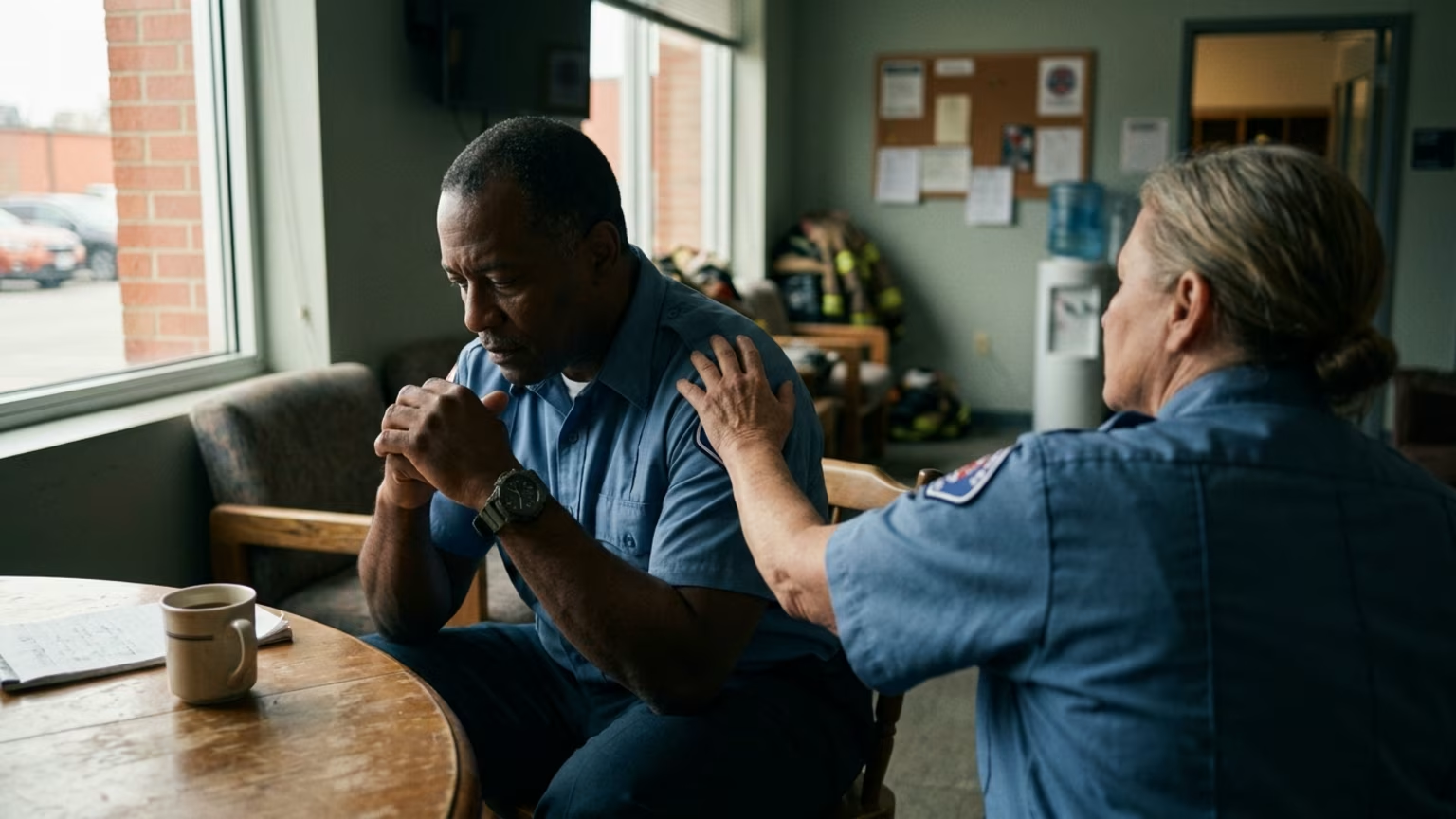

New data from the California Fire Foundation and UCF RESTORES highlights the critical need to integrate psychological support into daily firefighter operations.





If you or someone you know needs help, immediate resources are available. Call 911 for immediate danger. Call 988 and press 1 to reach the Veterans Crisis Line, or text 838255. Safe storage of firearms or medication can be coordinated with a trusted peer or clinician during difficult periods.
On October 1, 2026, the California Fire Foundation reported a 45% year-over-year increase in post-traumatic stress injury-related deaths among firefighters represented among its honorees.
The California announcement highlights the continued risk of post-traumatic stress injury, commonly called PTSI, among emergency personnel. While the foundation noted the increase compared with 2025, it did not publish the underlying death counts or a specific denominator. This limits the ability to determine a statewide rate or absolute change in California. However, the disclosure aligns with broader national efforts to formally recognize psychological trauma as a severe occupational health hazard.
The California Foundation stated that its October 3 memorial ceremony in Sacramento would honor 37 fire service professionals. The announcement framed this occasion as a call to honor firefighters and support their families. While the release noted that qualifying California firefighters have workers’ compensation protections related to PTSI, it did not detail eligibility. Understanding how an individual's specific circumstances are assessed remains a complex administrative hurdle for many seeking help.
Independent research from UCF RESTORES provides a more detailed picture of occupational risk in a different state. Using linked state records, researchers identified 307 Florida firefighter suicide deaths between 1999 and March 2026. This comprehensive look at state records provides a solid empirical foundation for designing targeted interventions. The UCF analysis found that firearms were linked to 66.4% of the identified deaths in Florida. Furthermore, more than a third of the personnel with known licensure status were inactive when they died.
These findings validate a shift toward career-spanning behavioral health protocols rather than relying on isolated interventions. Florida’s State Fire Marshal rolled out a Zero Suicide Prevention Framework informed by the UCF work. UCF describes this framework as a seven-element approach. It spans leadership and training while prioritizing identification and engagement. The final three elements focus on treatment, transition and improvement. This structure embeds psychological recovery into daily operations alongside standard physical training.
Integrating mental health into standard duty requires treating psychological fatigue with the same urgency as a physical injury. For example, recognizing how escalating call volumes compound physical exhaustion helps supervisors adjust expectations. First responders process high-stress incidents differently when their baseline physiological recovery is compromised by severe shift schedules. Operational leaders must understand that irregular sleep and physical exhaustion compound the effects of trauma.
The physiological demands of emergency service make it impossible to compartmentalize psychological trauma from physical fatigue. Shift work inherently disrupts the circadian rhythms that regulate stress hormones. This makes recovery from traumatic incidents significantly harder for personnel working irregular hours or rotating schedules. Adjusting a fatigued responder's operational tempo is a necessary tactic to prevent acute stress from becoming a chronic injury. Understanding how to structure shift rosters strategically offers a practical template for mitigating these physical risks.
The integration of psychological health into daily routines also requires recognizing the impact of inconsistent nutrition on cognitive function. Irregular eating patterns during extended tours frequently burden frontline supervisors attempting to sustain operational energy. Managing nutrition, hydration and energy when meal timing is inconsistent remains a major challenge for emergency-service professionals returning to complex shift work. Correcting these basic physical deficits is a necessary precursor to building lasting psychological resilience.
The traditional assumption that psychological risk diminishes immediately after retirement is strongly challenged by recent data. The UCF finding that over a third of the identified Florida cases involved inactive personnel shows that support must extend beyond active service. Transitioning out of uniform removes daily peer interactions and structured routines that often act as protective factors. The transition phase is particularly vulnerable and requires structured pathways to help personnel adjust to new roles.
Another outdated model treats mental health training as an annual compliance requirement rather than a continuous operational practice. The Florida framework replaces this check-box approach with daily leadership engagement and ongoing peer identification. Relying on external crisis hotlines as the primary safety net shifts the burden of care away from the organization. True prevention requires an organizational culture where colleagues recognize the early signs of distress before a crisis point is reached.
The historical tendency to view stress resilience solely through the lens of individual toughness frequently isolates personnel. Separating useful stress-resilience guidance from motivational slogans allows departments to treat the issue as an occupational injury rather than a personal flaw. When leaders frame psychological injury as a predictable outcome of continuous physical and emotional load, they remove the friction that prevents early intervention. This shift in perspective transforms recovery from a private struggle into a routine aspect of professional maintenance.
Clinical professionals often lack specific knowledge about shift schedules, command structures or common traumatic exposures. This knowledge gap creates friction for responders seeking professional support. Better clinical understanding of emergency work schedules directly improves the quality of operational recovery protocols. Departments can bridge this gap by actively connecting personnel with providers who specialize in treating frontline professionals.
Supervisors and individual responders must implement practical adjustments to their duty routines based on this occupational reality. Teams should establish regular, informal check-ins that do not wait for an acute crisis to occur. Integrating these conversations into post-incident briefings normalizes the process of seeking help for occupational stress. Evaluating the biological effects of sleep deprivation on operational leadership is a critical step in managing overall team resilience.
Individuals must also map out their support networks before they actually need to use them. Identifying local clinicians who understand the specific physical demands of shift work accelerates the recovery process. Responders should evaluate their off-duty habits and prioritize physical recovery windows when possible. Addressing sleep disruption aggressively protects baseline neurological function during difficult calls.
Personnel facing intense emotional distress should establish a safety plan with a trusted colleague, clinician or family member. This plan should include securing personal medications and arranging the safe storage of firearms away from the home. Handling these logistics proactively during periods of stability reduces risk during moments of acute crisis. Monitoring new research into cumulative duty hazards can provide further insights into long-term occupational risks.
Personnel dealing with accumulating occupational fatigue should also reassess their approach to physical training on rest days. Balancing strength, endurance, mobility and body composition across a demanding career requires strategic restraint when sleep is compromised. Attempting high-intensity workouts after a demanding night shift often compounds physiological stress rather than relieving it. Adjusting training volume to match actual recovery levels protects the immune system and maintains baseline readiness.
Departments should systematically review their internal messaging regarding workers' compensation and medical leave for psychological injuries. The California announcement highlights that these protections exist, but actual utilization depends heavily on the organizational culture. If taking time off for PTSI is unofficially stigmatized, even the most robust legal protections will fail to help personnel. Clear, supportive guidance from the highest levels of command is required to normalize the use of these necessary benefits.
Future occupational health research must provide clear, standardized data to accurately track the effectiveness of these new interventions. The lack of detailed methodology in the California Fire Foundation’s 45% figure demonstrates the need for transparent reporting structures. Robust data collection will help departments allocate resources more efficiently toward programs that actually yield measurable results. Tracking the long-term outcomes of the Florida State Fire Marshal's framework will provide valuable benchmarks for other agencies.
The California data, despite its lack of specific denominators, signals a growing willingness to publicly address PTSI. Future reports from advocacy groups must include clear calculation methods to provide a more accurate picture of occupational trends. This transparency is necessary to secure appropriate funding for targeted intervention programs and improved workers' compensation access. The intersection of physical recovery and psychological health will drive the next generation of first-responder performance science.
Researchers must continue analyzing the specific risk factors affecting inactive or retired personnel. As the emergency service sector continues to evolve, the demand for evidence-led, practical support structures will only increase. Determining whether new peer-support interventions actually improve the quality of care will guide future program development for frontline professionals. By treating psychological injury with the same rigorous, scientific approach applied to physical trauma, departments can better protect their personnel.
Future administrative policies must also clarify how these frameworks intersect with existing medical and retirement benefits. Understanding testosterone and hormone claims without assuming testing or treatment is right for everyone will be important as science uncovers the endocrine impact of prolonged stress. Agencies must base their future protocols on established evidence rather than commercially promoted claims. Developing clear, scientifically sound guidelines will protect personnel from predatory wellness trends while ensuring they receive appropriate care.
Addressing severe occupational stress requires moving past generic advice that treats physical fitness and psychological resilience as entirely separate challenges. Conflicting advice that prioritises short-term performance while ignoring long-term health frequently leaves emergency personnel exposed to cumulative fatigue, and Rescuris outlines clear, evidence-led parameters to help professionals maintain both their duty readiness and lifelong well-being.
Rescuris publishes evidence-aware guidance for firefighters, police officers, paramedics and other first responders on fitness, recovery, sleep, nutrition, stress resilience and long-term capability.






Read practical guidance on first responder fitness, recovery, sleep, nutrition and resilience for demanding work and a long, active career.
read the blog
