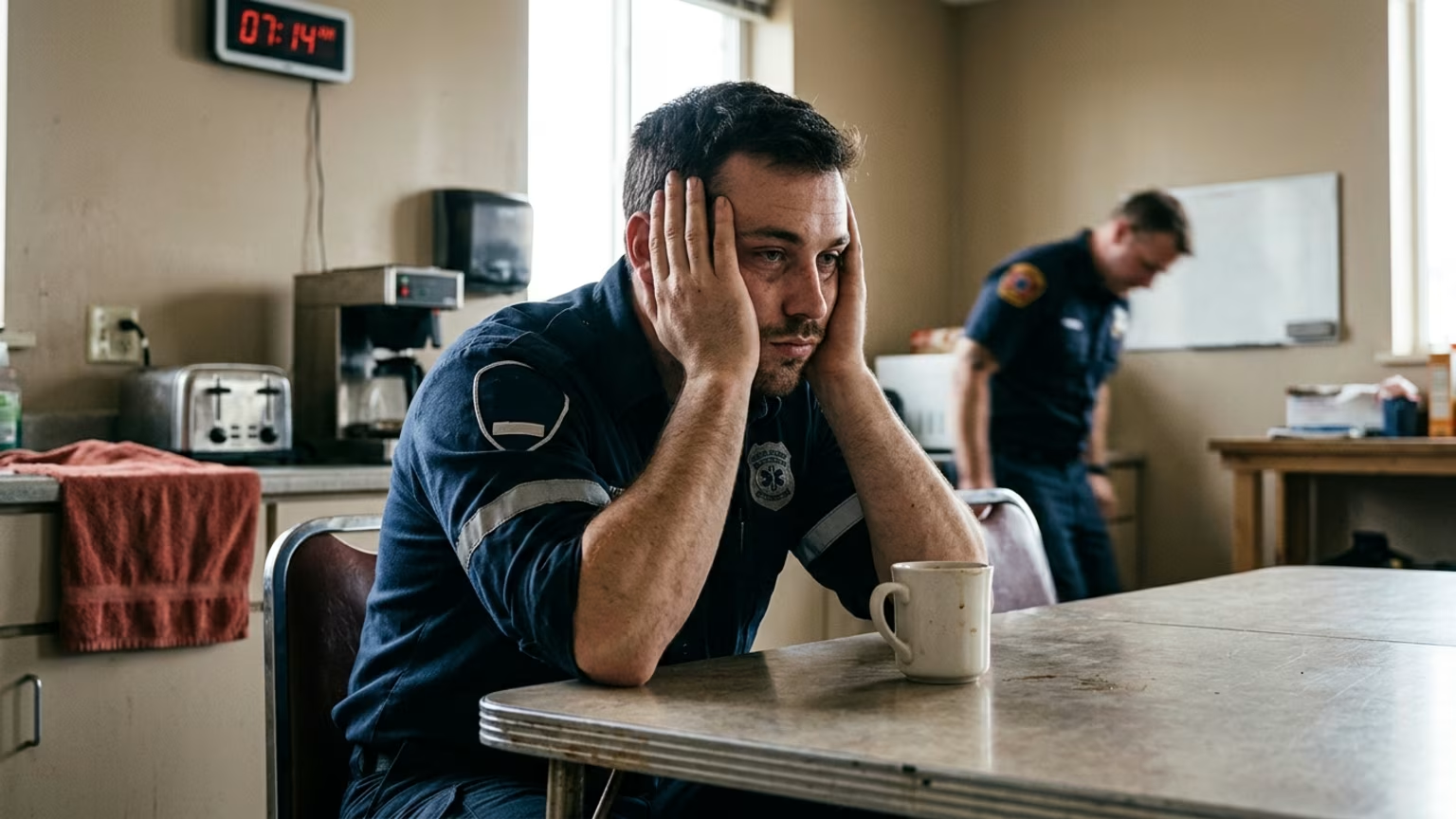

First-responder fatigue stems from circadian timing, sleep debt, and unpredictable calls. Compare 24-hour and shorter shifts to build better recovery systems.





Deciding between extended twenty-four-hour tours and shorter shift rotations requires balancing the risk of acute circadian disruption against the steady accumulation of chronic sleep debt.
Extended twenty-four-hour schedules offer the potential for consolidated rest between calls. The primary physiological challenge is the unpredictable timing of emergency dispatches. When a station alarm requires rapid decision-making during the biological night, responders face acute cognitive impairment. A study summarized in the source reported that sleep inertia was 3.6 times greater during the biological night than during the biological day.
This biological night window occurs approximately between 11 p.m. and 3 a.m. for most personnel. The biological day window falls approximately between 3 p.m. and 7 p.m. The physiological shock of a biological night awakening goes beyond mere grogginess. When the brain is forced into rapid operational mode during its lowest arousal state, complex problem solving suffers heavily.
First responders must process scene safety, medical algorithms, and tactical variables within seconds of an alarm. This rapid transition is inherently dangerous when circadian pressure forces the brain toward sleep. The same study found that the circadian effect persisted after accounting for sleep stage and sleep efficiency differences. Being awakened from deep sleep is not the only reason for poor performance after a nighttime dispatch.
The biological clock strongly modulates cognitive readiness independent of how deeply a responder was resting. Two paramedics who receive the same total hours of rest may experience completely different readiness levels. This discrepancy happens if one crew member is repeatedly awakened during their circadian low. Recognizing this vulnerability allows crews to implement targeted cross checks during late night emergency responses.
The continuity of station sleep depends heavily on call timing and local workload. A quiet extended tour might allow a responder to maintain baseline operational readiness. A busy tour can convert the exact same scheduled shift into a series of highly fragmented rest episodes. This fragmentation limits the body from moving through normal restorative cycles.
The circadian rhythm dictates core body temperature, hormone release, and metabolic function. When an emergency worker is roused during the lowest point of this cycle, their body must rapidly counteract powerful sleep signals. This biological friction creates severe sleep inertia that degrades tactical judgment. The study summarized in the research clearly demonstrated that this effect is distinct from sleep efficiency.
Mitigating this acute fatigue requires prioritizing recovery periods immediately after the shift concludes. First responders must structure their post shift habits to support neurological repair and physical recovery. Sleep inertia can severely degrade driving safety and emotional regulation on the way home. A responder who forces themselves to stay awake for daytime errands after a fragmented night shift prolongs their biological disadvantage.
Addressing these shift work and sleep challenges requires acknowledging that human physiology does not pause during an emergency response. The physical toll demands specific recovery strategies to maintain long-term career longevity.
Shorter shift models divide the workweek into more frequent duty periods. The primary physiological burden here is the steady accumulation of sleep debt across consecutive days. Eight-hour tours often involve repeated exposure to early morning starts or late evening finishes. They also create short turnaround intervals between consecutive duty assignments.
These tight turnaround times severely limit the biological window available for complete neurological recovery. Sleep debt operates like a physiological loan that must be repaid. Shorter shifts often create a false sense of security regarding daily rest requirements. Personnel working eight-hour rotations might assume they have ample time to recover at home.
However, commuting, family obligations, and daytime biological signals frequently disrupt these scheduled rest periods. The resulting chronic sleep debt degrades reaction times just as severely as an acute all night shift. Twelve-hour schedules extend the daily duty requirement while theoretically offering more calendar days off. However, a longer single shift allows physical and mental fatigue to accumulate rapidly.
This specific risk is exceptionally high when working night rotations. Mandatory overtime also exacerbates this risk by reducing the remaining time available to sleep before the next assignment. A responder who remains sharp on a day shift may show a significantly degraded cognitive pattern during a night rotation. Despite the distinct differences in daily hours, available research cautions against assuming one model is automatically superior.
A summary of research comparing police shift lengths reported no significant differences among the compared shift lengths across multiple outcomes. The review found no significant differences in work performance, health, and work family conflict among three shift lengths. The summary also reported no difference in sleep quality or sleep disorders across the evaluated schedules. This evidence indicates that shift length alone is a weak predictor of occupational safety and health outcomes.
The police shift research highlights a crucial reality for emergency service administrators. Changing from an eight-hour to a twelve-hour format does not automatically resolve underlying fatigue issues. Officers still face the same physiological constraints regarding human rest cycles and stress recovery. Administrators must look beyond the master schedule to evaluate actual rest patterns.
This holistic approach is necessary for protecting the long-term health of the workforce. Variables like rotation speed, exact start time, and individual rest habits play an equally critical role. Relying exclusively on schedule duration ignores the reality of how fatigue compounds over time. Developing a shift-specific sleep plan is far more productive than debating the theoretical merits of different hour blocks.
Determining the right operational schedule requires measuring local fatigue factors rather than adopting a rigid template. Departments can evaluate schedule impact by reviewing objective tracking data alongside crew feedback. For example, Firehouse reported that Roswell firefighters slept more after a specific schedule and start time change. The department moved from a 24/48 schedule beginning at 8:00 a.m. to a 48/96 schedule beginning at 11:00 a.m.
The Roswell evaluation reported a 41-minute increase in self-reported nightly sleep following the schedule adjustment. Tracker-measured mean sleep increased from 6.7 to 7.0 hours per night. Furthermore, sleep on the night before a shift reportedly increased from 6.1 to 7.0 hours. This improvement followed both a tour pattern adjustment and a start time shift.
Small timing variables can drastically alter physiological recovery and daily readiness. The change to an 11:00 a.m. start time in the Roswell evaluation likely played a major role in the results. A later start allows personnel to secure a full night of natural rest before beginning a multi-day duty cycle. This schedule aligns better with natural human wakefulness patterns compared to a traditional early morning start.
It reduces the immediate sleep debt personnel carry into their first operational period. Agencies can build a two-week fatigue map to identify their own localized high-risk operational periods. This process involves logging actual rest opportunities rather than just scheduled off-duty hours. Personnel should track continuous rest obtained and note specific awakening times during a shift.
Constructing a fatigue map requires disciplined data collection across multiple shift cycles. Crews should record unusual irritability, slowed decision making, near misses, and driving sleepiness. They should also note any poor physical coordination or an inability to complete normal tasks safely. This data provides a clear picture of when the schedule exceeds human biological limits.
The most dangerous operational window occurs when three distinct conditions overlap. These overlapping conditions include inadequate recent rest, repeated on-duty awakenings, and physical work during the biological night. For an eight-hour schedule, crews should track fast rotations and short recovery windows between assignments. For a twelve-hour schedule, officers should compare cognitive alertness in the first half of the tour versus the second half.
For a twenty-four-hour schedule, crews must separate nominal time on the clock from actual time awake. A quiet extended tour and a high-call extended tour produce completely different physiological loads. They require different fatigue protocols to restore physical capability safely. Agencies can then adjust high-risk task assignments during these identified vulnerability windows.
A frequent error in fatigue management is treating the scheduled shift length as an exact measure of actual sleep. A twenty-four-hour tour with a protected rest opportunity is biologically different from a shift with multiple dispatches. Assuming that a nominal assignment equals guaranteed rest miscalculates the true physiological toll on the body. Two tours with identical call counts impose different fatigue loads if one features dispatches clustered during the biological night.
Another common mistake is assuming that a simple administrative roster change will resolve clinical sleep conditions. Roster adjustments cannot cure underlying medical issues or chronic respiratory disruptions. First responders with undiagnosed sleep apnea or severe insomnia will still experience profound fatigue regardless of their schedule. Treating occupational fatigue with a schedule tweak while ignoring these clinical disorders leaves personnel at serious physical risk.
Operational readiness drops significantly when an underlying condition prevents restorative sleep during off-duty hours. Evidence-based clinical options for emergency workers include cognitive behavioral therapy for insomnia and imagery rehearsal therapy for posttraumatic nightmares. A responder-clinician resource details these approaches as effective treatments for severe occupational rest disruptions. These targeted clinical interventions are necessary for sustained health and long-term capability.
Simply shifting a start time will not resolve trauma-related rest disruptions or chronic insomnia. Addressing clinical sleep issues requires a dedicated framework within agency health programs. First responders often hesitate to report chronic sleepiness due to cultural stigma or fears of medical disqualification. Creating a supportive environment for sleep health evaluations encourages vital early intervention.
Early treatment of insomnia or trauma-related nightmares preserves career longevity and improves daily quality of life. Finally, relying entirely on self-reported fatigue without objective data obscures the true scope of the problem. Departments should combine subjective surveys with medical evaluations and wrist-worn tracking. Consumer wearables should be treated as supportive measurement tools rather than definitive clinical diagnostics.
Operational readiness relies on acknowledging the biological realities of emergency work. Fatigue is a physiological response, and biological limitations do not disappear simply because a call is dispatched. True resilience comes from understanding how shift timing, call frequency, and circadian rhythms interact to shape human performance over time. When agencies replace rigid assumptions with careful measurement, they build systems that respect both the mission and the personnel executing it.
Evaluating the impact of extended schedules and unpredictable call volume requires shifting from rigid roster assumptions to targeted, physiological recovery systems. Planning for physical capability and an active life after retirement or leaving service becomes an achievable reality when Rescuris translates clinical fatigue research into sustainable duty routines. Explore Resources
Rescuris publishes evidence-aware guidance for firefighters, police officers, paramedics and other first responders on fitness, recovery, sleep, nutrition, stress resilience and long-term capability.






Read practical guidance on first responder fitness, recovery, sleep, nutrition and resilience for demanding work and a long, active career.
read the blog
