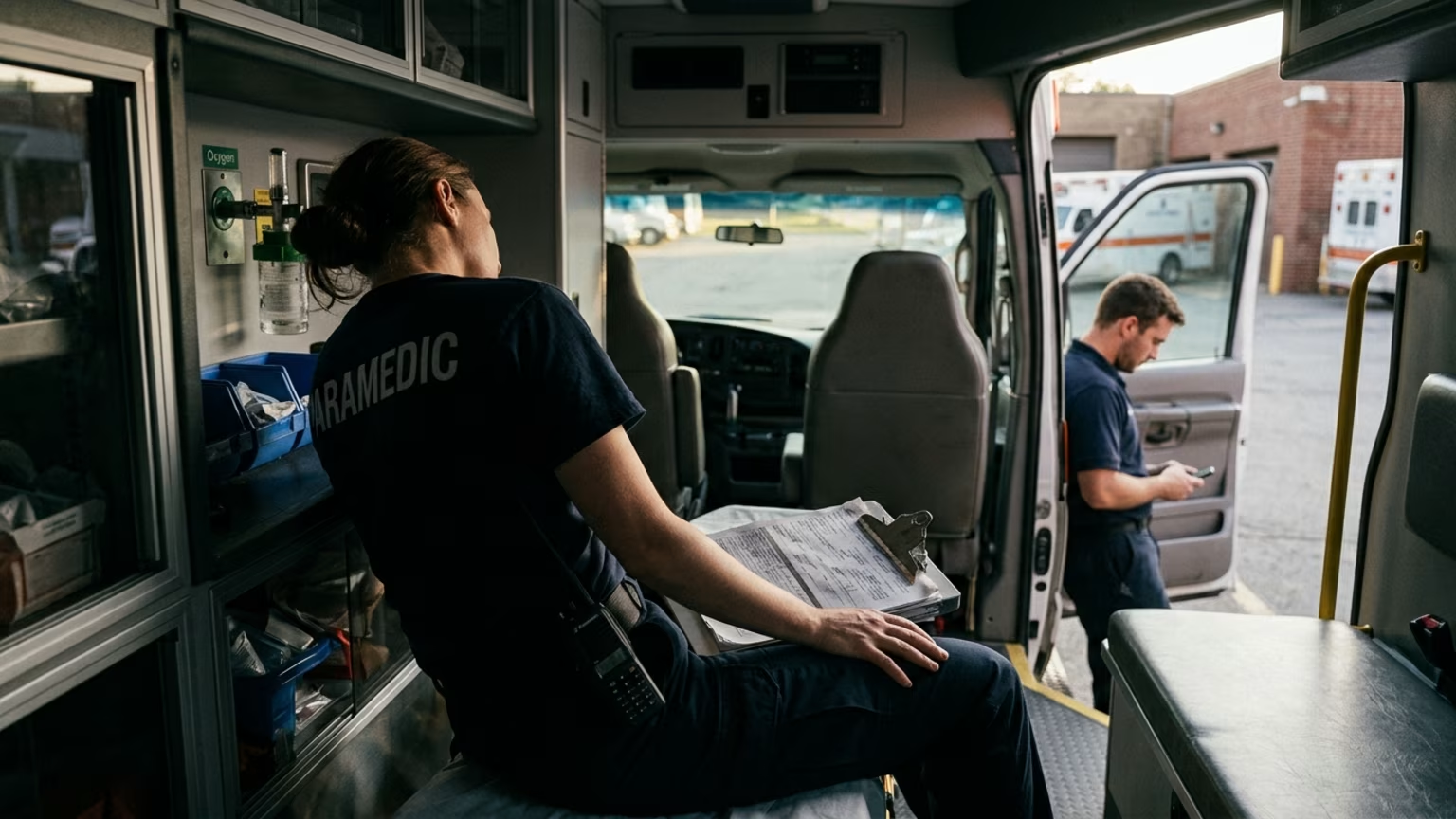

First responder fatigue involves more than lost sleep. Understand how circadian timing, sleep inertia, and schedule instability impact emergency duty readiness.





Fatigue for emergency personnel is not a single condition caused only by accumulating too few hours of rest. Night work, rotating schedules, and interrupted on-duty sleep create distinct recovery problems for first responders. These nonstandard schedules alter when sleep occurs, how continuously it happens, and how long the worker has been awake before performing a task. According to NIOSH materials, nonstandard schedules disrupt or shorten sleep while significantly reducing recovery time.
Treating fatigue as simple sleep deprivation ignores the biological realities of emergency medical and police work. A worker might technically obtain a reasonable number of total hours after a night shift. However, that person can still experience poor recovery because the sleep happened during the biological day. The true issue is whether those hours occurred during a biologically suitable and protected window.
This distinction directly affects how emergency personnel manage their physical readiness and personal safety. A night worker may have slept but still carry circadian misalignment and reduced alertness into their day. For a firefighter or paramedic, this matters heavily when deciding whether a post-shift workout or long drive home is a safe idea. Assuming that all sleep is equal can lead to dangerous choices behind the wheel or under heavy physical loads.
An oversimplified view of fatigue also masks the cumulative toll of unpredictable emergency responses. When departments measure readiness strictly by hours logged in bed, they miss the physiological strain of constant sleep interruptions. Emergency responders must navigate complex medical decisions, aggressive subjects, and difficult driving conditions. Maintaining high-level capability requires an accurate understanding of how irregular shifts undermine normal biological recovery.
Personnel who grasp these mechanics can better structure their limited downtime to protect long-term readiness. Addressing the unique demands of nonstandard schedules is a critical part of sustainable career longevity. The goal is to move beyond generic wellness advice and implement strategies built for irregular duty hours. This approach requires examining the specific physiological drivers of duty fatigue.
Understanding shift-work fatigue requires looking beyond total hours and examining specific physiological drivers. Several biological processes interact to determine how capable a responder remains throughout a long tour:
Distinguishing between normal tiredness and severe sleep dysregulation is critical for occupational safety. An emergency responder who has been continuously awake for many hours is primarily managing rising sleep pressure. A responder awakened suddenly from a short rest period is battling sleep inertia. When an alarm drops at 4 a.m., that professional is likely experiencing both problems alongside reduced circadian alerting.
Recognizing when fatigue crosses into clinical territory requires honest self-assessment regarding Shift Work & Sleep. Persistent insomnia, unintended sleep episodes, or severe sleepiness that affects driving are strong warning signs. These are clear indicators of sleep dysregulation rather than just the ordinary wear of an active shift. Symptoms that continue despite adequate sleep opportunity require professional assessment rather than being normalized as part of the job.
Ignoring these warning signs can compromise both individual health and crew safety. It is crucial to separate the physical exhaustion of a busy tour from the neurological signs of chronic sleep deprivation. Evaluating actual readiness means acknowledging when the body is failing to recover between shifts.
The pre-dawn window is operationally critical because several fatigue mechanisms converge during these specific hours. A responder working at this time may have been awake for many hours, which significantly increases their accumulated sleep pressure. Simultaneously, the internal biological clock is actively promoting sleep, which severely reduces circadian alerting. These overlapping processes create a period of heightened vulnerability for emergency personnel.
When a responder is awakened from fragmented rest during this window, they face additional biological hurdles. They may experience severe sleep inertia, especially since the awakening occurs directly during the biological night. Night-shift workers might have also slept poorly before their duty period began because daytime rest is often shorter and more easily disrupted. Furthermore, rotating workers may be severely misaligned, with their sleep timing constantly shifting from one tour to the next.
This convergence of fatigue factors does not mean every pre-dawn decision is unsafe or destined for failure. It simply means that departments and individuals should treat the specific timing of a task as a core part of the fatigue picture. A professional who feels highly capable at 10 p.m. may not have the same neurological reserve at 4 a.m. Recognizing this predictable dip in performance allows crews to implement smarter risk-management protocols during high-consequence operations.
Before a night or extended shift, emergency personnel must prioritize a protected sleep opportunity that is continuous and predictable. Preparing for nonstandard schedules means recognizing that daytime sleep is inherently fragile. Personnel should maintain a dark, cool, and quiet environment to support recovery after a night shift. Planning transportation is also a necessary step if post-shift sleepiness makes driving questionable.
Schedule transitions demand careful risk management regarding physical training. Rotating schedules can create severe fatigue through schedule instability and circadian misalignment even if total sleep appears adequate. For physically active responders, this supports flexible training routines rather than an inflexible calendar. Delaying intense physical work after fragmented rest is a practical choice. You can learn more about scheduling appropriate sessions in our guide to structured training around shift work.
During a shift, brief operational naps might offer temporary relief. A current study is comparing five operational-nap durations during simulated night work, measuring blood-pressure patterns and post-nap psychomotor performance. However, these results do not establish a universal nap protocol for all emergency personnel. Departments must consider naps within the context of staffing, medical guidelines, and sleep-inertia policies.
Using crew cross-checks for complex tasks is another baseline strategy to mitigate temporary cognitive impairment. Allowing a brief orientation period after waking can also help reduce the severity of sleep inertia. Personnel should communicate clearly when they have experienced repeated interruptions. It is dangerous to assume that a person who was nominally in bed is fully recovered.
Emergency personnel should not measure their recovery solely by whether they can push through the rest of the day. A responder might successfully complete errands or a heavy workout after duty while still carrying impaired sleep timing. They could also be operating with accumulated wakefulness or severe biological disruption from highly fragmented rest. Recognizing these hidden deficits is a crucial step in maintaining long-term physical capability.
A more useful post-shift assessment requires asking specific questions about the previous duty period. Personnel should ask whether their sleep was continuous or repeatedly interrupted by calls and station activity. They must consider how long they were awake before the shift officially ended. Identifying unusual sleepiness while driving or performing routine tasks is another vital safety check before taking on additional demands.
If fatigue symptoms include unintended sleep episodes, the situation requires immediate medical attention. Persistent insomnia or sleepiness that actively interferes with work are clinical issues, not just occupational inconveniences. Personnel experiencing these recurring schedule patterns should seek professional help rather than ignoring the problem. Addressing the root cause of chronic fatigue protects both the individual provider and the public they serve.
Fatigue management is an employer responsibility as well as a worker responsibility. NIOSH guidance frames fatigue prevention and management as an employer responsibility, noting the need to identify schedule-related risks. Schedule structure dictates the actual recovery opportunity available to emergency personnel. Evaluating how different shift rotations drive circadian strain is a critical leadership function.
In one firefighter schedule evaluation reported by Firehouse, mean sleep time measured with wrist-worn trackers increased from 6.7 to 7.0 hours per night under a 48/96 schedule. Additionally, the report noted that commute-night sleep increased from 6.1 to 7.0 hours. These findings represent one reported schedule evaluation and do not prove that 48/96 schedules are universally superior. However, they demonstrate that structural schedule changes directly influence actual sleep outcomes.
Are you evaluating your true physiological fatigue based solely on the total number of hours you spent in bed? Consider how your current operational routine accounts for sleep continuity, circadian timing, and the specific demands of schedule transitions.
Assessing true physiological readiness becomes difficult when first responders must measure their recovery solely by total hours slept, but building targeted fatigue strategies improves significantly when Rescuris provides evidence-based analysis. We help emergency-service professionals separate temporary sleep inertia from chronic circadian misalignment, directly addressing the challenge of understanding testosterone and hormone claims without assuming testing or treatment is right for everyone. Explore Resources
Rescuris publishes evidence-aware guidance for firefighters, police officers, paramedics and other first responders on fitness, recovery, sleep, nutrition, stress resilience and long-term capability.






Read practical guidance on first responder fitness, recovery, sleep, nutrition and resilience for demanding work and a long, active career.
read the blog
