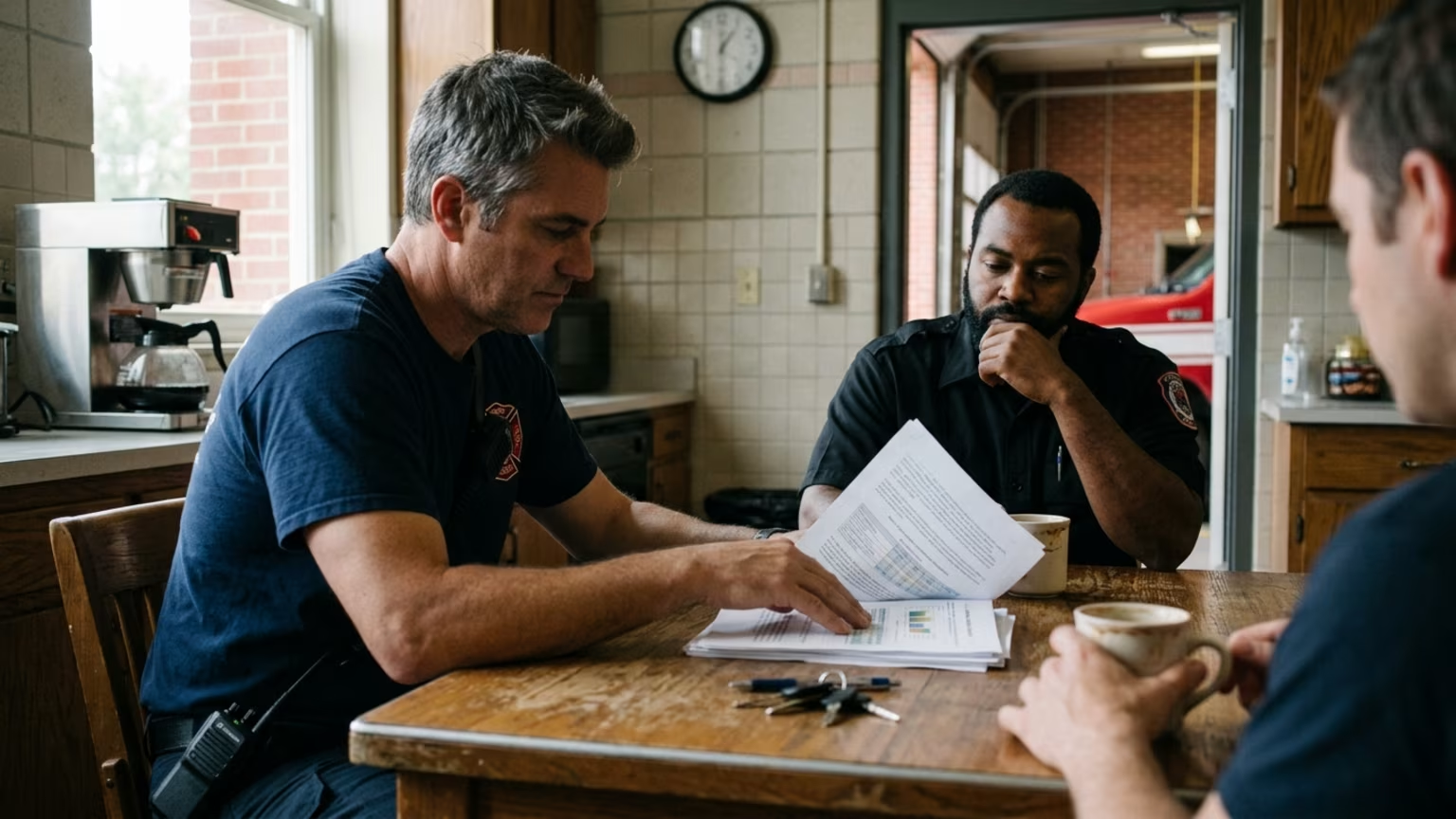

Frisco’s $112,500 study of alternatives to the 24/48 firefighter schedule provides a framework for analysing first responder sleep and operational readiness.





On September 15, 2026, the Frisco City Council adopted a budget that includes $112,500 for a shift-rotation research study for the Frisco Fire Department. The department currently operates on a schedule of 24 hours on and 48 hours off, according to reporting from Community Impact.
The core finding from the recent budget allocation is that Frisco is treating schedule design as a research question. The allocated $112,500 is part of a broader $66.5 million fire department budget. This specific funding supports thorough analysis rather than an immediate schedule change. Any actual adjustment to the rotation would follow the completion of this study and a subsequent City Council vote.
City Manager Wes Pierson told Community Impact that a schedule-change study is "absolutely requisite." This approach reflects a growing awareness that altering work hours requires concrete data on how those hours affect operations. A schedule label alone does not guarantee better rest or readiness. Funding a dedicated study allows the city to evaluate alternatives against locally relevant metrics.
Establishing a baseline is a critical step in any fatigue management protocol. Without clear data on existing sleep patterns and cognitive stress, evaluating a new schedule becomes a guessing game. The Frisco study presents an opportunity to measure the physical toll of a 24-hour shift. This analytical approach separates proven physiological recovery needs from generic administrative decisions.
Allocating municipal funds for this specific purpose signals a serious commitment to workforce health. The financial investment demonstrates that local government recognises the complexity of emergency service scheduling. Gathering objective data protects both the personnel who work the shifts and the communities they serve. Evidence-based policy guarantees that any eventual changes are grounded in measured operational realities.
This local development directly intersects with ongoing debates about fatigue management in emergency services. Plano recently implemented a 24-on and 72-off firefighter schedule in September 2025. Denton followed that move by adopting a 4-on and 96-off schedule, and Community Impact reports that other Texas departments are considering similar changes. These regional shifts provide context for why Frisco is formalizing its own review.
Changing a schedule structure fundamentally alters how crews manage sleep debt. A transition away from the traditional 24 hours on and 48 hours off model has been associated with improvements in select health outcomes and firefighter sleep. Community Impact noted that a study published by the National Library of Medicine supports this association. Better sleep was found to improve work-life balance and reduce cognitive stress for personnel.
The reduction of cognitive stress is particularly relevant for emergency medical personnel and firefighters handling complex incident scenes. Sleep deprivation degrades executive function, decision-making speed, and situational awareness. When a schedule continuously suppresses adequate recovery, the accumulated fatigue compromises both safety and operational effectiveness. Recognising cognitive stress as a measurable outcome validates the real-world experiences of personnel facing irregular shifts.
Emergency calls do not follow a predictable pattern. A schedule that provides ample rest during a quiet week can quickly become unsustainable during periods of high call volume. Analysing shift structures requires acknowledging these extreme variations in workload. The Frisco study provides an opportunity to factor unpredictable demand into the baseline assumptions about schedule design.
For professionals navigating these debates, evaluating shift schedules for first responder sleep and recovery requires looking beyond the basic calendar. A 48-hour recovery window is frequently interrupted by lingering fatigue from the prior tour. Adding an extra day of rest can sometimes provide the buffer needed to reset the body clock. The exact physiological benefit depends heavily on call volume and individual recovery habits.
Sleep disruption from nights, rotating shifts, and unpredictable calls fragments the biological rest needed to maintain physical capability. When departments rely on rigid 24-hour operations, personnel often accumulate sleep debt that a standard 48-hour break cannot clear. A structured schedule review validates the reality that demanding duty requires equally demanding recovery frameworks. Identifying the right rotation can help protect career longevity and overall resilience.
The ongoing evaluations in Texas highlight a broader industry reckoning with fatigue management. For decades, the 24-hour shift was accepted as a necessary operational standard across many jurisdictions. This acceptance often downplayed the long-term health consequences of chronic sleep disruption. The current push for data-driven alternatives challenges the idea that operational readiness requires sacrificing physiological wellbeing.
The traditional model assumes that two full days off provide adequate time to recover from a single high-intensity shift. The new wave of schedule reviews challenges the assumption that this ratio is universally effective. Accumulated physical wear often requires more deliberate rest periods. Comparing different rotation models reveals that not all time off is equally restorative.
The first day off after a busy 24-hour tour is often consumed by basic biological recovery rather than active rest. Transitioning to a longer recovery block might mitigate the chronic fatigue that builds up over a demanding career. Assessing these variables highlights the gap between traditional scheduling practices and modern physiological evidence. A comprehensive study must acknowledge that the physical toll of a shift varies drastically based on environmental factors.
Another assumption under scrutiny is that sleep debt can be fully resolved on days off regardless of call volume. A busy station might require crews to run calls continuously through the night. The resulting fatigue profile is vastly different from a station with a lower nocturnal call volume. By measuring health outcomes and sleep quality, the Frisco study moves the conversation from personal grit to objective physiology.
First responders must manage their own readiness while departments conduct lengthy schedule studies. The formal review process in Frisco serves as a reminder that policy changes take time. Personnel should treat these developments as long-term initiatives rather than immediate health prescriptions. In the interim, establishing daily habits that support physical capability remains entirely within a first responder's control.
One immediate adjustment is to actively manage the first sleep period following a shift. Prioritise a dedicated rest window regardless of whether the schedule is 24 hours or a different rotation. Minimising light exposure and delaying heavy meals can help signal the body to enter a recovery state. Learning how to assess your sleep when your schedule is unpredictable is a practical skill that supports long-term health.
Nutrition plays a parallel role in mitigating the effects of fragmented sleep. Managing hydration and energy when meal timing is inconsistent requires intentional planning before the shift begins. Crews can build a first responder shift-proof nutrition framework that accounts for high workload periods. Proper fuelling reduces the metabolic stress that often accompanies night calls and disrupted rest.
First responders should also evaluate their physical training routines against their current fatigue levels. Balancing intensive conditioning with the reality of accumulating physical wear prevents training from becoming another stressor. Adjusting workout intensity based on the previous night's sleep quality protects joint health and central nervous system recovery. A flexible approach to fitness respects the realities of demanding duty without compromising capability.
Managing stress resilience outside of working hours is equally necessary. High stress calls elevate heart rates and flood the system with adrenaline. Returning to a resting state requires intentional decompression practices rather than simply waiting for fatigue to take over. Active stress management protects the cardiovascular system and improves the quality of subsequent sleep blocks.
Developing a robust transition routine helps separate duty demands from home life. Personnel should establish clear boundaries between the end of a shift and the beginning of a recovery period. Deliberate transition habits signal the nervous system to shift out of a heightened state of alertness. Protecting even small blocks of uninterrupted rest can sustain performance until a normal rotation resumes.
The Frisco Fire Department study represents an important step in formalising sleep research within emergency operations. Future developments will depend heavily on what specific alternatives the researchers compare. Tracking how the study measures fatigue, cognitive stress, and work-life balance will provide valuable insights for other departments. These variables are notoriously difficult to quantify without a rigorous methodology.
The methodology used to track sleep and health outcomes in Frisco will serve as a template for future evaluations. Researchers may utilize wearable technology, self-reported fatigue scales, or objective performance metrics. The transparency of this data collection process will determine the study's credibility among frontline personnel. Clear communication about how fatigue is measured builds trust in the eventual policy recommendations.
Observers should also note how the final report addresses the distinct needs of different ranks and roles. The physical and cognitive demands placed on a battalion chief differ from those placed on a junior firefighter. A thorough schedule analysis will account for these variations in workload and stress exposure. Understanding these distinctions is necessary for creating equitable and effective recovery protocols.
Another critical factor to watch is how the research accounts for operational demands and staffing realities. A rotation that looks perfect on paper must still support continuous emergency coverage. The eventual findings will likely weigh the physiological benefits of extended recovery against the logistical challenges of deployment. The recommendations that emerge from this study could influence regional scheduling norms for years.
Finally, the City Council vote will demonstrate how public policy integrates physiological evidence. The decision will highlight whether measurable health outcomes can drive administrative changes. Until that vote occurs, the priority for first responders remains focused on individual recovery practices. Maintaining physical capability requires adapting to whatever schedule the job demands.
Evaluating new shift rotations gives emergency departments concrete data on workforce fatigue, and Rescuris translates that physiological evidence into practical protocols for the field. Conflicting advice that prioritises short-term performance while ignoring long-term health routinely challenges professionals on unpredictable schedules. We help first responders build sustainable recovery habits that actively protect career longevity and physical capability. Explore Resources
Rescuris publishes evidence-aware guidance for firefighters, police officers, paramedics and other first responders on fitness, recovery, sleep, nutrition, stress resilience and long-term capability.






Read practical guidance on first responder fitness, recovery, sleep, nutrition and resilience for demanding work and a long, active career.
read the blog
