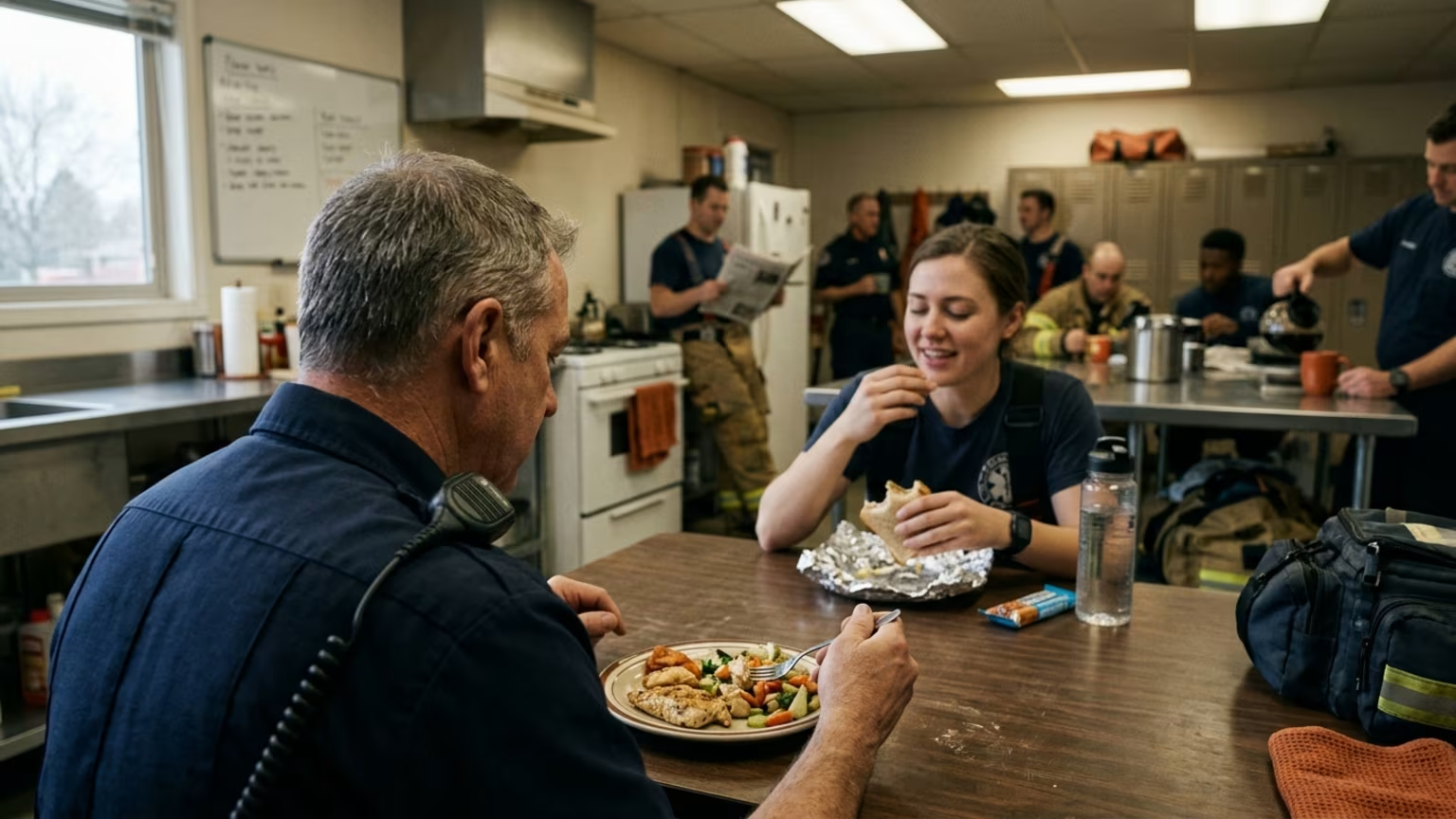

This practical framework replaces rigid meal scheduling with flexible fueling strategies to help first responders manage nutrition during unpredictable shifts.





First responders must choose between attempting to force rigid clock-based meal schedules that break during busy tours and adopting flexible fueling frameworks that adapt to unpredictable call volumes.
The traditional approach to shift nutrition often centers on eating only during daylight hours to match human circadian biology. The theory suggests that keeping food intake synchronized with daytime waking periods protects long-term metabolic health. Researchers recently tested this concept by looking at how simulated night work affects specific biological risk markers. A Mass General Brigham report detailed a Nature Communications randomized controlled trial that examined this exact physiological variable.
The study followed 20 healthy young participants through a highly controlled two-week inpatient protocol. Scientists carefully managed sleep schedules and daily daytime naps alongside required physical activity. They also strictly controlled artificial light exposure, physical posture and total food intake. The primary experimental difference was whether participants ate during the simulated night or restricted all meals entirely to the daytime.
Researchers measured multiple physiological outcomes including blood pressure and cardiovascular-risk markers from the autonomic nervous system. Another key measurement was plasminogen activator inhibitor-1, which serves as a biological marker associated with blood-clot risk. The study found that these cardiovascular risk factors increased after simulated night work in the group assigned to eat during both the day and night. Participants who restricted their eating exclusively to the daytime did not show the same increase in these specific markers.
The research team suggested that food timing might be a meaningful target for reducing the cardiovascular effects of circadian misalignment. However, this rigid scheduling model presents significant practical limitations for emergency personnel. The trial took place in a highly artificial laboratory setting over a very short duration. It focused on healthy young adults rather than active professionals facing extreme heat, heavy protective equipment and prolonged physical incidents.
An alternative approach abandons strict clock times in favor of adjusting intake based strictly on operational opportunity. This framework relies on eating smaller and less predictable meals whenever the daily schedule permits. Recent observational research has started to examine how these irregular eating patterns affect physiological markers in the real world. A study published in Chronobiology International by Taylor & Francis looked closely at this style of intake.
The 10-day cross-sectional study followed 30 male rotating shift workers operating on variable schedules. Researchers collected detailed daily data using dietary food recalls, continuous actigraphy and wrist-temperature monitoring. They found that greater fragmentation in the daily rhythm of energy and carbohydrate intake was actually associated with lower insulin levels. This highly fragmented eating pattern was also linked to lower HOMA-IR scores and lower triglyceride levels among the studied workers.
These findings provide an interesting physiological perspective for emergency personnel who struggle to eat complete meals. The results suggest that breaking food intake into smaller and less predictable events does not automatically ruin metabolic health. While the study was observational and cannot prove direct causation, it supports the idea of assembling interchangeable food components rather than waiting for a perfectly timed dinner. This adaptability becomes critical when station duties or emergency transport suddenly interrupt a planned meal break.
Practitioner guidance also supports moving away from heavy, inflexible meals during late night operations. One practitioner-oriented shift-worker nutrition guide specifically recommends balancing complex carbohydrates with protein to maintain steady physical energy. The same resource advises choosing lighter meals later in the shift to prevent heavy digestive burdens. It also emphasizes preparing portable snacks, prioritizing water or decaffeinated beverages and explicitly avoiding meals high in fat and sugar late at night.
Balancing these physiological insights requires practical rules for entirely different operational scenarios. A working framework should dictate when to pursue a full structured meal and when to pivot to fragmented, opportunistic fueling.
Periods of low call volume or predictable daytime hours offer the best chance for substantial nutrient intake. Personnel should use this specific time to consume their primary protein sources and necessary complex carbohydrates. A pre-shift meal at home or early in the day often falls squarely into this category. Eating a robust meal before arriving at the station builds an energy reserve for unpredictable early calls.
Departments and stations can support these heavier meals by improving access to refrigeration, microwaves and clean water. Better station environments allow personnel to store and heat quality food rather than relying on fast-food alternatives. While occupational guidelines exist for broad emergency operations, these specific facility improvements require localized effort. Maximizing these predictable windows reduces the biological stress of missed meals later in the tour.
When the tone drops constantly, first responders must immediately switch to a minimum viable meal approach. This involves grabbing a rapid protein source alongside an easy, digestible carbohydrate. Carbohydrates serve as a crucial operational tool during these demanding periods rather than a category to avoid entirely. They provide immediate, accessible energy for physical tasks, heavy lifting and prolonged rescue operations.
Compact backup foods become absolutely essential during these heavily fragmented periods. Personnel should keep protein-containing convenience foods readily available for delayed relief or extended transport times. Options like yogurt, milk and ready-to-drink protein beverages work perfectly for rapid consumption. Tuna packets, simple sandwiches or beef jerky also fit this need when standard meal preparation is completely impossible.
Night shifts require a careful balance between maintaining physical alertness and respecting basic circadian biology. Following the practitioner guidance, responders should consume significantly lighter foods toward the end of a long shift. Heavy meals high in fat or sugar can sit uncomfortably in the stomach and disrupt vital recovery sleep later. The physiological goal is to provide enough fuel to function without overloading the resting digestive system.
Personnel might consider eating their largest meal much earlier in their waking period before the night shift truly begins. If severe hunger strikes at three in the morning, a small protein snack is often a much better choice than a full cooked meal. The daytime-only eating laboratory evidence makes this lighter approach a reasonable biological option to discuss. However, it should never become a mandatory fasting rule when physical energy is strictly necessary for safety.
The transition from theoretical science to firehouse reality often introduces serious execution errors. One major mistake is misinterpreting the simulated night work trial as an absolute operational mandate. Attempting to avoid all food during a massive structural fire or a prolonged law enforcement operation is physically dangerous. Personnel need adequate physical energy to maintain alertness, physical strength and situational awareness.
Another common error involves misapplying broad guidance from generalized practitioner resources. The practitioner guide offers one sample calorie-distribution model for a night shift to help readers visualize a plan. However, this exact model is simply an example from a practitioner resource rather than a validated first-responder protocol. Treating sample calorie percentages as a universal schedule sets personnel up for immediate failure when a late call drops.
Failing to pack secondary food options is a practical mistake that ruins many well-intentioned nutrition plans. Responders often bring a single prepared meal for a normal shift but completely forget to pack compact backup foods. If an emergency call interrupts that single planned meal, the responder goes hungry for the rest of the tour. Preparing two distinct levels of food easily prevents this severe physiological energy deficit.
Finally, personnel sometimes ignore their own unique medical or biological constraints in favor of generic advice. Individual factors like diabetes, kidney disease and gastrointestinal disorders alter nutritional needs entirely. Cardiovascular disease, regular medications, clinically significant sleep disorders and pregnancy also require specialized input. Broad frameworks simply cannot replace individualized advice from a qualified clinician or registered dietitian.
The reality of emergency service means that perfect clinical meal timing will rarely survive a full operational tour. Broad occupational standards like NFPA 1550 cover health and safety programs for fire, rescue and EMS organizations across the board. However, these documents do not establish specific macronutrient prescriptions or universal dietary schedules for active personnel. First responders must evaluate their daily nutrition plans based on functional operational outcomes rather than strict clock accuracy.
A successful framework consistently produces stable physical energy, tolerable digestion, adequate training quality and manageable hunger. It should support a healthy body-composition trajectory and allow for restful sleep after the shift concludes. You cannot infer that a nutrition plan works simply because it strictly follows a daytime-only eating window. The true physiological measure of any shift dietary strategy is its resilience under acute operational pressure.
The best meal plan is simply the one that survives the friction of a busy tour.
Building operational readiness through predictable eating patterns is often derailed by the realities of emergency service. Sleep disruption from nights, rotating shifts, overtime and unpredictable calls forces personnel into erratic habits, but Rescuris helps first responders build practical metabolic frameworks that actually survive these operational constraints. Explore Resources
Rescuris publishes evidence-aware guidance for firefighters, police officers, paramedics and other first responders on fitness, recovery, sleep, nutrition, stress resilience and long-term capability.






Read practical guidance on first responder fitness, recovery, sleep, nutrition and resilience for demanding work and a long, active career.
read the blog
